
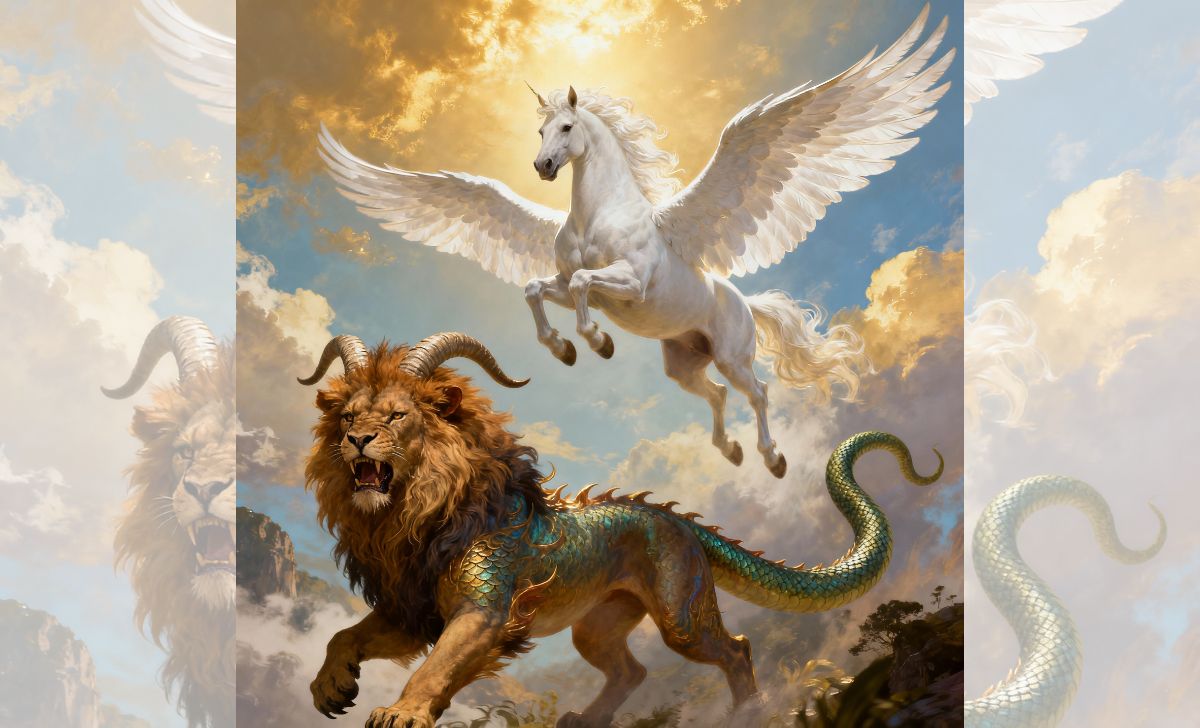
Greek mythology is filled with extraordinary creatures that symbolize human imagination, fears, and aspirations. Among them, two of the most iconic are Pegasus, the legendary winged horse, and the Chimera, the monstrous hybrid that breathed fire. Both creatures are unforgettable for their symbolism, their roles in ancient myths, and their lasting influence on art and storytelling. In this blog, we will journey through the origins, myths, and significance of Pegasus and the Chimera, exploring why they remain timeless figures in mythological lore.
Origins of Pegasus
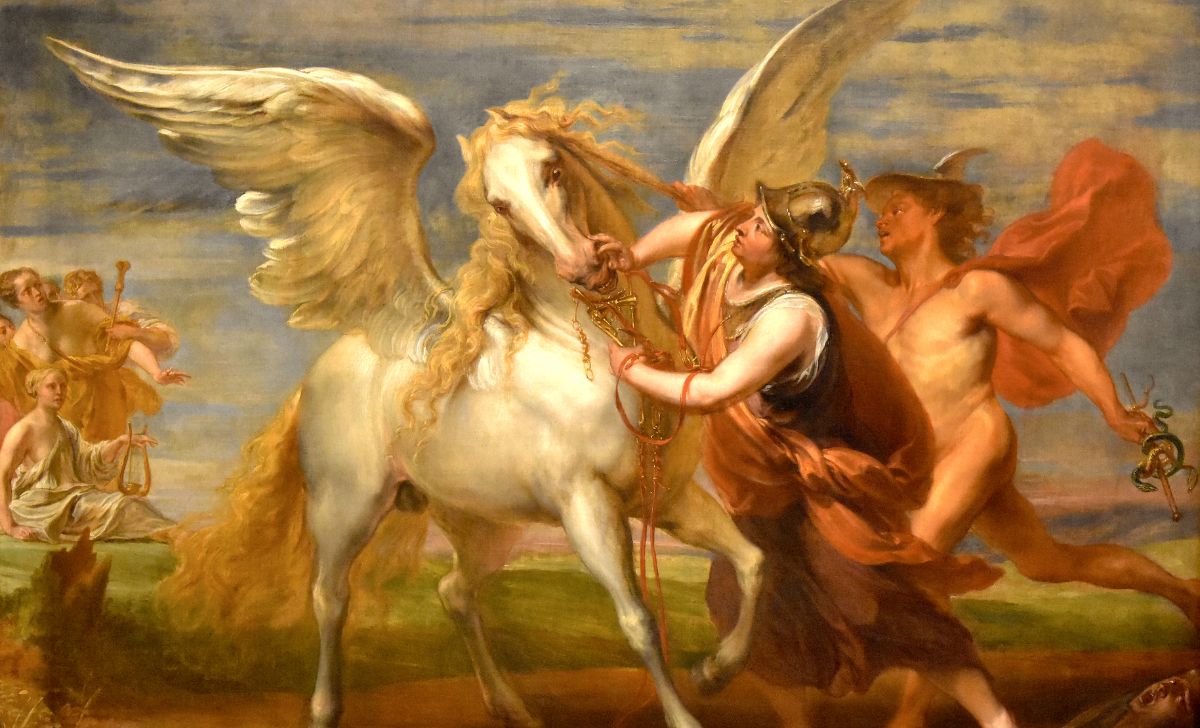
Pegasus, the dazzling white winged horse, emerges from one of the most dramatic myths of ancient Greece. His story begins with Perseus, who decapitated the Gorgon Medusa. From the blood that spilled from Medusa’s severed head, Pegasus was born, along with his brother Chrysaor. This extraordinary birth immediately placed Pegasus among the most symbolic creatures of Greek mythology: he represented freedom, divine inspiration, and the bridging of mortal and divine realms.
Pegasus was not only stunning in appearance but also associated with the Muses and poetic inspiration. In some versions of the myth, when his hooves struck Mount Helicon, a spring called Hippocrene gushed forth and became sacred to the Muses. This solidified Pegasus’ legacy as a creature tied to creativity and the pursuit of beauty.
Pegasus in Myth
Pegasus is most famously associated with the hero Bellerophon. According to legend, Bellerophon tamed Pegasus with the help of a golden bridle gifted by the goddess Athena. With Pegasus as his steed, Bellerophon accomplished great feats, the most well-known being his victory over the Chimera, a monstrous creature terrorizing the land of Lycia. Together, the man and the winged horse became an unstoppable combination of skill, courage, and divine favor.
Yet, the myth of Pegasus also carries a cautionary message. Overcome with pride, Bellerophon attempted to ride Pegasus to Mount Olympus, hoping to join the gods. Angered by his arrogance, Zeus sent a gadfly to sting Pegasus, causing Bellerophon to fall back to Earth, punished for his hubris. Pegasus, however, was allowed to ascend to Olympus and was immortalized among the constellations.
Symbolism of Pegasus
Pegasus carries powerful symbolic meanings:
- Freedom and transcendence – His wings embody escape from earthly constraints.
- Divine inspiration – His association with the Muses ties him to poetry, song, and creative brilliance.
- Balance of humility and ambition – His story with Bellerophon reminds us that true greatness comes from reverence for the divine, not arrogance.
Even today, Pegasus lives on as a symbol of flight, imagination, and inspiration in art, literature, and even modern corporate logos.
The Chimera: A Nightmare Creature
If Pegasus represents beauty and freedom, the Chimera embodies terror and monstrous chaos. She was a fire-breathing beast with a lion’s head, a goat’s body rising from her back, and a serpent for a tail. Born of the deadly union between the monstrous siblings Typhon and Echidna, the Chimera was one of the many monsters that sprung from their brood, alongside Cerberus and the Hydra.
The Chimera’s home was in Lycia, a region in Asia Minor, where she devastated the land and struck fear into all who encountered her. Her hybrid form made her especially terrifying, as she represented the unnatural blending of creatures. In ancient Greece, such monsters often symbolized chaos and the dangers that lurked beyond the boundaries of civilization.
The Chimera in Myth
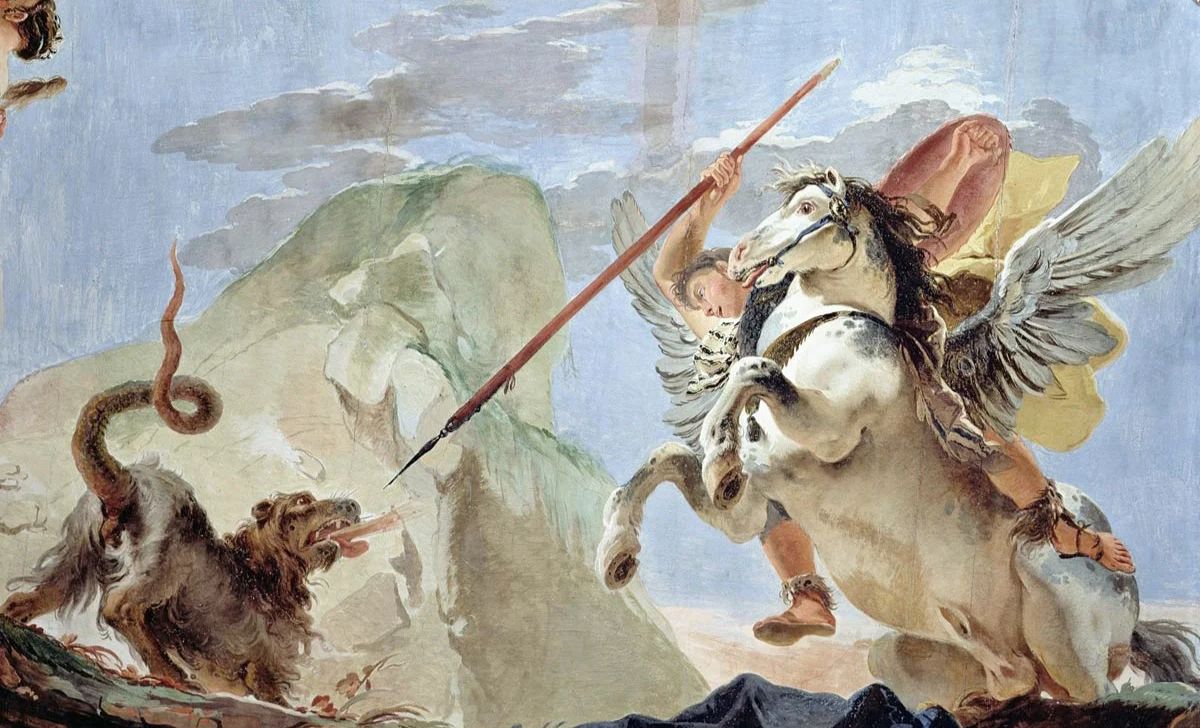
The Chimera is most famous in the story of her defeat at the hands of Bellerophon, riding Pegasus. The Lycian king commanded Bellerophon to slay the beast, believing the task impossible. But mounted on Pegasus, Bellerophon had the advantage of aerial combat. By flying above her fiery breath, he rained down arrows upon her. In some versions, he thrust a block of lead into her throat; her own blazing breath melted the lead, suffocating her.
This battle united the stories of Pegasus and the Chimera, making them forever linked in myth. Together, they symbolize the struggle between the noble, divine aspects of existence (embodied by Pegasus) and the chaotic, destructive ones (embodied by the Chimera).
Symbolism of the Chimera
In mythology, the Chimera is more than a mere beast—it is a representation of humanity’s deepest fears and inner struggles.
- Chaos and destruction – Her fiery breath represents uncontrolled fury and devastation.
- Hybrid monstrosity – Her unnatural mix of creatures symbolizes imbalance and distortion.
- Internal battles – Later interpretations see the Chimera as a metaphor for inner demons or impossible challenges.
The Chimera has also become an enduring metaphor in language. Today, the word “chimera” refers to an illusion, a dream that is unrealistic, or a fantastical blend of elements. In science, it even describes organisms composed of cells from different genetic origins.
Pegasus and Chimera Together
Though they stand on opposite sides of myth, Pegasus and the Chimera are intrinsically tied through the story of Bellerophon. Pegasus represents divine aid, courage, and inspiration, while the Chimera embodies deadly challenge and the forces of chaos. Their clash encapsulates a broader mythological theme: the eternal struggle between order and disorder, between aspiration and destruction.
This balance between opposites is a recurring theme in Greek mythology, teaching that life is a constant interplay of beauty and terror, creation and chaos. One cannot exist without the other, and through myth, humans learned to confront fear while aspiring to the divine.
Lasting Influence on Culture
Across centuries, both Pegasus and the Chimera’s legacies have endured:
- Pegasus appears in art, literature, and astronomy. The constellation Pegasus remains a brilliant tribute to his myth.
- The Chimera continues to symbolize hybrid monstrosities in literature, as well as unattainable dreams. Her image appears in medieval bestiaries, Renaissance art, and modern fantasy.
Together, they reflect the duality of human imagination—the dream of soaring beyond limits, and the nightmares of destructive forces that must be overcome.