

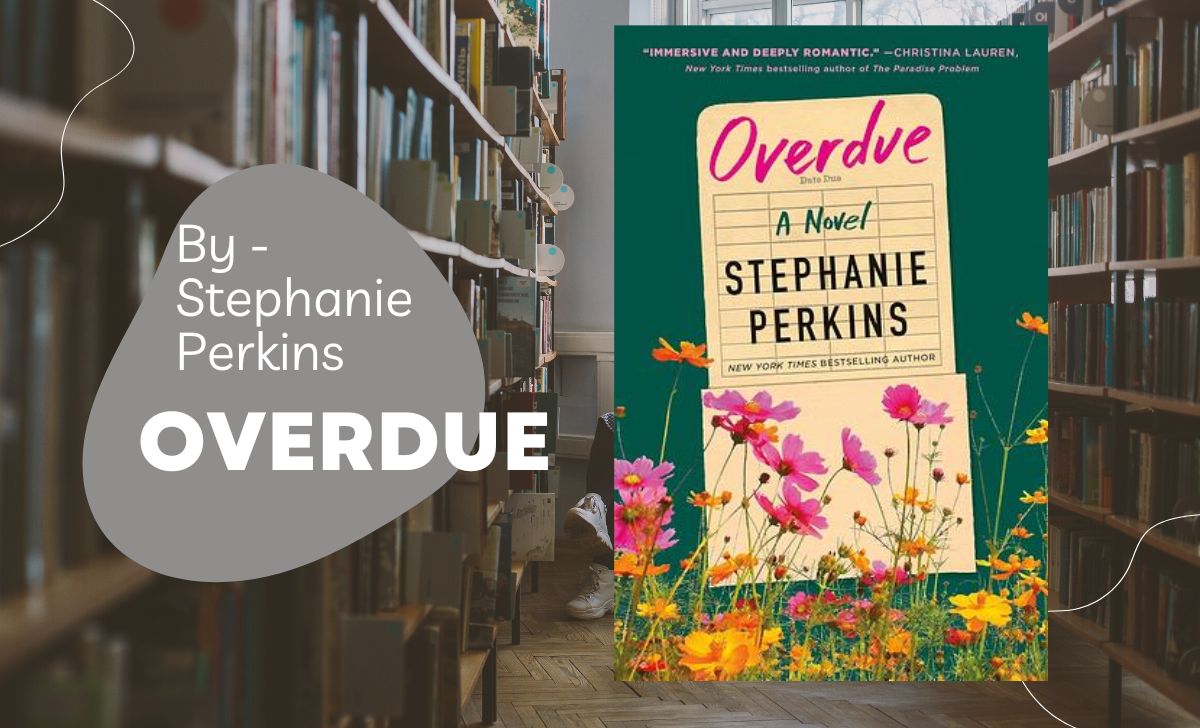
Stephanie Perkins — best known for YA favorites like Anna and the French Kiss — steps into adult fiction with Overdue, a quiet, character-first novel set in a small mountain town and centered on a librarian whose life begins to rearrange itself in unexpected ways. If you come for a rom-com, you’ll find something gentler than a rom-com; if you come for a portrait of a woman recalibrating what she wants from life, you’ll find a patient, empathetic story that lingers. This review walks through what Overdue does well, where it stumbles, and why it’s likely to land in the “comforting, bookish read” pile for many readers.
What the book is about (plot summary)
Ingrid Dahl is a thirty-something librarian living in Ridgetop, North Carolina, comfortably entrenched in a long-term relationship with Cory — the kind of steady partnership that has been a part of her life for more than a decade. When Ingrid’s younger sister becomes engaged, the question of marriage that had been hovering around her life becomes unavoidable. Ingrid and Cory decide, at her sister’s prompting and their own nervous curiosity, to take a one-month break with a blunt rule: date other people, return after the month, and decide whether they want to marry.
What follows is a year-long, month-marked story of missteps, small humiliations, friendships, and the slow-burning attraction to someone else — Macon, a co-worker whose reserve hides more than it reveals. The plot traces Ingrid’s interior shifts as much as external events: it’s a story about what it means to want more, to be surprised by desire, and to re-examine a life you thought fit.
Voice and tone — Perkins grown-up
Perkins’ voice is recognizable: warm, observant, and attuned to the ache of longing. Where her YA work leaned into teenage immediacy and crisp humor, Overdue opts for a softer, more contemplative tone that fits its protagonist’s age and emotional register. The prose spends generous time in small domestic moments — cataloguing books, lending quiet support to patrons, late-night conversations with friends — and that scale is the book’s strength. It’s intimate rather than cinematic, and Perkins allows scenes to breathe in a way that will feel familiar and comforting to readers who loved her earlier work.

Characters — sympathetic but not always surprising
Ingrid is written with tenderness: an introverted book-lover who mistakes stability for completeness until circumstances force her to ask better questions. Her supporting cast — a sister who’s moving into a different life stage, coworkers in the library, and the taciturn Macon — flesh out her world and function as mirrors for her choices. Critics have argued that some secondary figures are underdeveloped and that Macon, in particular, can read as too subdued to be fully convincing as the story’s romantic anchor. If you prefer bold, larger-than-life romantic leads, this slow-burn, low-drama approach may feel underpowered. But if you adore character-led, realistic emotional changes, the cast will likely win you over.
Pacing and structure — a month-by-month rhythm
Perkins breaks the narrative into months, a structural choice that gives Overdue its rhythm: incremental revelations, repeated small embarrassments, and the accumulating weight of choices. The month-by-month scaffold mimics the way life actually creeps forward after a relationship-change — uneven, repetitive, sometimes boring, sometimes electric. That pacing will be a joy for readers who savor simmering tension and the messy middle of personal change, but it may test those who prefer faster plots or more plot-centric stakes. A few reviewers noted that the focus sometimes drifts away from the central romantic question, which can frustrate readers expecting a conventional romance arc.
Themes — identity, comfort, and the small rebellions
At its heart, Overdue interrogates what it means to be settled versus what it means to be settled-in — and whether the two are the same. Perkins mines the difference between a comfortable life that supports you and a life where comfort has calcified into complacency. There’s also a tender celebration of work that matters in quiet ways: librarianship as vocation, the humility and joy of helping, and the small communities that form around shared reading. If you’re a reader who loves books about people who love books, Overdue offers that particular, cozy solace.
What works and what doesn’t
What works: Perkins’ empathy for her characters, a warm and readable voice, and the cozy, bookish setting that feels lived-in and nourishing. The emotional truth of Ingrid’s confusion — and her awkward, often humiliating attempts to figure herself out — is rendered with genuine compassion. What doesn’t: at times the romance feels secondary to the coming-of-self material, and certain characters (Macon included) can feel under-sketched or less believable as the novel’s emotional fulcrum. For readers looking for a steamy, fast-moving romance, this is the wrong expectation; for those who want an observant, slow-burning story of adult reorientation, it’s a solid match.
Final verdict
Overdue is a mellow, emotionally honest book about the awkwardness of re-evaluating a life and learning to be kinder to yourself in the process. It’s not an adrenaline rush; it’s a slow, thoughtful simmer. If you enjoy character-driven stories, bookish settings, and romances that feel earned rather than manufactured, this will likely be a rewarding read. If you need a tightly plotted, high-stakes romance, temper your expectations: the payoff is quieter but sincere. Overall, Stephanie Perkins’ adult debut lands as a comforting, humane novel that will especially appeal to readers who like their romantic fiction with a lot of atmosphere and small, truthful moments.