
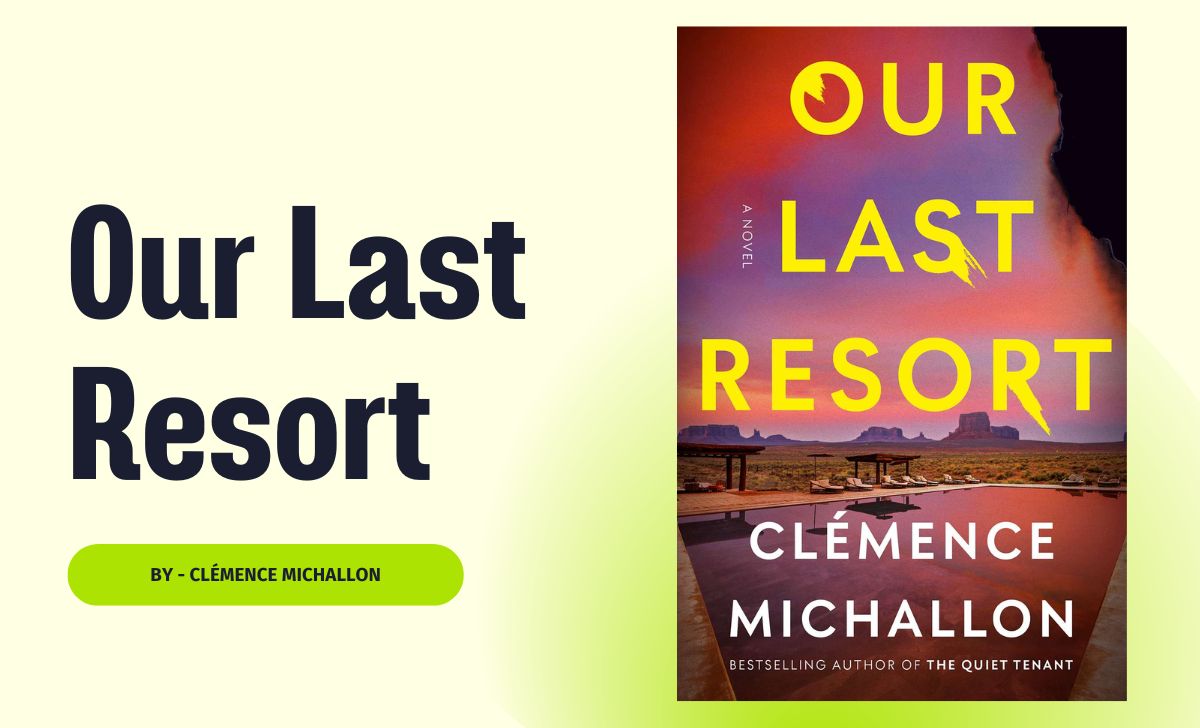
Set against the stark Utah desert, Our Last Resort opens at the luxurious Ara Hotel in Escalante, where two childhood companions—Frida and Gabriel—have reunited after years apart. Born and raised in a cult led by a charismatic figure named Émile, the pair escaped fifteen years earlier and have since tried to rebuild lives on their own terms. Now they’re on a getaway, hoping for quiet reconnection by the pool and on scenic hikes—but paradise quickly unravels when a glamorous young woman is found dead. Her husband, William Brenner—a wealthy tabloid magnate—is swiftly suspected, and suspicion soon falls on Gabriel. As police close in, Frida is forced to relive the trauma of their shared past while racing to prove Gabriel’s innocence. Crime meets cult, and every memory matters.
Atmosphere and Setting
The Ara Hotel feels like a character in its own right: isolated, opulent, and eerily uncaring under the blistering Utah sun. The contrast between headline‑making luxury and rugged desert beauty creates an underlying tension that mirrors the protagonists’ own fragile façade. The stillness of a resort full of secrets—bookish staff, glacial pools, hush‑hush corridors—adds to the sense of unease. Michallon’s prose captures both the serenity and the suffocation of this environment.
Characters: Frida and Gabriel
Frida narrates the novel with hardened introspection. She’s smart, resourceful, and emotionally scarred by years of control and manipulation. Gabriel, once a charismatic presence in her world, appears more wounded than confident. Their bond—scene after scene built from a shared foundation of trauma—feels authentic and complex. Michallon lets us see their deep loyalty and simultaneous mistrust grow, especially when suspicion targets Gabriel. Frida’s internal turmoil reflects the emotional paradox of their bond: shared survival, yet walled-off truths.
Plot Breakdown
Childhood in the Cult
Frida and Gabriel’s early lives unfold in a closed compound led by Émile. Childhood indoctrination, strict rules, and emotional deprivation shape their identities. Their escape doesn’t end the trauma—it merely relocates it. These flashbacks gradually reveal the origin of their warp‑tight connection, childhood healing, and recurring doubts.
Present‑day Thriller
Their vacation at the Ara Hotel begins idyllically, but quickly spirals after the murder of Sabrina. Gabriel becomes the lead suspect due to past scandals—including the high‑profile disappearance and death of his previous wife, Annie—a case he was never charged for. The book becomes a cat‑and‑mouse scenario as Frida frantically pieces together what really happened, while secrets from the past metastasize into deadly consequences.
The Big Reveal
In a shattering climax, long‑buried truths emerge: Brenda’s death was orchestrated by her husband, William, while Gabriel had a secret liaison with her—the contentious source of their fight. Gabriel’s innocence surfaces. In an earlier scandal, Annie’s mysterious death had ties to a cult secret—Frida reveals that she killed Annie to protect their shared secret. Émile was later prosecuted for tax evasion after a compound fire exposed financial wrongdoing.
Themes Explored
📌 Trauma and Sibling Bond
Michallon explores how trauma can both connect and divide. Frida and Gabriel’s relationship is a foundation built on survival rather than love—intense, complicated, sometimes toxic. Loyalty warps into moral compromise and guilt.
📌 Memory and Truth
The dual‑timeline structure keeps readers second‑guessing: is what Frida remembers reliable? Are the present suspicions justified? Memory here is both shield and weapon—a maze of half‑truths and justifications.
📌 Identity and Reinvention
Escalante’s Ara Hotel symbolizes reinvention: oasis, escape, fresh start. But Michallon suggests that outward reinvention often fails to detach from internal scars. The setting underscores how environment can’t erase the past—it merely reframes it.
Strengths of the Novel
- Taut Suspense: Michallon’s skill in building tension lies less in dramatic action and more in psychological dread—every flashback chapter recalibrates suspicion. The pacing leans slow burn, but with escalating urgency.
- Emotional Depth: Frida’s narration feels raw and authentic—her attempts to hold her world together betray an emotional structure on the verge of collapse. The dialogue, memories, and slow reveals all feed into emotional stakes more than body counts.
- Complex Moral Landscape: There’s no clear hero or villain, only survival choices made under duress. Frida’s actions against Annie, Gabriel’s haunted silence, William’s privilege—all illustrate how morality frays under pressure.
Weaknesses to Note
- Pacing Dips: The novel loses momentum in parts—especially middle sections heavy on hotel logistics or routine reflections on desert scenery. While atmospheric, some readers may feel slowed down.
- Believability Strain: Certain plot developments—like how investigators respond, car alarms triggered by proximity, or secondary character behaviors—require suspension of disbelief. A few reviewers found these pulls from realism disruptive.
Final Thoughts
Our Last Resort is emotionally resonant psychological suspense that trades gore for atmosphere and trauma for tension. Michallon cements her place among the most compelling voices in modern psychological thrillers. It’s not for readers seeking relentless action, but for those drawn to slow-burn intensity, flawed characters, and moral ambiguity. If you’re captivated by the likes of Gillian Flynn or Tana French, this will leave its mark.
Should You Read It?
Yes, if you appreciate:
- Psychological thrillers with layered characters.
- Novels that explore trauma, memory, and redefined family.
- Growing emotional tension more than explosive reveals.
Perhaps less so if you expect fast-paced procedural detail or frequent plot turns. But overall, it stands out as a haunting, morally complex journey you won’t forget.
Also Read: These Summer Storms: By Sarah MacLean (Book Review)