
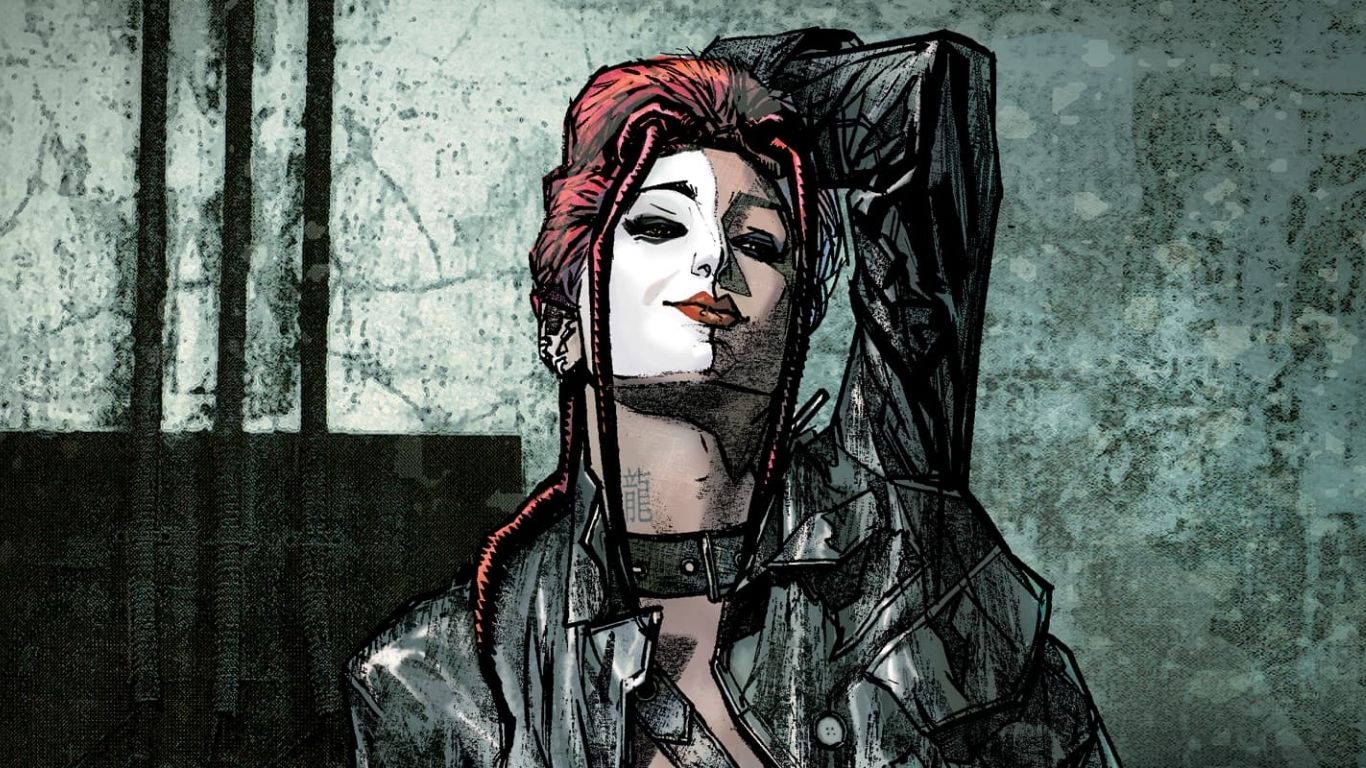
When you first hear the name “Typhoid Mary,” you might think of the infamous cook from the early 1900s who unknowingly spread typhoid fever across New York. But in Marvel Comics, this name belongs to someone far more complex and tragic—a woman whose broken mind is both her greatest weapon and her heaviest burden. Let me tell you the story of Typhoid Mary (Mary Alice Walker), and trust me, it’s way more than just another comic book villain origin tale.
The Beginning: A Girl with a Target on Her Back
Born as Lyla (though Marvel writers often use different variations of her real name), Mary Alice Walker didn’t have the kind of childhood that sets you up for success. She grew up somewhere out in New Mexico, and here’s the thing that matters—she had an abusive father. We’re talking about the kind of abuse that breaks you from the inside out. The kind that makes you want to run as fast as you can and never look back.
And that’s exactly what she did.
When Mary was old enough to escape, she bolted to New York City with big dreams. She wanted to be a dancer. Or maybe an actress. You know, normal hopes that most people have when they’re young and trying to convince themselves that things are going to be better. But New York isn’t always kind to people running from their demons, and Mary’s dreams didn’t quite work out the way she’d imagined.
Instead of Broadway, Mary ended up working at a brothel in Hell’s Kitchen that catered to criminals and organized crime figures. Yeah, that’s a pretty rough turn of events. She created a false identity for herself—calling herself Lyla Hughes and dyeing her hair blonde—hoping that this new persona would give her a fresh start. But here’s what the story wants us to understand: she was still running, still trying to escape, still looking for someone to tell her that things were going to be okay.
The Incident: How a Window Changed Everything
This is where things get really important to the origin story. In 1988, when Typhoid Mary first appeared in Daredevil #254 (created by writer Ann Nocenti and artist John Romita Jr.), her breaking point came courtesy of Matt Murdock himself.
Daredevil was tracking down a villain and found him at the same brothel where Mary was working. When a fight broke out, the women at the brothel instinctively protected the criminal, and Matt panicked. In that moment of chaos, he lashed out without realizing what he was doing—and he knocked Mary clean out of a window.
That moment changed everything.
Falling through the air, having been hurt by yet another man, having her hopes crushed yet again, something inside Mary shattered alongside the glass. There, somewhere between the brothel window and the ground below, Typhoid Mary was born. In that split second, Mary made a vow to herself: no man would ever hurt her again.
But here’s the tragic irony—she didn’t just develop anger or resentment. Her mind fractured. The trauma, combined with earlier childhood abuse she’d experienced, triggered something deeper: dissociative identity disorder (DID). It was the psychological equivalent of a circuit breaker tripping—her mind created multiple personalities as a way to survive and protect itself.
The Personalities: When One Mind Becomes Many
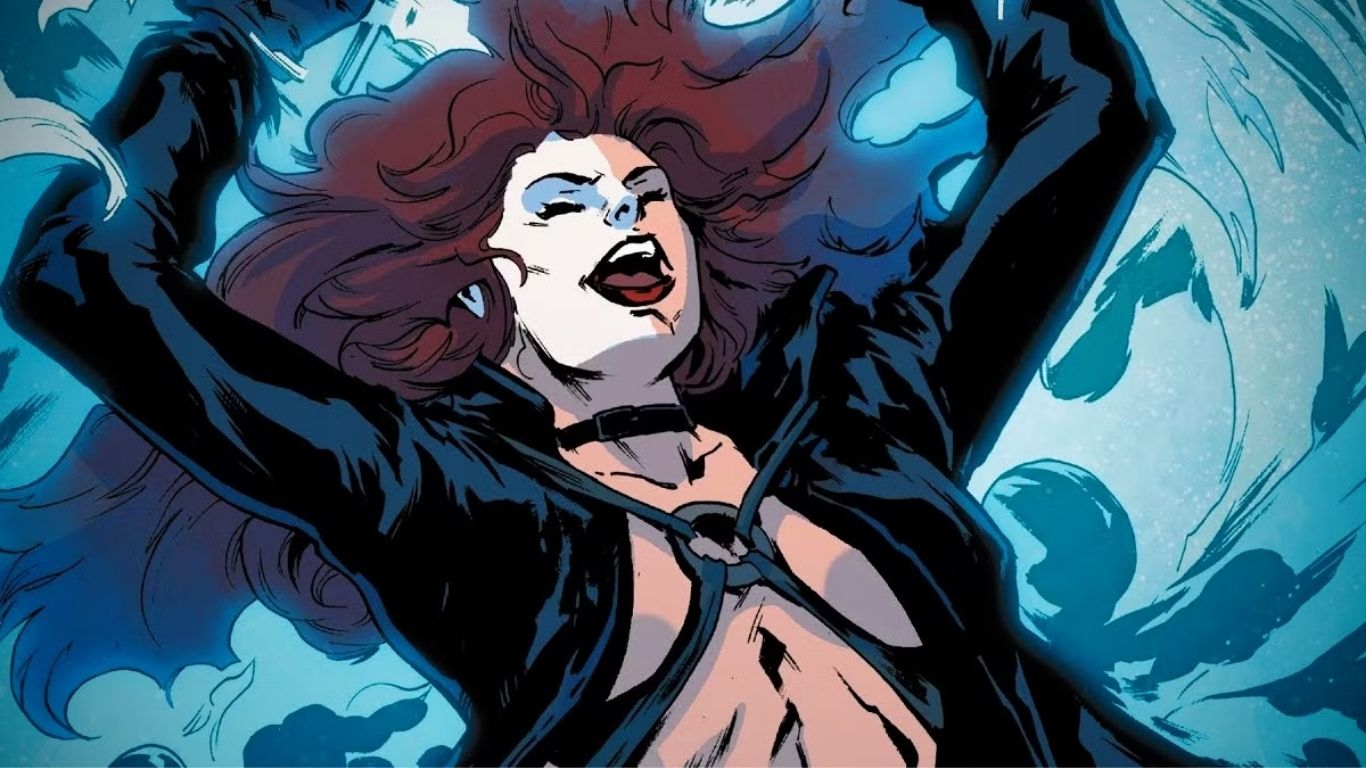
Now, understanding Typhoid Mary means understanding that she’s not just one person. She’s four distinct personalities sharing the same body, and each one has a completely different way of dealing with the world.
Mary Walker is the “original” personality—the one who’s supposed to balance out all the others. She’s calm, functional, and relatively stable, but she’s rarely dominant.
Mary (also called “Innocent Mary”) is probably the most sympathetic of all the personas. She’s quiet, timid, incredibly pacifistic, and genuinely kind-hearted. When this personality is in control, Mary is just a regular person trying to live a normal life. She’s gentle. She doesn’t have any superpowers during these phases. She’s just… a woman. A broken, traumatized woman, but a woman nonetheless.
Typhoid is where things get dangerous. This personality is adventurous, lustful, violent, and utterly reckless. Typhoid doesn’t care about consequences. She’s the dominant fighting personality, and she’s the one who uses Mary’s newly awakened mutant powers with lethal efficiency. Typhoid is seductive and charming, but beneath that exterior is a killer. This is the version that got hired by Kingpin as an assassin.
Bloody Mary is the worst of them all. She’s brutal, sadistic, and actively misandric (literally hates men). While Typhoid is bad, Bloody Mary is genuinely evil. She’s the persona that most wants to hurt people, especially men, and she’s the one who can access Mary’s full arsenal of psychic and telekinetic abilities.
And there might even be a fourth personality—a mysterious “lost” one that Mary occasionally hinted at but that never fully manifested in the comics.
What makes this tragic is that Mary Walker has no control over which personality is in charge at any given moment. She could be going about her day, being “Innocent Mary,” and then something triggers a switch. Suddenly, Typhoid is in control, and by the time Mary comes back to consciousness, days might have passed, people might have been hurt, and she might not even remember what happened.
The Powers: What Happens When Trauma Awakens Abilities
Here’s where the genetic element comes in. Mary Alice Walker isn’t just mentally ill—she’s a mutant. After the incident with Daredevil, her nascent mutant abilities started to manifest, likely triggered or accelerated by the intense trauma she experienced.
Depending on which personality is dominant, Mary can access a range of psionic abilities:
Telekinesis allows her to move small objects with her mind—anything under about 10 pounds. She can hurl knives, razors, or other projectiles without even touching them. Bloody Mary particularly loves gathering an arsenal of bladed weapons this way, assembling them into a kind of improvised battle armor.
Pyrokinesis is where things get genuinely scary. Mary can literally set people and objects on fire just by thinking about it. We’re talking spontaneous combustion within her line of sight. This ability is most powerful when Bloody Mary is in control, and it’s been used to devastating effect throughout her various fights.
Telepathy and Mental Suggestion is the third major ability—she can implant ideas directly into people’s minds, essentially hypnotizing weaker-willed individuals into doing what she wants.
The messed-up part? The “Innocent Mary” personality doesn’t have access to any of these powers. Only Typhoid and Bloody Mary can use them effectively. This means that even though all the personalities exist in the same body, they’re not equally equipped. It’s like Mary is trapped in a cage with two lethal predators, and sometimes she has to watch helplessly as they wreak havoc.
Beyond the mutant powers, Mary is also an exceptionally skilled martial artist, trained in Judo and Kendo. She’s an incredible marksman and has reflexes sharp enough to deflect a bullet back at the person who fired it. She’s physically fit, agile, and when she’s got a knife in her hand, she’s absolutely lethal.
The Deep Tragedy: Kingpin and the Daredevil Connection
When Mary first came to Kingpin’s attention, he saw exactly what he needed—a powerful, broken person he could manipulate and control. Kingpin has always had a talent for identifying people’s weaknesses and exploiting them, and Mary was practically a magnet for that kind of predatory behavior.
What makes this storyline so tragic is what happens next. While Typhoid is working as one of Kingpin’s assassins, Innocent Mary—the pacifistic, kind version of herself—starts to develop genuine romantic feelings for Matt Murdock (who is Daredevil). Matt, with his heightened senses, is completely fooled because each personality has different physiological markers. Innocent Mary’s heart rate is different. Her breathing is different. Her voice is different. Even Daredevil’s enhanced senses can’t always tell them apart.
So Mary is caught in this impossible situation where she’s literally fighting the man she’s falling in love with as Typhoid, while simultaneously trying to pursue a relationship with him as Innocent Mary. Meanwhile, Typhoid is also starting a dark romance with Kingpin himself. It’s a love triangle that shouldn’t be possible but somehow is, all happening within the same fractured mind.
The internal conflict becomes almost unbearable. Innocent Mary would try to assert control to protect Matt from Typhoid’s violence. Sometimes she’d succeed. Sometimes she wouldn’t. Matt would get hurt, confused, and terrified because he’d never know which version of Mary he was about to encounter.
This is classic Ann Nocenti storytelling—taking the noir elements of Daredevil and mixing them with genuine psychological horror.
From Villain to Government Tool to Would-Be Reformer
Mary’s story didn’t end with Daredevil, though. Through hypnosis and psychiatric treatment, her personalities were eventually suppressed, and Innocent Mary was able to gain dominance. She actually started living a normal life—she became an actress on a soap opera. Can you imagine? After all that violence and trauma, she was getting her chance at the dreams she’d had as a kid.
But then Kingpin came back to power, and one brief visit changed everything. A single slap to her face was all it took to release all her suppressed personalities. Just like that, all the progress was undone.
Later, Mary was recruited by Henry Peter Gyrich into a black ops government program called the Shadow Initiative and was given the codename “Mutant Zero.” The promise was that they could help integrate her fractured mind in exchange for her services as a classified government operative. For a while, it seemed like this might actually work. But being in such close quarters with other traumatized, super-powered individuals, combined with the stress of military operations, eventually pushed her to the breaking point again.
There’s a moment in the comics where Mary reveals why she even joined the Initiative in the first place. She couldn’t merge her personalities on her own. She couldn’t make them work together. So she took this desperate gamble—give up her freedom, become a government asset, all in hopes that someone could finally help her integrate her fractured mind. It’s heartbreaking because you can see her desperately wanting to be whole again.
Even her relationship with Deadpool (of all people) showed a brief glimmer of hope. Deadpool actually cared about her and tried to help her reform. But ultimately, his attempts to help failed when Typhoid manipulated him, and she ended up tricking him in a particularly cruel way. Even her best attempts at connection and healing kept ending in disaster.

Mary’s Journey Through Recent Comics
Over the years, Mary’s status as a villain has become more complicated. She’s been a member of the Sisterhood of Mutants. She’s served Kingpin in various capacities. She’s fought against Spider-Man, the X-Men, and countless other heroes. But the recent comics have shown something interesting—she’s actually married to Kingpin now.
And here’s the thing: unlike Kingpin’s previous wife, Vanessa, who would calm him down and make him want to be better, Typhoid Mary does the opposite. She deliberately provokes him, antagonizes him, makes him angrier. And according to recent storylines, Kingpin fights better when he’s angry. So their relationship is this twisted dynamic where she’s actively making him more violent and dangerous, and he seems to want that from her.
It’s a relationship that shows just how broken both of them really are.