
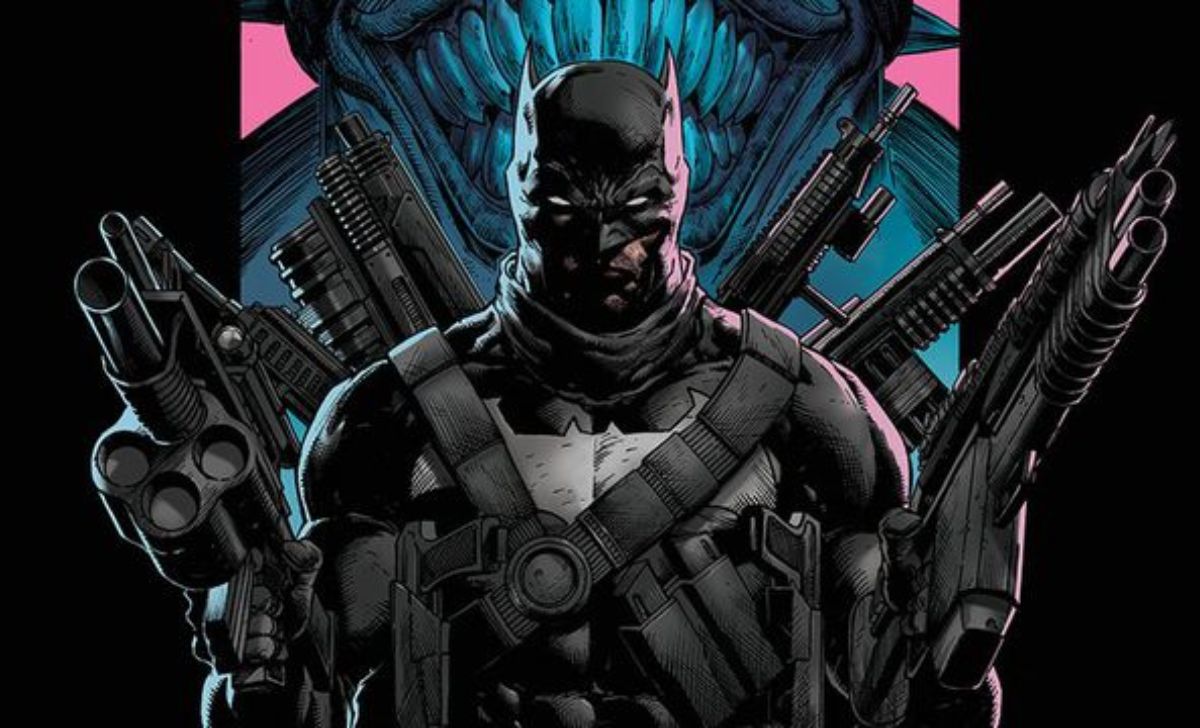
The origin of the Grim Knight represents one of the darkest and most terrifying interpretations of Batman ever conceived. This lethal vigilante from the Dark Multiverse combines Batman’s tactical brilliance with the Punisher’s kill-first mentality, earning the title of “the deadliest man alive” from the Batman Who Laughs. Unlike other Dark Knights who gained their powers through supernatural corruption or cosmic interference, the Grim Knight’s transformation stems from a single, devastating childhood decision that forever altered the trajectory of his moral compass.
The Origin: When Batman Chose Vengeance Over Justice
The Grim Knight’s origin story begins with the same tragic night that shaped every version of Bruce Wayne across the multiverse – the murder of Thomas and Martha Wayne in Crime Alley. However, this particular version of events takes a horrific turn that would define the Grim Knight’s entire existence. When Joe Chill gunned down Bruce’s parents, he made a fatal mistake that would doom his universe to tyranny.
After shooting the Waynes, Joe Chill became distracted by Martha Wayne’s scattered pearls, dropping his gun as he greedily collected the jewelry. In this crucial moment, young Bruce Wayne faced a choice that no child should ever confront. Instead of being paralyzed by fear like his Prime Earth counterpart, this Bruce was consumed by rage. He picked up Joe Chill’s discarded weapon and shot his parents’ murderer dead.
This single act of vengeance fundamentally changed Bruce Wayne’s psychological development. Where the traditional Batman was forged by trauma and a desire for justice, the Grim Knight was born from murder and the intoxicating rush of power that came from holding a gun. The weapon became a symbol not of fear and helplessness, but of ultimate control over life and death.
The defining moment came later when Bruce was contemplating his future as a crime fighter. As he sat wounded in his study, surrounded by an array of firearms, a bat crashed through his window. Instead of seeing this as a sign to become a creature of the night who inspired fear through mystery, Bruce drew his pistol and shot the bat dead. This act crystallized his philosophy – he would become Batman, but a Batman who killed without hesitation.
Early Years: The Making of a Killer
Following his parents’ death, the Grim Knight embarked on a globe-spanning training regimen that differed significantly from traditional Batman’s journey. Rather than learning martial arts and detective techniques from monks and masters who emphasized restraint and justice, this Bruce sought out the world’s deadliest assassins, mercenaries, and soldiers. He studied under killers who taught him not just how to fight, but how to execute efficiently and without mercy.
The Grim Knight’s training focused on weapons mastery, with particular emphasis on firearms, explosives, and tactical warfare. He learned from the best killers money could buy, absorbing their knowledge of death-dealing while maintaining his own strategic genius. This combination of Bruce Wayne’s intellect with the mindset of a professional killer created something far more dangerous than either element alone.
Upon returning to Gotham, the Grim Knight began his war on crime with unprecedented brutality. His first major public appearance involved attacking a gathering of Gotham’s corrupt elite – judges, politicians, and wealthy criminals who had escaped justice through their connections and wealth. Rather than exposing their crimes or finding ways to bring them to legal justice, the Grim Knight simply burned them all alive.
Powers and Abilities
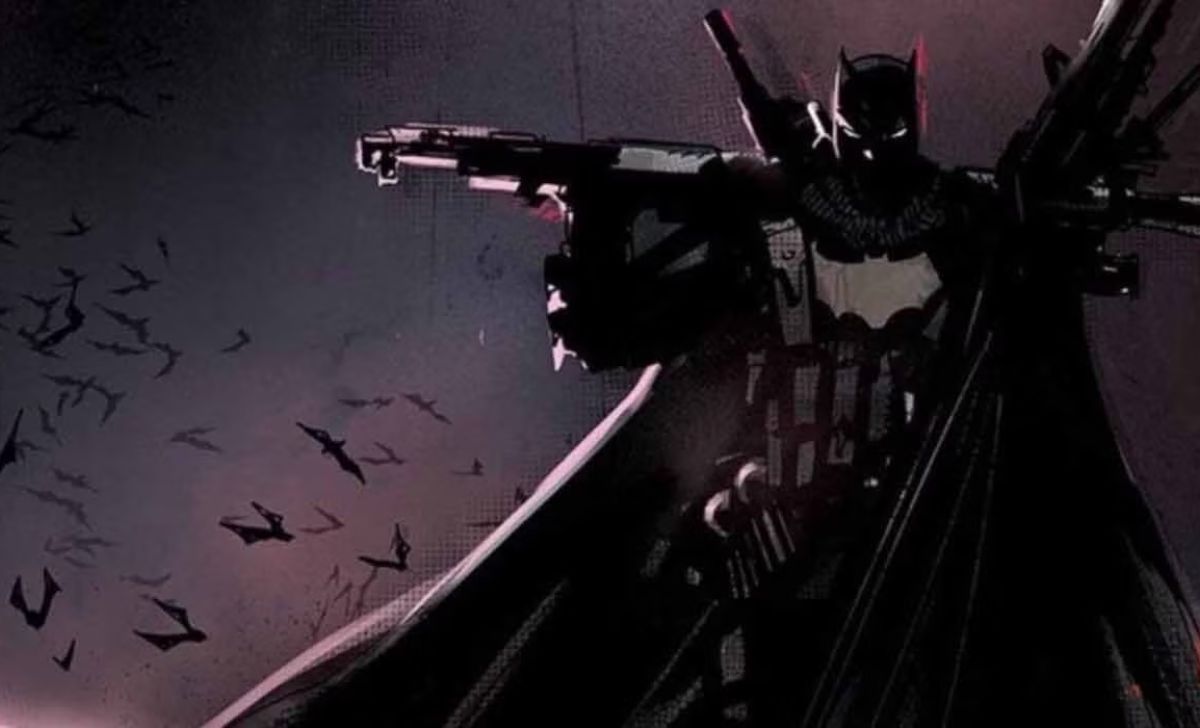
The Grim Knight possesses all of Batman’s traditional abilities enhanced by his complete willingness to use lethal force. His intelligence rating matches that of the Prime Earth Batman, making him a master strategist and detective. However, his approach to problem-solving differs fundamentally – where Batman seeks to incapacitate and capture, the Grim Knight simply eliminates obstacles permanently.
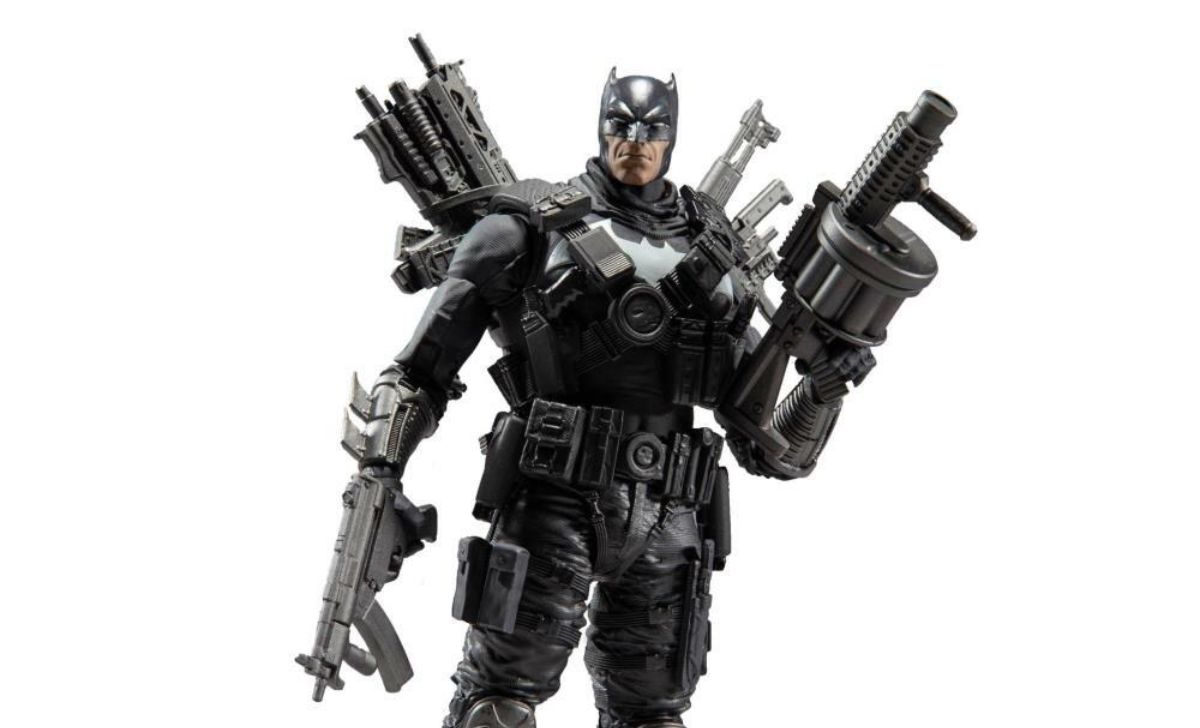
His combat skills reflect his lethal training. The Grim Knight demonstrates expert marksmanship with all forms of weaponry, though he particularly favors firearms and thrown weapons. Unlike Batman’s preference for batarangs, the Grim Knight uses knives and other bladed weapons designed to kill rather than disable. His hand-to-hand combat abilities, while formidable, rely heavily on lethal techniques learned from assassins rather than the defensive martial arts favored by traditional Batman.
The Grim Knight’s greatest asset remains his strategic mind combined with the vast resources of Wayne Enterprises. He uses advanced technology and weaponry unavailable to most vigilantes, creating an arsenal tailored specifically for lethal engagement. His suit incorporates military-grade armor and weapons systems, transforming him into a one-man army.
His tactical approach eliminates many of Batman’s traditional weaknesses. Where Batman must constantly balance between stopping criminals and avoiding lethal force, the Grim Knight simply kills any threat, allowing him to operate with ruthless efficiency. This philosophical difference makes him extremely dangerous, as he faces none of the moral constraints that limit other versions of Batman.
The Grim Knight’s Gotham: A City Under the Gun
Under the Grim Knight’s rule, Gotham became a police state where crime was met with immediate execution. His efficiency in eliminating criminal elements was so thorough that he never developed the colorful rogues’ gallery that defines traditional Batman stories. The Joker never emerged because the Grim Knight killed the Red Hood before he could fall into the chemical vat at Ace Chemicals. Two-Face never developed because Harvey Dent, while scarred, became a puppet mayor under the Knight’s control rather than a criminal mastermind.
The Grim Knight systematically eliminated Gotham’s criminal infrastructure before it could fully develop. Carmine Falcone, Tony Zucco, Oswald Cobblepot, Roman Sionis, and Waylon Jones all died before they could establish themselves as major threats. This preemptive approach to crime fighting created a Gotham free of supervillains but ruled through fear and tyranny.
The Wayne Enterprises connection proved crucial to the Grim Knight’s control over the city. He integrated Wayne technology into Gotham’s infrastructure, from police weapons to surveillance systems, giving him unprecedented oversight and control. This technological dominance allowed him to monitor the entire city and eliminate threats before they could fully manifest.
The Grim Knight’s methods extended to psychological warfare as well. He destroyed both Arkham Asylum and Blackgate Penitentiary, killing every incarcerated criminal to send a message that there would be no second chances under his rule. These acts of mass murder served as warnings to anyone considering criminal activity in his Gotham.
Major Story Arcs
The Batman Who Laughs Series
The Grim Knight’s primary storyline unfolds in Scott Snyder’s “The Batman Who Laughs” miniseries, where he serves as the secondary antagonist recruited by the titular villain. The Batman Who Laughs specifically chose the Grim Knight as his lieutenant because of his deadly efficiency and lack of moral constraints. This partnership represents the fusion of Batman’s worst fears – losing his moral compass (the Batman Who Laughs) and becoming a killer (the Grim Knight).
In this arc, the Grim Knight’s role involves corrupting Prime Earth’s Gotham while the Batman Who Laughs works to transform the Prime Earth Batman. The Grim Knight takes particular pleasure in hunting Commissioner Jim Gordon, whom he sees as representing everything he despises about law enforcement’s weakness. His capture and torture of Gordon serves both as psychological warfare against Batman and personal revenge against the type of person who had opposed him in his own universe.
The storyline explores the Grim Knight’s obsession with proving his methods superior to traditional law enforcement. He demonstrates his surveillance capabilities by showing Gordon that he had been watching not only the Commissioner but also his daughter Barbara, highlighting how his technological resources make resistance seemingly impossible.
The Grim Knight One-Shot
The dedicated “Batman Who Laughs: The Grim Knight” one-shot issue provides detailed backstory explaining how this version of Bruce Wayne became the Dark Multiverse’s most efficient killer. Written by Scott Snyder and James Tynion IV with art by Eduardo Risso, this issue reveals the psychological journey from traumatized child to merciless executioner.
The one-shot explores the Grim Knight’s relationship with his world’s Jim Gordon, showing how even good people can become enemies when faced with absolute power. In his universe, Jim Gordon represented the last bastion of moral authority opposing the Grim Knight’s reign of terror. The conflict between them demonstrates what happens when unstoppable force meets immovable moral principles.
This story arc also reveals the Grim Knight’s one weakness – his inability to kill Alfred despite the butler’s opposition to his methods. This moment of mercy, born from genuine emotional attachment, ultimately led to his downfall when Alfred provided information that helped Gordon expose Bruce Wayne’s identity.
Dark Nights: Death Metal
The Grim Knight returns in the “Death Metal” event as part of the Dark Knights serving Perpetua and the Batman Who Laughs. In this cosmic-scale storyline, he operates alongside other evil Batmen in their attempt to reshape the multiverse according to their twisted visions. His role emphasizes his position as the most tactically sound of the Dark Knights, serving as their military strategist and field commander.
During Death Metal, the Grim Knight’s weapons expertise and lack of moral constraints make him particularly valuable in large-scale combat scenarios. His approach to warfare – eliminate all enemies efficiently without regard for collateral damage – proves effective in the apocalyptic battles that define this event.
The Jim Gordon Conflict: When Good Opposes Evil
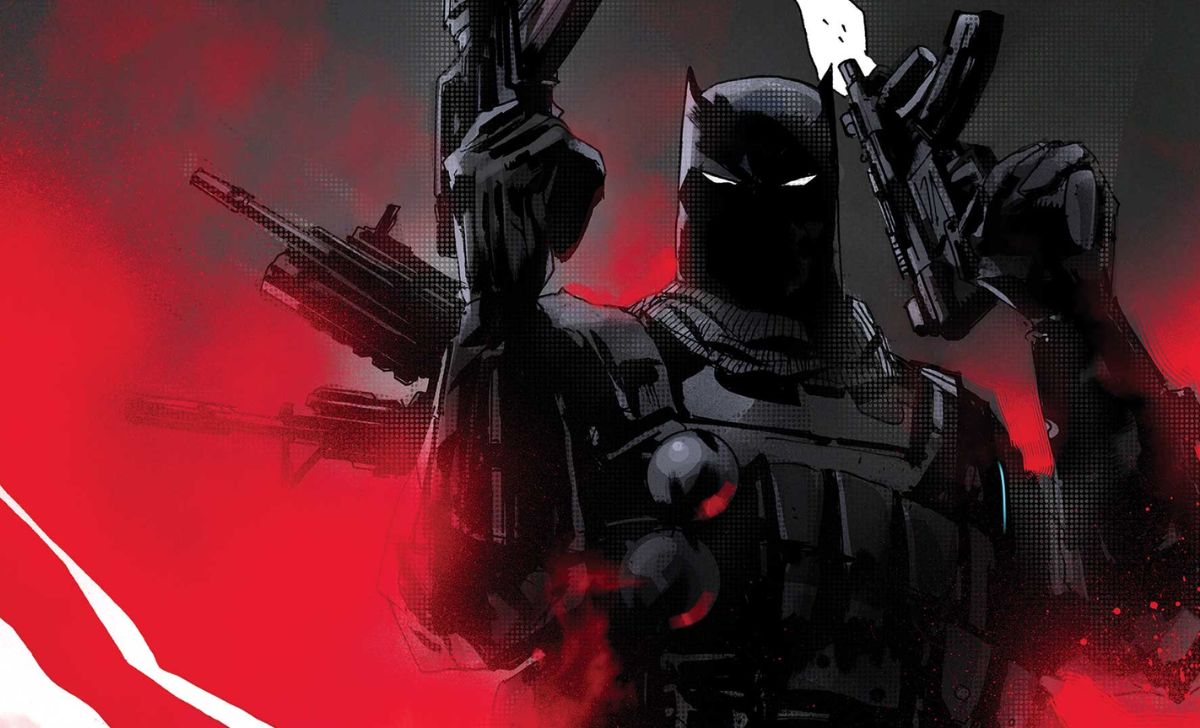
The relationship between the Grim Knight and Jim Gordon represents the story’s core moral conflict. In the Grim Knight’s universe, Gordon initially supported Batman’s crime-fighting efforts, as did most of the GCPD who appreciated how the vigilante made their jobs easier by eliminating criminals. However, Gordon eventually recognized the dangerous precedent being set and chose to oppose the Grim Knight despite the personal risk.
Gordon’s investigation into the Grim Knight showcased traditional police work at its best. Despite lacking the Knight’s resources or technological advantages, Gordon used intelligence, determination, and moral courage to piece together Bruce Wayne’s secret identity. His methods represented everything the Grim Knight had rejected – patient investigation, building cases through evidence, and working within legal systems rather than circumventing them.
The final confrontation between Gordon and the Grim Knight revealed the fundamental weakness in the latter’s approach. Despite all his weapons training and tactical preparation, the Grim Knight never truly mastered hand-to-hand combat because he always relied on firearms. When Gordon disarmed him during their final confrontation, the supposedly superior vigilante proved vulnerable to a determined opponent willing to fight for his principles.
Gordon’s victory over the Grim Knight demonstrates that moral authority and courage can triumph over technological superiority and ruthless efficiency. This defeat explains the Grim Knight’s obsession with Gordon variants across the multiverse – they represent his greatest failure and the living proof that his methods are not invincible.
Major Enemies and Adversaries
Jim Gordon – The Moral Opposition
Jim Gordon stands as the Grim Knight’s primary nemesis across multiple storylines. Unlike traditional Batman villains who represent chaos or criminal intent, Gordon embodies law, order, and moral authority. This makes him particularly threatening to the Grim Knight’s worldview because Gordon proves that justice can exist without murder.
The conflict between Gordon and the Grim Knight operates on multiple levels. Professionally, Gordon represents proper law enforcement procedure and constitutional protections that the Knight views as obstacles to true justice. Personally, Gordon serves as a moral compass pointing toward the path the Grim Knight abandoned when he chose vengeance over justice in Crime Alley.
Gordon’s investigation techniques contrast sharply with the Grim Knight’s approach. Where the Knight uses surveillance technology and intimidation to gather information, Gordon employs traditional detective work, witness interviews, and evidence analysis. This methodical approach ultimately proves more effective than the Knight’s high-tech shortcuts.
The Batman Who Laughs – Ally and Master
While technically an ally rather than an enemy, the relationship between the Grim Knight and the Batman Who Laughs reveals important aspects of both characters. The Batman Who Laughs recognizes the Grim Knight as a useful tool but never views him as an equal partner. This dynamic creates tension that occasionally surfaces in their interactions.
The Batman Who Laughs represents corruption through external influence (Joker toxin), while the Grim Knight embodies corruption through personal choice. Their partnership demonstrates how different forms of Batman’s potential downfall can work together while maintaining distinct motivations and methods.
The Grim Knight’s willingness to serve the Batman Who Laughs reveals his psychological need for structure and authority. Despite his apparent independence, he functions better as a lieutenant following orders than as a solo operator making all decisions himself.
Prime Earth Batman – The Path Not Taken
The Grim Knight’s conflict with Prime Earth Batman operates on a deeply personal level. Prime Batman represents everything the Knight rejected – moral constraints, non-lethal methods, and faith in redemption rather than punishment. Their confrontations force both characters to confront alternate versions of themselves.
For Prime Batman, the Grim Knight represents his darkest fears made manifest. The Knight demonstrates what Batman could become if he ever crossed the line and started killing, showing how quickly heroism can transform into tyranny. This psychological warfare proves as dangerous as any physical threat.
The Grim Knight views Prime Batman as weak and ineffective, constantly allowing criminals to escape and cause further harm. However, he also seems to understand that Prime Batman’s approach requires greater strength of character, making their conflict more complex than simple hero-versus-villain dynamics.
The Dark Multiverse Context
The Grim Knight’s origin in the Dark Multiverse provides important context for understanding his character and role in DC’s larger mythology. The Dark Multiverse represents failed timelines and broken worlds where hope has been extinguished and dark impulses triumph over heroic ideals. The Grim Knight’s universe exemplifies this concept by showing what happens when Batman’s dedication to justice becomes perverted into an obsession with control.
Unlike other Dark Knights who gained supernatural powers or were transformed by external forces, the Grim Knight represents a purely human corruption. His transformation required no cosmic interference or supernatural manipulation – only a single moment of choosing vengeance over justice. This makes him perhaps the most disturbing of the Dark Knights because his fall required only human weakness rather than extraordinary circumstances.
The Grim Knight’s recruitment by the Batman Who Laughs demonstrates how the Dark Multiverse’s inhabitants can influence Prime Earth. His presence in Prime Earth’s Gotham serves as both a direct threat and a psychological weapon designed to corrupt the Prime Batman by showing him an alternate path.