

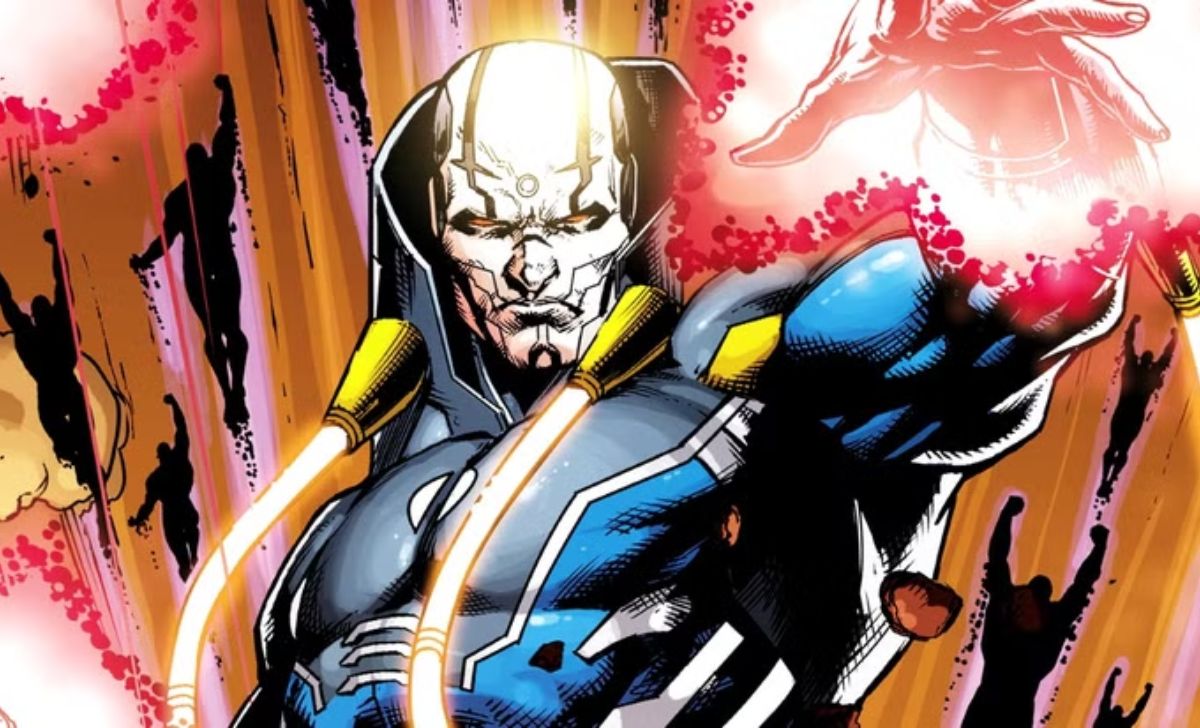
The Anti-Monitor’s origin is one of the most significant stories in DC Comics, as the blog “Origin Of The Anti-Monitor In DC Comics” will explore in detail. The character’s cosmic beginnings and cataclysmic impact make him a pivotal force in the largest DC crises, most notably “Crisis on Infinite Earths”—a saga that changed the DC Multiverse forever .
Creation and First Appearance
The Anti-Monitor was created by George Perez, Marv Wolfman, and Jerry Ordway, making his debut in “Crisis on Infinite Earths” issue 2 in May 1985. His roots stretch back to the birth of the DC Universe itself, stemming from an experiment by an Owen scientist named Crona. Crona’s device was meant to observe the source of creation but instead triggered a monumental explosion on OA, birthing both the antimatter universe and the multiverse .
The Antimatter Universe and Birth
After Crona’s disastrous experiment, the planet OA was thrust into turmoil. The Owens split—some championed justice, while others, indifferent to evil, fled to the antimatter universe and settled on the planet Qward, at its center. In this new universe, a surge of energy on one of Qward’s moons gave rise to the Anti-Monitor. Simultaneously, on a moon in the positive matter universe, his counterpart, the Monitor, was born .
Rise to Power and the Million-Year War
Once born, the Anti-Monitor quickly seized control of Qward, forging an army called the Thunderers. The most formidable became living shadows, serving his ambition to conquer. Driven by his insatiable hunger for dominance, the Anti-Monitor launched a war against the Monitor that raged for one million years, a reflection of their eternal opposition .
“Crisis on Infinite Earths” and the Multiverse
The “Crisis on Infinite Earths” storyline was introduced not just as a narrative but as a practical solution to streamline DC’s muddled continuity. Within this arc, the Anti-Monitor becomes aware of a rift between the antimatter and positive matter universes and sees his chance for multiversal conquest. Sending waves of antimatter, he destroys realities and aims to reign supreme. The Monitor, protector of balance, fights back by recruiting heroes from across time and space to merge the multiverse—redefining DC’s narrative landscape .
Defeat and Legacy
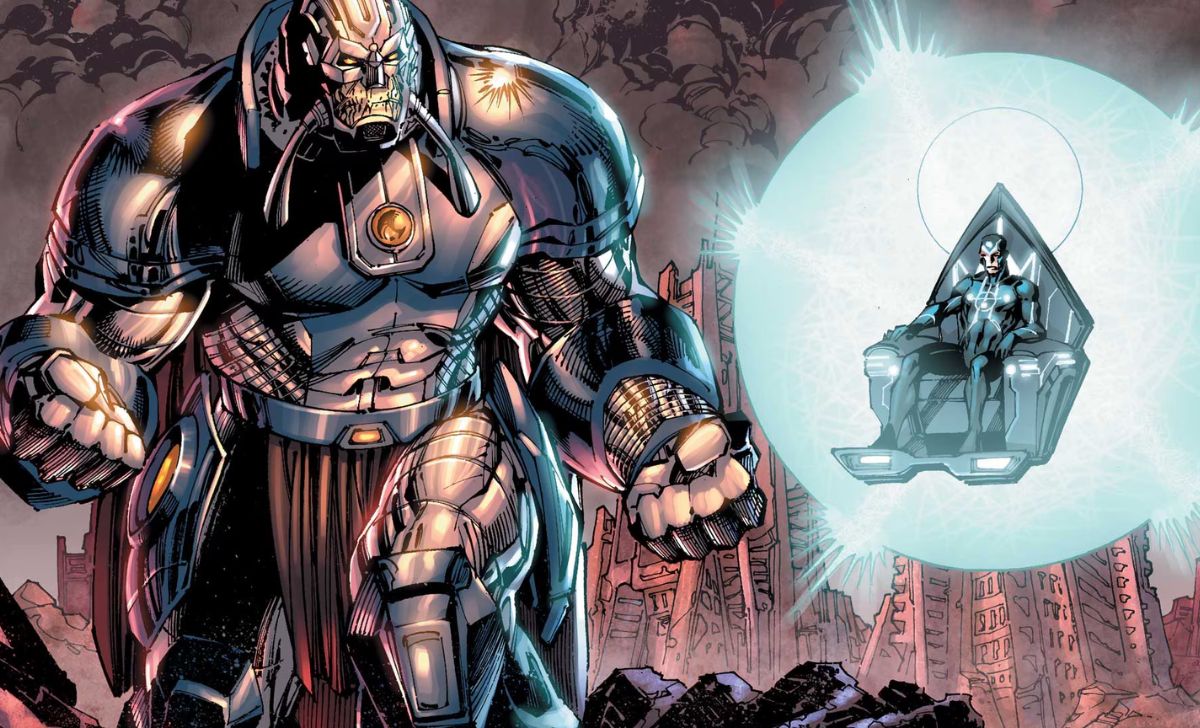
The climactic battle in “Crisis on Infinite Earths” leads to the Anti-Monitor’s eventual defeat. Reduced to a flaming head, he’s destroyed by Earth-Two Superman, demonstrating the unstoppable power of DC’s iconic heroes. The aftermath redefined the DC Universe by merging its parallel worlds, yet the Anti-Monitor’s legacy continued as he remained a threat to cosmic order .
Modern Continuity and Cosmic Origins
Recent comics (as of 2019) reveal the Anti-Monitor, Monitor, and World Forger share a common mother: Perpetua, a super celestial being who predated Earth Zero. She crafted the multiverse and her three children, deepening the cosmic connections of DC’s continuity. Perpetua’s story elevates the Anti-Monitor’s origins, placing him as the instrument and offspring of multiversal creation .
Powers and Abilities
The Anti-Monitor stands among DC’s five most powerful entities. His feats include destroying and absorbing thousands of universes, overwhelming armies of superheroes, and manipulating reality itself. By absorbing universes, he became even stronger than the Monitor. His influence spans major events: as a villain in the original Crisis, a guardian for the Sinestro Corps, and the source behind the Black Lantern Corps’ central battery .
Recommended Reading
For those eager to understand the Anti-Monitor’s full scope and impact, must-read storylines include:
- “Crisis on Infinite Earths”—the original multi-universe catastrophe .
- “Darkseid War”—which explores further cosmic battles and consequences .
The Anti-Monitor’s saga—filled with cosmic birth, multiversal warfare, and catastrophic power—remains essential for fans of DC’s vast universe .