

Spider-Man’s web shooters represent one of the most iconic and influential gadgets in comic book history. Since the origin of Spider-Man’s web shooter, these remarkable devices have evolved significantly since their debut in 1962, transforming from simple mechanical contraptions into sophisticated technological marvels while sparking decades of debate about their organic versus artificial nature.
The Birth of an Icon: Amazing Fantasy #15
Peter Parker first unveiled his revolutionary web shooters in Amazing Fantasy #15, published in August 1962. Stan Lee and Steve Ditko created these devices as essential tools for their new teen superhero, recognizing that Spider-Man needed more than just wall-crawling abilities and super strength to truly embody his arachnid inspiration.
The origin story shows Peter Parker crafting his web shooters with remarkable speed and precision. After gaining his spider powers from a radioactive spider bite, Peter recognizes that “a spider needs a web” and immediately sets to work creating his signature devices. The comic depicts him testing the web shooters in his bedroom, dangling from a strand attached to his ceiling while proclaiming, “Only a science major could have created a device like this!”
Steve Ditko’s Revolutionary Design
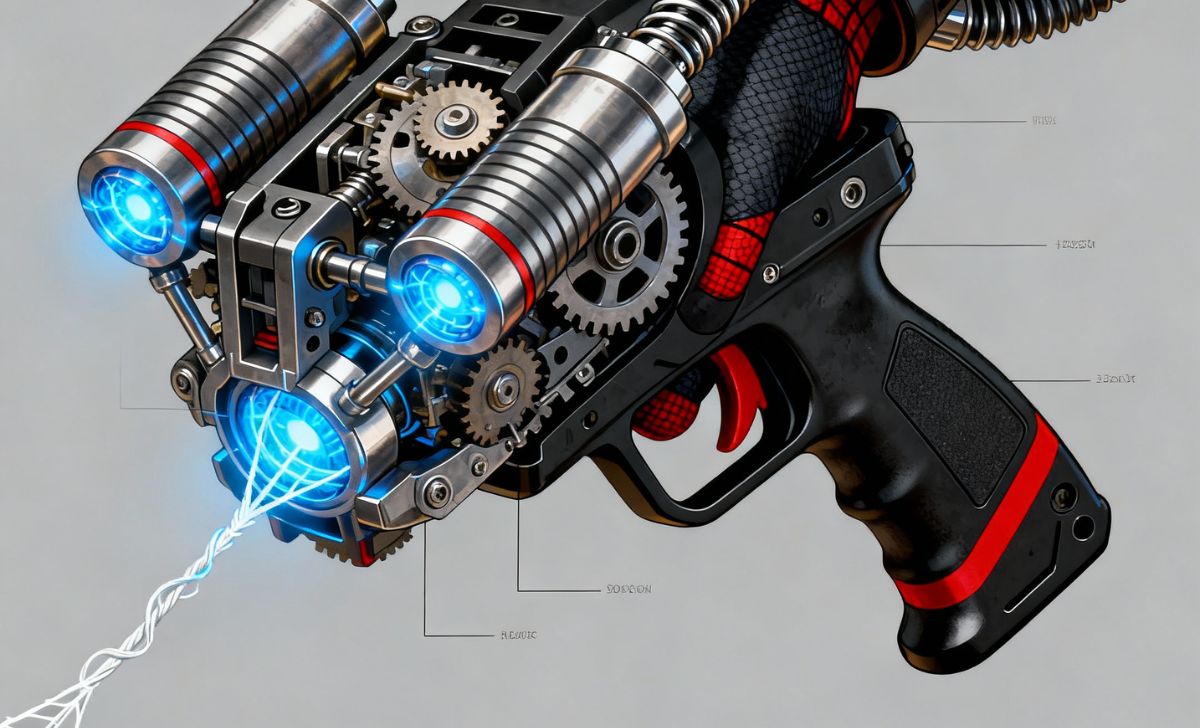
Steve Ditko deserves significant credit for the web shooter concept and design. Originally, Stan Lee had approached Jack Kirby to design Spider-Man, but Kirby’s version featured a web gun rather than wrist-mounted devices.
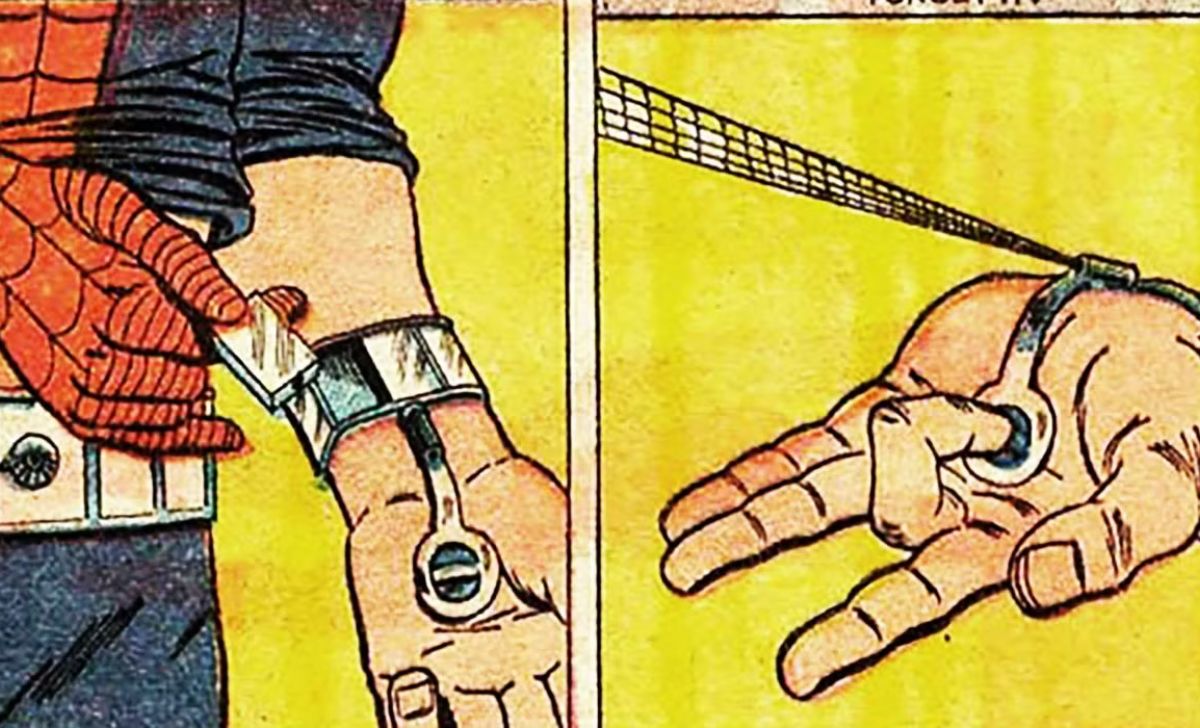
When Ditko took over the project, he created the iconic wrist-mounted design that became synonymous with Spider-Man. Eric Stanton, Ditko’s studio mate, later claimed he contributed the idea of “webs coming out of his hands,” though the extent of his actual involvement remains debated. Ditko’s design featured bulky wrist-mounted devices that could fire various types of webbing, establishing the template for all future iterations.

The Science Behind the Web
Peter Parker’s web fluid formula represents one of the most impressive scientific achievements in comic book history. The original comics established that Peter created a synthetic webbing that matched the proportional strength of actual spider silk. Amazing Spider-Man Annual #1 revealed that Peter had studied spider webs so extensively that he became “probably the world’s leading expert” on the subject while still in high school.
The web fluid cartridges Parker creates compress this synthetic material into small, portable containers that he carries on his belt. The web shooters allow him to control the spray pattern, creating everything from fine mists to thick ropes capable of supporting his weight during web-swinging. The distinctive “thwip” sound effect became an integral part of the Spider-Man experience.
Mechanical vs. Organic: The Great Debate
The debate between mechanical and organic web shooters has raged for decades, with compelling arguments on both sides. The mechanical web shooters serve multiple narrative and character development purposes that extend far beyond simple functionality.
Advantages of Mechanical Web Shooters
Mechanical web shooters showcase Peter Parker’s intellect and scientific prowess. They demonstrate that Spider-Man relies not just on his superhuman abilities but also on his genius-level intelligence to be an effective hero. The devices create numerous storytelling opportunities, as they can malfunction, run out of web fluid, or be damaged during battles.
The mechanical nature also adds vulnerability that makes Spider-Man more relatable and human. When his web shooters fail at crucial moments, it creates dramatic tension and forces Peter to rely on his other abilities and quick thinking. Additionally, the web shooters can be upgraded with different types of webbing for specific situations, from fireproof variants to electrical conductors.
The Case for Organic Webbing
Organic web shooters gained prominence through Sam Raimi’s Spider-Man film trilogy, which featured Tobey Maguire’s Peter Parker producing webs naturally from his wrists. Raimi justified this change by arguing that Peter’s spider bite should logically include the spider’s primary hunting mechanism – web production.
Organic webbing eliminates the practical problems of running out of web fluid during critical moments. It also makes the web-shooting ability more intrinsic to Spider-Man’s power set, similar to how spiders naturally produce silk. Furthermore, organic web shooters are much easier to conceal, requiring no bulky mechanical devices that could compromise Peter’s secret identity.
Evolution Through the Decades
The Silver Age Foundation (1962-1970)
The original web shooters featured a relatively simple design with visible web fluid cartridges and basic firing mechanisms. These early versions established the core functionality while Ditko’s artwork emphasized their mechanical nature through detailed breakdowns of how Peter manufactured and maintained them.
Bronze Age Refinements (1970-1985)
Artists like John Romita Sr. streamlined the web shooter design, making them less bulky while maintaining their essential functionality. The devices became more integrated into Spider-Man’s costume design, with artists experimenting with different visual approaches to the wrist-mounted technology.
The Organic Experiment (2001-2007)
J. Michael Straczynski’s run on Amazing Spider-Man introduced organic web shooters to the main Marvel continuity in 2001. This controversial change aligned the comics with the popular Raimi films but divided longtime fans who preferred the mechanical approach. The organic webbing storyline explored themes of Peter accepting his spider nature more fully.
Modern Era Innovations (2007-Present)
Following the conclusion of Straczynski’s run, Marvel returned Spider-Man to mechanical web shooters while incorporating lessons learned from both approaches. Modern iterations feature more sophisticated designs with computer-controlled firing mechanisms and advanced web fluid formulations.
Technological Marvels: The MCU Revolution
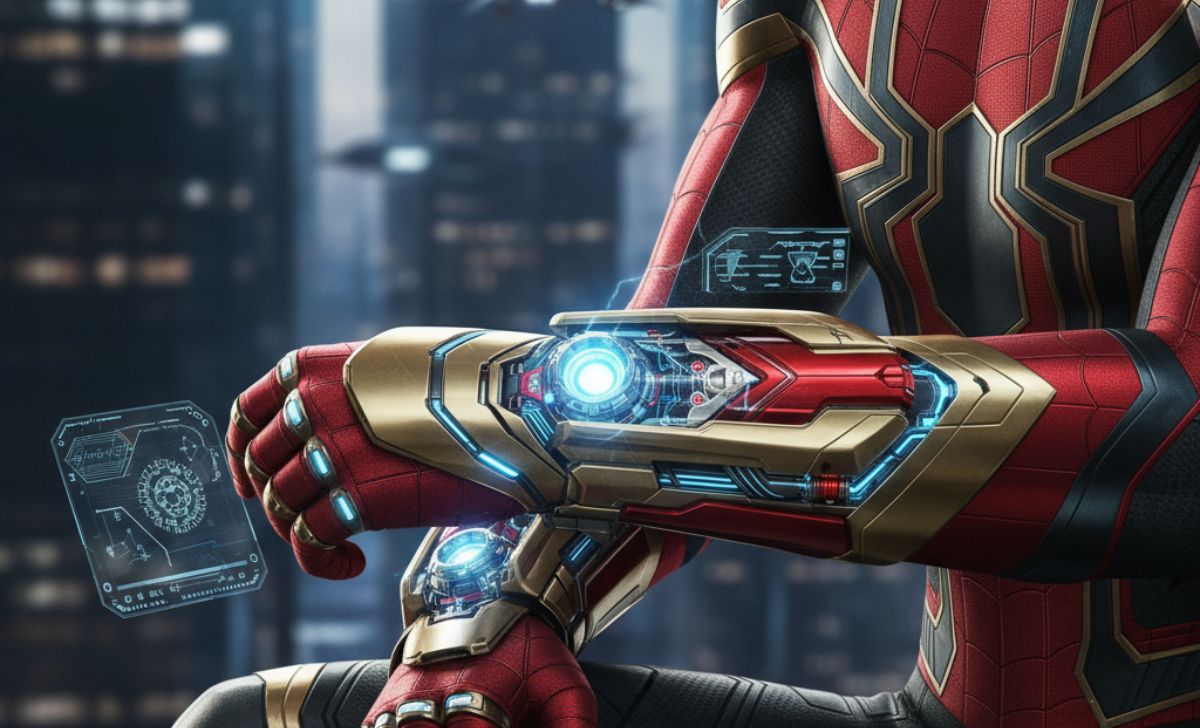
The Marvel Cinematic Universe revolutionized Spider-Man’s web shooters through Tony Stark’s advanced designs. These high-tech devices represent the pinnacle of web shooter evolution, featuring over 570 different web combinations accessible through voice commands and gesture controls.
Stark Industries Innovation
Tony Stark’s web shooters include revolutionary features like taser webs that deliver electrical shocks, web grenades for area-of-effect restraint, and ricochet webs that bounce off surfaces to reach difficult targets. The devices also produce spider tracers for tracking enemies and can generate holographic displays for tactical information.
The MCU web shooters maintain Peter’s original scientific contributions while enhancing them with Stark technology. Peter created the base web fluid formula and initial mechanical designs, which Tony then upgraded with advanced materials and computerized controls.
Alternative Universe Variations
Ultimate Spider-Man
The Ultimate universe presented a unique take on web shooter origins, having Peter discover his father’s web fluid formula rather than inventing it independently. This approach provided a more plausible explanation for how a teenager could create such advanced technology while maintaining the mechanical web shooter tradition.
Spider-Man 2099
Miguel O’Hara’s futuristic Spider-Man featured organic web shooters that emerged from the tops of his hands rather than his wrists. This design reflected the character’s genetic modification origin while providing a fresh take on the web-shooting concept.
Silk and Other Spider-Heroes
Characters like Cindy Moon (Silk) demonstrate how organic webbing can work differently across various spider-powered heroes. Silk’s organic webs emerge from her fingertips and possess different properties than traditional Spider-Man webbing, showing the versatility of the concept.
Manufacturing and Practical Considerations
The logistics of Peter Parker’s web shooter creation raise fascinating questions about resource acquisition and manufacturing. Comic stories rarely address how a financially struggling teenager obtains the materials needed for such sophisticated devices, leading to various creative explanations across different continuities.
Some interpretations suggest Peter scavenges materials from discarded electronics and industrial waste. Others propose that his scientific genius allows him to create effective substitutes using common household chemicals and repurposed components. The MCU addresses this by having Peter initially create crude but functional versions before receiving Stark upgrades.
Cultural Impact and Legacy
Spider-Man’s web shooters have inspired countless real-world attempts at recreation, from simple toy versions to sophisticated engineering projects. Scientists and inventors continue working to develop functional web-shooting devices, though none have achieved the fictional capabilities of Peter Parker’s creations.
The ongoing mechanical versus organic debate reflects deeper themes about technology, human enhancement, and the nature of superhero abilities. This discussion has influenced how other comic book characters approach similar power sets and technological augmentation.
The Future of Web-Shooting Technology
Modern Spider-Man stories continue evolving web shooter technology to match contemporary scientific understanding and technological capabilities. Advanced materials science, nanotechnology, and smart manufacturing techniques provide new possibilities for how these devices might function in future iterations.
The integration of artificial intelligence, as seen in the MCU’s Karen AI system, represents another frontier for web shooter development. These smart systems can analyze situations and automatically select appropriate web types, making the devices more responsive and effective.