
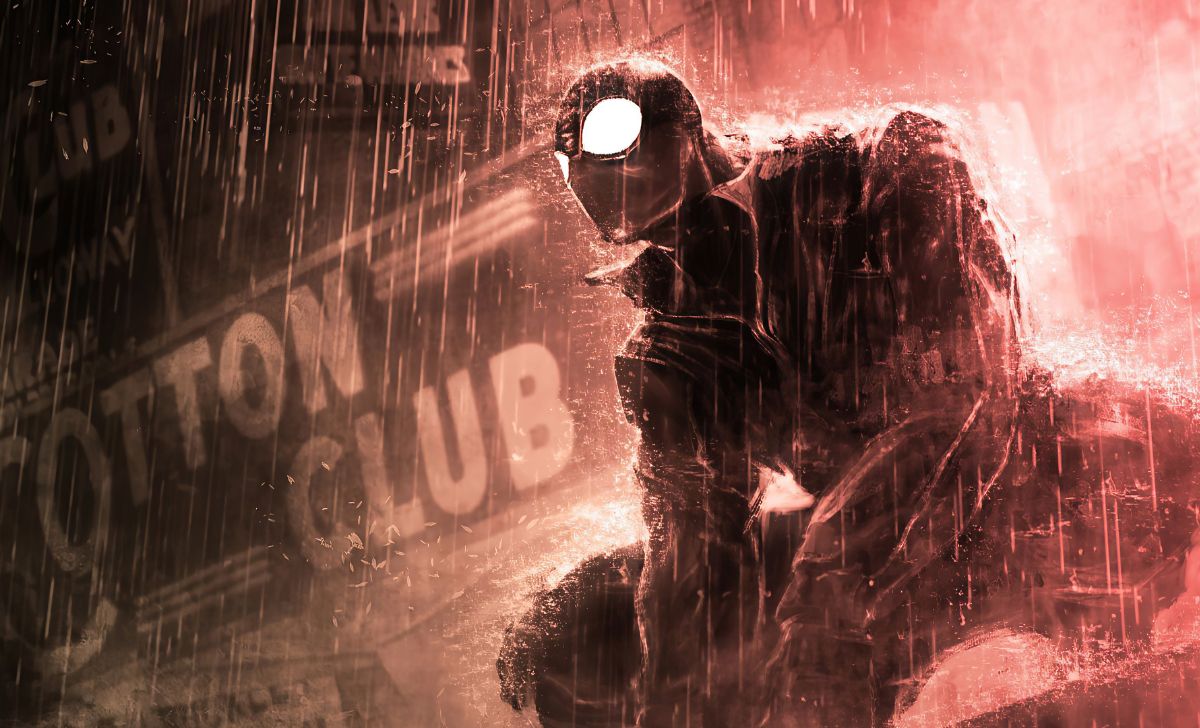
Spider-Man Noir isn’t your friendly neighborhood hero—he’s a hardened vigilante shaped by corruption, injustice, and the Great Depression itself. This moody reimagining of Peter Parker’s story strips away the gloss of modern superhero life and dives headfirst into a gritty, noir-infused world where moral lines blur as easily as ink on wet paper. But where did this shadowy version of Spider-Man come from, and how did he spin his way into Marvel lore? Let’s trace the origins of Spider-Man Noir—the Spider who fights crime in a city that never sees the light.
The Birth of Spider-Man Noir
In this alternate universe within the Marvel Noir imprint, Peter Parker’s story begins differently yet echoes familiar themes of loss and justice. Raised by his beloved Aunt May and Uncle Ben, Peter grew up during one of America’s bleakest eras.
Both May and Ben were social activists, devoting their lives to helping the downtrodden and speaking out against the corruption running rampant in their city. Their belief that good must always triumph over evil shaped Peter’s moral core—but tragically, this would also become their undoing.
Their activism brought them into direct conflict with Norman Osborn, a notorious crime lord known as The Goblin. Unlike the traditional Marvel version, this Goblin isn’t a cackling madman in a green suit—he’s a ruthless mob boss who thrives in the criminal underworld. His enforcers include noir versions of classic Spider-Man villains like Kraven, The Chameleon, and The Vulture, who in this grim reality is a grotesque cannibal and sideshow freak.
When Ben Parker’s efforts to expose Osborn’s brutality went too far, the Goblin retaliated in the most horrific way possible—ordering his men to torture and murder him. As if that weren’t enough, Vulture brutally devoured Ben’s remains, cementing the Spider-Man Noir universe as one of Marvel’s darkest storylines.
Tragedy Sparks a Vengeful Hero
The death of Uncle Ben ignited something fierce within Peter. The idealistic young man transformed into someone determined to confront evil head-on. Along with Aunt May, Peter survived an attempted attack from Osborn’s men thanks to Ben Urich, a hardboiled journalist working for The Daily Bugle. Urich became Peter’s mentor and guide, showing him the power of exposing crime and corruption through the press.
But destiny had other plans. One fateful night, a mysterious tip—intended for Urich—sent Peter to an abandoned warehouse. Inside, the Goblin’s henchmen were unloading stolen antiques, one of which was an eerie spider-shaped statue. As the gangsters mishandled the artifact, it shattered, releasing a swarm of ancient spiders. Chaos erupted, and as the insects attacked one of the thugs, one spider climbed up to where Peter was hiding and bit him.
This bite wasn’t an ordinary venom—it was mystical.
The Spider-God’s Curse
Peter fell unconscious and entered a haunting dream. A Spider-God appeared before him, a ghostly deity who declared, “Why do you tremble, little man? My bite brings only torment to those of evil intent—I grant you the curse of power.” When Peter awoke, he found himself cocooned in a black, web-like substance, hanging from a beam. In that eerie moment, Spider-Man Noir was truly born.
Emerging from the shadows, Peter discovered his new powers—heightened agility, improved reflexes, and an uncanny ability to sense danger. His transformation was physical and psychological. No longer just a journalist’s apprentice, he became a vigilante driven by vengeance and justice, determined to cleanse his city of corruption.
A Costume Forged in Memory
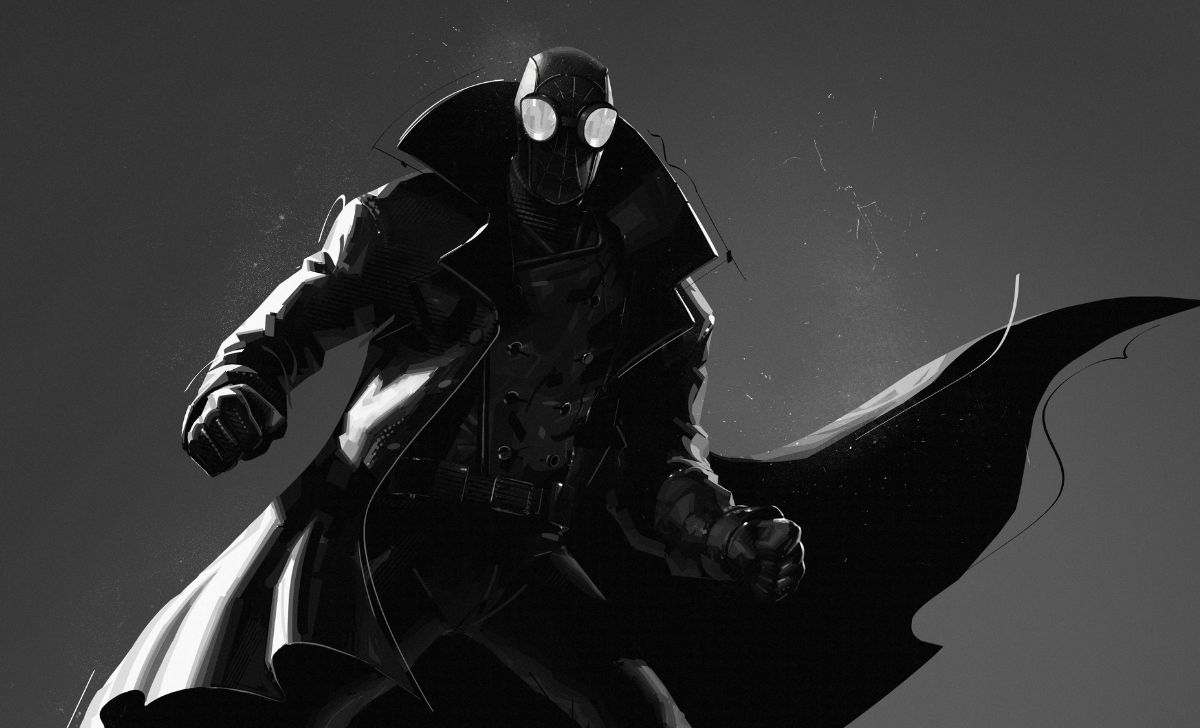
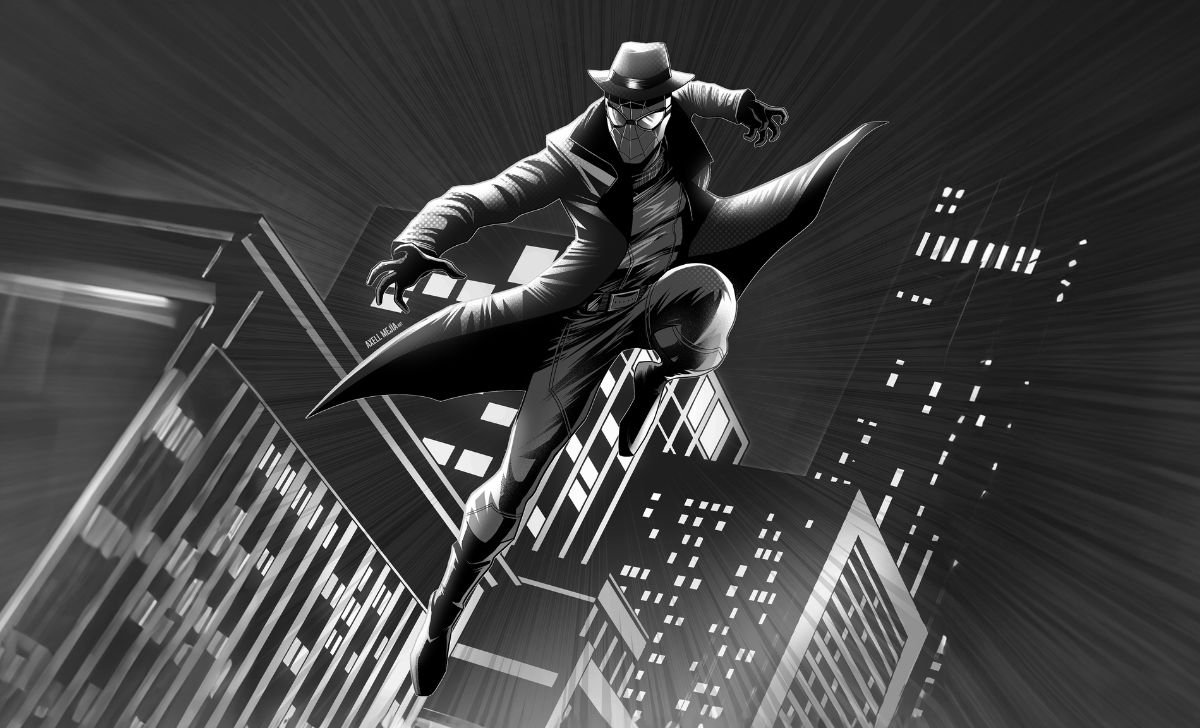
To conceal his identity, Peter crafted a costume inspired by his Uncle Ben’s World War I pilot uniform. The result? A striking look dominated by a black trench coat, leather gloves, and aviator goggles—symbolizing a soldier of justice waging war from the shadows.
Unlike his mainstream counterpart, Peter armed himself with a revolver, reflecting the harsher moral landscape of his universe. This Spider-Man wasn’t afraid to fight dirty or face the consequences of pulling the trigger when confronted by evil.
When Peter stormed Norman Osborn’s mansion to confront him, the noir tone reached its peak. As he battled Osborn’s men and landed dramatically on the Goblin’s desk, Peter delivered a chilling ultimatum: “It all stops—the extortion, the drugs, the prostitution, the rackets—all of it ends tonight.”
This wasn’t Spider-Man the comedian. This was Spider-Man the avenger.
Ben Urich’s Betrayal and the Road Ahead
However, tragedy struck once again when Peter discovered that his mentor, Ben Urich, had been secretly working with the Goblin. Addicted to drugs and consumed by guilt, Urich had been blackmailing Osborn for money to fuel his habit. For Peter, this revelation was unbearable. His respect for Urich turned to disgust, as he exclaimed, “He’s bought you. He bought you like a dog.”
Breaking ties with Urich, Peter fully embraced his identity as Spider-Man Noir—the masked shadow of justice lurking in the city’s darkness. His mission was clear: dismantle the criminal empire that had destroyed his family and corrupted his world.
The Powers of Spider-Man Noir
Spider-Man Noir possesses many of the same core powers as the original Peter Parker but with noir-specific twists.
- Superhuman Strength and Agility: He can leap great distances, deliver powerful blows, and easily overpower regular humans.
- Spider-Sense: His heightened awareness makes him nearly impossible to ambush.
- Organic Webbing: Unlike the classic Spider-Man who relies on web-shooters, Noir’s organic webbing emerges naturally, often described as a dark, shadowy silk.
- Parkour Mastery: Instead of wall-crawling in the classic sense, he relies on acrobatics, scaling walls, jumping across rooftops, and performing flips in a fluid, physical style reminiscent of urban parkour.
- Healing and Endurance: His body can recover from injury faster than a normal human, keeping him fighting even after brutal encounters.
Spider-Man Noir is a perfect blend of street-smart combat skill and supernatural agility—equal parts detective and predator.
The Noir Universe in Context
Marvel Noir offered alternate versions of numerous heroes beyond Spider-Man. Titles like Wolverine Noir, Daredevil Noir, and Punisher Noir brought readers into worlds of corruption, organized crime, and moral ambiguity.
Each series stripped away the sci-fi brightness typical of Marvel and replaced it with 1930s grit—a world of jazz clubs, gangsters, and smoky alleys. Within that framework, Spider-Man Noir stood out as the most complete reimagining, successfully translating the essence of Peter Parker into a detective-horror tone worthy of The Maltese Falcon or Sin City.
From Comic Pages to the Multiverse
Spider-Man Noir’s popularity extended far beyond his four-issue debut. He became a key player during the Spider-Verse storyline, where alternate Spider-heroes from across dimensions banded together to battle Morlun and the Inheritors—vampiric beings who hunted Spider-Totems across the multiverse.
Despite the catastrophic events, Spider-Man Noir survived, continuing his crusade as a member of the Web Warriors, a team formed by surviving Spider-heroes to protect dimensions under threat.
This inclusion solidified his place among fan-favorite Spider-People, and his appearance in Into the Spider-Verse—voiced by Nicolas Cage—cemented his legacy as a fan icon. Cage’s deadpan, hardboiled delivery gave the character an unforgettable personality that perfectly matched his comic-book origins.
Why Spider-Man Noir Works
Spider-Man Noir resonates because he captures a timeless truth about the character: Spider-Man is adaptable. Whether swinging through neon skyscrapers or stalking criminals through smog-filled alleys, Peter Parker’s moral core remains consistent—great power demands responsibility.
However, in Noir’s world, that responsibility manifests differently. Justice here isn’t about witty quips or hopeful redemption—it’s about opposing systemic evil in a shattered society. His revolver and trench coat don’t betray Spider-Man’s ideals; they embody how those ideals survive in a world devoid of light.
For readers drawn to stories of redemption, sacrifice, and the blurred line between heroism and vengeance, Spider-Man Noir offers a compelling study of what happens when a familiar symbol of hope becomes a weapon against despair.
Essential Reading for Spider-Man Noir Fans
If this mysterious version of the web-slinger intrigues you, start with these standout comics:
- Spider-Man: Noir (2009) – The original four-issue miniseries that introduces the character’s dark origins.
- Spider-Man Noir: Eyes Without a Face (2010) – The chilling sequel exploring human experimentation and moral decline.
- Edge of Spider-Verse #1 (2014) – Brings Noir back as part of the multiverse-spanning Spider-Verse event.
- Web Warriors (2015–2016) – Features Spider-Man Noir working alongside Spider-Gwen, Spider-Ham, and others.
- Protector of the Spider-Verse (Collected) – Compiles key appearances and shows Noir’s evolution as a dimensional defender.
Each of these graphic tales deepens the understanding of Noir’s conflicted spirit and how he carries the mantle of Spider-Man in a time of darkness.