
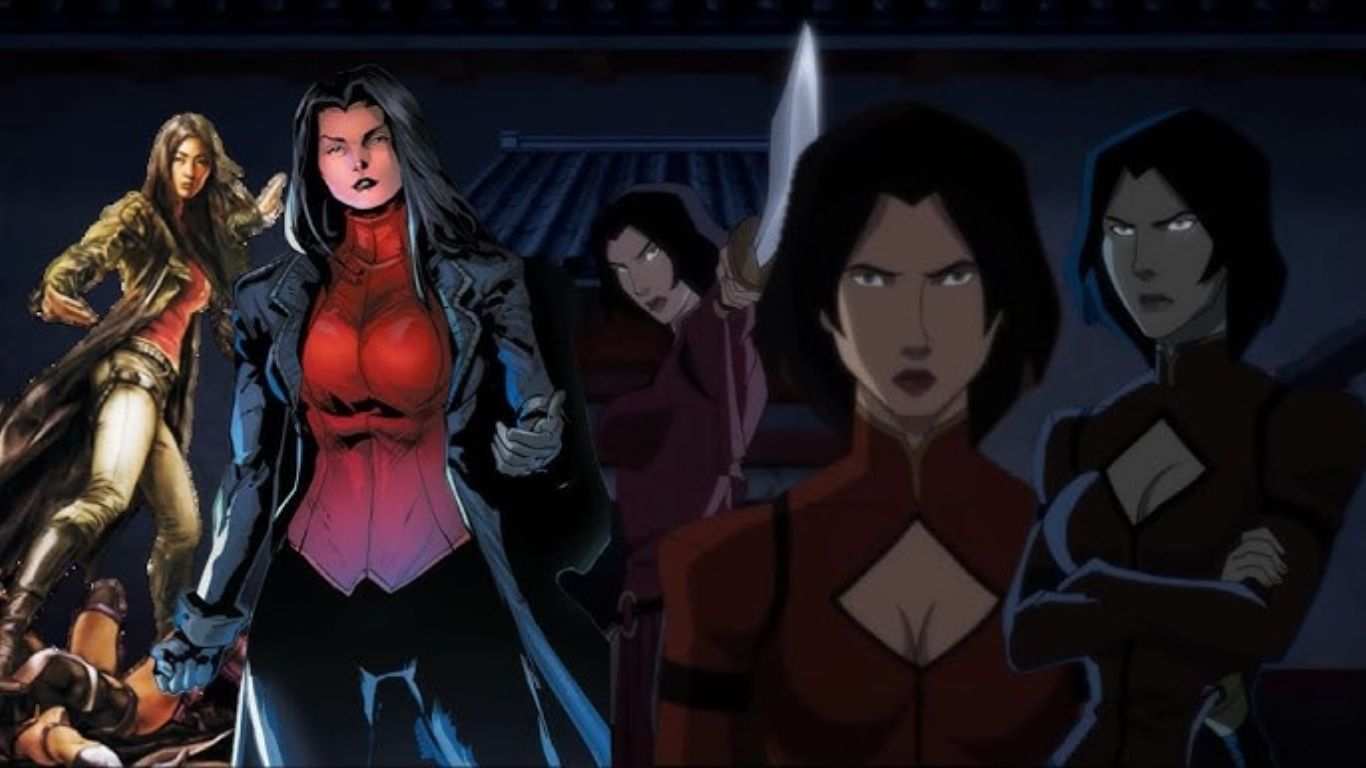
Among DC’s many master fighters, one name consistently rises above the rest: Lady Shiva. Known across the world as “the deadliest woman alive,” she is a living weapon, a philosophical warrior, and a constant measuring stick for every martial artist in the DC Universe. Lady Shiva’s origin is one of tragedy, reinvention, and relentless pursuit of perfection—told and retold across multiple continuities, but always circling the same core ideas: discipline, violence, and the search for a worthy challenge.
Despite the wording in some fan discussions, Lady Shiva is firmly a DC Comics character, with deep roots in the worlds of Batman, Richard Dragon, and the Bat-family-upstairs-by-lisa-jewell/”>Family. There is no Marvel version of Lady Shiva; she is uniquely DC’s creation.
This is a detailed look at her evolving origin, from her earliest appearances in the 1970s to the retcons that tied her to Batgirl Cassandra Cain.
Creation and First Appearance
Lady Shiva was co-created by Dennis O’Neil and Ric Estrada, debuting in Richard awakening-the-dragon-heart-legacy-book-1-by-nora-roberts/”>Dragon, Kung Fu Fighter #5 (cover-dated December 1975–January 1976). Conceived during the 1970s martial arts boom, she was introduced first as a mysterious and dangerous opponent for Richard Dragon before becoming one of DC’s most enduring martial-arts figures.
From the start, Shiva was framed not just as “a good fighter” but as something closer to a force of nature. Later official DC profiles would openly describe her as the deadliest martial artist in the DC Universe, a woman who has “never known a threat she could not overcome.” That reputation quickly elevated her from a supporting ready-player-one-by-ernest-cline/”>player in a kung-fu title to a recurring presence in books featuring Batman, The Question, Green Arrow, Birds of Prey, and others.
Her real name has been presented in various forms—Sandra Woosan, Sandra Wu-San, and in later continuity Wu Ming-Ye or Wu Ming-Yue—reflecting the way different writers have reinterpreted her background over the decades. What never changes is her role: an almost mythic combatant who moves on the edges of morality.
The Original Origin: Sister, Vengeance, and Richard Dragon
Shiva’s earliest backstory painted her as a woman shaped by family and revenge. In the pre-Crisis and early post-Crisis era, she was said to have grown up in Asia (often implied to be China), later living in Detroit with her older sister Carolyn. From childhood, the sisters trained intensely in martial arts, developing a unique, almost dance-like style of combat—graceful, fluid, and lethally precise.
Carolyn and Sandra became renowned for this style, which combined elegance with deadly efficiency. That life was shattered when Carolyn was murdered. In the earliest version of the story, she was seemingly killed by a bizarre villain and industrialist named Guano Cravat, but Shiva was led to believe that the martial artist Richard Dragon was responsible.
Fuelled by grief, Sandra dedicated herself entirely to vengeance. She pursued Dragon with the single-minded intent of killing him, honing her skills even further in the process. When they finally clashed, however, the truth emerged: Dragon had not killed Carolyn at all. Shiva had been manipulated. Faced with the reality of her misplaced hatred, she redirected her rage outward—not into guilt, but into a broader, more abstract devotion to violence and combat as a way of life.
This is around the time she fully embraced the moniker Lady Shiva, explicitly tying herself to the Hindu deity of destruction. The name choice was symbolically loaded: she was no longer just Sandra, the grieving sister. She was destruction itself, walking.
From there, Shiva’s path intertwined with Richard Dragon and fellow master fighter Bronze Tiger (Ben Turner). Rather than enemies, they gradually became uneasy allies and sometimes comrades, forming a triangle of elite martial artists whose philosophies about violence and purpose often clashed even as they respected each other’s skill.
Evolution Through The Question: Warrior, Not Just Assassin
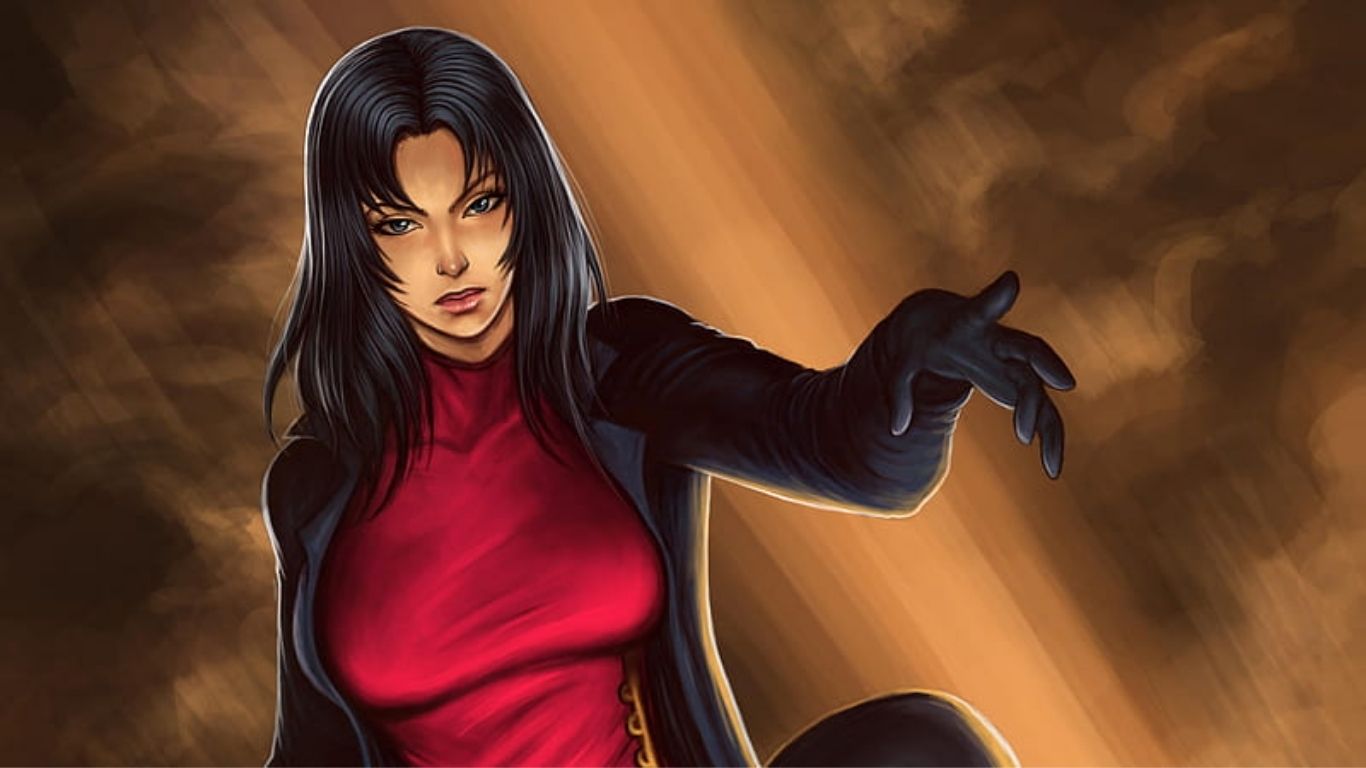
Dennis O’Neil revisited Shiva in his seminal 1980s run on The Question, deepening her characterization and moving her beyond a simple revenge-driven assassin. In these stories, she becomes closer to a wandering warrior out of wuxia fiction—someone guided by a personal code and an obsession with testing herself, rather than mere money or bloodlust.
Here she brutally beats investigative hero Vic Sage (The Question) almost to death, then indirectly sets him on the path to true martial mastery when Richard Dragon takes him under his wing. Shiva is not a mustache-twirling villain; she is a catalyst. Her actions, however brutal, often force others to grow or confront their own limits.
This era reinforced several key traits that still define Shiva today:
- She seeks worthy opponents, not random victims.
- She treats combat as both art and philosophy.
- Her morality is ambiguous but consistent—she is loyal only to the path of the warrior, not to any nation or cause.
It also cemented the idea that she might have a death wish, either consciously or subconsciously courting the one opponent who could finally end her.
The Cassandra Cain Retcon: Mother of a Living Weapon
In the late 1990s and early 2000s, DC radically expanded Shiva’s backstory by tying her directly into the origin of one of the Bat-Family’s most unique members: Cassandra Cain, the third Batgirl.
Cassandra’s backstory reveals that the mercenary David Cain was hired to create the perfect bodyguard and assassin, originally envisioned as a living weapon to serve Ra’s al Ghul. Seeking the ideal genetic and martial foundation for this child, Cain observed two sisters fighting in a martial arts tournament: Sandra Wu-San and her sister Carolyn.
Cain noticed something chilling: Sandra was holding back for her sister, fighting below her true level. Convinced that Sandra’s full potential could only be unlocked through deep trauma and loss, he murdered Carolyn and then lured Sandra into a trap.
He offered her a vile bargain:
- He would spare her life.
- In exchange, she would bear his child.
- Then leave that child with him to raise as a weapon.
Sandra agreed. After giving birth to a daughter—Cassandra—she abandoned the child to Cain’s brutal training regimen and disappeared into the world to forge herself into the ultimate fighter, emerging fully and definitively as Lady Shiva.
This retcon reframed Shiva’s grief and rage over her sister’s death, tying it directly to the creation of another central DC character. It also gave Shiva a haunting dual identity: as the mother who walked away from her child, and as the aspirational endpoint of that child’s intended path—the perfect killer.
Cassandra, raised without language and taught to “speak” only through body language and combat, eventually escaped Cain and sought redemption as a hero, becoming Batgirl. When she later discovers that Shiva is her biological mother, their relationship becomes one of DC’s most intense and psychologically rich rivalries.
Mother vs. Daughter: Shiva and Cassandra Cain
The Shiva–Cassandra dynamic has been explored in depth in Batgirl and in later DC stories and commentary. Cassandra sees in Shiva everything she fears she could become: a pure instrument of death. Shiva, in turn, sees in Cassandra the only person who might surpass her.
Their confrontations are some of the most iconic martial arts duels in DC Comics:
- In their early encounters, Cassandra, stripped of her ability to read body language, dies in combat against Shiva after accepting a duel to the death simply to experience a moment of true perfection in battle.
- Shiva, realizing that Cassandra had a death wish rather than a true warrior’s drive, revives her using a Lazarus Pit, demanding a real fight later on.
- In their rematch, Cassandra defeats Shiva but chooses not to kill her, rejecting Shiva’s worldview that death is the ultimate consummation of combat.
Their bond is often framed as one of DC’s most powerful mother–daughter rivalries, revolving around the concept of violence as identity: Shiva embraces it utterly, while Cassandra fights to transform it into something redemptive.
Rebirth and Prime Earth: Wu Ming-Ye and the Village of Assassins
With DC’s various continuity reshuffles, especially The New 52 and Rebirth, Shiva’s origin has been refined again while preserving the major beats: mysterious Asian roots, a sister, violence, and a flight to the West.
In more recent explanations, Shiva’s birth name is given as Wu Ming-Ye (or Wu Ming-Yue). She is said to have been born in a small Chinese village known as a “place of assassins,” effectively a cradle of killers where violence is a way of life. Her parents are murdered by her own uncle, who leads a ninja clan; she and her sister (renamed Mei-Xing in some tellings) escape.
Fleeing to Detroit, the sisters again take up martial arts, both to survive and to avenge their parents. They eventually cross paths with Richard Dragon and Bronze Tiger, echoing earlier continuity, and once more a sister’s death becomes the catalytic trauma that sets Sandra or Wu Ming-Ye on the path to becoming Lady Shiva.
This updated origin threads together earlier versions. The assassin-village element underscores how deeply death and combat are woven into Shiva’s life from the beginning. The Detroit and sister angle preserves the emotional heart of her original story. The connection to Richard Dragon and Bronze Tiger situates her firmly within DC’s martial-arts corner of continuity.
Across all versions, the pattern is the same: family, loss, and a deliberate choice to become something inhumanly focused—a living embodiment of combat.
Lady Shiva and the Bat-Family
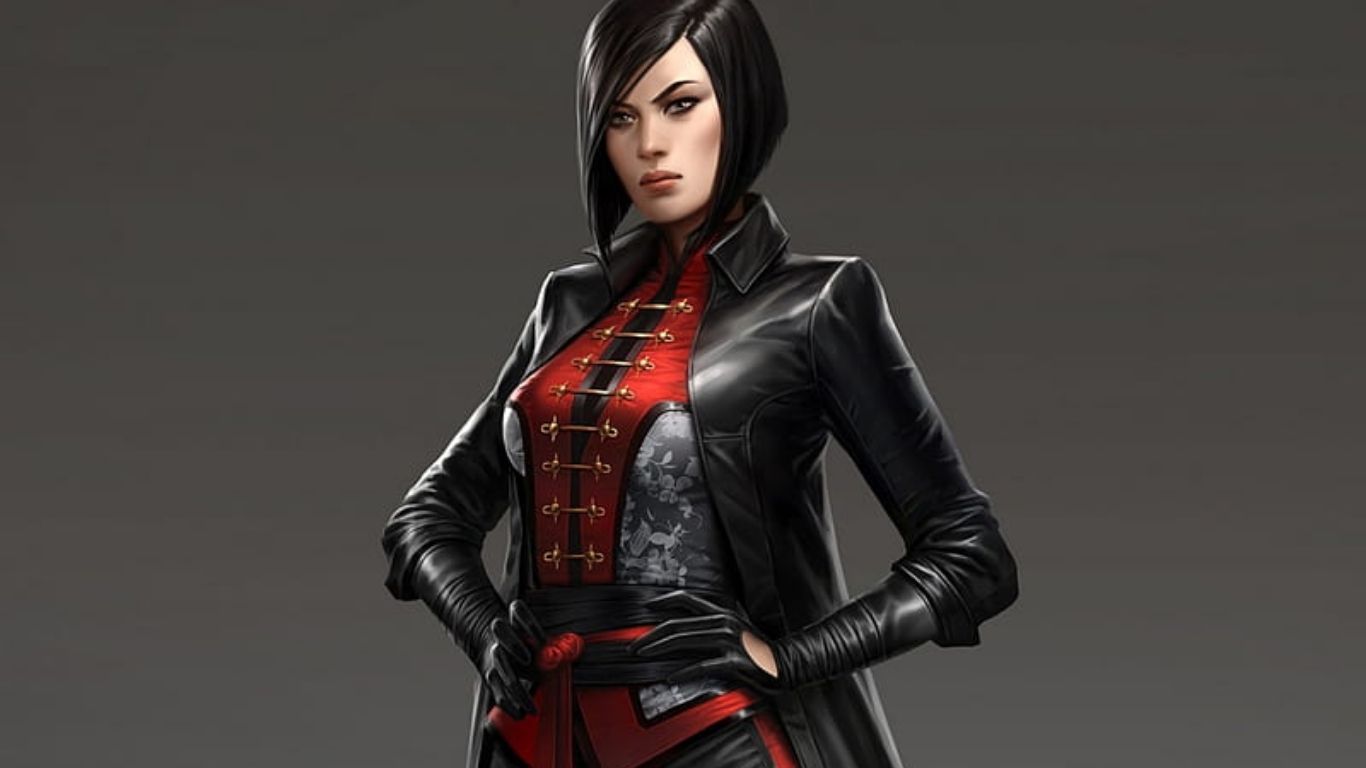
While Shiva began in a kung-fu book, modern readers most often encounter her in stories tied to Batman and the Bat-Family.
Several key roles define her in this context:
- She is one of the few people to have defeated Batman decisively in single combat, reinforcing her mystique as the deadliest fighter alive.
- After Bane breaks Bruce Wayne’s back in the Knightfall and KnightsEnd era, Shiva is one of the figures who helps retrain Bruce as he struggles to regain his former skill, pushing him to re-embrace the darkest edges of his ability.
- She temporarily mentors Tim Drake (Robin), trying to mold him into a more lethal combatant. Tim ultimately rejects her philosophy, but not the skills she imparts.
- Through Cassandra Cain, Shiva becomes an inescapable shadow over the Bat-Family’s ethics—the living example of what complete devotion to lethal efficiency looks like, contrasted with Batman’s rule against killing.
DC often emphasizes that Shiva has at times trained the League of Assassins, saved entire cities, and worked with or against heroes depending solely on what kind of challenge the situation poses. She is neither a traditional supervillain nor a conventional antihero; she exists outside most moral categories.
Powers, Skills, and Philosophy
Lady Shiva has no superhuman powers in the traditional sense. Her “abilities” are the result of extreme training and a mindset honed to something sharper than most people’s survival instincts.
Key aspects of her capabilities include:
- Unmatched martial arts mastery: She is frequently cited as one of, if not the, best hand-to-hand combatant in the DC Universe, routinely placed on or above the level of Batman, Bronze Tiger, and Richard Dragon.
- Body-language reading: Like Cassandra Cain, Shiva can “read” an opponent’s movements and intentions by watching their body language, allowing her to anticipate attacks and exploit openings with uncanny precision.
- Pressure-point expertise: She can disable, maim, or kill with minimal motion, using nerve strikes and precise blows.
- Weapons proficiency: Shiva is comfortable with swords, sticks, knives, and improvised weapons, though she often prefers to rely only on her hands and feet to test her pure skill.
More important than the techniques, though, is her philosophy. Shiva believes that combat is the purest expression of the self. A battle to the death can be a kind of communion, hence her obsession with duels and worthy enemies. Boredom is worse than death; some stories suggest she may actively seek the opponent who can finally kill her.
This worldview makes her terrifying but also strangely consistent. She rarely double-crosses people out of pettiness or greed; her betrayal, if it comes, is almost always in the service of a better fight.
Orientalism and Identity: A Meta Note
Over the years, Lady Shiva has also reflected changing attitudes toward representation in comics. Early stories mix Chinese, Japanese, and even Hindu elements rather loosely—her costume, background, and name drawing from multiple Asian cultures at once. Later analyses and fan discussions have noted how she was designed as a collage of “Eastern” tropes to contrast with Western heroes, sometimes at the expense of cultural specificity.
More recent stories and profiles tend to treat her as primarily Chinese, grounding her more clearly while still acknowledging the layered, sometimes contradictory history behind her creation and development.