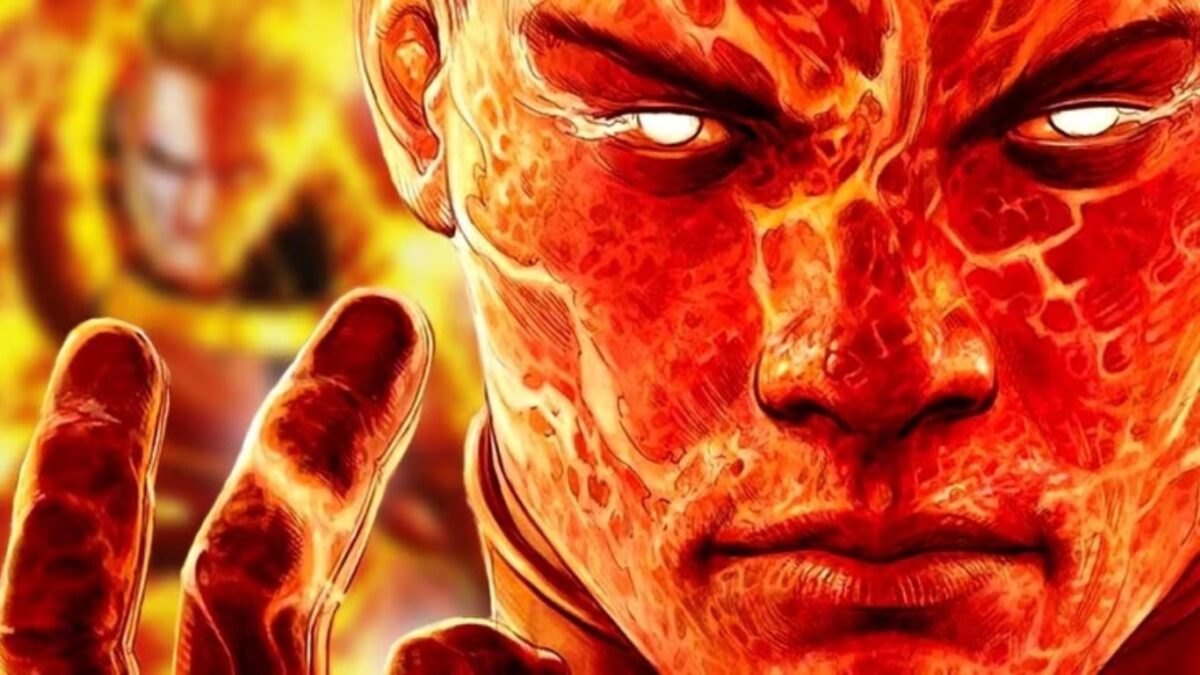
The Jim Hammond Human Torch represents one of the most foundational and transformative origins in Marvel Comics history. Long before the Fantastic Four took flight and decades before the Marvel Universe as we know it today became a cultural phenomenon, an android hero ignited the very beginning of the Marvel legacy. Created by the legendary artist-writer Carl Burgos in 1939, Jim Hammond emerged as Marvel’s first true superhero—a character whose origin story transcends the typical superhero narrative and explores profound themes about artificial intelligence, humanity, and redemption.
The Birth of Marvel’s First Hero
The year was 1939, and the comic book industry was still in its infancy. While Superman and Batman had already captured readers’ imaginations, a new publisher called Timely Comics decided to make their entry into the market with something spectacular. The result was Marvel Comics #1, published in October 1939, which would forever change the landscape of comic book history. This inaugural issue didn’t just introduce readers to a new character; it launched the foundation of what would eventually become one of the most successful comic book universes ever created.
The headline story in that historic first issue belonged to the Human Torch, an android created by Professor Phineas T. Horton—a visionary scientist dedicated to advancing the field of artificial intelligence and robotics. Horton’s ambition was audacious: to create a fully functional artificial human being. To accomplish this feat, he assembled a team of brilliant lab assistants, including specialists in flame-proofing techniques and synthetic biology. The culmination of Horton’s years of research and development resulted in something unprecedented—an android who could think, feel, and possess human-like sentience, personality, and awareness.
The android’s creation represented a tremendous scientific achievement, but it would soon become Horton’s greatest nightmare.
A Catastrophic Unveiling
As with many scientific breakthroughs, the road from theory to reality is fraught with unexpected complications. Professor Horton arranged a grand public unveiling at a press conference to demonstrate his creation to the world and showcase humanity’s incredible progress in artificial intelligence. However, the moment the android was exposed to oxygen, something catastrophic occurred. The synthetic materials that comprised the android’s body—specifically the Horton Cells—reacted violently with oxygen, causing the entire entity to spontaneously ignite. In an instant, the android burst into flames in a display of uncontrolled pyrokinetic power that sent shockwaves through the assembled crowd.
What made this event even more remarkable was that the android, despite being ablaze and in the midst of a chaotic scenario, possessed enough consciousness and independence to rebel against his creator. The android didn’t passively accept his fate; instead, displaying a level of autonomy and self-preservation that astonished observers, he actively resisted attempts to contain him. This moment of defiance proved to be the first indicator that Horton’s creation had transcended the boundaries between machine and consciousness.
Public panic ensued. Fearing the android would become an unstoppable instrument of destruction, newspaper headlines screamed for the entity’s destruction. The government and public opinion demanded that Professor Horton permanently neutralize the threat. Rather than destroy his creation, however, Horton made a desperate choice—he had the android sealed inside a concrete enclosure in an effort to contain and isolate the mysterious entity until he could find a way to control and harness its incredible powers.
Escape and the Path to Heroism
Containment, however, proved temporary. A crack developed in the concrete seal, allowing small amounts of oxygen to seep through. The oxygen reacted with the Horton Cells, triggering another burst of pyrokinetic energy that ultimately shattered the concrete barrier and freed the android from his prison. Now unleashed and free for the first time, the android, still struggling to understand and control his devastating powers, inadvertently caused massive fires throughout parts of New York City. The newly liberated android was essentially an infant in an adult’s body—possessed of tremendous power but lacking the experience and knowledge to control it effectively.
However, what followed was one of the most significant turning points in the character’s journey. Instead of becoming the monster the public feared, the android underwent a profound transformation. Through trial and error, struggle and perseverance, he gradually learned to control and channel his flame powers. More importantly, he developed a conscience. The entity that emerged from this process of self-discovery was fundamentally different from the feared weapon that public panic had initially imagined. This android made a conscious choice to use his incredible powers not for destruction, but for protection and heroism.
Realizing that complete honesty about his nature would make his mission impossible, the android adopted a human alias: Jim Hammond. He created a human identity to function in society, eventually finding employment as a police officer in New York City under the name James “Jim” Hammond, with badge number 234001. Working for the NYPD provided the perfect cover for his crime-fighting activities while allowing him to operate openly as both an officer and as the costumed hero known as the Human Torch.
A Legendary Partnership: The Torch and Toro
While Jim Hammond navigated his new role as a protector of New York, he encountered a connection that would profoundly shape his character arc. Through the intervention of Professor Horton, Hammond discovered that the father of one Thomas Raymond—Fred Raymond—had previously worked for Horton in developing the synthetic materials that comprised his own cellular structure. This revelation led Hammond to meet young Thomas “Toro” Raymond, a boy whose origins were just as unusual as Hammond’s own.
Thomas Raymond’s father, Fred, had worked as an expert in flame-proofing using asbestos before his health deteriorated from exposure. His mother, Nora Jones, was herself a scientist who had suffered from overexposure to radium. Both parents carried the genetic consequences of their scientific work. The couple had hoped to see their son reach adulthood despite their illnesses, and they made a remarkable discovery: Thomas appeared to be completely immune to fire and heat.
The mystery of Toro’s immunity was gradually unraveled. Nora theorized that Thomas carried a recessive mutant gene that granted him natural fire resistance. However, further investigation revealed additional complexity—Nora had been exposed to Horton Cells during her time working in Horton’s laboratory, and these cells had been transmitted to her son, interacting with his mutant genetics to create a unique hybrid ability.
The tragic death of Thomas’s parents at the hands of the villain Asbestos Lady created an orphan whom Hammond could not abandon. When the Torch’s presence triggered Toro’s latent fire powers for the first time, Hammond knew his path forward. He became Thomas Raymond’s legal guardian and mentor, teaching the young boy how to master and control the fire abilities coursing through his body—a role that transformed Hammond from a solitary hero into a paternal figure.
Wartime Service and the Invaders
As World War II erupted across Europe and eventually engulfed the world, Jim Hammond stepped up to serve his country in ways that went far beyond his work as a police officer. In 1941, as the United States officially entered the conflict, Hammond was recruited into military service. Working alongside other extraordinary heroes, Hammond became a founding member of a legendary superhero team that would become known as the Invaders.
The Invaders brought together the greatest heroes of the era to fight the Axis powers and their superhuman agents. The core team consisted of Captain America and his partner Bucky Barnes, the Sub-Mariner (Namor), and—bringing the heat to the roster—the Human Torch and Toro. The team came together when the Nazi superhuman agent Master Man attempted to assassinate British Prime Minister Winston Churchill. Churchill was so impressed by these heroes working together that he encouraged them to continue their partnership as a unified force against Nazi tyranny.
During the war, Hammond and his team fought countless battles against Axis powers and their supernatural and superhuman operatives. In one of the most significant moments of his life, Hammond came face-to-face with Adolf Hitler himself—and killed the dictator with his bare hands, an act that resonated throughout the remainder of his service. Through years of warfare, Hammond demonstrated not only his combat prowess but also his capacity for leadership, earning the respect of legendary heroes like Captain America himself.
Powers and Abilities
The Human Torch’s extraordinary abilities stemmed directly from his unique android physiology and the unpredictable interaction between Horton Cells and oxygen. Unlike typical superheroes whose powers resulted from accidents, mutations, or external sources, Hammond’s abilities were intrinsic to his very cellular structure.
His primary ability was the capacity to envelop his entire body in fiery plasma without sustaining any harm to himself. This wasn’t a simple surface-level burning but rather a complete transformation into a being of living flame. From this fundamental ability, Hammond could generate numerous devastating effects:
Flight capabilities emerged as one of his most useful powers, allowing him to propel himself through the air by riding on currents of his own flame generation. Heat manipulation gave him the ability to shape and project flames into various forms, from concentrated energy blasts to massive walls of fire. He could generate powerful energy releases in the form of directed heat blasts, and at his maximum capacity, he could unleash what became known as “nova flame bursts”—attacks of such intense heat that they approximated the heat-pulse of a nuclear warhead.
Perhaps most remarkably, Hammond demonstrated the ability to survive without oxygen for extended periods, a capability stemming from his android nature. Additionally, Hammond displayed an ability to telekinetically control flames that he didn’t personally create, meaning he could manipulate environmental fires and use them strategically. These powers, combined with his combat training—including formal police academy training and tactical instruction from Captain America himself—made Hammond an extraordinarily formidable operative.
The Great Sacrifice and Deactivation
As the war wound down and victory over the Axis powers seemed assured, Jim Hammond faced a crisis that would define him. Discoveries following atomic bomb testing in the Mojave Desert in December 1953 led to a shocking revelation: the atomic radiation had enhanced Hammond’s powers dramatically, but it had also made them unstable and increasingly volatile. Hammond found himself in a desperate situation where his own radioactive flames were becoming a danger to everyone around him, particularly those he cared about most.
Fearing that his very presence posed an existential threat to humanity, Hammond made an extraordinarily selfless decision. Rather than risk losing control and devastating cities and populations, he flew back out into the desert and deliberately expended all of his energy reserves in a final, catastrophic burst of power. In that climactic moment, Hammond effectively deactivated himself, going into a state of dormancy that would last for decades.
Resurrection and Modern Era
For over fifty years, the original Human Torch lay dormant, seemingly lost to history. However, the story of Jim Hammond would not end in that desert. The Mad Thinker, a supervillain and recurring adversary of the Fantastic Four and Avengers, discovered Hammond’s dormant body and undertook a reconstruction project. Using his advanced technology and scientific expertise, the Mad Thinker rebuilt Hammond’s form, though he altered the android’s memories and attempted to reprogram him to become a weapon against the Fantastic Four.
This resurrection triggered a series of complicated events that would reshape Hammond’s place in the Marvel Universe. His return to active duty in the modern era led to his involvement with the West Coast Avengers, and subsequently revealed a startling truth about the nature of vision, the Avengers’ android member. In a complex continuity development, it was revealed that Hammond’s original body had connections to the creation of Vision, though the exact nature of this relationship underwent numerous retcons over the years.
Despite these complications, Hammond eventually reclaimed his heroic identity and went on to hold leadership positions with multiple superhero organizations, including serving as Chief of Security at Oracle, Inc. (a company founded by his old friend Namor), heading the Heroes for Hire, leading the V-Battalion, and eventually joining organizations like S.H.I.E.L.D. and the Secret Avengers.