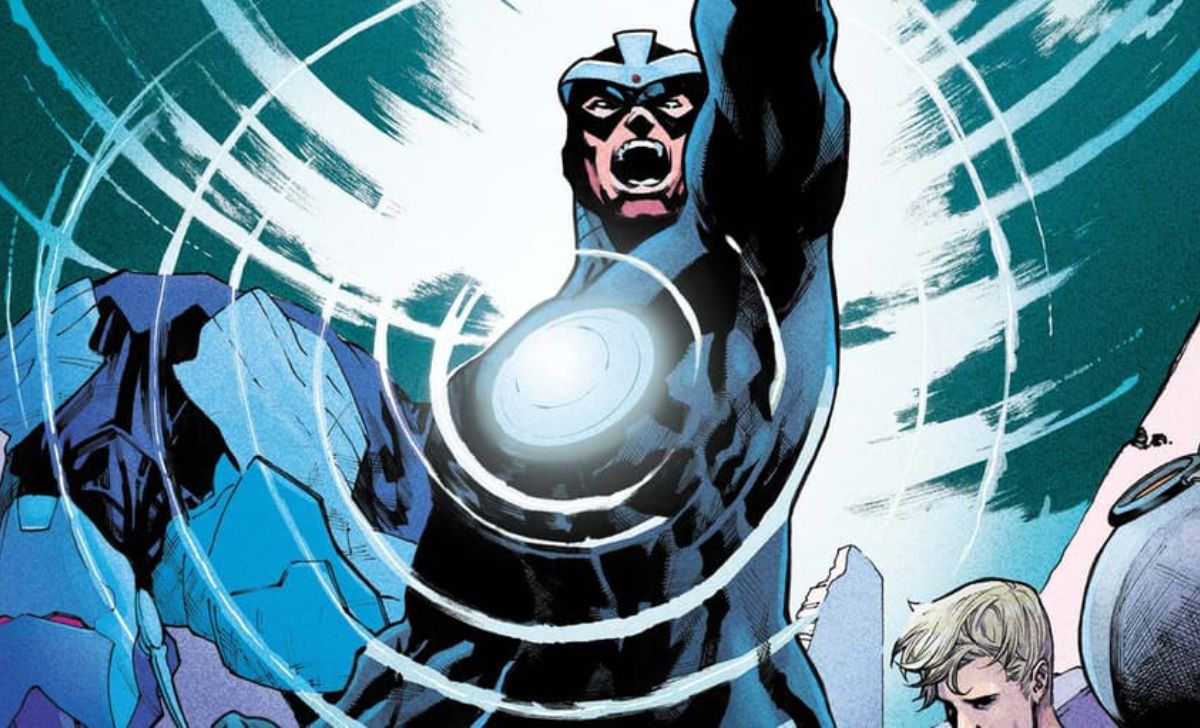
Alexander “Alex” Summers, better known by his codename Havok, stands as one of Marvel Comics’ most compelling yet underappreciated mutant heroes. Born into tragedy and perpetually dwelling in the shadow of his more famous older brother Cyclops, Havok’s journey from a frightened college student to a powerful plasma-wielding leader represents a fascinating study in heroism, identity, and the complex burden of extraordinary power.
A Family Torn Apart
The story of Havok begins with a catastrophic event that would shape his entire life. Born in Honolulu, Hawaii, Alexander Summers was the second son of Christopher Summers, a United States Air Force Major and test pilot, and his wife Katherine. The Summers family enjoyed a seemingly normal life until a fateful day when they were flying back from vacation in a private plane. Without warning, their aircraft came under attack by a scout ship from the intergalactic Shi’ar Empire, setting the wooden plane ablaze.
With the plane engulfed in flames and plummeting toward Earth, Katherine Summers made a desperate decision that would separate her family forever. She strapped the only available parachute to young Alex and his older brother Scott, then pushed them out of the burning aircraft. While both boys survived the landing, Scott suffered a severe head injury that would later affect his own mutant abilities. The brothers were hospitalized and left with amnesia, having lost most memories of their parents. Believing their parents dead, the traumatized children were sent to separate facilities—a decision that would keep the brothers apart for years and fundamentally alter both their destinies.
Growing Up in the Shadows
Alex was eventually adopted by the Blanding family, who had recently lost their own son Todd in a tragic car accident. The Blandings attempted to mold Alex into a replacement for their deceased son, and Alex desperately tried to please his new parents. Unknown to anyone, however, the geneticist Nathaniel Essex—better known as the villainous Mister Sinister—had been monitoring Alex since his adoption, having placed him in the orphanage initially. Sinister recognized the boy’s latent mutant potential and watched as it began to emerge.
When the boy who caused Todd Blanding’s death attacked Alex, the young Summers’ dormant mutant powers suddenly manifested in a horrifying display. His plasma blasts, raging completely out of control, accidentally incinerated the attacking boy. The traumatic incident could have destroyed Alex psychologically, but Sinister intervened in his own sinister way. He placed genetic locks on Alex to prevent his mutant powers from developing further and imposed psi-blocks that removed Alex’s memories of the entire event. As a result of this manipulation, Alex grew up completely unaware of his mutant heritage, the powers lying dormant within him, and the terrible thing he had done.
Alex went on to live a relatively normal life, studying and eventually earning a degree in geophysics at college. He completed a master’s degree and even began doctoral work in the field of geophysical science. It seemed that Alex Summers would live an ordinary human existence, his extraordinary abilities locked away forever. Fate, however, had different plans.
The Emergence of Power
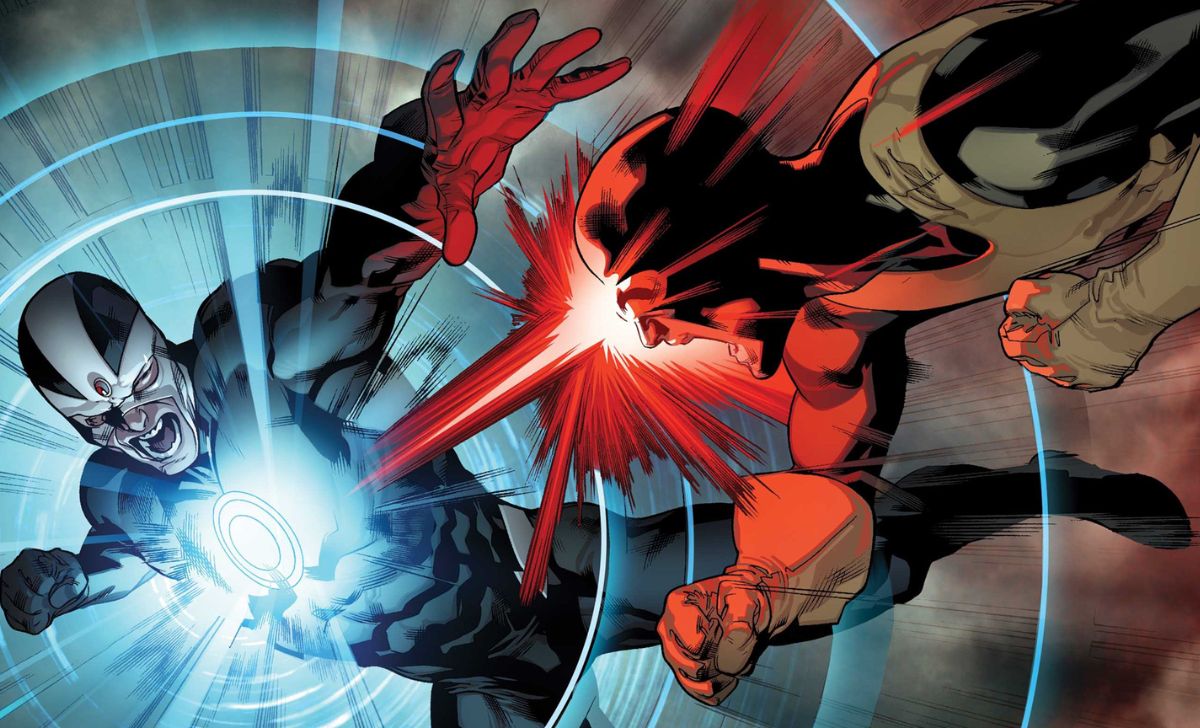
The truth about Alex’s nature came crashing back into his life during his college years, when he first encountered the original X-Men and learned the shocking truth that his older brother Scott had become the mutant superhero Cyclops. Their reunion would be short-lived and dramatic, however, as Alex was quickly kidnapped by his own professor of archeology, a man named Ahmet Abdol who called himself the Living Pharaoh.
Abdol had discovered a psychic link between himself and Alex, revealing that both possessed the latent mutant ability to absorb cosmic radiation and convert it into energy. More importantly, Abdol realized their powers existed in adverse proportion to each other—when one absorbed cosmic energy, it diminished the other’s access to the same power source. The Living Pharaoh saw Alex as the only being capable of rivaling his power and therefore the only obstacle to his ultimate transformation.
The villain transported Alex to his laboratory in Egypt and imprisoned him in a specially shielded cell that blocked his absorption of cosmic energy. With Alex’s interference removed, Abdol absorbed massive amounts of cosmic radiation and transformed into the Living Monolith, a gigantic being with virtually unlimited cosmic power. The X-Men fought desperately against this virtually unstoppable force but were losing badly until Alex managed to free himself from his containment. Once released, his body resumed absorbing cosmic energy, which immediately diminished the Monolith’s power and caused him to revert to his human form as the Living Pharaoh.
This terrifying experience revealed Alex’s incredible potential, but it also exposed a critical flaw. His mutant powers initially manifested only when he was near death, and he possessed no ability to control them. The immense destructive force he could unleash made him a danger to everyone around him, including the very people he wanted to protect.
Birth of a Hero: The Name Havok
Alex’s inability to control his plasma powers made him vulnerable to exploitation. He was soon captured again, this time by Larry Trask and his advanced Sentinels—mutant-hunting robots bent on controlling or eradicating all mutants. Larry Trask, son of the Sentinels’ original creator Bolivar Trask, was ironically a mutant himself with precognitive abilities. Despite his own mutant status, Larry continued his father’s mission, though his methods would inadvertently create one of the X-Men’s most distinctive heroes.
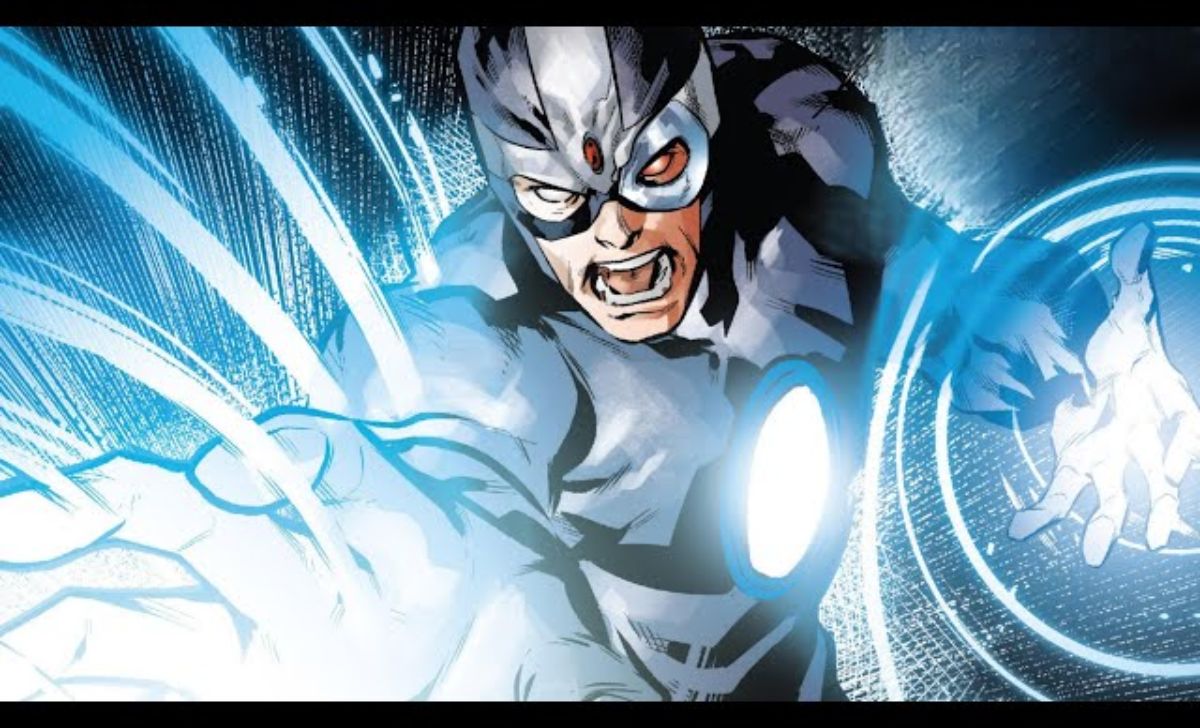
Recognizing that Alex’s raw power was useless without control, Larry Trask designed a special containment suit equipped with sophisticated sensors for measuring and regulating Alex’s power output. The black bodysuit featured a revolutionary design with special circuits that channeled his cosmic energy, limiting his abilities to controllable levels. Most distinctive was the strange headgear with a special gemstone at its center and the pulsating concentric circles on the chest that indicated how much cosmic energy Alex had stored within his body.
It was Larry Trask who gave Alexander Summers his heroic codename: Havok. The name proved prophetically appropriate for someone whose plasma blasts could wreak havoc on virtually any target. When Trask himself was revealed to be a mutant and his Sentinels were defeated by the X-Men, Havok briefly lost control of his powers once more. The excess energy was absorbed by the villain Sauron, but this incident helped Alex finally begin to gain genuine mastery over his abilities.
The costume designed by legendary artist Neal Adams became iconic in comic book history. Adams intended the suit to be more than just fabric—it represented a kind of energy container through which readers could actually see the energy inside Havok’s body. The revolutionary silhouette design meant that no matter which direction Havok turned, the concentric circles of his plasma energy would always be visible emanating from his chest, creating a surreal yet realistic aesthetic that had never been attempted in comics before.
Powers and Abilities
Havok possesses one of the most visually spectacular and devastatingly powerful mutant abilities in the Marvel Universe. His body acts as a living solar battery, constantly and passively absorbing ambient cosmic energy from his environment—including stellar radiation, x-rays, gamma radiation, and various other forms of cosmic radiation. This energy is stored within specialized cell enclaves throughout his body and processed through an as-yet-unknown biological mechanism.
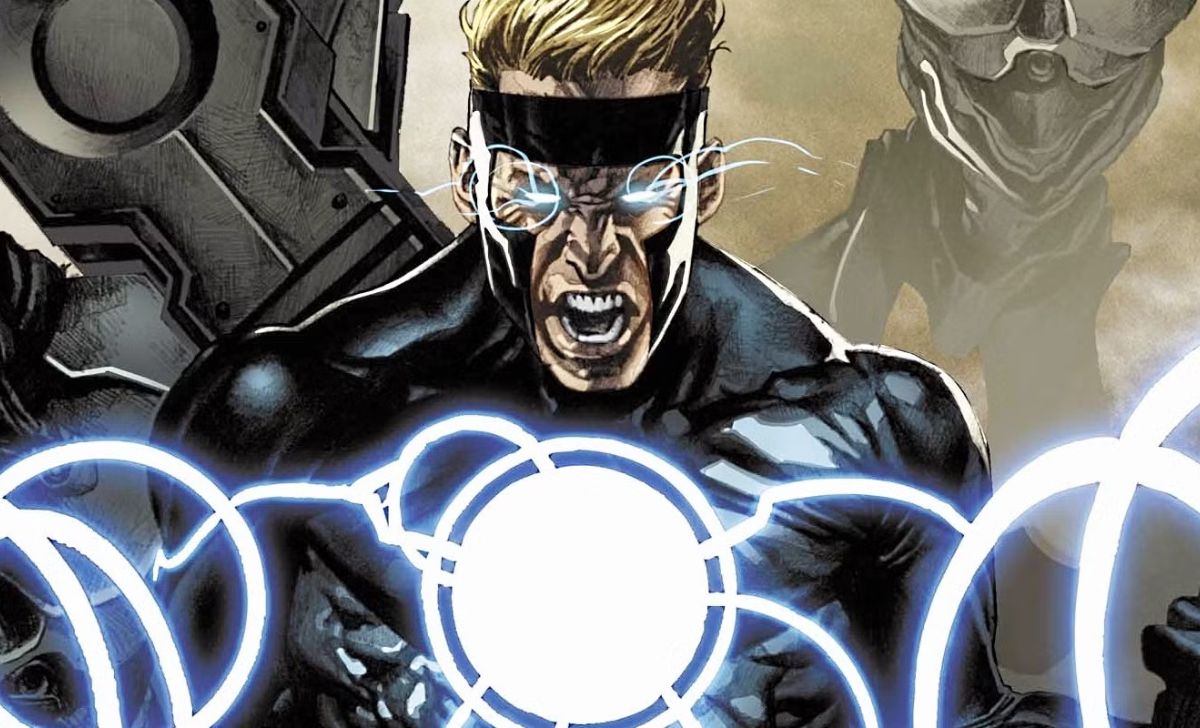
When released, this stored energy emanates from Havok’s body as waves of superheated plasma with his signature tell-tale concentric circle pattern. These plasma waves heat the air in their path to such extreme temperatures that they can penetrate, shatter, melt, or even vaporize most targets. The sudden temperature jump often causes objects to explode or disintegrate on contact, an effect that observers might mistake for concussive force. In truth, Havok can also displace air molecules to create actual concussive effects, but his primary power involves thermal destruction rather than kinetic impact.
The plasma blasts emanate from Havok’s body in all directions unless he purposefully channels them in a single direction, typically along the length of his arms. With intense concentration, Havok can modulate the intensity of his blasts—at the lowest level, he can project energy toward a human being that will cause only a severe headache rather than incinerating them. At full power, his blasts can reach the destructive equivalent of 40 pounds of TNT.
Havok’s body is constantly absorbing cosmic radiation, and when each of his power-storage enclaves reaches capacity, excess energy is immediately re-emitted in negligible quantities. The concentric circles on his costume’s chest serve as an indicator of his current energy reserves. Upon total expenditure of his available energy, Havok’s body requires approximately 16.5 to 17 hours to recharge to peak capacity under normal circumstances. The act of concentrating to release his energy in focused beams rather than omnidirectional waves is physically exhausting, especially over extended periods.
Beyond his passive absorption, Havok has demonstrated the ability to actively and willingly absorb various other forms of energy through conscious effort, including starlight and gamma radiation. He can even use stored energy for flight by directing plasma as a downward thrust, and can form temporary shields against projectile weapons by emanating plasma waves from his body. Most intriguingly, Havok has developed immunity to his brother Cyclops’s optic beams, and Cyclops is similarly immune to Havok’s plasma blasts—a unique biological connection between the Summers brothers. However, Havok is not immune to the powers of his younger brother Gabriel Summers, known as Vulcan.
Joining the X-Men
After gaining sufficient control over his abilities, Havok actively joined the X-Men team and began a romantic relationship with Lorna Dane, the magnetic mutant known as Polaris. Their love story would become one of the most enduring yet tumultuous relationships in X-Men history. The romance caused tension within the team, particularly angering Iceman, who had harbored romantic feelings for Lorna himself.
During a critical moment when the senior X-Men were in the Savage Land, Havok and Polaris were approached by Professor X about an imminent invasion by the alien Z’Nox. During this crisis, the couple fell deeply in love. They were both later captured alongside the original X-Men by Krakoa, the living island, but were eventually rescued by a new team of X-Men that would reshape the franchise. Following this adventure, Havok and Polaris chose to quit the team’s active membership along with most of the original members, seeking a more normal life.
For years afterward, Havok and Polaris alternated between pursuing graduate work and postgraduate degrees in the American Southwest—where they occasionally encountered the Hulk—and helping Moira MacTaggert with genetic research at her facility on Muir Island off the coast of Scotland. It was during their stay on Muir Island that Havok helped the X-Men battle the reality-warping mutant Proteus. Alex also learned the shocking truth that Corsair of the space-pirating Starjammers was actually his father Christopher Summers, who had survived the Shi’ar attack years earlier.
Leadership and X-Factor
Havok’s relationship with Polaris faced a severe test when she was possessed by the mutant Marauder named Malice, ending their romantic relationship temporarily. Following this traumatic experience, Havok sought out and rejoined the X-Men. His greatest opportunity for leadership came when he joined the relaunched X-Factor team in October 1991, where he remained until the series concluded in September 1998.
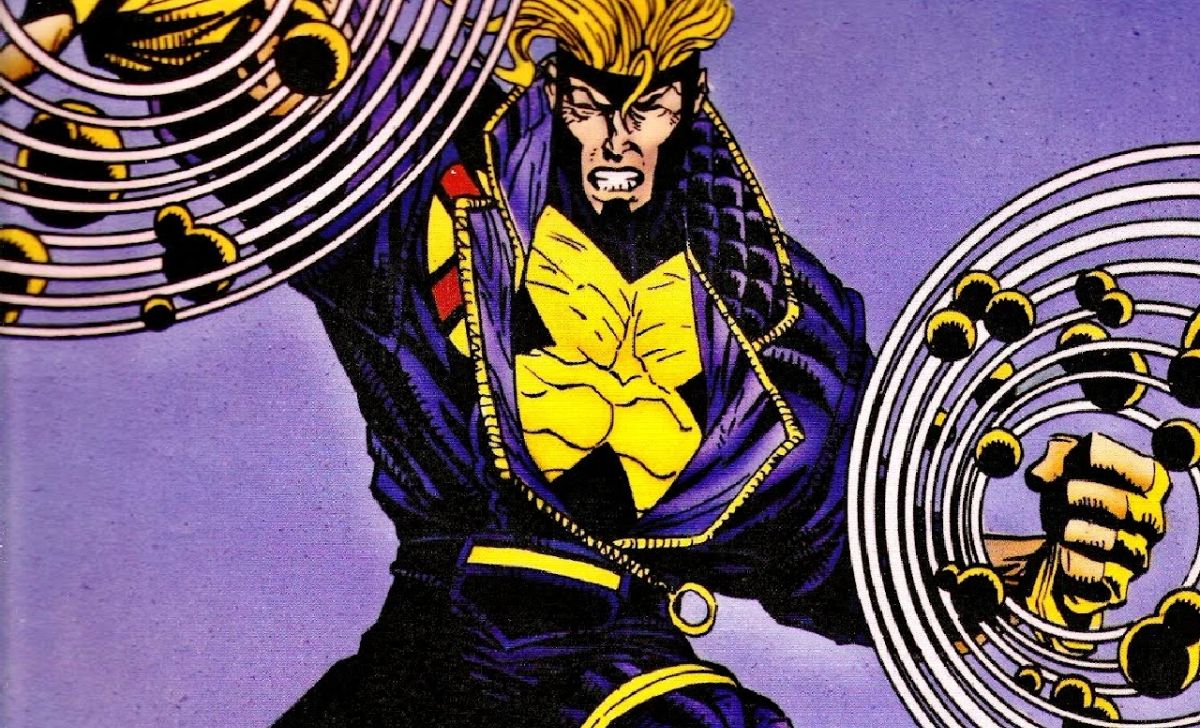
The government-sanctioned X-Factor gave Havok his first real chance to step out of his brother’s shadow and prove himself as a capable leader. He was given a new uniform featuring the team’s blue and yellow color scheme—blue baggy pants, a blue shirt with a huge yellow X on the chest, and a dark leather jacket. During this era, Havok led the team through numerous challenges, though he frequently struggled with the weight of leadership and the constant comparisons to his more famous brother.
His time with X-Factor was complicated by recurring power instability that sometimes forced him to wear his black containment suit beneath his regular clothes, fearing he might accidentally harm innocent bystanders. He was eventually kidnapped by the Brotherhood and experimented on, later appearing in a modified containment suit with bulky red gloves and shoulder straps that functioned as an anti-gravity harness, enabling him to levitate.
The Mutant X Saga
One of the strangest chapters in Havok’s history began when his teammate Greystone, suffering from temporal insanity, attempted to build a time machine to return to his own timeline. When Havok tried to stop him, the machine exploded, seemingly killing both men. At the precise instant of Havok’s death, another version of Havok from an alternate reality was also killed by a Sentinel. Havok’s spirit somehow found its way into his counterpart’s body, and he awakened in what became known as the Mutant X Universe.
In this alternate reality, Havok discovered he was living an inverted version of his brother’s life. Here, Alex had been the sole Summers family member to escape Shi’ar abduction, while Scott was captured along with their parents. Consequently, it was Alex who became one of the original X-Men and eventually the team leader. He was married to Madelyne Pryor, and they had named their son Scotty after Havok’s presumed-dead brother. After a falling out with the X-Men over accepting Magneto as their leader, this reality’s Havok had formed his own team of heroes called “The Six”.
The mainstream Earth-616 Havok spent considerable time trapped in this alternate reality, leading to the 32-issue Mutant X series. Eventually, he managed to return to his own body and reality, though the experience left lasting psychological scars.
Space Adventures and the Starjammers
Havok’s cosmic destiny came full circle when he joined his father Corsair and the Starjammers in their rebellion against the Shi’ar Empire. This occurred during “The Rise and Fall of the Shi’ar Empire” storyline, when Havok’s long-lost younger brother Gabriel Summers—the incredibly powerful mutant known as Vulcan—traveled to Shi’ar space seeking revenge for their mother’s death and his own mistreatment by the Shi’ar.
Vulcan allied himself with Deathbird to overthrow the mad emperor D’Ken, but ultimately killed D’Ken himself and assumed the Shi’ar throne by marrying Deathbird. In the tragic course of this conflict, Vulcan killed Corsair—Havok and Cyclops’s father. Devastated by his father’s death but determined to stop his brother’s tyrannical rule, Havok decided to assume Corsair’s position as leader of the Starjammers. Polaris chose to stay with him, and they were joined by Marvel Girl (Rachel Grey), Korvus, Ch’od, Raza, and other rebels.
The Starjammers’ new mission became defeating Havok’s own brother Vulcan and returning the rightful ruler Lilandra to the Shi’ar throne. Havok led rebel raids against Vulcan’s forces with tremendous success, as defections plagued the Shi’ar Empire under the rule of a non-Shi’ar emperor, eventually sparking a full-fledged civil war. For months, Havok, Polaris, and the team were captured and tortured while continuing their resistance. Despite their best efforts, however, Vulcan maintained his grip on the empire for some time.
Uncanny Avengers and Leadership Recognition
Havok’s finest moment of recognition came after the events of Avengers vs. X-Men, when Captain America decided the Avengers hadn’t done enough to champion the mutant cause. In response, Cap formed the Avengers Unity Division—also known as the Uncanny Avengers—a groundbreaking team dedicated to improving and protecting human-mutant relations. For this crucial mission, Captain America personally chose Alex Summers to serve as the team’s leader.
This represented an extraordinary moment of validation for Havok, who had spent his entire heroic career in the shadow of his more celebrated brother. While he often existed as the lesser-known Summers brother, Havok proved himself to be an incredibly powerful and capable leader. During his tenure leading the Unity Division, Havok faced and defeated the time-traveling conqueror Kang, saving the entire world. He even demonstrated his raw power by taking down the Hulk solo, aiming his plasma blasts directly at the Green Goliath’s brain. During this period, Havok also embarked on a romantic relationship with founding Avengers hero Janet Van Dyne, the Wasp.
The Krakoa Era and Recent Struggles
The Krakoa Era, when mutants established their own nation-state, proved particularly challenging for Havok. After mutant resurrection protocols were established on the island nation, Havok was among those brought back to life. However, he struggled to find his place in this new mutant society. He moved to Summers House on the moon but was deeply unhappy. Years of mind control and manipulation—by figures ranging from Mister Sinister and Dark Beast to Erik the Red and Madelyne Pryor—had caused cumulative damage to his brain, eventually causing him to lose control of his powers once again.
This instability led to his assignment to the Hellions, a team specifically composed of mutants whose severe emotional issues made them liabilities to other teams. The Hellions’ very first mission proved psychologically devastating for Havok: they were sent after Madelyne Pryor, a woman Alex had loved deeply during the “Inferno” storyline. When Psylocke telepathically controlled Havok into killing Madelyne at Mister Sinister’s urging, using his powers to destroy her hideout, it reopened terrible old wounds.
Eventually, Emma Frost successfully arranged for Madelyne’s resurrection specifically for Havok, and the two began a new relationship. When Magik made Madelyne the Queen of Limbo, Havok joined her as her consort. After the villainous organization Orchis broke the nation of Krakoa during the Hellfire Gala, Madelyne and Havok used the Limbo embassy as a refuge for mutants. However, during one of their first missions, Havok was stabbed in the throat by a Wolverine cyborg named Albert. Desperate to keep the man she loved alive, Madelyne used necromantic magic to prevent his death, continuously grafting demon flesh to his body. This left Havok in a zombie-like state that horrified those around him.
The toxic nature of their relationship was fully revealed in X-Men: From the Ashes: Demons & Death #1, where it was discovered that Madelyne had deliberately used her powers to make Havok’s condition worse, creating a dependency that ensured he could never leave her. When the truth came out—that there was nothing actually wrong with Havok except Madelyne’s magic—their relationship finally shattered completely. It proved to be another heartbreaking chapter in Havok’s history of manipulation and loss.
A Multiversal Nexus
One of the most fascinating and underexplored aspects of Havok’s existence is his role as a multiversal nexus point. It was revealed in the Mutant X and Exiles comic books that Havok’s body and mind serve as a nexus for all other Alex Summers across every reality, with his very existence functioning as a “back door” to his alternate-reality counterparts. This revelation caused significant problems during the crossover between Uncanny X-Men and Exiles, though the full implications of Havok’s multidimensional status have yet to be thoroughly explored.