Few villains in anime feel as cold, ruthless, and theatrically inevitable as Frieza. First introduced in Dragon Ball chapter 247 (October 24, 1989) by Akira Toriyama, he isn’t just a late-game boss — he’s the emotional fulcrum that reshaped the series, the catalyst for Vegeta’s trauma, and the spark that turned Goku into a legend. Below I retell Origin of Frieza and arc, riff on why he works so well as a villain, and cover how he keeps finding new ways to come back stronger — all in active, human-forward language.
A name that chills: Toriyama’s vegetable jokes — and a sinister spin
Toriyama loved puns. Vegeta, Kakarot, Nappa — many Saiyan names are playful riffs on vegetables. Frieza’s name, though, flips that whimsy into menace: the pun on “freezer” gives him a frosty brand identity that matches his persona — cold, clinical, and preservative. That lighthearted naming tradition makes Frieza’s brutality land harder: the universe’s “grocery store” joke becomes a cosmic dictator.
Born to rule: the Frieza family and their alien dynasty
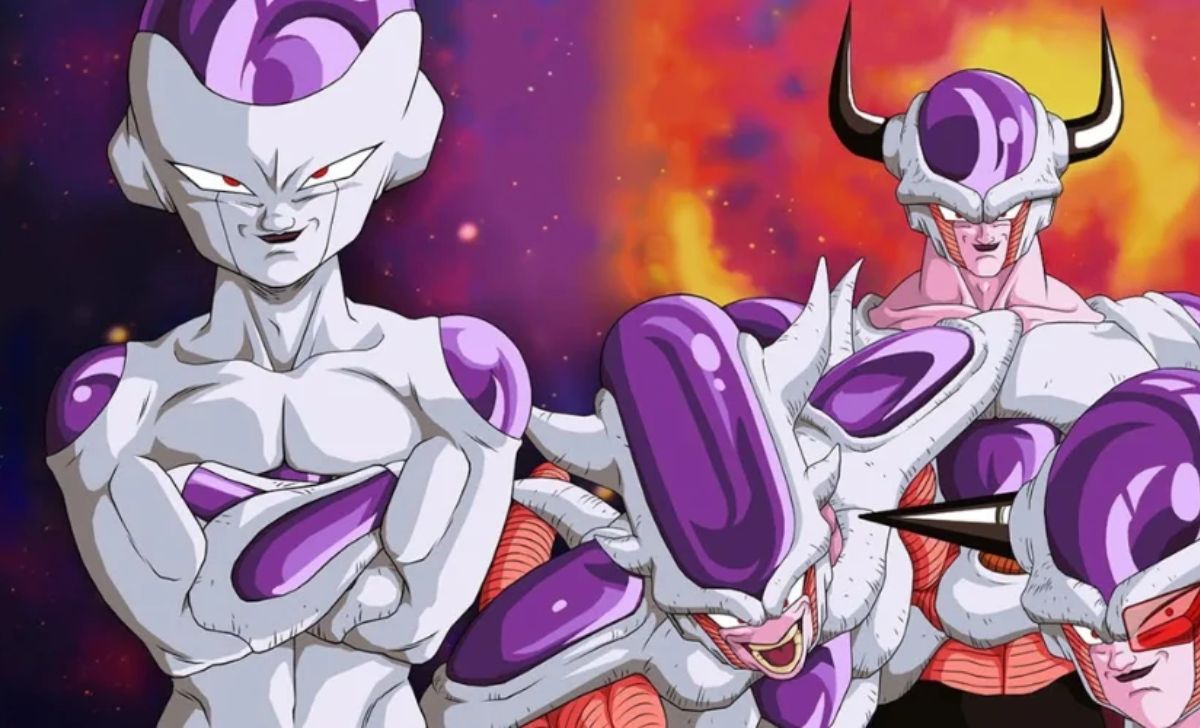
Frieza belongs to a powerful, mysterious alien lineage often called the Frieza race. Exceptional strength, merciless temperament, and survival in harsh conditions mark them as natural overlords. His father, King Cold, ran the family enterprise of conquest and planetary exploitation — and when King Cold stepped back, Frieza inherited a galaxy-sized business. Early scenes (as shown in flashbacks) establish the transfer of power: Frieza arrives, makes an icy impression on the Saiyans, and quickly proves he won’t tolerate disrespect. He demonstrates leadership by literal bloodshed — killing dissenters with surgical efficiency — and sets the tone for what his rule would look like.
Empire-building and paranoia: the Saiyans as tools and threats
Frieza turned the Saiyans into his hired muscle: proud warriors who conquered planets and delivered them to the Frieza Force for sale. It’s a grim, almost corporate arrangement — Frieza outsourced the dirty work while he kept the profit and the throne. But he also feared the one thing Saiyans might produce: a Super Saiyan. That mythical transformation terrified him because a single Super Saiyan could upset the balance of power. Paranoia took the wheel: better to erase the threat entirely than risk a rebellion. That logic led to his most infamous decision.
The annihilation of Planet Vegeta: genocide for security
Frieza chose erasure over containment. Believing he’d nullified the Saiyan threat, he destroyed Planet Vegeta — an act meant to be final. Some retellings and later material add layers: cosmic politics and gods like Beerus play ambiguous roles in the decision. Whatever the backstory’s wrinkles, the outcome is stark: a proud warrior race is nearly wiped from existence, with only a handful surviving (including Goku and Prince Vegeta). That act of extermination anchors Frieza as more than just an opponent — he’s trauma incarnate for the Saiyans and the narrative’s deepest moral wound.
Namek becomes the stage: Dragon Balls, alliances, and escalation
Frieza’s hunt for immortality and control takes him to Planet Namek, home to another people and their Dragon Balls. The Z Fighters — Vegeta, Krillin, Gohan, Piccolo, and eventually Goku — converge to stop him. Namek becomes a chessboard of small-scale heroism and grand cruelty: Frieza’s troops clash with Namek’s defenders; alliances form; sacrifices occur. Goku trains in the gravity chamber and grows stronger off-screen, which sets up the monumental showdown that follows.
Rage, legend, and the birth of a Super Saiyan
When Frieza kills a beloved ally — Krillin in the classic telling — Goku’s grief detonates into fury. That emotional rupture triggers the fabled first Super Saiyan transformation: not a technical upgrade but a mythic response to loss and necessity. The battle that unfolds rewrites what Dragon Ball can do on-screen and in story: Escalating attacks, transformations, and a climactic moral test. Frieza reveals ever-more terrifying forms; Goku answers with resolve. Their fight isn’t just spectacle — it’s the point where the series matures into something mythic.
Death, rebuilding, and the long con of villainy
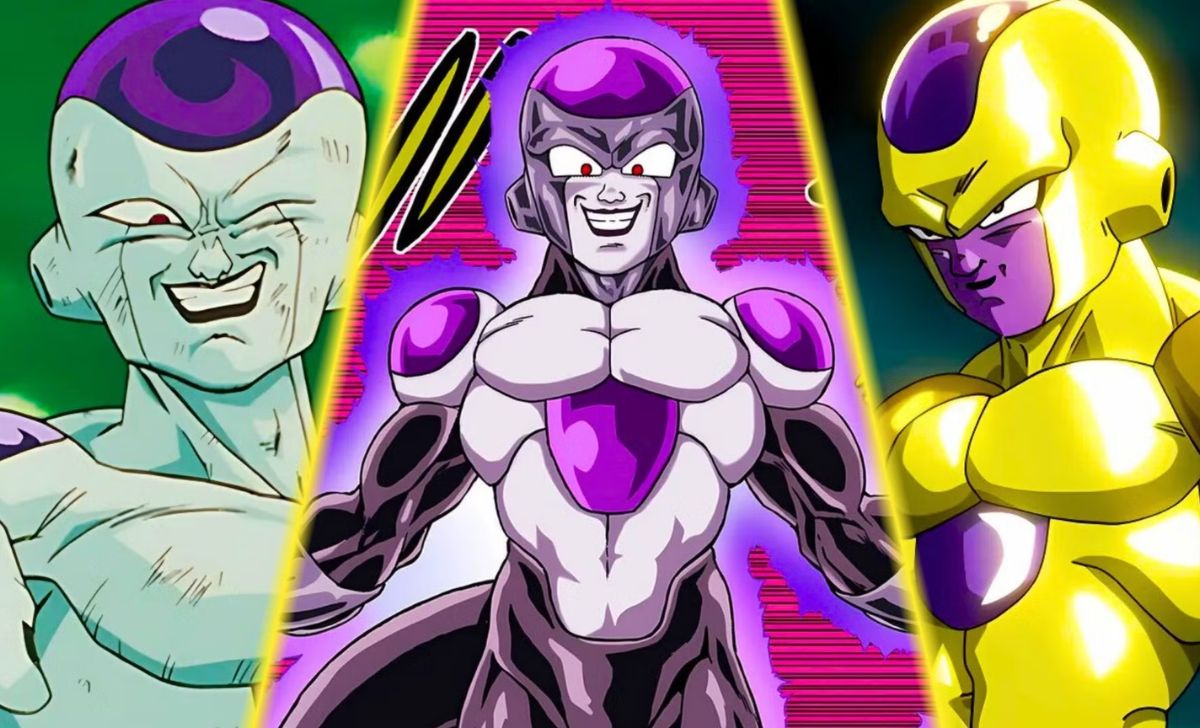
Frieza doesn’t stay down. He survives catastrophic defeat — later found damaged and rebuilt as Mecha Frieza — only to be cut down again by a future warrior, Trunks. Still, death isn’t permanent in this universe: science, magic, and convenient plot devices bring him back. The Resurrection arc returns Frieza in a new shining costume: Golden Frieza — a cosmetic upgrade with teeth. Every comeback amplifies his menace and tests the heroes, while reminding fans why he captured their attention the first time.
New heights of menace: transformations and tactical cruelty
What keeps Frieza scary is that he combines raw power with cold strategy. He evolves through multiple forms — each a calibrated power-up — but he’s not just a brute. He uses telekinesis, tactical observation, and psychological cruelty. He studies opponents, adapts on the fly, and makes decisions that tilt entire civilizations. That blend of calculated intelligence and show-stopping power makes every encounter feel dangerous.
Modern twists: Frieza today and how he keeps getting stronger
In more recent material, creators keep reintroducing Frieza with new upgrades and forms that test the heroes again — sometimes surpassing even God-level techniques. Each reinvention raises questions about escalation in long-running series: how do you keep a villain meaningful when power scaling spirals? Frieza’s answer has been to stay thematically consistent: no matter the form, he remains proud, remorseless, and fixated on domination.
Why Frieza still resonates: trauma, spectacle, and emotional stakes
Frieza works because he’s more than a punchline; he’s the story’s moral and emotional machine. He forces characters to confront loss (Vegeta), inspires legend (Goku), and raises the dramatic stakes to mythical levels. Unlike villains who exist to absorb damage, Frieza actively reshapes the universe’s history. He is the reason certain characters grow, suffer, and eventually become icons.