
The DC Universe has given readers an incredible array of demons, sorcerers, and supernatural entities, but few origin are as uniquely compelling as Etrigan the Demon. A muscular, yellow-skinned demon who speaks in rhymes and shares an immortal bond with a medieval knight, Etrigan stands as one of Jack Kirby’s most distinctive creations. His origin story weaves together Arthurian legend, infernal hierarchies, and a curse that has lasted over fifteen centuries, creating a character whose complexity has fascinated comic book readers since 1972.
The Reluctant Birth of a Demon
Etrigan first appeared in The Demon #1, published in August 1972, but the character’s creation tells a story of artistic compromise and commercial demand. Jack Kirby, the legendary artist who had co-created Captain America, the Fantastic Four, and the X-Men, had moved to DC Comics to pursue his ambitious Fourth World saga. This interconnected series of titles including New Gods, Forever People, and Mister Miracle represented Kirby’s most personal creative vision—a sprawling science fiction mythology about ancient space gods locked in eternal conflict.
However, DC Comics unexpectedly canceled both New Gods and Forever People in 1972, despite Kirby being in the middle of developing these stories. According to Mark Evanier, Kirby’s longtime assistant, the artist “looked like a man who’d been punched in the face repeatedly” when he received the news. The publisher had other plans for Kirby’s talents. They wanted him to create a horror character to capitalize on the rising popularity of horror comics in the early 1970s.
Kirby had no particular interest in horror comics, but as a consummate professional, he delivered exactly what DC requested. The story goes that during a dinner at a restaurant, Kirby conceived Etrigan’s name, backstory, and motivations on the spot. Kirby had originally hoped to create the first issue or two and then pass the character to other creators, but DC had other ideas. The first issue of The Demon sold so well that the publisher insisted Kirby continue working on the title for another fifteen issues, frustrating the artist who desperately wanted to complete his Fourth World stories.
The Demon from Hell: Etrigan’s Infernal Heritage
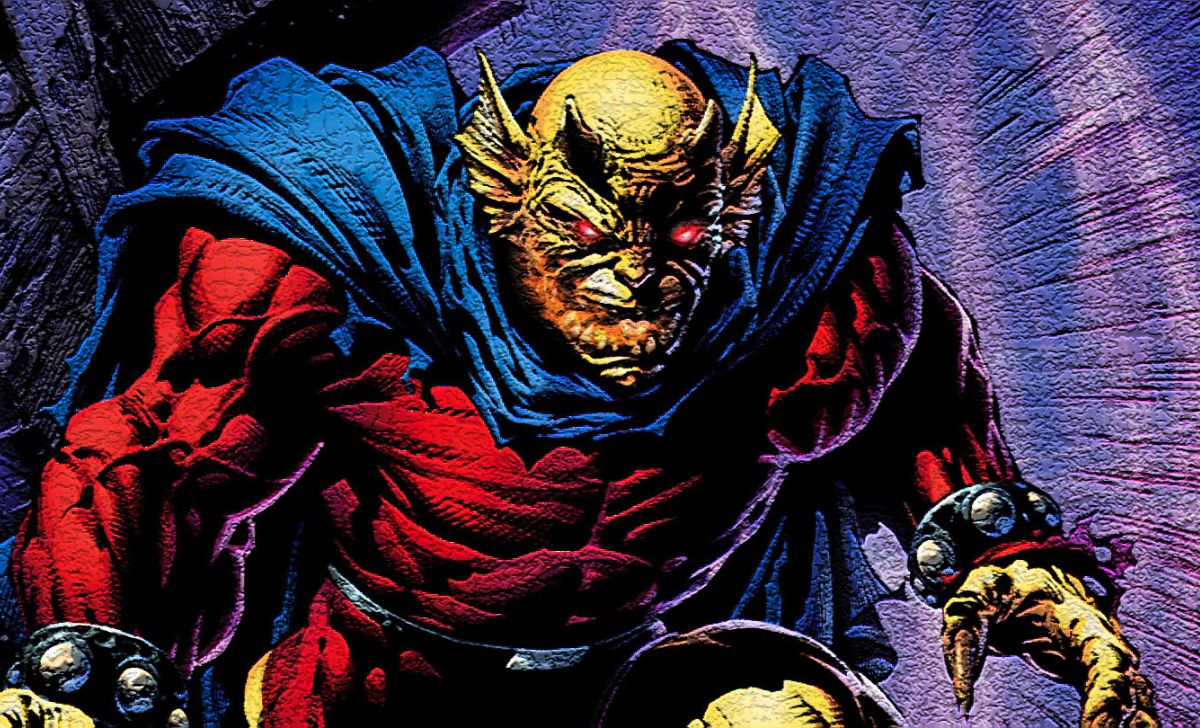
Etrigan’s origin reaches deep into both demonic lore and Arthurian legend. In DC Comics continuity, Etrigan is the son of Belial, an archduke of Hell and member of the Satanic Triumvirate alongside Lucifer and Beelzebub. His mother is another demon named Ran va Daath, making Etrigan a prince among demons.
What makes Etrigan’s family tree particularly fascinating is its connection to other DC characters. Belial fathered multiple children across different realms. Merlin, the legendary wizard of Camelot, is also Belial’s son, born of a mortal witch, making him Etrigan’s half-brother. This familial connection proved crucial to the events that would bind demon and man together. Belial had Merlin trained in sorcery specifically so that the wizard would be powerful enough to control his troublesome older brother Etrigan.
The demon’s family connections extend even further into DC’s supernatural hierarchy. Belial himself is revealed to be the son of Trigon, the dimensional demon lord and father of Raven from the Teen Titans. This means that Etrigan is actually Raven’s nephew, and the Teen Titans’ resident empath is the aunt of one of DC’s most famous hellraisers—a relationship that remains largely unexplored in comics but represents one of the DC Universe’s most intriguing familial connections.
As a young demon, Etrigan was “cruel even for Hell” and ran amok through the infernal realms. His audacity knew no bounds—he even attempted to steal Lucifer’s Crown of Horns, which resulted in his mother Ran va Daath being cast into exile in Masak Mavdil. This act of defiance established Etrigan’s character as a demon who refused to bow to authority, even in Hell itself.
The Fall of Camelot and the Forging of a Bond
Etrigan’s transition from Hell to Earth occurred during one of the most pivotal moments in Arthurian legend—the fall of Camelot. In the original Kirby telling, the sorceress Morgaine le Fey attacked Camelot with a massive army and legions of demons, seeking to claim the Eternity Book, a powerful magical tome in Merlin’s possession that held the secrets of immortality.
As Camelot’s defenses crumbled under Morgaine’s assault, Merlin made a desperate decision. He summoned his half-brother Etrigan from the depths of Hell to defend the kingdom. The demon proved a formidable warrior, successfully driving back Morgaine’s forces and saving Camelot from immediate destruction. However, Merlin knew this victory was temporary. Morgaine would return, and Etrigan’s wild, violent nature made him as dangerous as any enemy.
To preserve both his secrets and bind Etrigan as a future protector against Morgaine, Merlin performed a powerful spell using the Eternity Book. He merged Etrigan with Jason Blood, a knight of Camelot who had served King Arthur. The exact nature of this binding has varied across retellings. In the original Kirby version, Jason Blood was essentially created by Merlin as a living prison for Etrigan, with no prior existence as a separate being. Later interpretations established Jason as a distinct individual—a Druid and knight who lived during Arthur’s time.
Some versions suggest Jason’s binding to Etrigan was punishment for betraying Camelot to Morgaine le Fey, with whom he had fallen in love. In these tellings, Jason opened Camelot’s gates to Morgaine’s forces, only to be betrayed by her in turn. Merlin’s curse became both punishment and redemption—condemning Jason to carry a demon within him, but also granting him immortality and the chance to atone for his betrayal across the centuries.
After binding Etrigan to Jason, Merlin gave the demon a crucial page torn from the Eternity Book—the part Morgaine most desired—ensuring Etrigan would remain central to her quest and Merlin’s secrets would be protected. Then Merlin razed Camelot himself and disappeared, leaving Jason Blood to walk the Earth for over fifteen centuries, carrying the demon within him.
Awakening in the Modern World
For centuries, Etrigan lay dormant within Jason Blood, who had no memory of his demonic nature. In modern times, Blood established himself as a prominent demonologist in Gotham City, using his extensive knowledge of the occult without understanding its true source.
Everything changed when Blood was mysteriously summoned to Castle Branek, Merlin’s hidden crypt. As he explored the ancient tomb, he discovered an inscription carved in stone. Reading it aloud, Blood unknowingly spoke the words of transformation:
“Change, change the form of man. Free the might from fleshy mire. Boil the blood in heart of fire. Gone, gone the form of man, Rise the demon Etrigan!”
The transformation was explosive and immediate. Jason Blood’s form shifted, replaced by the hulking, yellow-skinned demon Etrigan. Unfortunately, Blood wasn’t alone in the crypt. Morgaine le Fey, now ancient and frail after centuries of searching for the Eternity Book, had followed him, triggering Etrigan’s return and marking the beginning of their eternal conflict in the modern world.
The Rhyming Demon and His Distinctive Voice
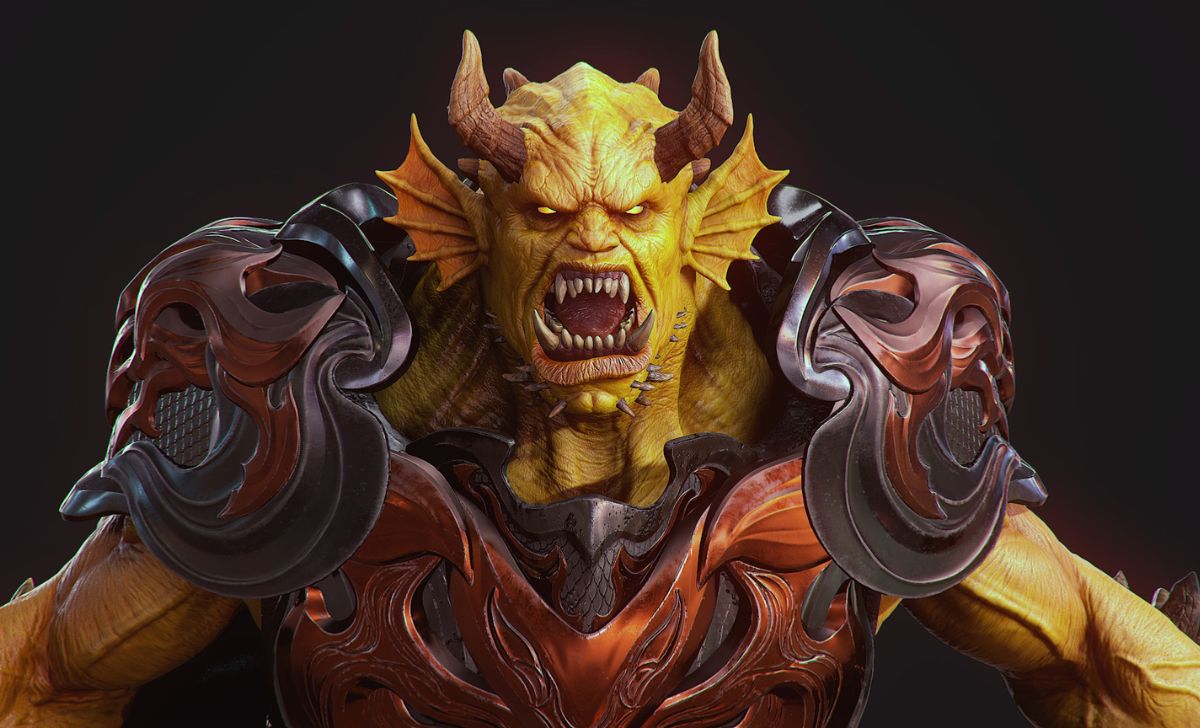
One of Etrigan’s most memorable characteristics is his tendency to speak in rhyme—a trait that has become synonymous with the character. Interestingly, this wasn’t part of Kirby’s original conception. In Kirby’s The Demon series, rhyming was used by multiple magic users including Merlin, Morgaine, and Etrigan when casting spells or making threats, but it wasn’t Etrigan’s constant mode of speech.
It was Alan Moore who transformed this occasional flourish into Etrigan’s defining vocal characteristic. During his acclaimed run on Saga of the Swamp Thing in issues #25-27 (1984), Moore had Etrigan speak exclusively in iambic pentameter, giving the demon’s dialogue a poetic sophistication. Moore’s innovation was so successful that subsequent writers adopted it as standard, with the good ones maintaining the rhyming pattern throughout their stories.
Within DC Comics lore, Etrigan’s rhyming speech was later explained as the result of a promotion in Hell’s hierarchy. The ability to speak in rhyme became a badge of his elevated rank in the infernal power structure, distinguishing him from lesser demons. This detail adds another layer to the character—even Etrigan’s manner of speaking reflects his status and ambition within Hell’s complex bureaucracy.
Powers and Abilities of the Demon
As a demon prince of Hell, Etrigan possesses formidable supernatural abilities that make him one of DC’s most powerful mystical characters. He is virtually immortal, having existed for millennia and showing no signs of aging or weakening. His physical strength is tremendous—sufficient to trade blows with Superman and punch the Man of Steel to the moon. Etrigan has easily subdued demons who nearly killed Wonder Woman and toyed with Lobo, one of DC’s most notoriously durable characters.
Etrigan’s signature ability is his hellfire breath, which he can project in devastating streams. In combat, he displays a bestial ferocity, targeting opponents’ heads and vital points with calculated brutality. The demon also possesses considerable magical knowledge and power, capable of casting spells and manipulating mystical forces. His acute senses include a heightened sense of smell that allows him to track targets across great distances.
However, Etrigan isn’t invulnerable. Christian symbols, particularly the crucifix, cause him severe pain on contact. He was once destroyed when Jason Blood froze himself using cold generated from the Philosopher’s Stone. The demon’s greatest weakness, though, may be his own nature—his tendency toward violence and chaos makes him as dangerous to allies as to enemies.
Jason Blood’s binding to Etrigan granted him immortality as well, allowing him to survive from the 6th century to the present day. Over the centuries, Blood has accumulated vast knowledge of demonology, magic, and the occult, making him an expert in supernatural matters even when in his human form.
Etrigan’s Evolution Through Different Eras
Following Kirby’s original sixteen-issue run from 1972 to 1974, Etrigan became a recurring supporting character throughout the DC Universe. He appeared in seminal works by some of comics’ greatest writers, each adding their own interpretation to the character.
Alan Moore’s use of Etrigan in Swamp Thing established the demon’s rhyming dialogue and showcased his role in DC’s mystical hierarchy. Neil Gaiman featured Etrigan in The Sandman, where the demon served as a guide through Hell’s gates with characteristic wit and menace. Kevin Smith included Etrigan in Green Arrow storylines, while Jim Starlin and Mike Mignola used him in the cosmic epic Cosmic Odyssey.
Matt Wagner created a four-issue miniseries in 1987 that delved deeper into Etrigan’s mythology. Alan Grant wrote an Etrigan feature in Action Comics Weekly before launching a second ongoing title in 1990 that lasted 58 issues. This series proved significant for introducing several important developments in Etrigan’s story.
Perhaps most notably, writer Garth Ennis took over The Demon with issue #40 in 1993. Ennis’s run, while not extensively discussed among his more celebrated works, proved significant for one reason—it introduced Tommy Monaghan in The Demon Annual #2. Monaghan, a Gulf War veteran turned metahuman contract killer, would become the protagonist of Ennis’s beloved Hitman series, one of DC’s finest crime comics of the 1990s.
John Byrne later helmed Blood of the Demon, a 2005 series that lasted seventeen issues. Byrne’s run controversially ignored much of the continuity established after Kirby’s original series, focusing instead on exploring the fundamental relationship between Jason and Etrigan and revealing new aspects of their “blood bond.”
The New 52 and Beyond
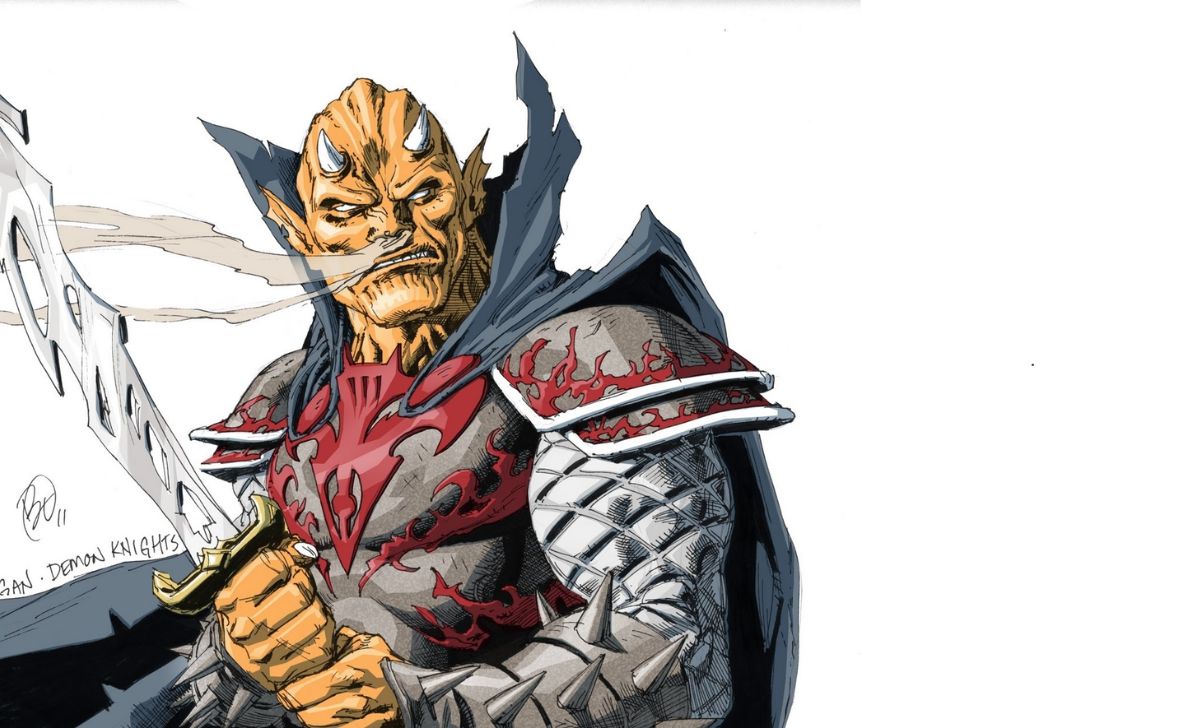
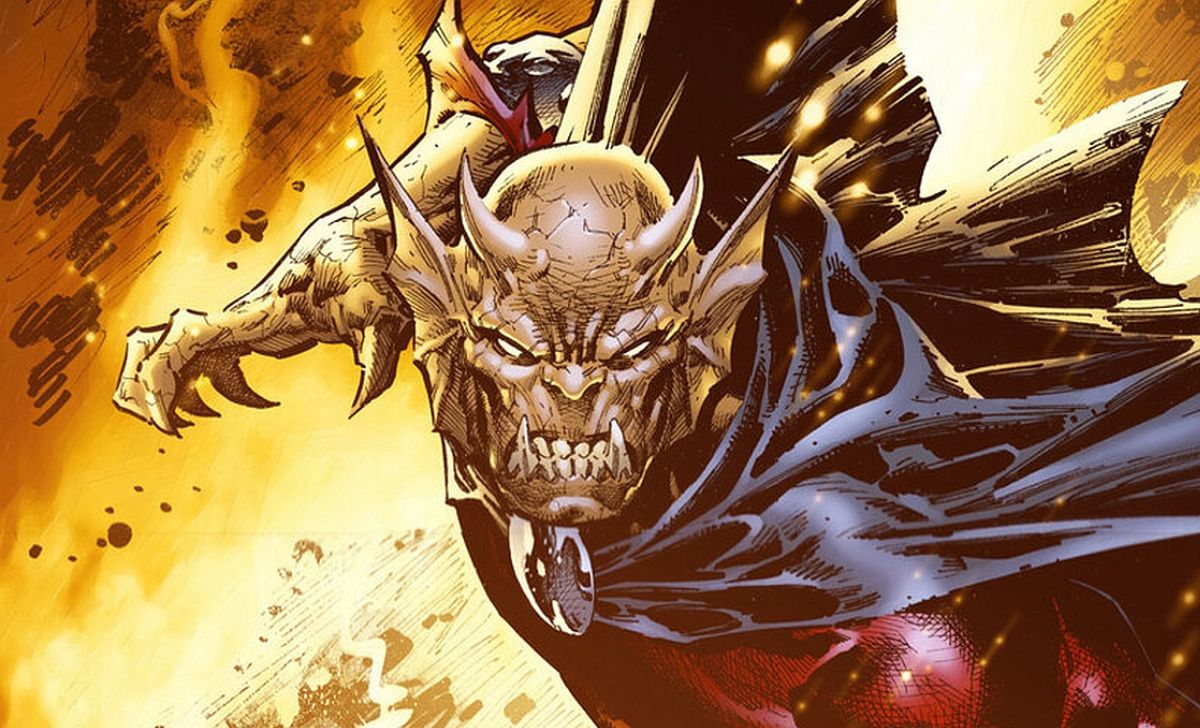
When DC Comics rebooted its universe with The New 52 in 2011, Etrigan received a fresh interpretation in Demon Knights, written by Paul Cornell with art by Diogenes Neves. This series was set during the Dark Ages and featured Etrigan as part of a medieval team of adventurers—essentially a medieval Justice League Dark.
Cornell’s version modified Etrigan’s origin significantly. In this telling, Etrigan was a Rhyming Demon who served Lucifer before leading a rebellion against him. Jason of Norwich was a scribe to Merlin who suffered from terrible rages. A prophecy warned that without a quest to channel his anger, Jason would kill his lover, Madame Xanadu. When Camelot fell, Merlin bonded Etrigan to Jason to provide that quest and prevent the prophecy’s fulfillment.
Demon Knights showcased a fresh take on familiar characters, with the team including Madame Xanadu, Vandal Savage, Shining Knight, and other warriors defending medieval Europe from threats like Morgaine le Fey and Mordru. The series ran for 23 issues and was praised for its blend of sword-and-sorcery adventure with DC Universe mythology.
Following Demon Knights, Etrigan has appeared in various DC titles including Justice League Dark, Batwoman, Swamp Thing, and Secret Six. He received a new limited series, The Demon: Hell is Earth, bringing the character back to prominence in DC’s supernatural corner.