
Deadman, one of DC Comics’ most enduring supernatural heroes, is a character steeped in mystery, mysticism, and tragedy. Created during the Silver Age, Deadman (Boston Brand) has captivated readers with his unique ghostly abilities and his quest for justice from beyond the grave. Exploring Origin of Deadman In DC Comics sheds light not just on Brand’s journey, but on the ways DC Comics has woven horror, spirituality, and redemption into the fabric of its superhero universe.
Origins in the Silver Age
Deadman debuted in “Strange Adventures” #205, published in October 1967. The character was created by writer Arnold Drake and artist Carmine Infantino, both legendary figures in comic book history. At a time when superhero comics were grappling with the limits set by the Comics Code Authority, Deadman presented a bold new direction: a spectral protagonist whose adventures leaned heavily into mysticism, existential questions, and even horror.
Arnold Drake conceived Deadman out of a desire to inject fresh, unconventional ideas into comics. The mid-1960s saw Western audiences growing interested in Zen Buddhism, the Hare Krishna movement, and other forms of Eastern mysticism. Drake drew on these influences, particularly the notion of unresolved existence after death, and married them with the visceral thrills of a murder mystery.
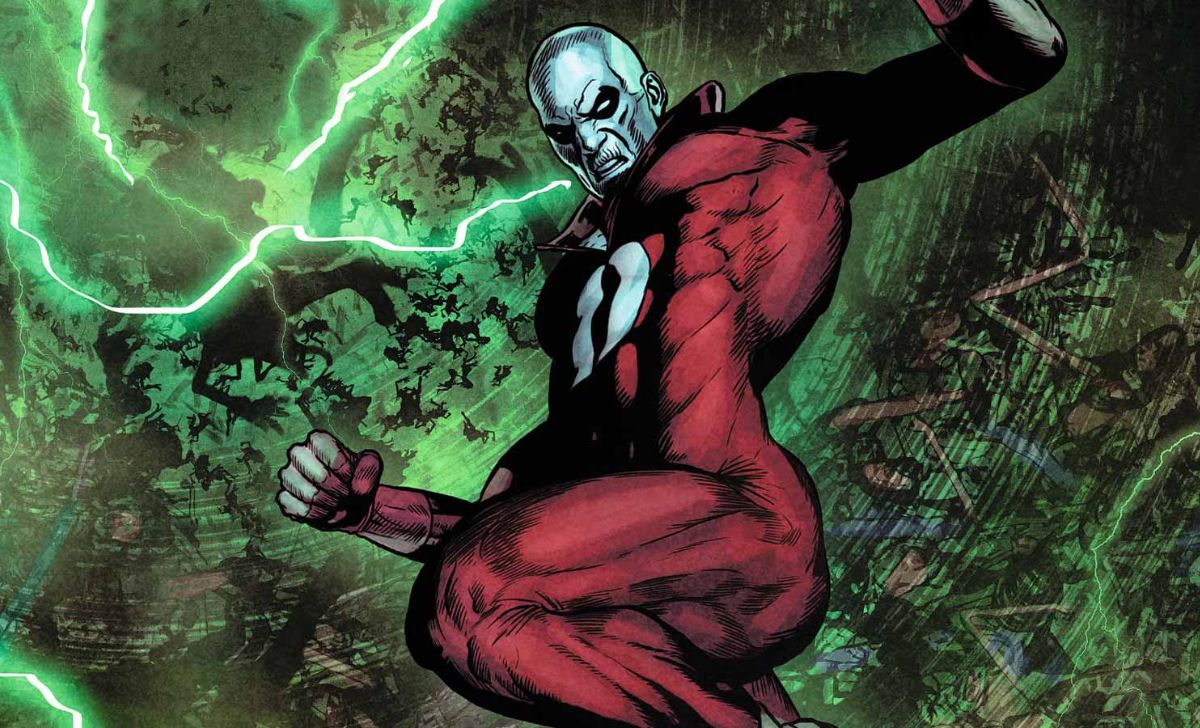
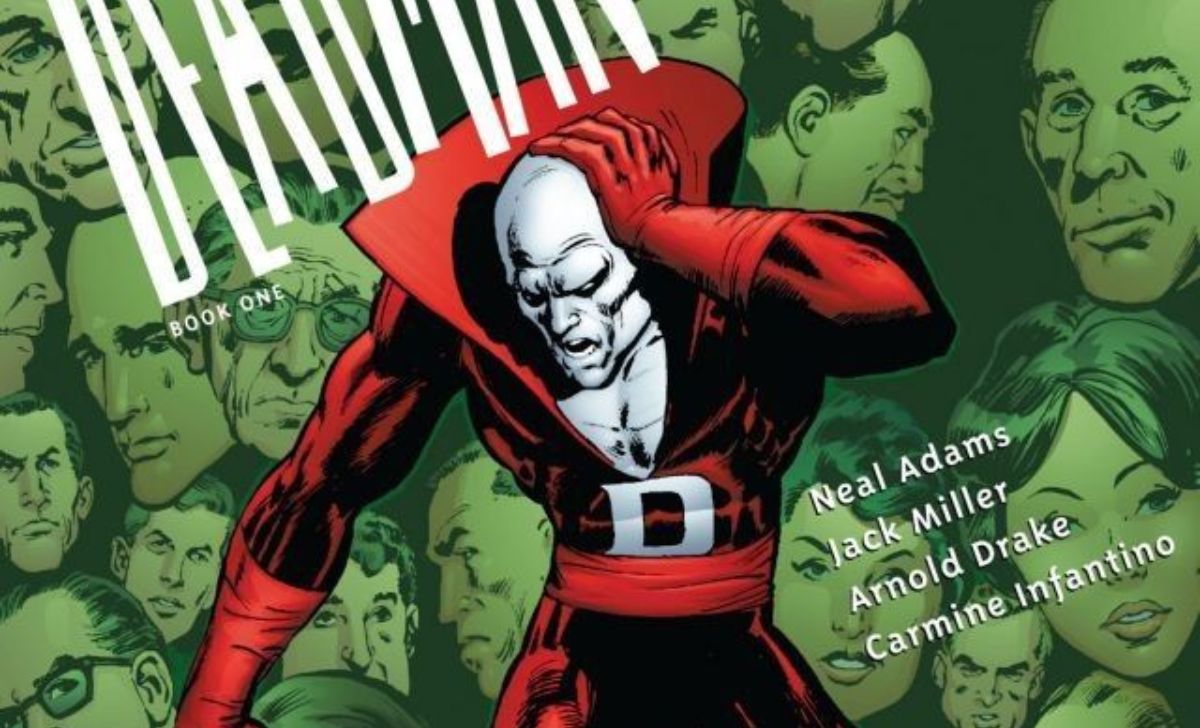
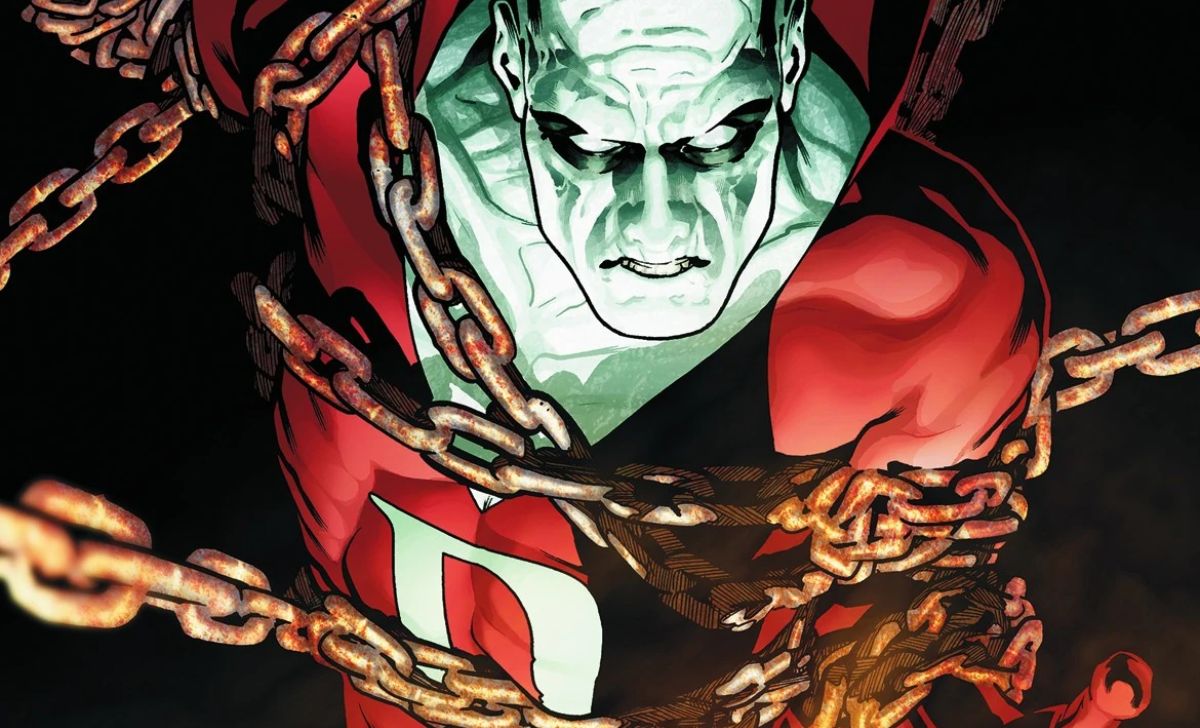
Initially envisioned as a skeleton-like figure, Deadman would become Boston Brand, a brash circus aerialist famed for his death-defying stunts and cryptic stage persona. “Deadman,” with his ghastly white paint and flamboyant red costume, was both a literal and symbolic role for Brand—a living man haunted by death long before he died.
The Murder and Transformation
Boston Brand’s life changed forever during a fateful circus performance. Known as one of the world’s best acrobats, he thrilled crowds with his extraordinary skills and fearless attitude. But during one show, a mysterious killer known only as “The Hook” shot Brand from the shadows, sending him plunging to his death in front of a horrified audience.
Rather than passing on, Brand’s spirit was intercepted by Rama Kushna, a Hindu deity who presided over the hidden city of Nanda Parbat. Rama Kushna offered Boston a second chance—not at life, but at justice. She granted him the power to inhabit any living body and to walk unseen among mortals, facilitating his hunt for the identity of his murderer and his quest to balance the scales of justice for others.
Brand became a literal “Deadman” – a ghost with unfinished business. He retained his personality, memories, and determination, but could only interact with the world by possessing the bodies of the living. This power was coupled with supernatural knowledge, the ability to communicate with spirits, flight, invisibility, and intangibility. Brand’s world was now a lonely one, filled with fleeting connections and very few who knew his true identity.
The Stake in Mysticism and the Comics Code
Deadman’s origin is as much about the dawn of supernatural superheroes as it is about the shifting landscape of American comics in the late 1960s. At a time when depictions of death, ghosts, and other taboo horrors were typically prohibited by censors, DC found a clever loophole: rooting Brand’s transformation in Eastern mysticism rather than Western occultism. The Comics Code was mitigated by framing Deadman’s existence through the benevolence of Rama Kushna and the ways of Nanda Parbat, not the specter-filled lore of vampires and ghouls.
This infusion of Eastern philosophy—particularly the focus on karma, reincarnation, and enlightenment—set Deadman apart from other ghostly heroes. He was not just seeking vengeance, but the deeper peace offered by spiritual completion. This angle allowed the writers to pursue mature themes: loss, atonement, and the search for meaning beyond death.
Early Adventures and The Hook’s Secret
In his first story arc, Deadman used his new abilities to investigate his own murder, moving from body to body in search of clues. His journey took him deep into the seedy underworld and ultimately led to the revelation that his assassin, The Hook, was carrying out a ritualistic initiation to join an elite society of killers, sometimes linked to groups such as the League of Assassins or the Scavenger Cult, depending on the continuity.
After finally bringing The Hook to justice, Boston Brand’s journey was far from over. Rama Kushna revealed that Boston’s mission extended beyond personal vengeance—he was charged with maintaining balance between good and evil and serving as an agent of justice from the spirit world. Deadman’s stories thus shifted from solving a single murder to investigating mysteries, supernatural threats, and spiritual dilemmas that other heroes could not resolve.
Continuing Legacy and Evolving Role
Neal Adams, one of the most influential artists in comics, took over the character soon after his debut. Adams’s arresting, cinematic art style left an indelible stamp on the series, further enhancing the eerie, atmospheric quality of Deadman’s tales and solidifying his place as a DC mainstay.
Through the 1970s and ‘80s, Deadman appeared as a guest star in titles such as “The Brave and the Bold,” often teaming with Batman and eventually becoming so familiar that even the Caped Crusader was unfazed by Brand’s ghostly presence. Brand also interacted with other mystical figures, including the Spectre and Zatanna, marking him as a crucial part of DC’s supernatural pantheon.
Deadman’s journey is often marked by pathos and a bittersweet sense of detachment. With each possession, he feels the lives and emotions of others, yet remains fundamentally alone—unable to physically touch or truly know anyone. This existential loneliness is a recurring theme, one that gives Deadman’s stories a poignant, reflective depth.
Post-Crisis, The New 52, and Justice League Dark
After “Crisis on Infinite Earths,” Deadman received new limited series that explored his relationship with Rama Kushna and his continuing role as a spiritual agent. While he never achieved A-list popularity or a definitive, long-running solo series, he became a staple in the background of DC’s mystic and horror-centric stories.
The 2011 New 52 reboot brought Deadman to a wider audience as part of Justice League Dark, DC’s supernatural superhero team. In this role, Deadman finally found an ongoing function alongside other outcast heroes like John Constantine, Zatanna, and Swamp Thing. During these years, he was sometimes restored to life, briefly engaged in relationships (notably with Dove of Hawk & Dove), and explored new facets of his cosmic responsibilities. His visual style also shifted with each era, from the athletic and mysterious to the gaunt and haunting, particularly as rendered by artists such as Kelley Jones.
Publications and Adaptations
Deadman’s original run in “Strange Adventures” was reprinted in several collections and celebrated with multiple miniseries, including “Love After Death” and “Exorcism.” He won the prestigious Alley Awards soon after his debut, including the 1967 Best New Strip and a 1968 Hall of Fame honor, testifying to his immediate impact on readers and critics alike.
Apart from comics, Deadman has appeared in animated serious and feature films, voiced by well-known actors such as Michael Rosenbaum and Nicholas Turturro, and was featured in “Justice League Unlimited” and “Justice League Dark.” Each adaptation reinforced his characterization as a tormented but compassionate spirit seeking redemption.