
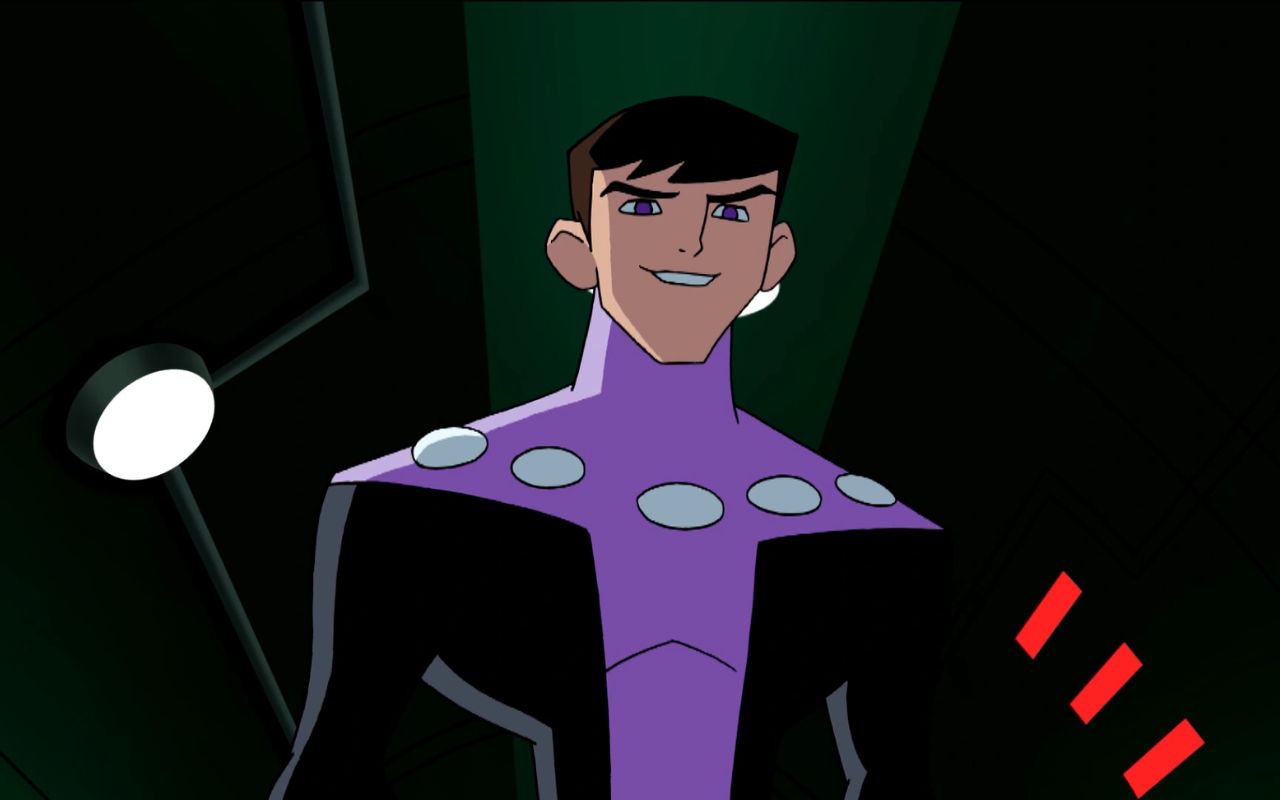
In the vast pantheon of DC Comics superheroes, few characters hold the distinction of being true founders of legendary teams. Cosmic Boy—born Rokk Krinn on the planet Braal—stands as one of these rare pioneers, serving as a founding member and the first leader of the Legion of Super-Heroes. His journey from a championship athlete to one of the most influential heroes of the 31st century represents a compelling narrative of leadership, sacrifice, and unwavering heroism that has captivated readers since 1958.
Creation and First Appearance
Cosmic Boy burst onto the comic book scene in Adventure Comics #247 in April 1958, created by writer Otto Binder and artist Al Plastino. This historic issue marked not only the debut of Cosmic Boy but also the first appearance of the Legion of Super-Heroes itself, a team that would become one of DC’s most enduring franchises. In that inaugural story, three teenagers from the 30th century—Lightning Boy (later Lightning Lad), Saturn Girl, and Cosmic Boy—traveled back in time to meet their hero, Superboy, inviting him to join their “super-hero club” inspired by his legendary exploits.
The character was conceived during the Silver Age of comics, a period when science fiction concepts and futuristic settings captivated readers’ imaginations. The Legion’s premise—young heroes with diverse powers from different planets united in common purpose—resonated deeply with audiences, and Cosmic Boy’s role as the team’s natural leader established him as a cornerstone of the franchise from day one.
The Birth of a Hero: Rokk Krinn’s Origins
Rokk Krinn’s origin story is deeply intertwined with his homeworld and family circumstances. Born on Earth in the mid-30th century to Braalian parents Hu and Ewa Krinn, Rokk’s birth on Terra rather than his parents’ native Braal proved significant. His family had left the economically-depressed planet Braal seeking better opportunities on Earth. Whether Rokk’s extraordinarily powerful magnetic abilities stem from being born within Earth’s strong magnetic field or despite it has never been definitively established, but the result was undeniable—his powers far exceeded those of typical Braalians.
When Rokk was still young, his family returned to Braal, where he grew up amid the harsh, bleak landscape of a rocky, economically-struggling world. Despite these hardships, young Rokk was determined to help support his family. He channeled his exceptional magnetic talents into mastering magno-ball, Braal’s most popular sport and virtually the planet’s only source of pride. This sport, which involves manipulating an iron ball using magnetic powers to score goals, could only be played by Braalians, yet it had become a showcase event at the Cosmic Games with galaxy-wide viewership.
Rokk’s natural gifts and relentless training paid off spectacularly. By age 13, he had become a two-time Intergalactic Magno-Ball champion, earning the nickname “Cosmic Boy” for his dominance in the Cosmic Games. He sent most of his considerable earnings home to his struggling parents, unaware that in some timelines his manager was embezzling his money. His athletic success made him a celebrity, offering a beacon of hope for his depressed homeworld.
The Fateful Meeting That Changed History
At age 14 or 15—the age of Braalian adulthood—Rokk decided to leave his homeworld and travel to Earth, seeking better work opportunities to support his family. This journey would alter the course of 31st-century history. Aboard the spacecraft bound for Earth, Rokk met two other young passengers: Garth Ranzz from Winath, who possessed the ability to control electricity, and Imra Ardeen from Titan, a natural telepath. The three teenagers quickly formed a friendship during their voyage.
The pivotal moment came when their ship arrived on Earth. During what should have been a routine landing, the trio witnessed an assassination attempt on R.J. Brande, one of the wealthiest and most influential figures in the galaxy. Without hesitation, Rokk, Garth, and Imra sprang into action. Working together instinctively, they used their respective powers to save Brande’s life, thwarting the assassin Horraz’s deadly plot.
Brande, deeply impressed by not only the youths’ powers but also their courage, quick thinking, and teamwork, saw something extraordinary in them. As a visionary businessman and humanitarian, he recognized an opportunity to channel their potential for the greater good. Brande approached the three young heroes with an unprecedented offer: he would fund and sponsor them to form an organization of young super-heroes who could serve as goodwill ambassadors for the United Planets while protecting the galaxy from threats.
Inspired by the legendary exploits of 20th-century heroes—particularly Superman’s deeds as Superboy—the trio accepted Brande’s proposal and founded the Legion of Super-Heroes. As one of the three founding members, Rokk adopted his magno-ball nickname officially, becoming Cosmic Boy. Through team consensus and later through the endorsement of UP-appointed leader Leviathan (who stepped down recognizing Cosmic Boy’s superior leadership qualities), Rokk became the Legion’s first official leader.
Powers and Abilities: Master of Magnetism
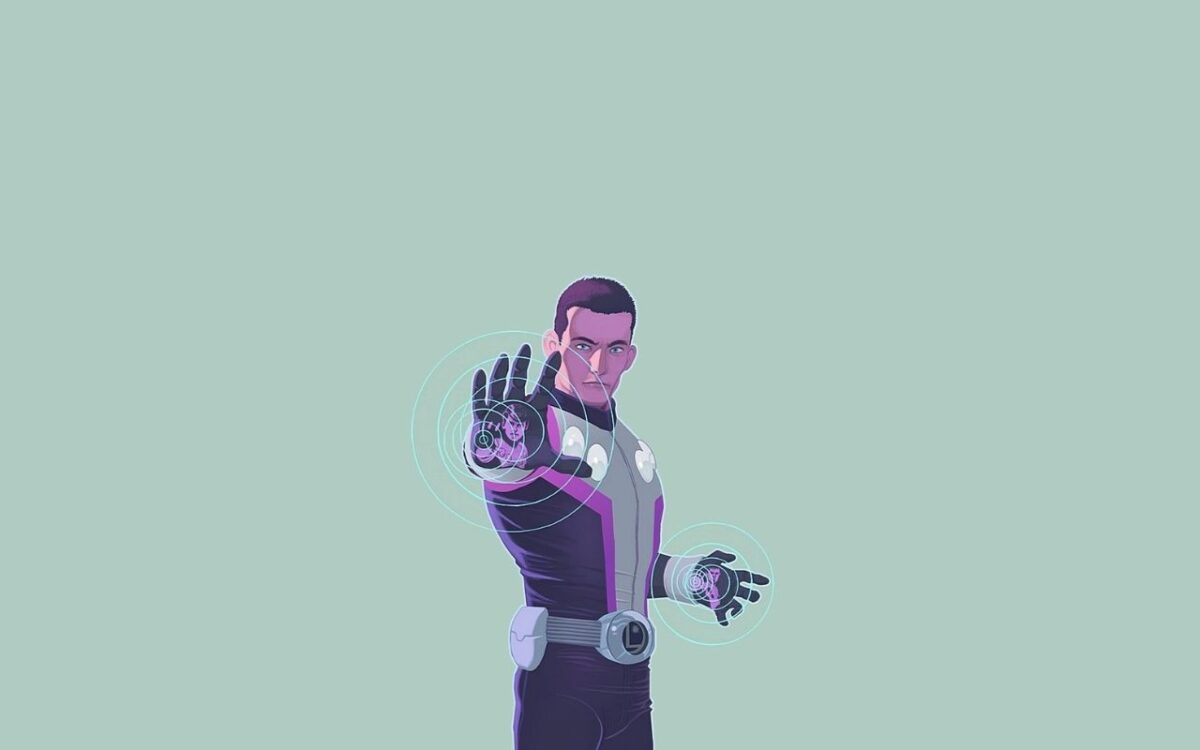
Cosmic Boy’s powers stem from his Braalian heritage, though his abilities far surpass those of average members of his species. All natives of Braal evolved the innate ability to manipulate magnetic fields due to their planet’s intense electromagnetic environment, but Rokk’s powers—possibly enhanced by his birth on Earth—represent the pinnacle of Braalian magnetic mastery.
Magnetic Manipulation and Control
At the core of Cosmic Boy’s abilities lies his extraordinary control over magnetic fields, electromagnetic spectrums, and metallic materials. His prodigy-level powers allow him to:
- Attract, repel, and manipulate any magnetic metal or ore with precision down to the microscopic level
- Shatter steel walls and structures with concentrated magnetic force
- Repel projectiles including bullets, missiles, and energy weapons
- Pull satellites from orbit demonstrating his ability to affect objects at great distances
- Shape and mold metal to his will, creating tools, weapons, or barriers instantaneously
- Affect living beings by manipulating the trace metals in their bloodstream, though this dangerous technique risks killing and is extremely rarely used
Advanced Applications
As Cosmic Boy has honed his abilities over years of Legion service and athletic training, he has developed increasingly sophisticated applications of his powers:
Force Fields: He can generate powerful magnetic shields capable of withstanding attacks from multiple Daxamites at full strength and even enduring 1000-megaton explosions, though such extreme defensive measures cause significant physical strain.
Flight: By manipulating planetary magnetic fields and ley lines, Cosmic Boy can fly at near-light speeds even within atmospheres, instinctively sensing and riding magnetic currents.
Electromagnetic Vision: One of his more exotic abilities allows him to perceive the entire electromagnetic spectrum—from radio waves and microwaves through infrared, visible light, ultraviolet, X-rays, and gamma rays. This enhanced perception lets him detect cloaked or invisible objects and even read the electromagnetic “auras” of people, including their emotional states.
Electromagnetic Pulse (EMP): When concentrating, Rokk can emit a devastating EMP that disables all unshielded electronic devices over several kilometers, though he rarely uses this power due to its uncontrollable environmental effects.
Magnetic Sense: As a living magnetic field himself, Cosmic Boy can feel distortions and fluctuations in magnetic fields around him, giving him a near-precognitive awareness of incoming threats.
Skills Beyond Powers
Rokk’s abilities extend beyond his innate powers. His championship magno-ball career honed his accuracy and precision to peak levels. Years of Legion service developed his expertise in hand-to-hand combat, including the Braalian martial art ku-jui, piloting various spacecraft, tactical planning, and military strategy. His natural charisma and tactical brilliance make him an exceptional leader, earning the respect and loyalty of teammates even during difficult periods.
Building the Legion: Leadership and Growth
As the Legion’s first leader, Cosmic Boy faced the monumental challenge of transforming a trio of teenagers into a respected intergalactic organization. Under his guidance during the team’s crucial first year, the Legion expanded from three founding members to an 18-member team of heroes representing diverse worlds and abilities. His leadership style emphasized unity, strategic thinking, and bringing out the best in each team member’s unique abilities.
Cosmic Boy’s tenure as leader was marked by several defining characteristics. He maintained an almost magnetic pull on the team (quite fitting for his powers), serving as the stabilizing force that kept diverse personalities and abilities working cohesively. His relationship with the equally brilliant but sometimes difficult Brainiac 5 proved particularly complex, with their philosophical differences about leadership and tactics occasionally creating rifts within the team. While Brainiac 5’s genius made him invaluable, Cosmic Boy’s tactical skills and ability to inspire made him irreplaceable as a field commander.
Relationships and Personal Life
Night Girl: A Love Across Teams
One of the most endearing aspects of Cosmic Boy’s story is his relationship with Lydda Jath, better known as Night Girl. Lydda, daughter of a renowned scientist from the perpetually dark world of Kathoon, initially tried out for the Legion motivated by her instant crush on its leader. Though rejected because her super-strength only functioned in darkness or near-total absence of light, she joined the Legion of Substitute Heroes instead, staying close to the Legion—and to Cosmic Boy.
Despite the unusual beginnings (Night Girl essentially stalked him after seeing him on television), their relationship evolved into one of the Legion’s most stable romances. Night Girl proved herself time and again as both a formidable combatant and Cosmic Boy’s emotional anchor, even saving him from himself when grief and rage nearly drove him to murder. In some timelines, the couple married after the Magic Wars and had a son named Pol Jath Krinn, honoring Cosmic Boy’s fallen brother.
Family Tragedy: The Krinns
Cosmic Boy’s family remained central to his identity throughout his Legion career. His parents, Hu and Ewa, eventually moved to Earth to be closer to their famous son. The family’s closeness made the tragedy that befell them even more devastating. During a terrorist attack called “fireballing,” a nuclear bomb detonated near the Krinn family home on Earth, hospitalizing Rokk’s father and younger brother Pol, and killing his mother Ewa.
This event nearly broke Cosmic Boy. Consumed by grief and rage, he tracked down the terrorists to the prison planet Takron-Galtos, intent on violating the Legion code by executing them. Only Night Girl’s intervention—literally knocking him unconscious—prevented him from crossing that irreversible line. The incident demonstrated both the depth of Cosmic Boy’s humanity and the importance of having someone who could reach him even in his darkest moments.
The tragedy had another profound effect: it inspired Rokk’s younger brother Pol to follow in his footsteps. Enrolling in the Legion Academy, Pol took the name Magnetic Kid, wearing his brother’s old costume and developing his own formidable magnetic abilities. Though Pol intended initially to join the Science Police rather than the Legion (due to the Legion’s rule against duplicate powers), he applied for Legion membership after Cosmic Boy retired, becoming Legionnaire #35. Tragically, Magnetic Kid sacrificed himself during the Magic Wars to save the Sorcerer’s World, ensuring that Legion of Super-Heroes could confront the crisis threatening the universe. A statue was erected in his honor on Shanghalla, the cemetery planet for fallen heroes.
The Time Trapper Connection
One of the most bizarre and fascinating aspects of Cosmic Boy’s history involves his connection to one of the Legion’s greatest foes—the Time Trapper. This mysterious being, who exists at the literal end of time and possesses near-omnipotent temporal powers, has had a complex relationship with both Cosmic Boy and the Legion throughout various continuities.
During the pivotal events leading to Zero Hour, Cosmic Boy discovered evidence that the fabric of time itself had been manipulated. When he and Night Girl took a vacation back to the 20th century in 1986, they encountered the real Superman, who claimed no knowledge of the Legion. This revelation led Cosmic Boy to suspect the Time Trapper’s involvement, but when he attempted to inform the Legion, the Trapper kidnapped him, bringing him to the end of time itself.
The full scope of the Time Trapper’s manipulations proved staggering: he had created an entire pocket dimension containing a false Superboy, the hero who had inspired the Legion’s formation. The revelation that their greatest inspiration had been a construct shook the Legion to its core. Even more disturbing, in some timelines, it was revealed that Cosmic Boy himself was destined to become the Time Trapper—a future version of Rokk transformed into the very being who had plagued the team throughout its history.
This temporal paradox—the founder of the Legion potentially becoming its greatest temporal enemy—added layers of complexity to Cosmic Boy’s character. During Zero Hour, these temporal contradictions came to a head, ultimately leading to the erasure of the original Legion timeline.
Legacy Through Multiple Continuities
The DC Universe has undergone several major reboots, and Cosmic Boy’s story has been retold and reimagined multiple times, yet certain core elements always remain.
Post-Zero Hour Reboot
In the post-Zero Hour continuity, Rokk Krinn was still a celebrity magno-ball champion nicknamed “Cosmic Boy” after winning the Magnoball Cosmic Games. His manager Alex Cuspin was embezzling his earnings until Imra Ardeen’s telepathy exposed the scheme. The core origin—saving R.J. Brande with Lightning Lad and Saturn Girl—remained intact, as did his role as the Legion’s first leader.
Threeboot Era
The “Threeboot” continuity presented a different take on Cosmic Boy’s leadership. This version showed more friction with Brainiac 5, with both manipulating team members and undermining each other’s authority as they disagreed on tactics. When Supergirl joined the team from the 21st century, Cosmic Boy helped her realize she wasn’t dreaming and the two had a brief romance. However, his controversial decision to imprison the villain Praetor Lemnos (effectively sentencing him to “death”) and his role in exterminating an entire race led to public backlash. A leadership election was called, and Supergirl replaced him as leader.
Retroboot
Following Infinite Crisis, the original Legion continuity was restored (though without the events of Legion volume 4). In this timeline, Night Girl became an official Legion member, though Cosmic Boy broke off their relationship, ostensibly to protect her. The founding trio’s friendship remained central to the team’s identity.

Retirement, Returns, and Reservist Status
Throughout his long history, Cosmic Boy has cycled between active membership and reserve status multiple times. As the founding members aged and the Legion recruited new blood, Cosmic Boy and his fellow founders felt it was time to step aside, allowing newer members to take the spotlight. He officially resigned to become Senior Advisor, though he could never truly stay away from the team he helped create.
During a period following the Magic Wars, Cosmic Boy lost his powers after exposure to a magnetic dampener during a war between Braal and Imsk. He left active duty and returned to Braal with Night Girl, where they lived together and had their son. When Reep Daggle (Chameleon Boy) reformed the Legion, Rokk rejoined as Polestar, using special gauntlets that replicated his original magnetic abilities. However, these artificial powers began affecting his mind, and he renounced them rather than lose himself to their influence.
Even in retirement, Cosmic Boy founded a new, more serious incarnation of the Legion of Substitute Heroes with Night Girl and former Legion Academy members. His leadership and strategic mind remained valuable resources the Legion called upon during their greatest crises.
Visual Evolution: The Costume Controversy
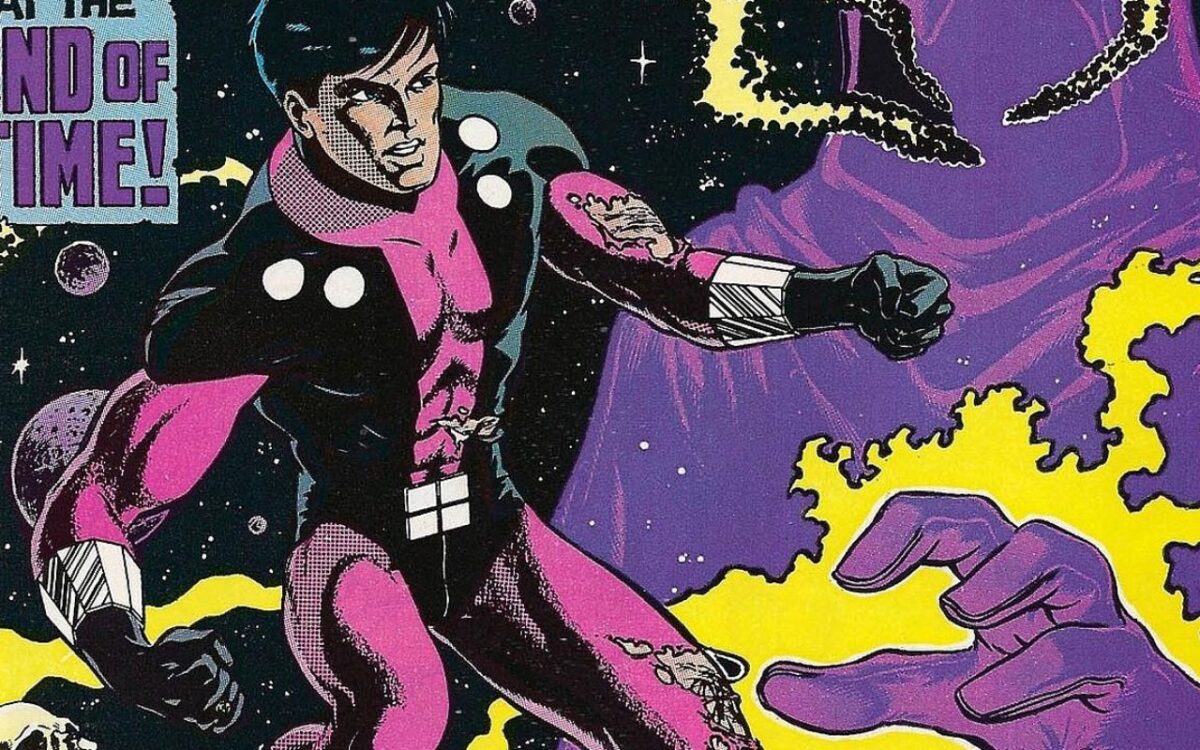
Cosmic Boy’s visual design has evolved considerably over the decades. His original Silver Age costume debuted in 1959, featuring relatively standard superhero aesthetics for the era. However, the character became infamous among comic fans for a particular costume designed by artist Mike Grell in the 1970s—what has been dubbed the “corset” or “bustier” outfit.
This controversial design consisted of a black corset-like top with white trim, black gloves, and black boots, essentially putting a male superhero in an outfit typically reserved for female characters. Interestingly, comic historians have revealed that this look was partially the result of a printing error—areas meant to be colored pink were sometimes left as bare skin, creating the appearance of exposed flesh that colorists in other books then perpetuated. Despite its controversial nature (or perhaps because of it), the outfit has become iconic in discussions of superhero costume design and gender representation in comics.
The Reboot Legion saw Cosmic Boy receive a new costume with design elements harking back to his Silver Age appearance, though modified for a more contemporary aesthetic. Each iteration of the Legion has given Cosmic Boy a fresh visual identity while maintaining recognizable core elements.