
Cheshire, whose real name is Jade Nguyen, is far more than a simple assassin. She represents a compelling study of how trauma, survival, and circumstance can shape someone into a figure both dangerous and, paradoxically, capable of redemption. Her origin story, built across decades of comic book history, reveals a character whose darkness stems from profound tragedy rather than inherent evil.
Birth and Early Childhood Tragedy
Jade Nguyen’s life began under tragic circumstances. Born to a searcher-by-tana-french/”>French or American diplomat father and a Vietnamese mother, Jade’s early years were marked by abandonment and exploitation. Her father abandoned her mother, leaving the family in devastating poverty. In a desperate act of survival, Jade’s mother made the heartbreaking decision to sell her young daughter into slavery. This act of betrayal by the one person meant to protect her would become the foundational trauma that defined her entire existence.
The sale into slavery wasn’t merely an economic transaction—it represented the beginning of Jade’s transformation from an innocent child into a hardened survivor. Trapped in bondage, the diary-of-a-young-girl-by-anne-frank/”>young girl faced unimaginable hardships, yet she possessed something her captors had not anticipated: an indomitable will to survive.
Escape and First Mentors
At just 11 years old, Jade Nguyen performed an act that would forever alter her trajectory. She murdered her owners and escaped from slavery, demonstrating both the cunning and lethal capacity that would define her future. Free but homeless, a young orphan with no formal training or education, Jade needed guidance—and she found it in the underworld.
Her first significant mentor was Weng Chen, a Chinese freedom fighter and guerrilla warfare expert. Unlike her captors, Chen provided Jade with something she desperately needed: structure, discipline, and a system of knowledge. Under his tutelage, she learned the intricacies of hand-to-hand combat, strategic thinking, and survival tactics. This apprenticeship lasted approximately five years until, at age 16, Jade killed Chen and moved on to her next teacher.
The cycle of learning and surpassing her mentors continued when Jade became a student of Kruen Musenda, known throughout the criminal underworld as the “Spitting Cobra”. Musenda was a renowned African assassin specialized in the creation and application of poisons—a skill that would become Jade’s most distinctive trademark. Her time under the Spitting Cobra’s guidance proved transformative. She didn’t merely learn the craft; she mastered it. The relationship evolved beyond mentorship when, at age 17, Jade married Musenda. However, this marriage would be short-lived. After just two years of marriage, Kruen Musenda died, and Jade once again found herself without a mentor, though now she possessed complete knowledge of toxicology and assassination techniques.
The Cheshire Name and Evolution into an Assassin
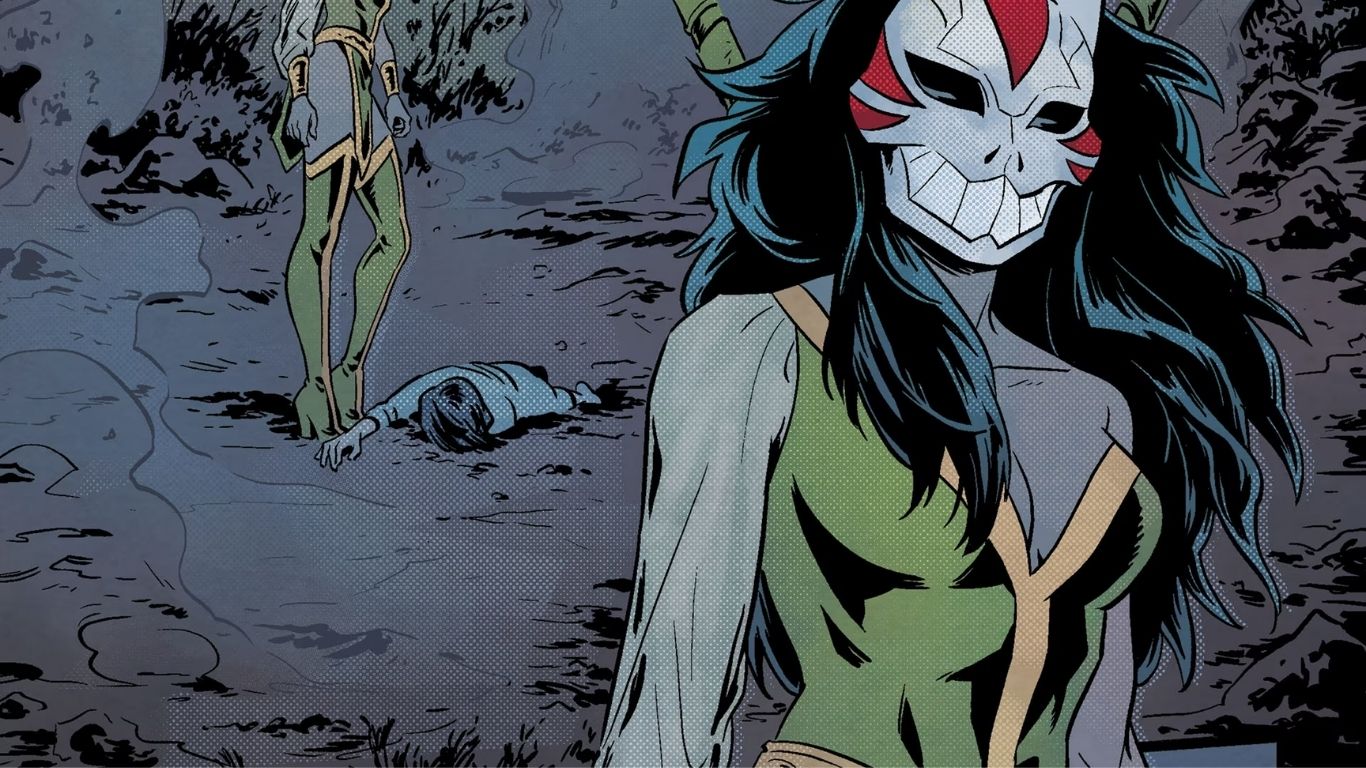
After Kruen’s death, Jade Nguyen formally adopted the alias Cheshire and officially began her career as an independent assassin. The name choice itself carries symbolic weight—the Cheshire Cat from Lewis Carroll’s Alice in Wonderland is known for its haunting grin and ability to disappear, reappearing at will. Like the literary character, Jade’s Cheshire persona would become known for her calculated cruelty and her uncanny ability to appear and vanish from situations.
Creative Genesis: Marv Wolfman and George Pérez
Cheshire made her official debut in New Teen Titans Annual #2 in 1983, created by legendary comic book architects Marv Wolfman and George Pérez. Wolfman, who had returned to DC in 1980 after disputes with Marvel, was relaunching the Teen Titans alongside artist George Pérez. The creative team, responsible for introducing iconic characters like Raven, Starfire, and Cyborg to the DC Universe, sought to populate their narrative with memorable antagonists.
Cheshire was introduced alongside five other assassins in what became a pivotal storyline. Each assassin possessed different specialties and weapons—some wielded spears, others rocket launchers, and one was literally “half a tank”—but out of this crowd of killers, Cheshire stood out remarkably. She proved to be the only female assassin in the group and, crucially, the only one with a meaningful backstory. More impressively, in her first appearance, she managed to out-fight Starfire, one of the most powerful members of the Teen Titans team. For a series at the height of its popularity, this was no minor feat.
The George Pérez Design Philosophy
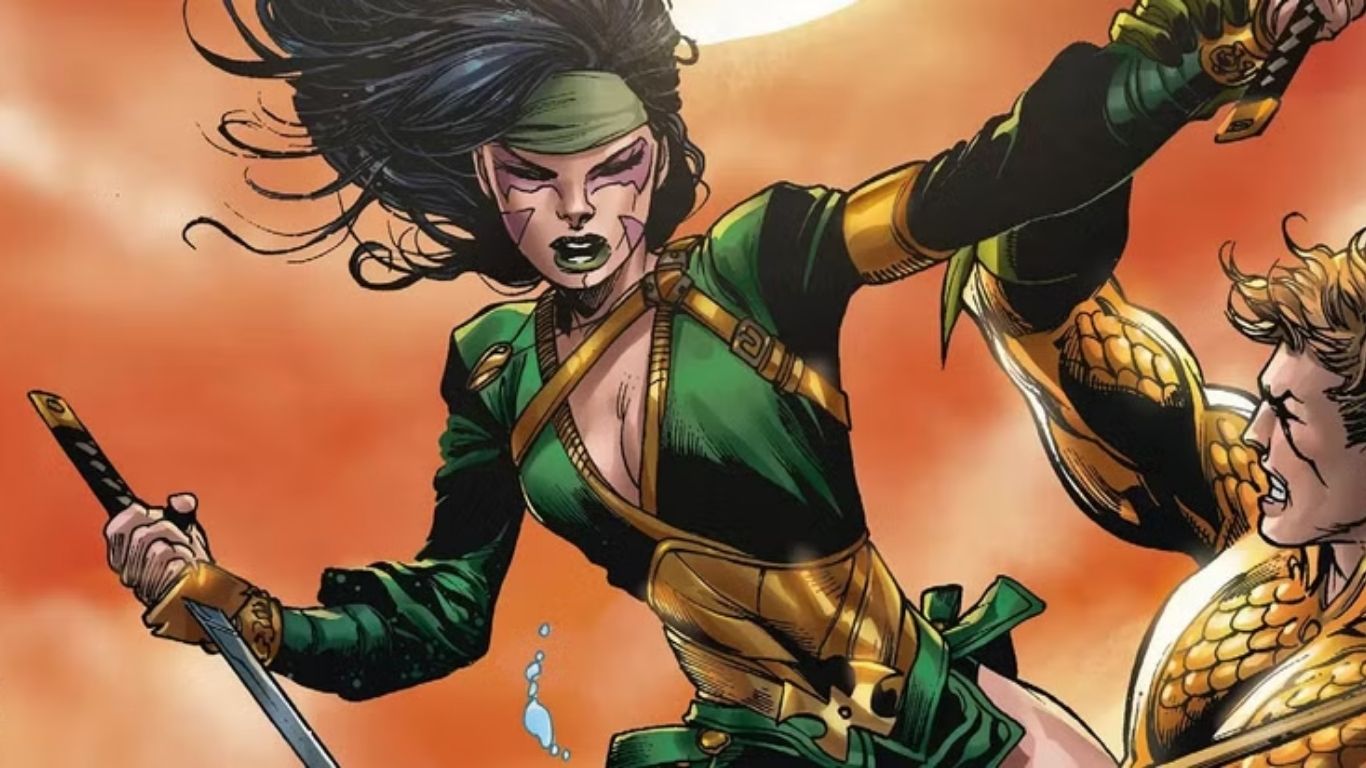
George Pérez’s costume design for Cheshire exemplified his mastery of visual storytelling. She was designed with an asymmetrical costume, a departure from many female characters of the era whose designs were more uniform and generic. This asymmetry wasn’t merely aesthetic—it reflected her role as an unpredictable, unbalanced force of nature. The design conveyed both elegance and danger, femininity and lethality. Unlike many assassin characters that felt derivative or generic, Pérez’s Cheshire had a distinctive visual identity that made her immediately memorable.
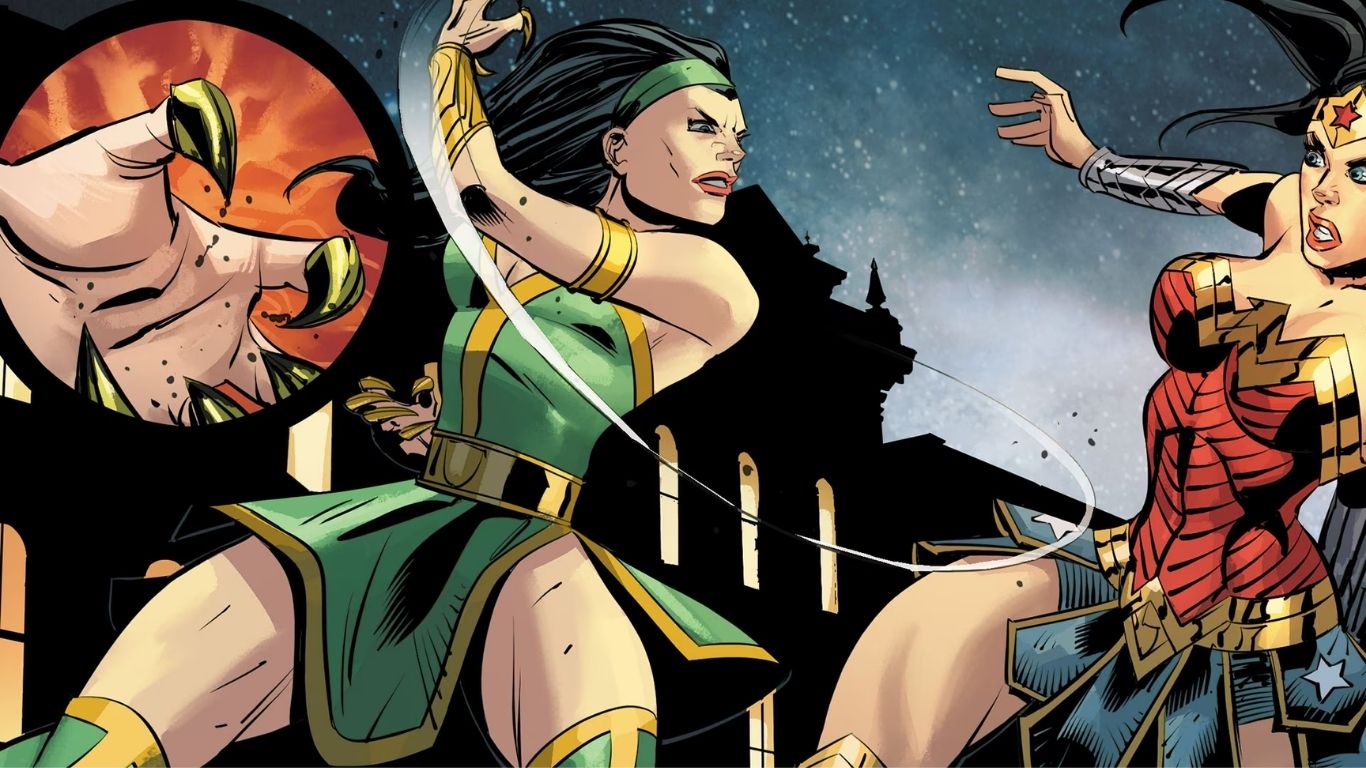
Her most iconic feature became her poisoned fingernails—artificial, elongated nails dipped in various deadly toxins. This choice of weapon was both practical and psychologically revealing. Rather than relying on guns or blades, Cheshire’s weapon was an extension of herself, making her entire body a tool of assassination. The poisoned nails suggested intimacy and precision; she wouldn’t kill from a distance but face-to-face, her femininity part of her tactical approach.
Meeting Roy Harper and the Titans
In the early comic storylines, Cheshire caught the attention of the Teen Titans, but her most significant connection would be to Roy Harper, the red-headed former sidekick of Green Arrow. Roy, operating under the alias Arsenal (and previously known as Speedy), became romantically involved with Cheshire while undercover. What began as a mission of infiltration evolved into genuine feelings on both sides.
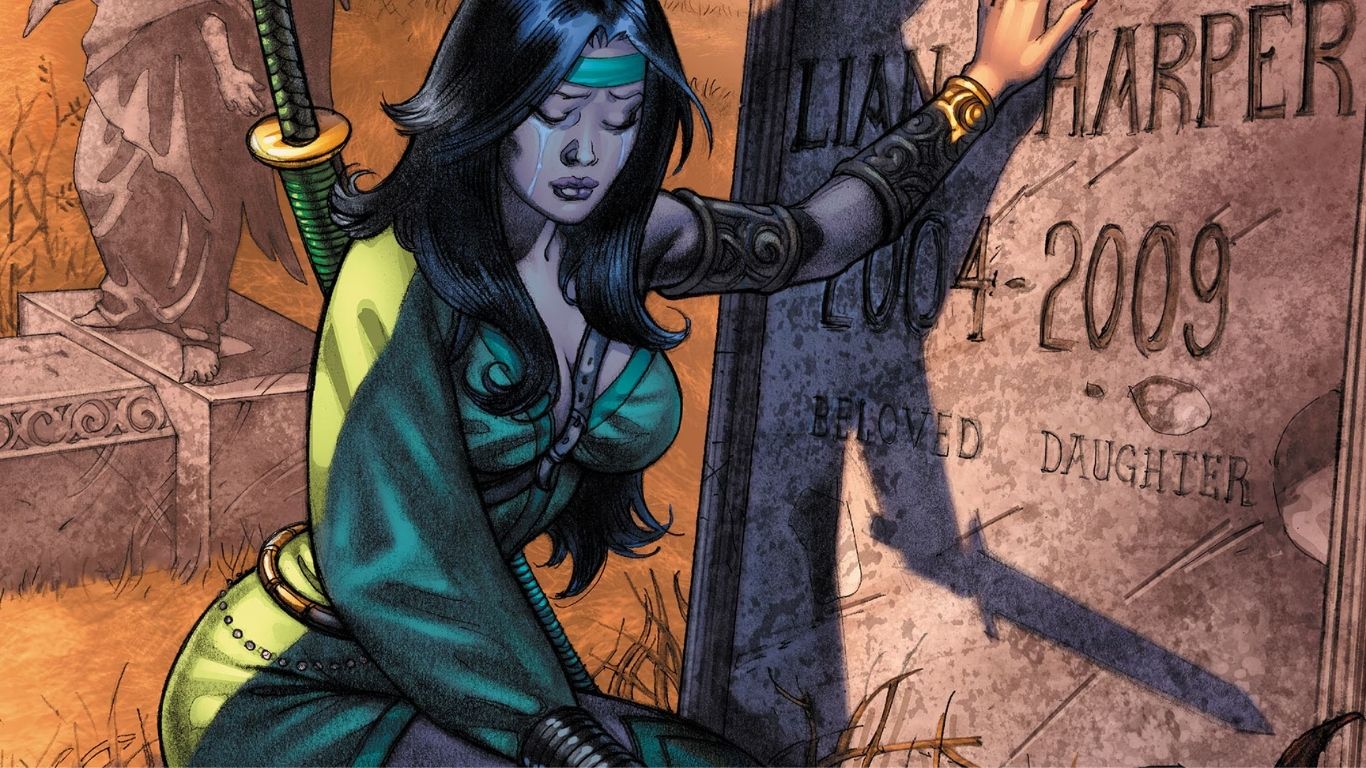
The relationship produced a daughter: Lian Harper, born while her mother remained on the run. The birth of Lian in 1986 (introduced in New Teen Titans Vol. 2 #21) became a pivotal moment in Cheshire’s characterization. It revealed that beneath the cold assassin’s exterior existed a woman capable of love and maternal instinct. When Roy discovered his daughter’s existence and eventually gained custody, he became single father to the young girl, while Cheshire remained imprisoned or operating in the criminal underworld.
Powers, Abilities, and Combat Expertise
Cheshire’s skill set made her one of DC’s most formidable assassins. Her expertise encompassed multiple combat disciplines:
- Martial Arts Mastery: Years of training with Weng Chen, the Spitting Cobra, and other mentors made Cheshire an elite hand-to-hand combatant. She demonstrated the ability to fight evenly with superhumanly strong characters and proved capable of defeating or escaping nearly any opponent through superior strategy and technique.
- Poison Expertise: Her knowledge of toxicology was unparalleled among non-magical assassins. She could synthesize, apply, and weaponize poisons of extraordinary lethality and specificity. Her arsenal included poisons that could kill, incapacitate, paralyze, or create specific effects tailored to her mission requirements.
- Tactical Brilliance: Cheshire was not merely a warrior but a strategist. She could plan operations of impressive scope and manage complex team dynamics, eventually leading her own group of assassins.
- Infiltration and Deception: Her calm demeanor, intelligence, and ability to blend into various environments made her an exceptional spy and infiltrator.
The Complex Villain: Disparities in Character
From her inception, Cheshire presented an interesting narrative paradox that writers have continued to explore. In some stories, particularly those focusing on her romantic history with Roy Harper and her maternal feelings toward Lian, she appeared almost sympathetic—a woman damaged by her horrific childhood, trying to survive and occasionally showing capacity for genuine emotion. In other narratives, particularly the early Deathstroke solo series, she transformed into a ruthlessly efficient, supremely evil villain.
This duality reached its apex in the Deathstroke storyline, where Cheshire was revealed as the leader of the Brotherhood of Evil. In this role, she embarked on one of her most heinous plans: stealing nuclear warheads and detonating one over Qurac, a fictional Middle Eastern nation. The destruction of Qurac and the deaths it caused would become a permanent stain on her record, referenced repeatedly in subsequent appearances and serving as justification for her life sentence imprisonment.
Later Appearances and Character Development
Following her capture after the Qurac incident, Cheshire was repeatedly imprisoned, broke out, recaptured, and returned to custody. She appeared in various series, particularly those featuring female heroes and antiheroes like Wonder Woman and Birds of Prey, where she occasionally worked with other female assassins and villains.
In later Batman stories, Cheshire was featured among an elite group of assassins hired to eliminate Batman. This storyline demonstrated her continued relevance as one of DC’s top assassins, capable of standing alongside legendary killers like Deathstroke and Merlyn.
A Path Toward Redemption
More recently, particularly in Ram V’s Catwoman series, Cheshire’s character trajectory shifted dramatically. Alongside other reformed or reforming villains like Clayface, Firefly, and Knockout, Cheshire pursued a redemption arc. Working with Catwoman to defend Alleytown against the Magistrate—a militaristic force threatening their community—Cheshire demonstrated that her story wasn’t necessarily one of permanent damnation.
A significant moment in these stories saw Jade reunited with her now-teenage daughter Lian, suggesting that the bond between mother and child, despite decades of separation and trauma, remained meaningful. This reunion hinted at the possibility that even the darkest characters in the DC Universe might find reasons to change.
The Lian Mystery and Modern Continuity
Recent storylines have complicated Cheshire’s history further. In modern DC stories, it was revealed that a character called “Shoes” (also known as “Cheshire Cat”) was actually Lian Harper, and that Cheshire had saved and later abandoned her daughter at a church. Lian grew up in Gotham’s Alleytown as a sidekick to Catwoman, eventually adopting her own mantle inspired by her only memory of her mother—the woman in the cat mask who rescued her.
DC has also updated Cheshire’s racial heritage in modern continuity. Rather than being strictly described as half-French and half-Vietnamese, Jade is now more clearly established and emphasized as Vietnamese, with her cultural background playing a more central role in her characterization.