

The origin of Batman’s utility belt in DC Comics is a story of evolution, innovation, and iconic design, stretching back to the character’s earliest appearances in 1939. This blog explores the historical context, major creators involved, and the belt’s transformation into the legendary piece of superhero gear seen today.
Early Beginnings: The First Appearance
Batman’s utility belt first appeared in Detective Comics #29, published in July 1939 and written by Gardner Fox, who became the first writer aside from Bill Finger to contribute to the Batman mythos. In its debut, the belt was described as containing “choking gas capsules,” which Batman could deploy to confound and escape from criminals. This rudimentary function laid the foundation for what would later become a multi-purpose arsenal essential to the Dark Knight’s crimefighting.
Prior to this, Batman was depicted in Detective Comics #27 (May 1939) wearing a simple belt, which was likely intended only to keep his costume together, with no mention of any gadgets or compartments. Within just a couple of issues, Fox transformed the accessory from a mundane part of Batman’s uniform to an innovative and character-defining tool.
The Early Contents and Functionality
During the Golden Age of comics, the contents of Batman’s utility belt were relatively simple. The earliest belts had glass pellets filled with choking gas and by Detective Comics #31 (September 1939), the now-famous Batarang made its first appearance, pulled from a hidden pouch in the belt. Other devices quickly followed in subsequent issues, including the Bat-rope and smaller gadgets, demonstrating Batman’s inventiveness.
Interestingly, the earliest version of the belt sometimes included items that are surprising from today’s perspective. Early Golden Age Batman occasionally carried a firearm in a belt holster, reflecting a grittier approach that changed as the character evolved. When Robin debuted, Batman abandoned carrying guns, and the belt became more focused on non-lethal tools, in line with his growing commitment to justice without killing.
Evolution Through the Silver Age
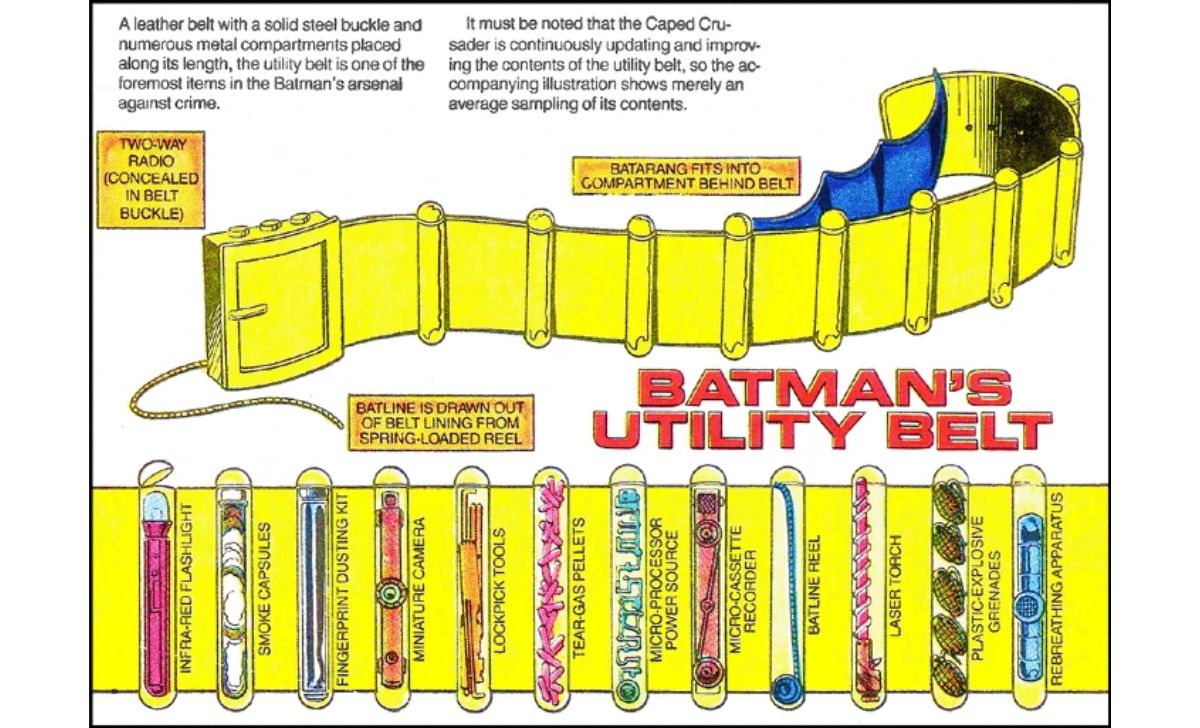
As the Batman mythos matured, so too did the utility belt. The basic design—a yellow belt with a buckle and capsules or cylinders—remained largely unchanged from its introduction in 1939 up until the late 1980s. However, comic writers and artists began to imagine new functions for the belt, loading it with myriad capsules, pouches, and hidden compartments. These could contain tools for forensic investigation, chemical analysis, crime scene documentation, and more—expanding Batman’s ability to solve crimes and navigate dangerous situations.
Many stories referenced Batman’s clever customization of the belt for specific missions, packing items such as smoke pellets, impact grenades, and communicators. The belt’s design also included a radio in the buckle, waterproof compartments for matches, and compartments for money or bat-keys—though these more mundane items were often overlooked by readers and writers in favor of the flashier gadgets.
Redefining the Belt: Modern Era Innovations
In 1986, Frank Miller’s miniseries, “Batman: The Dark Knight Returns,” introduced a dramatic new look for the utility belt, replacing the capsules with military-style pouches. This design choice reflected the narrative’s grittier, more realistic tone and influenced decades of subsequent character renderings. In “Batman: Year One” and “Legends of the Dark Knight,” the pouch-style belt became the standard depiction.
By 2000, pouches were the norm in most portrayals, signaling a shift to a more tactical, paramilitary aesthetic. Artists such as Graham Nolan occasionally added further customization, such as dual pouches on the back, but retained the belt’s essential function as a modular gadget carrier.
Technological Advancements: Grapple Guns and Beyond
As Batman’s tactics evolved, his belt began to feature more sophisticated and specialized devices. The grapple gun, which would eventually become a signature Batman gadget, was first introduced as a manually thrown rope attached to the belt. In Tim Burton’s 1989 “Batman” film, a grappling gun appeared for the first time, launching Batman’s ascent to rooftops in spectacular fashion. Artist Norm Breyfogle later introduced the grappling gun to the comics in “Batman” #458 (January 1991), making it a standard feature in virtually all future Batman stories, including animated series and video games.
Technological improvements also included belt security measures—making it nearly impossible for anyone but Batman or his most trusted allies to access its contents. More advanced versions of the belt incorporated micro-motors for rotating gadgets to the front, chemical sensors, and encrypted communications capabilities. In some stories, Batman even kept kryptonite hidden in a waterproof, lead-lined compartment to use against a rogue Superman.
The Utility Belt in The Bat Family
Variations of the utility belt have appeared in the costumes of Bat-family members such as Robin, Batgirl, Nightwing, and even alternate Batmen like Jace Fox. While these belts differ in styling, compartment layout, and gadgetry, they share the principle of modular accessibility for crimefighting tools. Robin’s earliest belt featured interior pouches for R-shaped throwing weapons and Bird-A-Rangs, while modern versions have exterior pouches mirroring Batman’s own design.
Batgirl initially used a hip-attached purse before adopting a traditional utility belt, demonstrating the practicality of Batman’s approach. Nightwing, meanwhile, integrated his arsenal into his gauntlets and back holster, making his tools even less conspicuous. Each member of the Bat-family adapts the belt’s concept to their own tactical needs.
Iconic Gadgets and “Wonderful Toys”
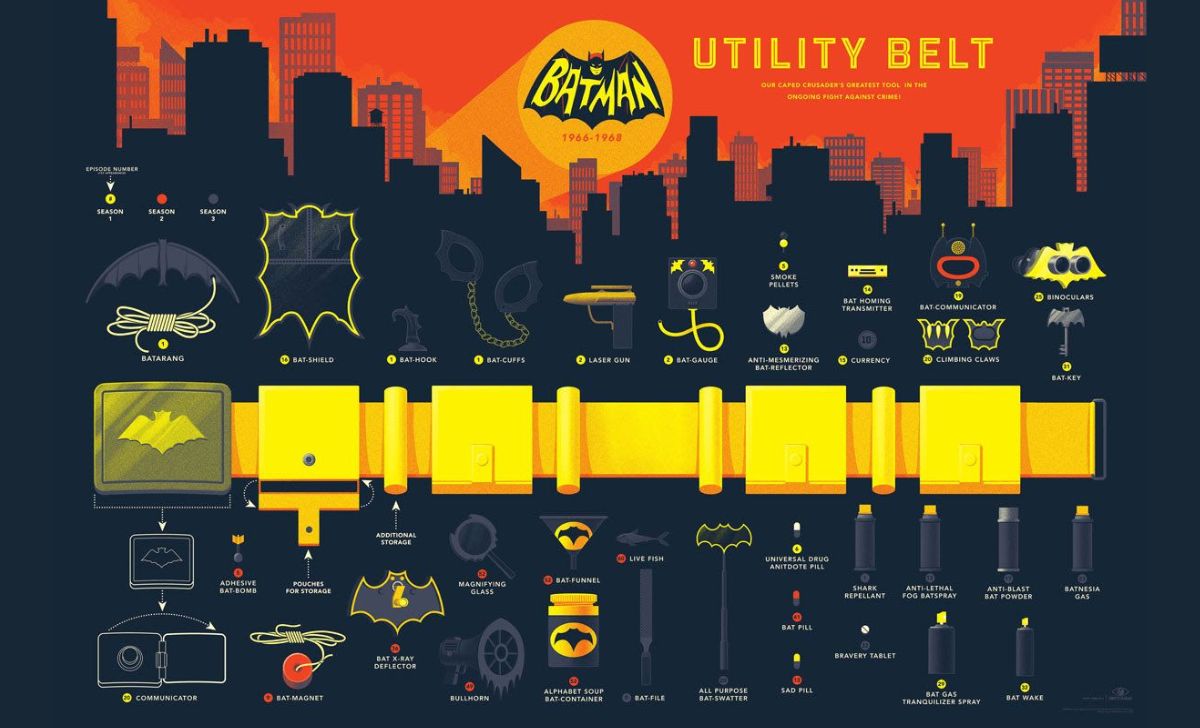
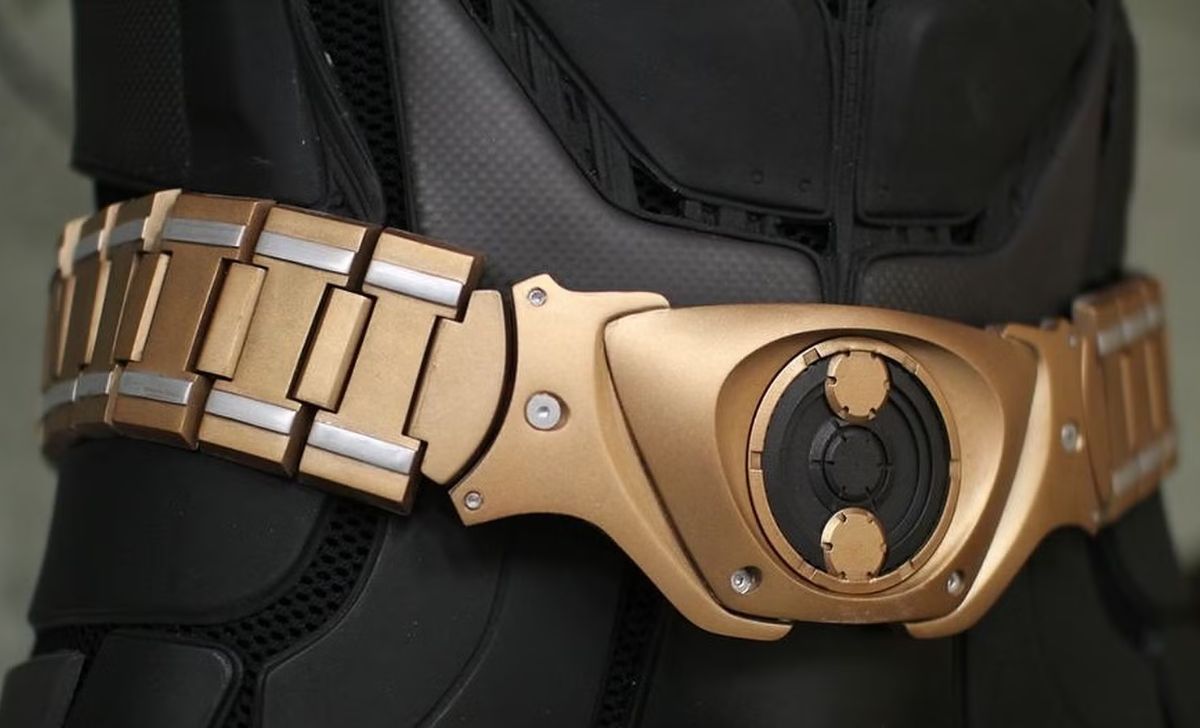
The contents of Batman’s utility belt have included a dazzling array of gadgets over time, becoming a symbol of his resourcefulness. Some of the most recognizable devices include:
- Batarangs: Customizable throwing weapons, often collapsible for compact storage.
- Smoke and gas pellets: Used for escapes and disorienting foes.
- Grapple gun: For scaling buildings and rapid traversal.
- Explosives: Miniature charges for breaching and distraction.
- Forensics and surveillance gear: Including micro-cameras and evidence kits.
- Communications devices: Radios, encrypted transmitters, and tracking systems.
- Kryptonite: Hidden in secure compartments to neutralize threats from super-powered beings.
- First aid kits: Compact supplies for battlefield triage and emergency medical care.
Writers have delighted in inventing new gadgets and showcasing Batman’s preparation for virtually any scenario, reinforcing the character’s image as the “ultimate planner.”