
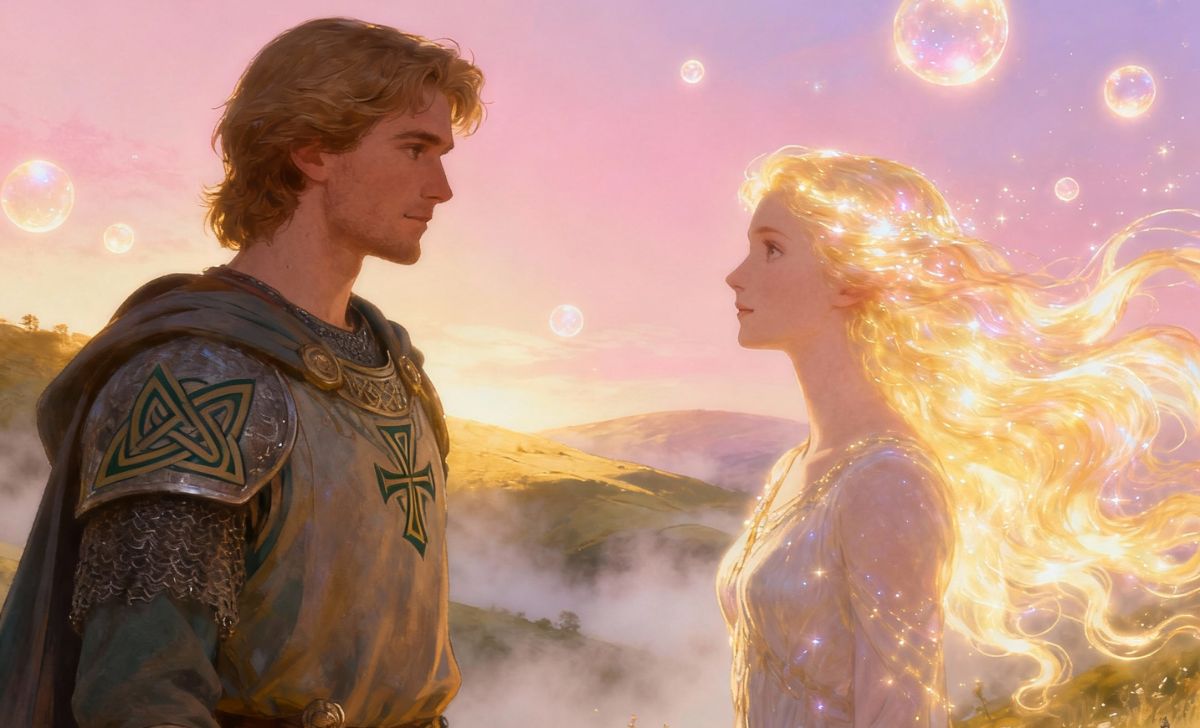
In the rolling green hills and mist-shrouded lakes of ancient Ireland, a tale unfolds that blends heroism, love, and the sorrow of time’s passage. The legend of Oisín and Tír na nÓg celebrates the allure of eternal youth and the bittersweet cost of lost time. This enduring story, woven through the tapestry of Celtic mythology, continues to captivate readers with its vivid imagery, dramatic tensions, and poignant truths.
The Birth of a Hero
Oisín, whose name means “little deer,” descended from the famed Fianna warrior band of Fionn mac Cumhaill. Born of Fionn’s union with Sadhbh—transformed into a fawn by magic and restored to human form—Oisín embodied both the wild spirit of the forest and the valor of his legendary father. From his earliest days, he displayed remarkable poise, strength, and a keen poetic sensibility that set him apart among the Fianna.
Raised in the rugged wilderness of County Sligo, Oisín learned the arts of hunting, poetry, and song. He absorbed the wisdom of druids and the camaraderie of his fellow warriors. He perfected the use of his magical horse, Failinis, renowned for its swiftness and keen senses. As he matured, bards sung of his deeds and poets chronicled his adventures, cementing his reputation as Ireland’s foremost poet-warrior.
The Enchantment of Tír na nÓg
One day, as Oisín hunted in the glen of Glencar, he encountered a radiant maiden by a crystal-clear lake. She introduced herself as Niamh of the Golden Hair, daughter of Manannán mac Lir, the sea god. Niamh glowed with otherworldly beauty and invited Oisín to journey with her to Tír na nÓg—“the Land of Youth.”
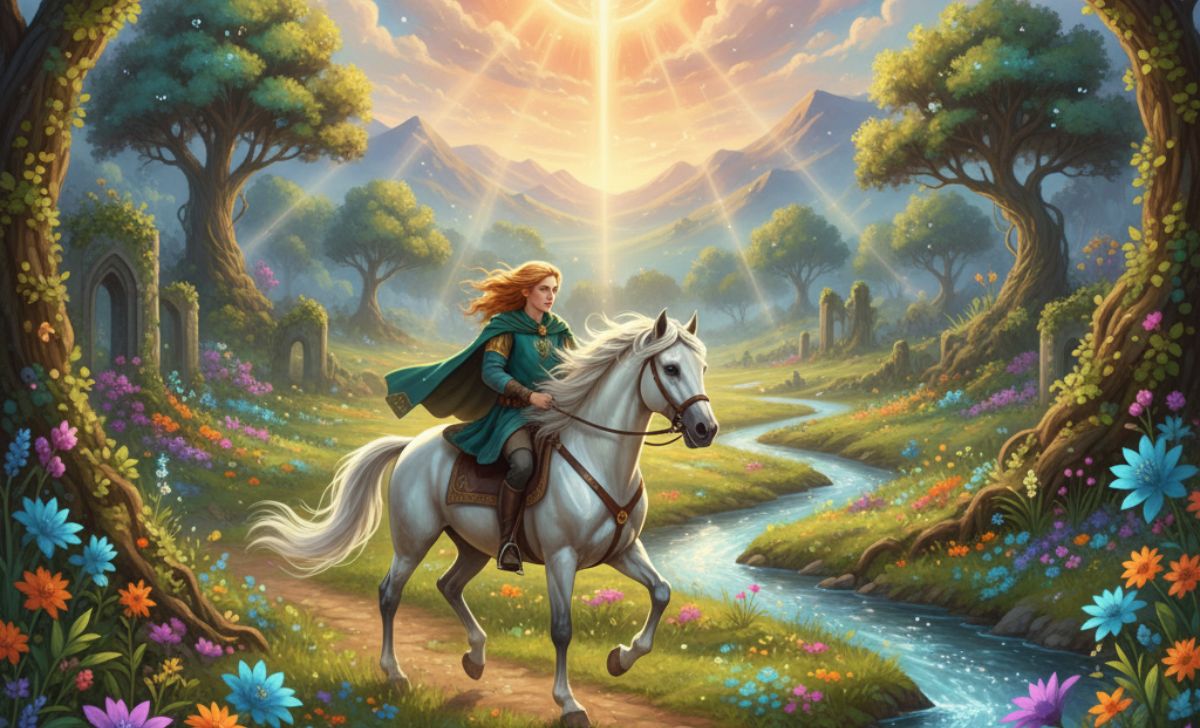
Tír na nÓg lay beyond the western horizon, across storm-tossed seas. It shimmered with verdant meadows, trees laden with fruit, and rivers that sparkled like liquid silver. There, no one aged, no illness ever struck, and each day overflowed with music, feasting, and laughter.
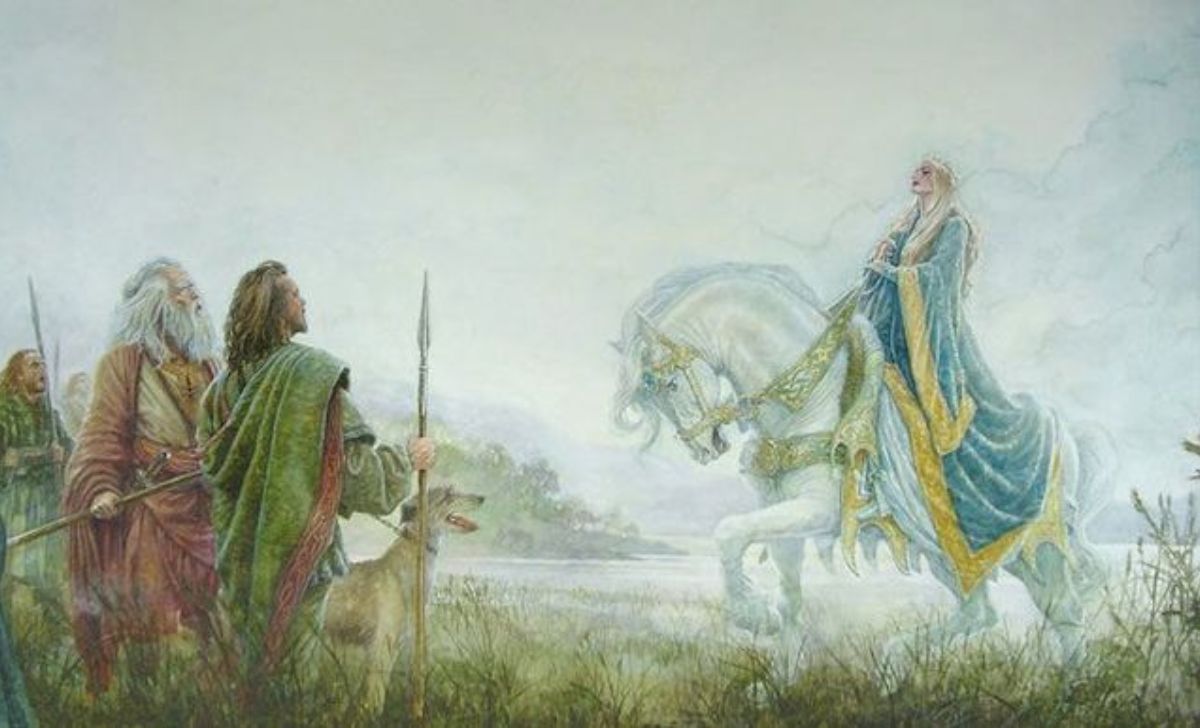
Enchanted by Niamh’s promise, Oisín mounted her ivory steed, Macha. They galloped across the ocean’s surface, their spirits buoyed by magic winds. Within a single night, they arrived in Tír na nÓg. Oisín drank from its enchanted wells and ate its ambrosial fruit. With each passing moment, he felt weightless, free of cares both mortal and mundane.
Life in the Land of Eternal Youth
In Tír na nÓg, Oisín witnessed marvels beyond imagination. Golden deer leapt through emerald glades. Birds sang songs that painted the sky with color. Castles crowned crystal hills, and in every courtyard minstrels performed. Oisín learned to play enchanted harps, attended feasts that lasted seven days, and danced under silver moons.
His love for Niamh blossomed into devotion. They married beneath a canopy of stars and soon welcomed twin sons. Niamh revealed that time in Tír na nÓg flowed differently: one year there equaled one hundred years in Ireland. But Oisín felt no fear; he reveled in each day as if it were all there ever was.
Together, the family explored every corner of the island. Oisín chronicled its wonders in verse, calling down the blessings of the sidhe—Celtic fairies—upon its people. He grew as a bard, his poetry suffused with the essence of eternal beauty. Yet, in moments of quiet longing, distant memories of green hills and mist-laden lakes stirred within him.
The Yearning for Home
As decades slipped by unnoticed, a gentle sadness stirred in Oisín’s heart. He loved Niamh dearly, but he found himself longing for the land of his birth, for Fionn and the Fianna, and for the familiar tang of peat smoke on the wind. He feared that his absence had sorrowed his father, that his comrades had grown old or passed beyond the veil.
With a heavy heart, Oisín confessed his yearning to Niamh. She wept golden tears, warning him that if he returned even for an instant, he would never return to Tír na nÓg. Time’s enchantment bound him irrevocably. Yet, she could not deny his desire.
Niamh provided Oisín with Failinis—his old steed magically restored—and granted him safe passage. She held him close, imploring him to heed her warning. Oisín swore not to dismount, lest the spell break. Armed with hope and dread in equal measure, he set sail across the western sea back to Ireland.
The Tragedy of Lost Time
When Oisín’s ship reached the familiar cliffs of Howth, he marveled at their shape. He urged Failinis inland, scanning every face for a hint of recognition. But the Ireland he remembered had vanished. Fields lay fallow, small hamlets decayed, and no trace of the Fianna remained.
He reached the ancient battlefield of Gabhra, expecting empty graves of his fallen comrades. Instead, thorny weeds lay undisturbed, and bronze weapons crumbled. At last, atop a hill, he spotted an old man digging peat. With a cry, Oisín leapt to the ground, intending to help. His foot struck a stone, and he tumbled to the earth.
The instant his hand brushed the soil, his body aged a century. His hair turned snow-white, and his limbs grew frail. He had broken the spell. Time rushed in all at once, catching up with every lost year. The strength that once carried him across oceans vanished.
The old peasant recoiled in fear, felling Oisín’s precious harp with his spade. Oisín lay among the turf, his voice ragged as he summoned Niamh. But the winds of Tír na nÓg could not reach him now.
Reflections on Desire and Mortality
The legend of Oisín and Tír na nÓg endures as a meditation on human longing and the passage of time. Oisín’s journey reveals two fundamental truths:
First, the desire for eternal youth arises from our fear of loss—loss of loved ones, memories, and ourselves. In Tír na nÓg, Oisín found beauty without end but also emotional stasis. Without change or challenge, life loses its meaning.
Second, time remains inexorable. Even a hero who walks among gods cannot escape mortality forever. Oisín’s tragic return underscores the fragility of human existence and the necessity of embracing life’s fleeting moments.
The Legacy of the Fianna
Though Oisín’s heartbreak marks a tragic end, his poetry lived on. He recited the story to the aged man who found him, passing the tale into the oral traditions. Bards learned his verses, and storytellers spread them across Ireland’s hills and valleys. Generations retold his adventures, ensuring that the spirit of the Fianna and the magic of Tír na nÓg would never fade.
His sons, Per𐞥 and Ardan, whom he left behind in Tír na nÓg, grew into radiant princes. Their descendants, the godlike Tuatha Dé Danann, carried pieces of Oisín’s legacy into realms both mortal and fairy.