

When Nioh first arrived in 2017, it quickly earned a reputation as the strongest soulslike not made by FromSoftware. Its razor-sharp combat, brutal bosses, and dizzyingly deep mechanics set a new bar. Nioh 2 refined that formula, smoothing rough edges and expanding systems, but it largely played things safe. Nioh 3 does not. This is not just a sequel—it’s a bold reinvention that reshapes how the series is played, explored, and mastered.
At its core, Nioh 3 remains a punishing action RPG steeped in Japanese history and supernatural folklore. You once again battle yokai, clash with legendary warriors, and harness mystical powers tied to Guardian Spirits. This time, however, the structure surrounding those familiar elements has dramatically changed. Instead of a traditional mission-based progression, Nioh 3 sends players across massive open battlefields spread through multiple eras of Japanese history, from the Edo Period to the Heian Era, the Bakumatsu Era, and even further back into antiquity. It’s a time-hopping journey that feels far grander in scale than anything the series has attempted before.
A Story That Exists to Serve the Action
Narratively, Nioh 3 sticks closely to the series’ established approach—for better and for worse. You play as Takechiyo, grandson of Ieyasu Tokugawa and heir to the shogunate, tasked with traveling through time to uncover a way to defeat an ancient evil corrupting the present. Historical figures, famous battles, and mythological threats collide in a stylized retelling of Japanese history.
While the premise sounds rich, the execution remains dry. The story largely functions as connective tissue between eras and boss fights, rarely giving players a strong emotional reason to care about what’s unfolding. Cutscenes are brief and well-choreographed, but they don’t linger long enough to build attachment. Fortunately, Nioh 3 knows exactly where its strengths lie, and the narrative never overstays its welcome or disrupts the game’s relentless momentum.
The Best Combat in the Soulslike Genre
Where Nioh 3 truly separates itself from the pack is combat. Simply put, it may be the finest combat system the soulslike genre has ever seen. Every weapon feels precise and weighty, enemy AI is aggressive and unforgiving, and the sheer number of viable playstyles is staggering.
The biggest evolution comes from the introduction of two distinct combat styles: Samurai and Ninja. Samurai Style is classic Nioh—careful stamina management through Ki Pulses, stance switching, parries, and a deliberate balance between offense and defense. It rewards patience, timing, and mastery of fundamentals.
Ninja Style, on the other hand, feels like the series cutting loose. It trades Ki Pulses and stance management for speed, agility, and relentless pressure. Attacks consume far less stamina, allowing players to overwhelm enemies with rapid strikes. Ninja combat also introduces a suite of ninjutsu tools—shuriken, traps, and magical abilities—that recharge as you land hits, making aggressive play not just viable, but encouraged. Dodging behind enemies to exploit powerful backstab damage becomes second nature, and the style feels almost like playing a completely different character.
Crucially, Nioh 3 never forces one style over the other. You can swap between Samurai and Ninja instantly, even mid-fight, and each style has its own gear loadout. Some players may prefer Samurai’s defensive depth and Arts Proficiency system, which rewards clean play with empowered attacks. Others will gravitate toward Ninja’s speed and freedom. The brilliance lies in how seamlessly the two styles complement each other, allowing you to adapt strategies organically rather than obey rigid design rules.
Open Worlds That Reward Curiosity
Nioh 3’s shift to open-world hubs is its most dramatic structural change. While it’s not a seamless open world in the traditional sense, each region is enormous—often taking 15 to 20 hours to fully explore. Maps begin as blank slates, slowly revealing themselves as you push deeper into enemy territory.
Exploration is consistently rewarded. Clearing optional challenges, defeating elite enemies, and uncovering hidden points of interest directly strengthen your character. You’ll discover Kodama spirits, Jizo statues offering powerful bonuses, Guardian Spirit traversal challenges, Masters who unlock new weapon skills, and Lesser Crucibles that enhance your Spirit abilities. As you explore, an Area Exploration rating rises, unlocking stat boosts, skill points, and even marking missed rewards on the map.
This system smartly balances guidance and mystery. You’re never drowning in icons, but you’re also never left wondering if exploration is worth your time. It always is. Even when the environments don’t deliver jaw-dropping surprises, the steady stream of meaningful upgrades makes wandering feel purposeful—especially in a game this demanding.
Difficulty, Crucibles, and the Joy of Growth
Nioh 3 remains brutally difficult. Enemies are aggressive, bosses hit hard, and poor stamina management can leave you stunned and dead in seconds. Yet the open-ended structure makes that difficulty more approachable. When you hit a wall, you’re free to explore, grow stronger, and return better prepared rather than grinding the same corridor repeatedly.
Crucibles stand out as some of the game’s most memorable challenges. These demonic realms act as intense, self-contained trials, often serving as climactic moments in the story. Their unique weapons offer powerful trade-offs—higher damage at the cost of increased vulnerability—reinforcing Nioh 3’s constant risk-versus-reward philosophy.
Even when you outlevel a region, success never comes easily. Boss fights demand sharp reflexes, pattern recognition, and smart use of both combat styles. Pure number grinding won’t carry you through, and that’s exactly why victories feel so satisfying.
Customization Depth—A Blessing and a Curse
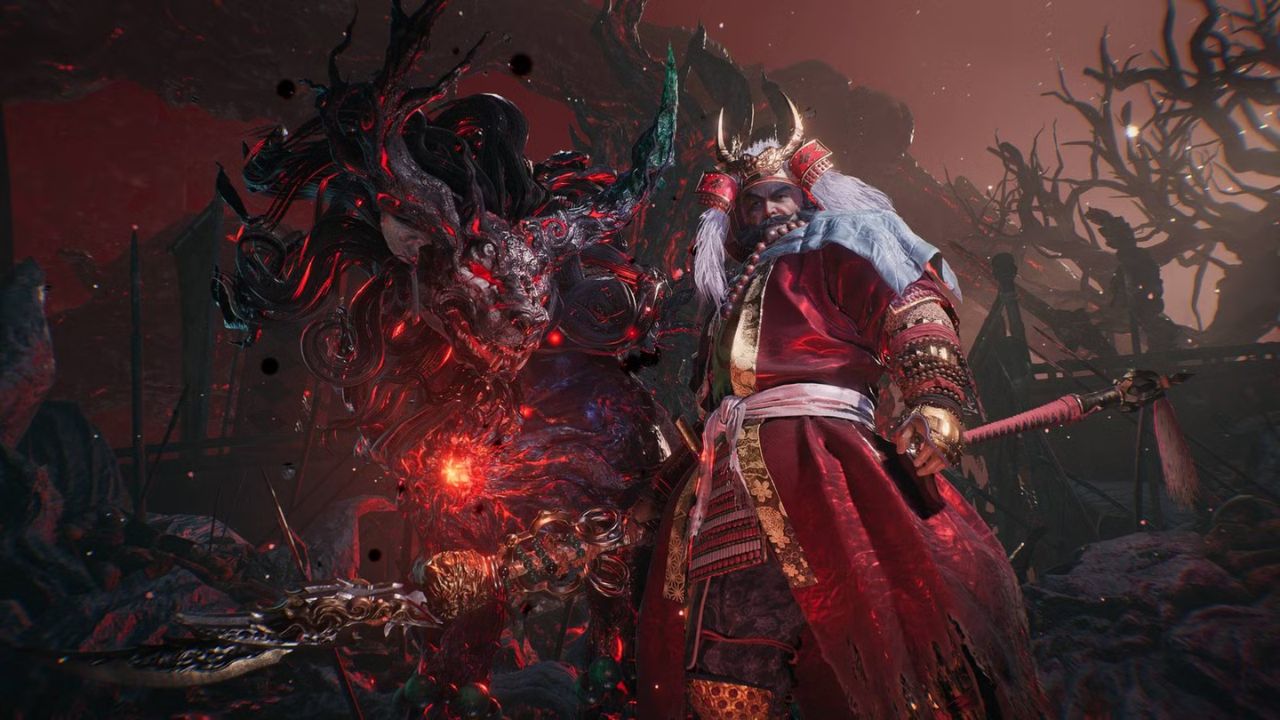
Customization in Nioh 3 is immense, even by series standards. Separate loadouts for Samurai and Ninja, expansive weapon skill trees with free respecs, Guardian Spirits, soul cores, prestige points, and countless gear options give players extraordinary control over their builds.
That freedom, however, comes at a cost. The loot system remains overwhelming, especially during a first playthrough. Gear becomes obsolete quickly, making deep optimization feel pointless until New Game+. Menu time can pile up as you inspect, recycle, and manage mountains of equipment, occasionally breaking the game’s otherwise relentless flow.
Thankfully, Nioh 3 introduces a much-needed auto-equip feature. With a single button press, you can equip the strongest available gear, even tailoring it around weight preferences to preserve dodge speed or maximize defense. It’s not perfect—it can’t account for niche set bonuses—but it dramatically reduces friction for players who want to focus on combat rather than spreadsheets.
A New High Point for the Series
Despite its narrative shortcomings and lingering loot frustrations, Nioh 3 stands as the strongest entry in the trilogy. Its open-world structure isn’t flawless, but the rewarding exploration, varied challenges, and stunning environments largely make up for its shortcomings. More importantly, the combat—elevated by the Samurai and Ninja styles—is nothing short of exceptional.
After dozens of hours, Nioh 3 continues to surprise with how much freedom it gives players to approach its challenges. It’s demanding without being unfair, complex without being inaccessible, and endlessly rewarding for those willing to engage with its systems. In a genre crowded with imitators, Nioh 3 doesn’t just keep pace—it sets a new standard.