Ancient myths have always captivated human imagination, weaving tales of gods, heroes, and cosmic battles that transcend time and culture. Today’s television landscape shows these timeless narratives remain powerful, with modern series drawing deeply from mythological wells to create compelling stories that resonate with contemporary audiences. From Greek deities walking among mortals to Norse gods battling climate change, mythological themes that dominate popular TV shows reveal how mythology continues to shape storytelling—illuminating universal human experiences while reflecting modern concerns.
The Hero’s Journey: A Universal Framework
The hero’s journey is one of mythology’s most enduring contributions to TV storytelling. Popularized by Joseph Campbell, this structure appears repeatedly in myth-forward series, providing a familiar yet flexible framework viewers instinctively grasp.
Percy Jackson and the Olympians exemplifies this arc. The series follows Percy as he discovers his identity as a demigod and embarks on a quest that entangles gods, monsters, and prophecies. His transition from ordinary kid to hero mirrors classical mythic patterns: supernatural mentors, threshold crossings, tests, and atonement.
Blood of Zeus pushes this further by creating an original hero within a Greek framework. Heron, a commoner who learns he’s Zeus’s son, must protect both the mortal world and Olympus. By weaving lesser-known figures alongside Olympians, the show demonstrates how the hero’s journey adapts easily to fresh stories while honoring ancient forms.
Ragnarok reimagines the hero’s journey in a modern, urgent key. Magne, a teenager embodying Thor’s spirit, confronts beings whose industrial activities threaten the environment. Here, Ragnarok’s prophesied apocalypse becomes an allegory for climate change, translating mythic stakes into contemporary terms without losing myth’s archetypal pull.

Divine Intervention and Prophecy
Prophecy and fate generate narrative tension while probing free will and the nature of power. Shows use these devices to ask whether destiny rules lives or whether human choices shape outcomes.
Kaos, a darkly comic Greek-myth show, hinges on a chillingly ambiguous prophecy shared by several characters. As Zeus grows paranoid over omens, the series explores how fear, misreading, and political control turn prophecies into self-fulfilling engines of chaos. It plays with the Moirai’s role, reframing destiny as something mediated through human expectation and error rather than brute supernatural fiat.
American Gods takes another view: gods intervene, but their power depends on human belief. Old Gods drawn from global pantheons clash with New Gods born of media, technology, and celebrity. Divine action here springs from scarcity and relevance, turning intervention into a struggle for survival in a marketplace of attention.
Good Versus Evil: Eternal Conflict
The conflict between good and evil sits at mythology’s core, yet modern shows use it to explore moral ambiguity rather than strict binaries.
Vikings blends saga and history to examine power, faith, and violence without simplistic heroes and villains. Moments of supposed divine favor coexist with human frailty, suggesting myth as a language for moral gray zones rather than a scoreboard for saints and sinners.
Supernatural constructs an American mythos out of folklore, urban legends, and theology. Across its long run, the show moves from monster-of-the-week to questions about whether absolute good or evil even exist. Angels, demons, and even God are scrutinized through personal choices, loyalties, and consequences, reframing morality as situational and relational.
Visual symbolism often reinforces this: journeys into darkness as tests of character, luminous sanctuaries as fragile reprieves, thresholds that literalize temptation and courage.
Family, Loyalty, and Sacrifice
Family binds myth and modern TV together. These stories track how blood ties, chosen kinship, and inherited debts empower and destroy.
In Percy Jackson, divine parentage complicates everything. Children of gods carry legacies they didn’t choose: abandonment, expectations, and the constant threat of being pawns in immortal feuds. Friendships and found-family bonds at places like camp become counterweights to celestial dysfunction.
Norse-inspired shows spotlight loyalty and sacrifice. In Ragnarok, Magne’s divine calling strains his human relationships, dramatizing the cost of destiny. Vikings highlights kinship and oath-brotherhood as dual-edged—vehicles of meaning and engines of tragic conflict when loyalties split.
Indian epic adaptations, from Ramayana to Mahabharata, dive deeply into dharma (duty) and the agony of divided loyalty. Family oaths, vows, and sacrificial choices define characters’ arcs, insisting that personal desire bends to a cosmic moral order—and showing the devastation when it doesn’t.

Mortality, Immortality, and the Afterlife
Myth’s most profound preoccupation—what lies beyond death—finds rich modern treatment on TV.
Kaos reimagines the Greek Underworld as a corrupt bureaucracy guarding power, with processes that strip identity and memory rather than dispense cosmic justice. The result is a critique of systems that prize order over souls, turning the afterlife into a mirror of earthly authoritarianism.
American Gods reframes immortality as burden. Deities fade without worship, turning eternity into loneliness and irrelevance if purpose dissolves. The show flips immortality from prize to existential trap without connection and meaning.
Vikings visualizes Valhalla and death-in-battle ideals, showing how mythic afterlives shape behavior in life—from courage and fatalism to ritual and remembrance. Blood of Zeus reflects Hades’s layered realms and the possibility of extraordinary posthumous status, echoing ancient Greek ideas of death as transition rather than annihilation.
Transformation and Redemption
Myth loves metamorphosis. TV channels that into redemptive arcs and identity reinventions.
Loki offers a striking redemption: a trickster evolves into a self-sacrificing guardian who literally holds time’s threads together. It’s a mythic inversion—shadow becomes shepherd—achieved through friendship, self-recognition, and a willingness to shoulder cosmic responsibility.
Ragnarok treats transformation as slow and painful. Magne grows into his role, stumbling, backsliding, and learning to balance power with restraint. This grounds divinity in human development, making godhood feel like a moral craft rather than instant upgrade.
Indian mythic narratives frequently emphasize inner change. Legends like Valmiki’s pivot from violence to wisdom underscore a core truth: no one sits beyond transformation. Grace, discipline, and insight remake identity, not just external power or titles.
Power, Corruption, and Authority
Divine courts are perfect stages for political allegory. Modern mythic TV often uses gods to interrogate authority.
Kaos depicts Zeus as a paranoid autocrat whose insecurity breeds cruelty. The show critiques spectacle, control, and the hollow rituals propping up fragile power. Rebellion against such order becomes a question: does replacing one puppet master with another amount to liberation—or a rebrand of domination?
American Gods refracts power through belief economies. Old Gods hustle for relevance while New Gods ride cultural addictions. The thesis is sharp: power accrues to what people collectively serve, and cultural shifts redraw the divine map in real time.
Vikings shows how myth legitimizes rule. Claims of divine favor, omens, and sacred lineages provide political cover—even as leaders must still navigate the harsh math of survival, alliance, and betrayal.

Cultural Identity and Representation
Mythological TV increasingly acts as cultural stewardship. Retellings preserve heritage, teach values, and invite new perspectives.
Indian television’s long tradition of epic adaptations keeps vast narrative ecosystems alive for new generations. Modern takes like Siya Ke Ram shift perspective, centering women’s experiences within patriarchal epics and enriching interpretation without abandoning reverence.
Japanese myth flows strongly through anime, where Shinto ideas, yokai, and folk motifs inhabit contemporary settings. This format makes ancient cosmologies accessible, blending reverence with innovation and exporting cultural memory worldwide.
Global streaming has catalyzed cross-cultural myth literacy. Greek and Norse tales circulate alongside Indian and Japanese narratives, offering audiences both familiarity and discovery—and sparking vital conversations about adaptation, accuracy, and respectful reinterpretation.
Modern Reinterpretation of Ancient Themes
Contemporary shows thrive when they address current anxieties through ancient frames.
Ragnarok recasts cosmic collapse as environmental crisis—giants in corporate suits, apocalypse as ecological tipping point, heroism as local resistance with planetary stakes.
Percy Jackson modernizes Olympians without diluting essence: gods keep their archetypal natures while navigating contemporary personas and institutions. Humor and humanity make the divine legible to younger viewers.
Kaos takes bolder liberties: gods as emotionally volatile power brokers whose pettiness reveals the dangerous banality of tyranny. It’s a timely insight—authoritarianism often looks less like grandeur and more like insecurity weaponized.
The Psychological Power of Myth
Myth connects because it speaks in archetypes—the hero, mentor, shadow, trickster—mapping inner life to outer adventure. That’s why a demigod’s quest can feel like adolescence distilled, or a trickster’s turn toward stewardship can echo midlife reckonings about purpose and sacrifice.
The hero’s journey tracks psychological development: separation, trial, integration, return with wisdom. TV arcs built on this spine engage viewers at a subconscious level, making character growth feel personally instructive rather than merely entertaining.
Mythic TV also creates safe distance for existential inquiry. Questions of meaning, mortality, and transcendence become approachable when filtered through gods, monsters, and afterlives—letting audiences wrestle with them imaginatively before they do so intimately.

Future Directions
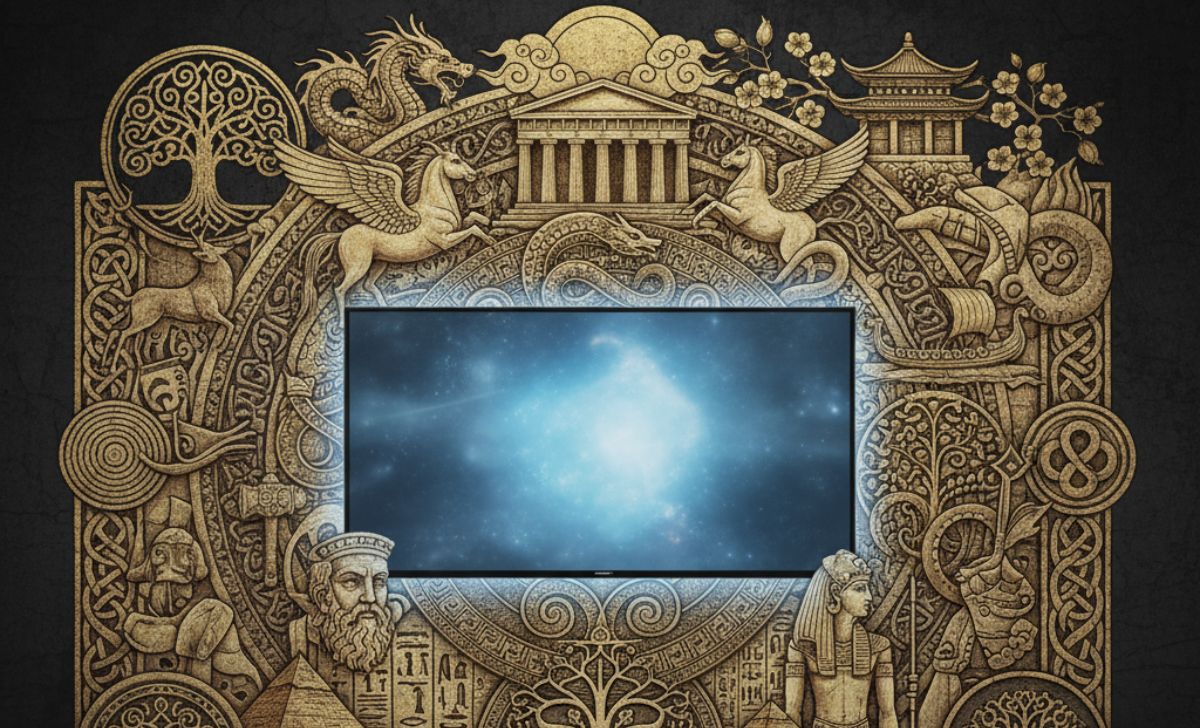
The next wave of mythic television will likely expand beyond Greek, Norse, and Hindu canons into Egyptian, Celtic, Mesopotamian, and indigenous traditions—each with vivid cosmologies and ethical frameworks ripe for exploration. As creators deepen research and collaborate with cultural custodians, expect richer representation and fresher insight.
Advances in visual effects will continue to conjure realms—Olympus’s shimmer, Yggdrasil’s glow, the Underworld’s thresholds—with greater fidelity, while smaller, character-driven shows will push psychological and thematic depth. Interactive and immersive formats may let audiences not only watch but inhabit mythic roles, translating ancient initiation into embodied experience.