
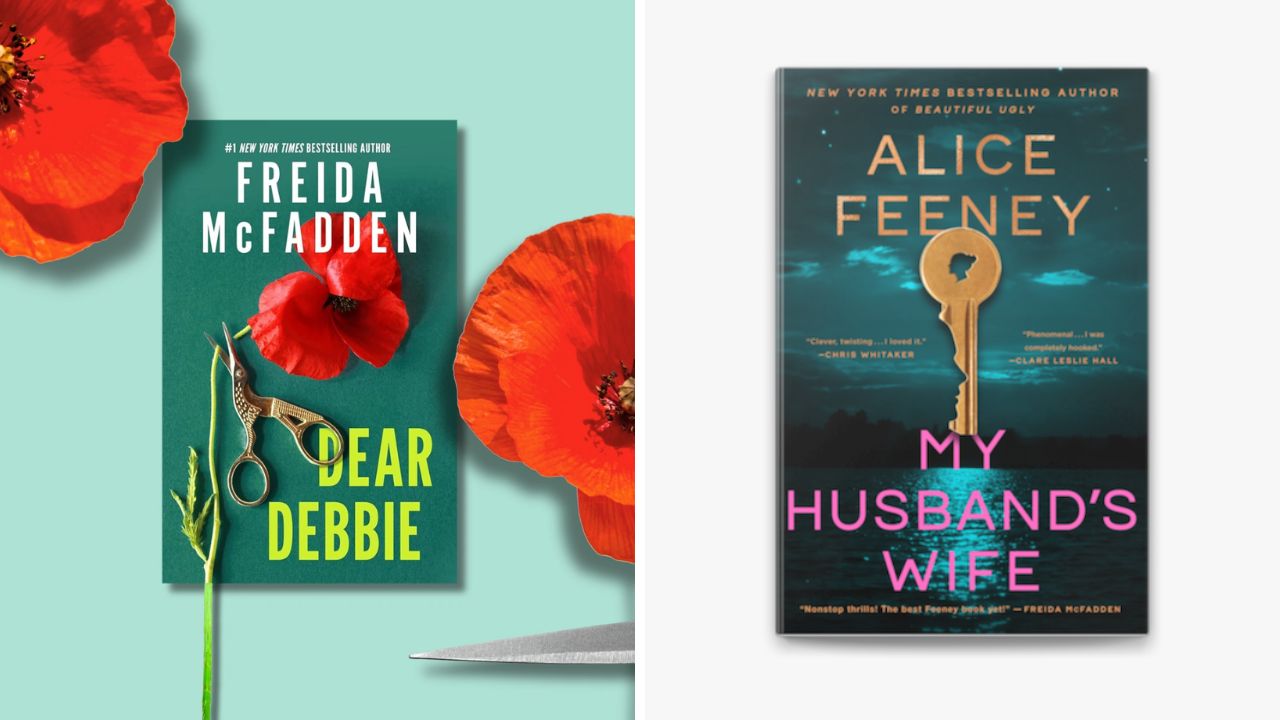
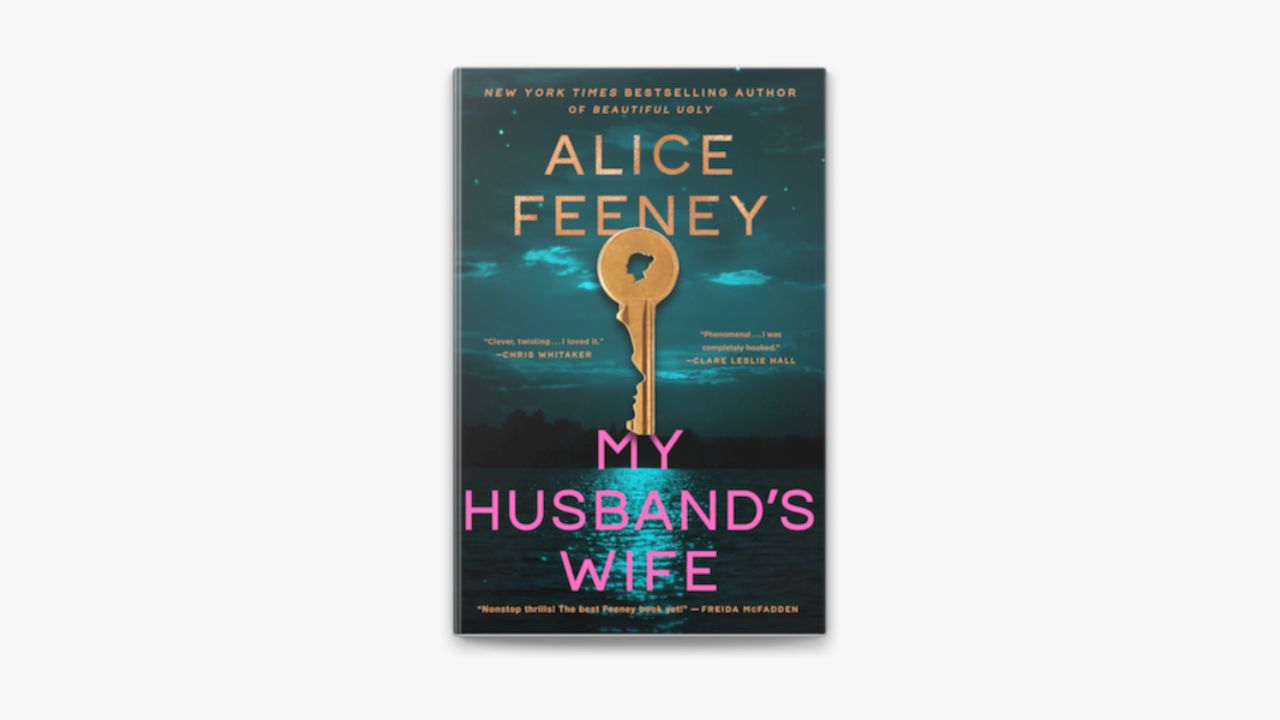
For years, the genre has been shaped by the legacy of the “Girl” era—think twisty, unreliable narrators and dark domestic secrets popularized by authors like Gillian Flynn and Paula Hawkins. But now, the formula has split in two very different directions. January delivered the perfect case study with the back-to-back releases of Alice Feeney’s My Husband’s Wife and Freida McFadden’s Dear Debbie—two thrillers that couldn’t feel more different in tone or intent.
Feeney leans into atmosphere and psychological depth. My Husband’s Wife is layered, eerie, and structurally ambitious—a story built around secrets, shifting timelines, and a house that feels like a character in its own right. It’s the kind of novel that asks readers to slow down, pay attention, and sit with the unease.
McFadden, on the other hand, thrives on momentum. Dear Debbie is sharp, fast, and addictive—designed for late-night binge-reading. It plays with suburban drama, modern tech paranoia, and deliciously petty revenge, delivering twist after twist with barely a pause for breath.
So what does this showdown tell us?
2026 readers seem divided. Some crave the slow-burn, puzzle-box experience. Others want the adrenaline rush—the kind of thriller you finish in one sitting and immediately recommend in a group chat.
Whether My Husband’s Wife or Dear Debbie takes the crown as Thriller of the Year may come down to one simple question: are readers in the mood to think… or to gasp?
The Gothic Puzzle: Deconstructing My Husband’s Wife
Alice Feeney has spent her career carving out a niche that sits comfortably between the commercial accessibility of B.A. Paris and the darker, more literary sensibilities of Daphne du Maurier. Her previous works, such as Rock Paper Scissors and Daisy Darker, demonstrated a predilection for isolated settings and characters who are trapped—both physically and psychologically. In My Husband’s Wife, Feeney doubles down on these obsessions, crafting a narrative that is as much about the architecture of the mind as it is about the architecture of a house.
The Architecture of “Spyglass”
In 2026, the setting of a thriller is no longer just a backdrop; it is a competitive differentiator. Readers, fatigued by generic suburban cul-de-sacs, crave immersion. Feeney answers this demand with “Spyglass,” an estate in the fictional coastal village of Hope Falls. The name itself—Spyglass—invokes concepts of observation, magnification, and distortion, priming the reader for a story where perception is unreliable.
The house is described as “enchanting” and “old,” a stark contrast to the modern glass boxes often found in tech-thrillers. By grounding the horror in a legacy property—one inherited by the character Birdy from a long-lost grandmother—Feeney taps into the “Real Estate Gothic” tradition. Spyglass is a prize that demands a price. For Eden Fox, the artist protagonist, it represents the pinnacle of her success, the place where she will finally “make it.” For Birdy, the reclusive heir, it is a final refuge. The house becomes the intersection point for these two distinct lives, a physical space where their identities will violently collide.
The coastal setting allows Feeney to utilize elemental imagery—fog, tides, cliffs—to mirror the internal states of her characters. Unlike the stark, fluorescent-lit terror of a hospital or a police station, the terror in My Husband’s Wife is atmospheric, seeping in like damp. This appeals to a specific demographic of reader: the “mood reader,” who prioritizes the feeling of a book over the velocity of its plot.
The Narrative Mechanics of Displacement
The inciting incident of My Husband’s Wife is a masterclass in the “unheimlich” (the uncanny). Eden Fox goes for a run—a mundane, healthy activity—and returns to find her key no longer fits her lock. This is a primal anxiety: the sudden lockout. But Feeney escalates it immediately. A woman who looks exactly like Eden opens the door, and Eden’s husband insists that this stranger is his wife.
This premise engages with the Capgras delusion—the psychiatric belief that a loved one has been replaced by an identical impostor—but flips the perspective. Here, the protagonist is the one being erased. It creates an immediate, visceral sense of vertigo. The reader is forced to ask: Is Eden insane? Is this a conspiracy? Or is there a supernatural element at play?
Feeney structures the novel to withhold the answer through a dual-timeline mechanism. While Eden battles for her identity in the present, a second narrative thread follows Birdy starting six months prior. This structural choice is crucial. It transforms the book from a linear chase into a pincer movement. As we watch Birdy’s past advance toward Eden’s present, the reader becomes the detective, piecing together the collision before it happens. This dramatic irony—knowing that Birdy is coming for Eden’s life—generates tension without the need for constant action sequences, a hallmark of the psychological suspense style.
The “Death Date” Clinic: A Surrealist Gamble
Perhaps the most ambitious and risky element of My Husband’s Wife is the subplot involving a “shadowy London clinic” discovered by Birdy. This clinic claims to be able to predict a person’s date of death. This inclusion pushes the novel to the very edge of the thriller genre, dipping a toe into speculative fiction.
In 2026, genre-blending is increasingly common, but it remains a gamble. Traditional mystery readers often reject supernatural solutions. However, the presence of the clinic serves a thematic purpose. Birdy is reeling from a “life-changing diagnosis” (presumably terminal). The clinic represents the desperate search for control in the face of mortality. By introducing the concept of a “death date,” Feeney raises the stakes beyond mere marital infidelity or financial greed. The characters are fighting against time itself.
This plot device suggests that My Husband’s Wife is attempting to be more than a domestic potboiler; it is aspiring to be a meditation on how we spend our remaining time and who we choose to be when the end is near. This thematic weight gives the book a “prestige” feel, positioning it as a contender for awards that value literary merit alongside thrills.
Character Psychodynamics: Eden vs. Birdy
The dichotomy between the two female leads is central to the novel’s conflict.
- Eden Fox: The “Have.” An artist on the brink of her big break. She represents success, visibility, and the future. Her identity is tied to her career and her marriage. The loss of her home and husband is a dismantling of her ego.
- Birdy: The “Have Not.” A reclusive Londoner, invisible to the world until she inherits Spyglass. She represents the past, secrets, and invisibility. Her motivation—to “right some old wrongs”—casts her as an avenging angel or a ghost from the past.
The dynamic creates a “Prince and the Pauper” or “Talented Mr. Ripley” tension. The doppelgänger motif suggests that these women are interchangeable in the eyes of the world—or specifically, in the eyes of the husband. This critique of the male gaze—that a husband could (or would pretend to) mistake one woman for another—adds a layer of feminist commentary to the plot. It suggests that the role of “Wife” is a costume that can be worn by anyone who fits the measurements.
Critical Reception: The “Marmite” Effect
The critical response to My Husband’s Wife in early 2026 highlights the risks of Feeney’s high-concept approach. The reception has been polarized, a phenomenon often referred to in the industry as the “Marmite Effect”—readers either love it or hate it, with very little middle ground.
- The Detractors: Influential reviewers, such as the host of a popular thriller YouTube channel, expressed significant disappointment. Complaints centered on the pacing (“slow and boring”) and plausibility (“extremely unrealistic”). For readers who prioritize grounded realism, the combination of the doppelgänger plot and the death-date clinic proved too much to suspend disbelief. A Reddit user noted that the ending “annihilated everything” that came before it, leading to a mixed rating.
- The Acclaim: Conversely, the book has received glowing endorsements from peers. Lisa Jewell called it “propulsive, compulsive, addictive,” and Freida McFadden herself—ironically, the competitor—blurbed it as “the best Feeney book yet”. Professional critics have praised the “breathless pace” and “jaw-dropping ending”.
This polarization is not necessarily a negative for sales. Controversy generates conversation. The debate over whether the ending is “genius” or “ridiculous” keeps the book in the public consciousness, driving curiosity purchases.
The Suburban War: Anatomy of Dear Debbie
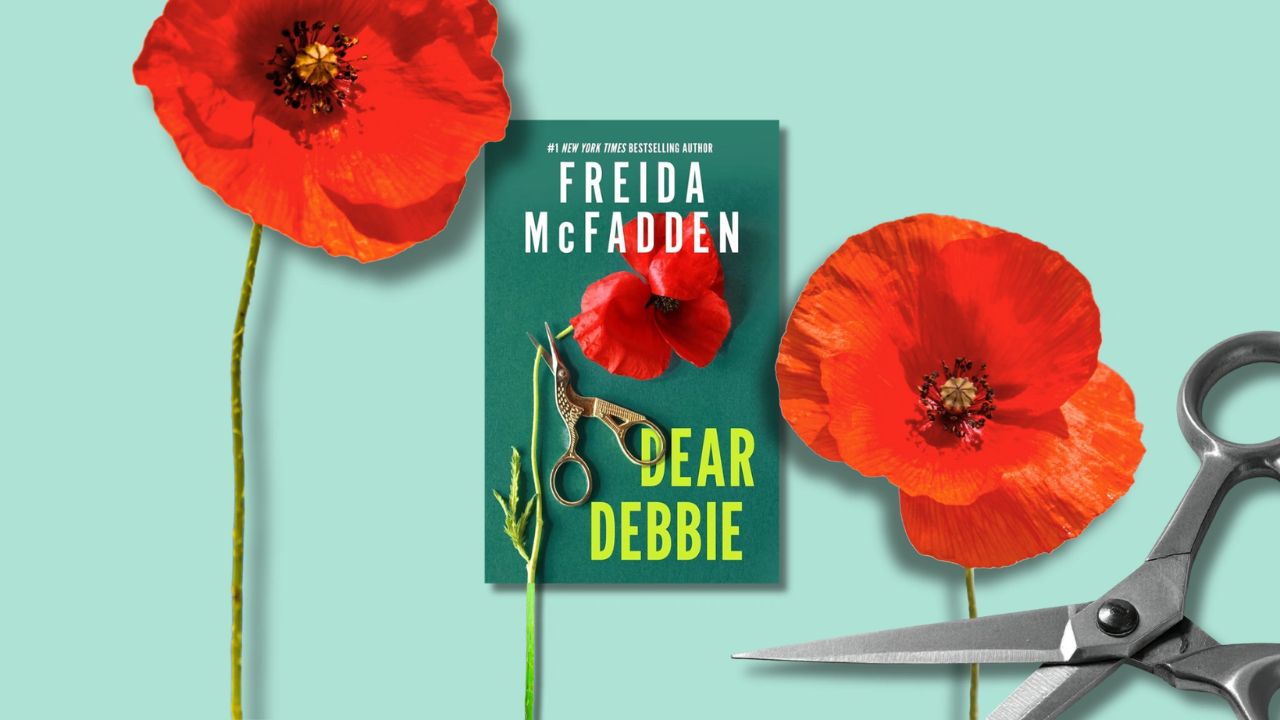
If Alice Feeney is playing chess with her readers, Freida McFadden is playing dodgeball—fast, chaotic, and aiming for the face. Dear Debbie represents the pinnacle of the “Popcorn Thriller,” a sub-genre characterized by high velocity, accessible prose, and hooks that are designed to be consumed in a single sitting. McFadden, a practicing physician specializing in brain injury, has mastered the art of the hook, and Dear Debbie is engineered to be her most addictive product yet.
The Satire of Advice: The “Dear Debbie” Column
The structural genius of Dear Debbie lies in its titular conceit. Debbie Mullen is an advice columnist. This profession allows McFadden to embed a layer of satire into the narrative. Throughout the book, readers are treated to snippets of Debbie’s columns, where she dispenses “neighborly advice” to the wives of New England.
These columns serve multiple narrative functions:
- Exposition: They establish the social mores of the suburban setting—the pressure to be the perfect wife, mother, and neighbor.
- Irony: There is a delicious disconnect between Debbie’s calm, rational public persona and her chaotic, unraveling private life. She advises women on how to handle difficult husbands while her own husband is keeping secrets via a tracking app.
- Foreshadowing: The advice Debbie gives often mirrors the traps she is setting for her enemies. It suggests a Machiavellian mind that views social interaction as a game to be won.
This device updates the epistolary format (letters, diaries) for the modern age. It is reminiscent of Gone Girl’s diary entries but stripped of the literary pretense and injected with dark humor. It allows the reader to feel smarter than the characters, spotting the hypocrisy before the protagonist admits to it.
The Antiheroine Upgrade: Debbie 2.0
Debbie Mullen is a significant evolution of the “unreliable narrator.” She is not merely confused or drunk (a la The Girl on the Train); she is hyper-competent and brimming with rage. The report describes her as having a “genius-level IQ of 178” and an MIT background in computer science. This is a crucial detail. It moves the character away from the “victim” archetype and toward the “villain-protagonist” archetype.
When Debbie’s life spirals—losing her job, her daughter’s behavioral issues, her husband’s secrets—she doesn’t collapse. She weaponizes her skillset. The mention of a “Punish Your Husband” app signals a shift into “Tech-Noir.” Debbie is not gaslighting her husband by moving objects around the house; she is hacking his digital life. This resonates deeply with 2026 anxieties about surveillance and digital privacy within relationships.
Debbie fits the “Good for Her” cultural trope perfectly. Audiences in the mid-2020s have shown a voracious appetite for female characters who exact disproportionate revenge (e.g., Promising Young Woman, The Menu). Debbie is described as a “walking red flag” and a “magnetic antihero”. Readers are invited not to sympathize with her morality, but to enjoy her efficacy. We cheer for her not because she is good, but because she is good at it.
The “Popcorn” Factor: Pacing and Accessibility
McFadden’s writing style is a deliberate commercial choice. Her prose is often described as functional—invisible, even—prioritizing dialogue and action over description. Dear Debbie is 336 pages, a standard length, but the pacing is described as “fiendishly clever” and “gripping”.
Reviewers consistently use words like “delicious,” “fun,” and “palate cleanser”. In a world of heavy news cycles and complex literary fiction, Dear Debbie offers escapism. It is a “one-sitting” read. The chapters are likely short, ending on cliffhangers that exploit the “just one more chapter” dopamine loop.
This accessibility is key to McFadden’s dominance. Her books are entry-level drugs for the thriller genre, appealing to lapsed readers or those who find denser texts intimidating. The YouTube review that contrasted Feeney and McFadden explicitly stated that while Feeney was “slow,” McFadden was “absolutely as good as eating chocolate”.
Commercial Dominance: The McFadden Machine
The sales data for Dear Debbie is staggering. By early February 2026, it had secured the #1 spot on the Official UK Top 50 for two consecutive weeks. Even more impressively, in a week where sales dropped by 42%, it still sold nearly 22,000 copies. To put this in perspective, the runner-up (Lisa Jewell’s Don’t Let Him In) sold fewer than 10,000 copies.
This indicates that McFadden has transcended being an “author” and has become a “brand.” Her release schedule—often multiple books a year—keeps her name constantly on the charts. Her fanbase, “Freida McFans”, operates with the fervor of a fandom, pre-ordering and hyping releases regardless of reviews. This distinct commercial advantage makes Dear Debbie a juggernaut that is difficult to beat in terms of raw numbers.
Head-to-Head Comparative Analysis
To predict the “Thriller of the Year,” we must compare the two contenders across several axes of merit.
Atmosphere vs. Adrenaline
- My Husband’s Wife: Relies on Atmosphere. The reading experience is about immersion in the creepy, salty air of Hope Falls. It requires the reader to surrender to the mood. The tension is slow-building, like a tide coming in.
- Dear Debbie: Relies on Adrenaline. The reading experience is kinetic. It creates a sense of urgency. The tension is immediate and sharp, like a slap.
Verdict: In 2026, the mass market trends toward Adrenaline. Short-form video content (TikTok, Reels) has trained audiences to expect constant stimulation. Dear Debbie aligns better with the current attention span economy. My Husband’s Wife is a luxury good; Dear Debbie is a necessity.
The “Twist” Economy
Both authors are famous for their twists, but their methodologies differ fundamentally.
- Feeney’s Twists: These are often structural and existential. They rely on withholding information about identity or timeline. In My Husband’s Wife, the twists involve the true nature of the women and the reality of the clinic. These twists often require the reader to re-evaluate everything they have read previously. They are intellectual puzzles.
- McFadden’s Twists: These are often situational and character-based. They involve inversions of morality—the victim is actually the villain. In Dear Debbie, the twists involve the true identity of characters like “Jesse” and the nature of the husband’s secrets. These twists are visceral shocks designed to elicit a gasp.
Critique: McFadden’s twists are sometimes criticized for being “outrageous” or creating plot holes (e.g., a Reddit user complaining that the husband’s “secret” being alcoholism was underwhelming). Feeney’s twists are criticized for being “unlikely” or relying too heavily on convenience. However, McFadden’s twists are generally more “meme-able,” which aids in social media virality.
Cultural Resonance
- Feeney: Taps into anxieties about Identity and Reality. In an age of Deepfakes and AI, the fear of being replaced by a doppelgänger is potent. The “death date” plot taps into health anxiety and the post-pandemic awareness of mortality.
- McFadden: Taps into anxieties about Gender Roles and Surveillance. The rage of the suburban mother who does everything right and gets treated wrong is a timeless theme, but the addition of hacking/tracking apps modernizes it.
Verdict: Dear Debbie feels more culturally “loud.” The theme of female rage is currently a dominant cultural force. Debbie Mullen is a character that readers want to be (in a fantasy sense), whereas Eden Fox is a character readers want to save.
Market Performance and Sales Trends
The data provides a clear picture of the commercial landscape.
The Charts
As of February 2026, Dear Debbie is objectively the sales leader. Holding the #1 spot in the UK and selling 22k copies in a “down” week is a massive feat. This suggests that McFadden has successfully captured the mass market—the supermarket shopper, the airport reader, the Kindle Unlimited subscriber who buys the paperback.
My Husband’s Wife is performing well, described as a “hit with indies” (independent bookstores). This distinction is crucial. Feeney’s book is likely selling better in hardcover and in curated spaces where booksellers hand-sell titles. McFadden’s book is moving volume in mass retailers.
Format Wars
- Feeney: Likely dominates in Hardcover and Audiobook (narrated by a full cast including Richard Armitage, a major selling point). The “sprayed edges” marketing for the first edition targets collectors and “Bookstagrammers” who value the book as an aesthetic object.
- McFadden: Dominates in Paperback and E-book. Her pricing strategy often undercuts traditional publishers, making her books an impulse buy. Dear Debbie was released in paperback immediately in some markets or at a lower price point, facilitating mass adoption.
The Broader 2026 Context
While Feeney and McFadden are the early frontrunners, they do not exist in a vacuum. The 2026 thriller market is crowded with other major players.
The Hoover Factor
Colleen Hoover’s Woman Down, released January 13, 2026, is the elephant in the room. Hoover crosses genres between romance and thriller. While her sales will likely eclipse both Feeney and McFadden combined due to her massive romance fanbase, Woman Down may be categorized differently (e.g., “Romantic Suspense” vs. “Psychological Thriller”). However, for the general “Thriller of the Year” conversation, she is a formidable spoiler.
The Sequel Challenge
Laura Dave’s The First Time I Saw Him is a sequel to the massive hit The Last Thing He Told Me. Sequels often sell well but rarely capture the cultural zeitgeist the way a fresh standalone does. This puts Dave at a disadvantage for the “Thriller of the Year” title, which usually favors novelty.
Genre Fatigue?
The sheer volume of thrillers released in Jan/Feb 2026 (including Matthew Quirk, J.D. Barker, etc.) risks saturating the market. This benefits established brands. In a flooded market, readers gravitate toward names they trust. Feeney and McFadden are safe bets.
Award Season Predictions
Looking ahead to the 2027 award season (honoring 2026 books), we can predict the following trajectories based on the ITW (International Thriller Writers) and Goodreads Choice Award patterns.
ITW Thriller Awards
- Best Hardcover Novel: My Husband’s Wife has a strong chance here. The ITW tends to favor structural complexity and literary merit over raw sales figures. Feeney’s intricate plotting fits their criteria.
- Best Paperback Original: If Dear Debbie is categorized as a paperback original (which McFadden’s books often are), it is a shoo-in for this category. However, the ITW often overlooks “popcorn” thrillers in favor of grittier crime fiction.
Goodreads Choice Awards
- Best Mystery & Thriller: This is a popularity contest. Dear Debbie is currently the frontrunner. McFadden’s fanbase is extremely online and active on Goodreads (110k ratings vs Feeney’s 55k in the first month). Unless Woman Down cannibalizes the vote, McFadden is the likely winner.
Conclusion: The Verdict
The battle for “Thriller of the Year 2026” is a battle between two different definitions of the genre.
Alice Feeney’s My Husband’s Wife is the Critics’ Choice. It is a sophisticated, atmospheric, and ambitious novel that pushes the boundaries of the domestic noir by incorporating speculative elements. It will be the book that is discussed in book clubs, analyzed in reviews, and collected in special editions. It wins on Craft.
Freida McFadden’s Dear Debbie is the People’s Choice. It is a razor-sharp, hilarious, and cathartic revenge fantasy that perfectly captures the mood of 2026. It is the book that will be seen on every subway car, every beach towel, and every TikTok feed. It wins on Cultural Impact.
Final Prediction
If “Thriller of the Year” implies the book that defined the moment, the winner is Dear Debbie.
In an era defined by high stress, economic uncertainty, and a desire for agency, the story of a brilliant woman using her wits to burn down the structures that confine her resonates more deeply than a gothic puzzle about identity. Freida McFadden has captured the zeitgeist. Alice Feeney has written a beautiful riddle, but Freida McFadden has handed the readers a sledgehammer. And in 2026, the sledgehammer wins.