

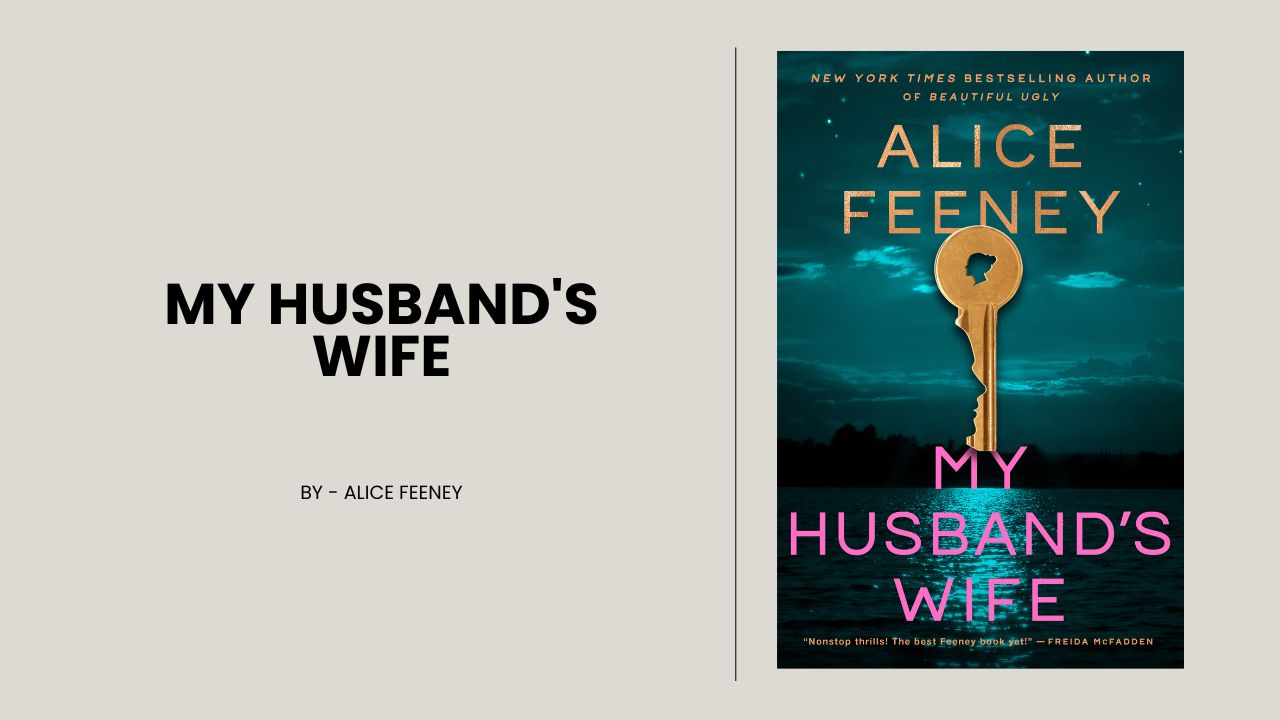
Alice Feeney’s latest psychological thriller “My Husband’s Wife” opens with a moment of pure nightmare fuel. Eden Fox, an artist who has just moved into a quiet seaside house called Spyglass, goes for a morning run and returns to find her key no longer fits her own front door. When the door opens, a woman who looks exactly like her stands there — and Eden’s husband insists this stranger is his wife.
From that single, chilling moment, the novel spirals into a gripping exploration of identity, memory, and manipulation. Feeney wastes no time pulling the reader into a story where reality itself feels unstable. The confusion is immediate, the danger unmistakable, and the tension thick enough to feel in your chest.
🧠 Plot Mechanics: Dual Timelines and Unreliable Narrators
What sets My Husband’s Wife apart from standard domestic thrillers is its clever structure. The story moves between Eden’s present-day nightmare and events from six months earlier, following Birdy — a sharp, isolated woman in London who inherits Spyglass from a grandmother she barely knew.
These timelines slowly collide, revealing pieces of a puzzle that never quite fits neatly. Feeney uses unreliable narrators to full effect. Just when you think you understand what is happening, the story shifts and forces you to reconsider everything. It becomes a psychological chess match between the author and the reader.
🧍♀️ Characters: Layered, Flawed, and Unsettlingly Real
Feeney excels at writing complicated women who feel authentic in their contradictions. Eden is vulnerable but determined, confused yet perceptive. Her terror feels personal, not theatrical. Birdy, on the other hand, is dry, observant, and quietly heartbreaking beneath her sharp wit.
Even minor characters carry secrets, giving the story a constant sense of emotional unease. No one is entirely innocent, and no one is fully trustworthy. This moral grayness makes the suspense more powerful because the danger doesn’t come from monsters — it comes from people.
🌀 Themes: Identity, Deception, and the Fragility of Truth
Beneath the shocking premise lies a deeper question: how well do we really know ourselves when others define us? The novel explores how identity can be shaped, stolen, or rewritten by the people closest to us.
Feeney taps into a deeply human fear — that your life could be altered by a single lie, and everyone else might believe it. The story examines memory, illness, love, and control, showing how easily truth can become something negotiable rather than absolute.
📊 Pacing and Style: Relentless and Hypnotic
The novel moves fast, with short chapters that end on sharp emotional turns. Feeney’s writing is crisp and controlled, never wasting words. Each scene pushes the mystery forward, creating a constant sense of momentum.
This is the kind of book that keeps you reading “just one more chapter” until it is suddenly 2 a.m. The twists arrive steadily, not all at once, making the tension feel sustained rather than gimmicky.
🏁 Final Thoughts: A Dark, Intelligent Psychological Thriller
My Husband’s Wife is not just about a marriage gone wrong — it is about reality itself slipping out from under your feet. Alice Feeney delivers a tense, emotionally charged thriller that stays in your mind long after the final page.
For readers who love psychological suspense filled with sharp twists, morally complex characters, and a haunting atmosphere, this novel is a must-read. Feeney once again proves she knows exactly how to make readers doubt everything they think they know — including the people they trust most.