

Meta used its annual Meta Connect keynote to push a bold bet: smart glasses — not virtual worlds — will become the next everyday way people access artificial intelligence. CEO Mark Zuckerberg unveiled a family of AI-powered wearables that pair tiny displays, cameras and a novel “neural” wristband to put messaging, maps, translation and Meta’s AI assistant directly into a frame you can wear all day.
What Meta showed at Connect
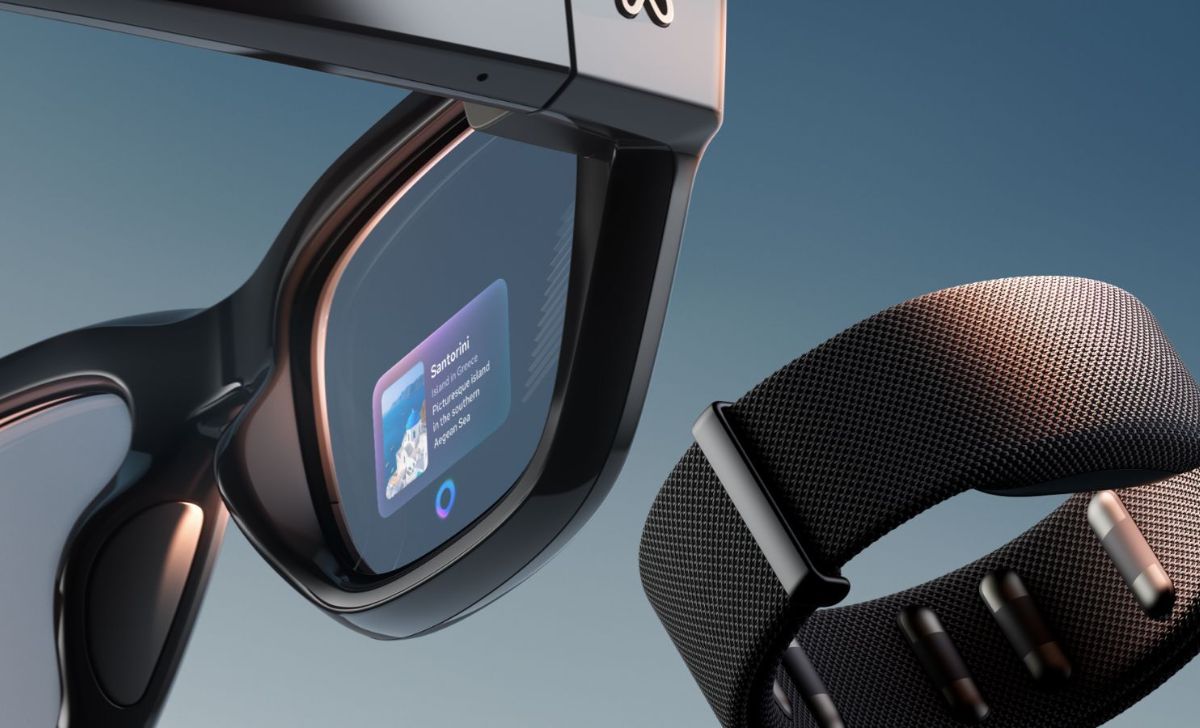
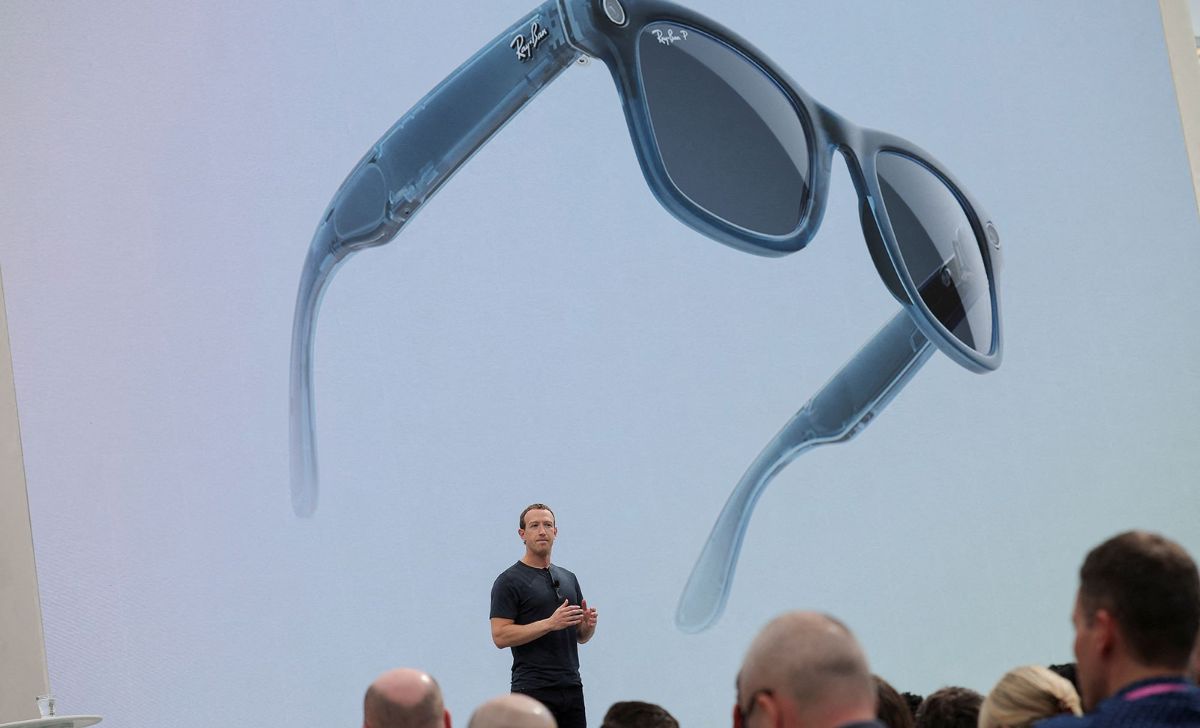
Onstage at the company’s Silicon Valley campus, Zuckerberg introduced the Meta Ray-Ban Display — a pair of sunglasses with a full-colour, high-resolution micro-screen tucked into one lens — alongside a second-generation Ray-Ban model and an Oakley sports variant. He positioned the hardware as a path to “personal superintelligence,” saying glasses let people stay present while tapping AI to enhance communication, memory and perception.
The Display embeds the tiny visual interface in the inside-right corner of the lens so content appears as if floating a few feet in front of the wearer. That display can show messages, maps, incoming video-call windows and AI response panels; a 12-megapixel camera captures photos and video. Meta also showed a wristband that links to the Display, enabling subtle hand gestures — like pinching thumb and forefinger — to navigate the interface without relying solely on voice.
The lineup, prices and availability
Meta rolled out three main models at Connect:
- Meta Ray-Ban Display — the premium model with the built-in lens display, a 12MP camera and the wristband pairing. Price: $799. Meta says the Display will begin rolling out on September 30 at select U.S. retailers (including Verizon, LensCrafters, Ray-Ban and Best Buy).
- Ray-Ban Meta Gen 2 — an updated, more familiar-looking Ray-Ban with improved battery, colors and a higher-quality camera. Price: $379.
- Meta Oakley Vanguard — a sport-oriented model with a centered bridge camera and beefier speakers for outdoor use. Price: $499.
Meta has not released comprehensive sales numbers but observers estimate the company has sold roughly two million pairs since its first consumer launches in 2023. Its partner EssilorLuxottica has said it aims to produce 10 million pairs a year starting in 2026 — a sign of how ambitious the partners’ growth plans are.

Key features: display, AI and hands-free controls
The Displays add visual feedback that earlier Meta glasses lacked. Core capabilities shown include:
- Messages, calls and media: view and send messages, watch short videos and take video calls where the caller appears on the tiny display.
- Navigation and live info: maps and turn-by-turn directions appear on the lens so users can walk without staring at a phone.
- Live captioning and translation: spoken conversation can be captioned in real time; transcripts save to the Meta AI app for later reference.
- Integrated AI: users can ask Meta AI questions and receive concise on-screen panels with audio follow-ups.
- Neural wristband: the gesture band lets wearers select and scroll with small hand movements — useful for situations where voice is impractical.
Privacy is built into the design: only the wearer sees the display, and users can switch the screen off to use the frames as ordinary glasses.
Battery life and camera capabilities
Battery figures vary by model: Meta says the Display works for about six hours on a charge, with its carrying case supplying roughly 30 additional hours. The neural wristband runs about 18 hours and is water-resistant. The Gen 2 model increases on-device battery life to eight hours (with a charging case extending to 48 hours) and ups video capture to 3K; the Oakley Vanguard delivers the longest on-glasses battery life — roughly nine hours — and is designed to integrate with fitness platforms like Strava and Garmin.
Live demos and hangups
Meta staged multiple live demonstrations — but not all went smoothly. Onstage demos included a WhatsApp video call that failed to connect to the Display and an AI cooking demo that returned unintelligible results (Zuckerberg blamed Wi-Fi in one instance). In another moment the accept-call control failed to appear on the Display during a demo with CTO Andrew Bosworth. Those glitches underscore that while hardware and micro-displays have matured, software and connectivity still create fragile user experiences in live settings.
Market context and industry reaction
Analysts greeted the announcements with cautious interest. Some see smart glasses as a more natural, less cumbersome successor to the company’s earlier Metaverse ambitions — a device people might actually wear outside the home. Others remain skeptical: observers argue Meta must demonstrate clear, everyday advantages to convince mainstream consumers to pay hundreds of dollars for glasses that also carry privacy, social and practical tradeoffs.
Meta faces increasing competition from major players — Google, Samsung, Snap and potentially Amazon — all racing to ship wearable displays and integrate AI into daily life. At the same time, Meta is pouring money into the backend: the company has publicly committed massive investments into AI data-center infrastructure and talent, describing plans to build sprawling facilities and to develop ever-more capable models.
Political and safety backdrop
The product launch did not occur in a vacuum. Activists and family members of suicide victims protested at Meta’s New York headquarters during the week of the announcement, calling for stronger child safety protections across Meta’s platforms. Separately, two former Meta safety researchers told U.S. lawmakers they believed the company had discouraged certain internal research on harms associated with its virtual reality products — allegations Meta has called “nonsense.” These controversies add regulatory and reputational pressure as Meta expands into new device categories that will be worn by, and potentially used by, young people.
What to watch next
Meta’s new glasses package marks a clear strategic pivot: put AI in a frame people actually wear. The company must now translate engineering progress into reliable, day-to-day value while managing privacy concerns, competition and regulatory scrutiny. If Meta can iron out software bugs, prove the wristband UX works in real life and persuade mainstream buyers the benefits justify the price, the company will have taken a meaningful step toward making AI a wearable, rather than just a cloud-based, companion.