

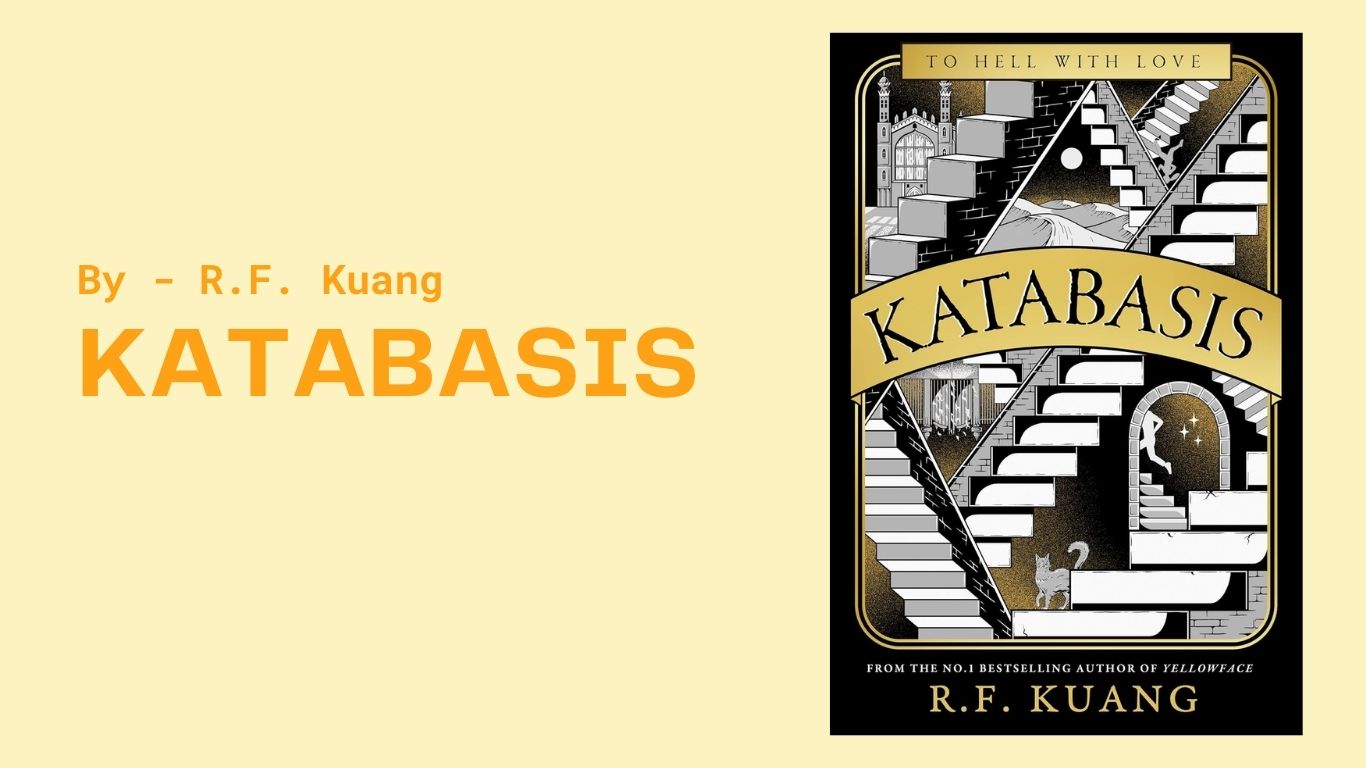
R.F. Kuang’s Katabasis is a book that wears its ambition on its sleeve — part academic satire, part mythic descent, part strange-magic journey. At its center is a very human ache: why do we give our lives to ideas, institutions, and the people who gatekeep them? Kuang pushes that question to an extreme and dresses the answer in a feverish, often funny, sometimes exhausting narrative.
Set at Cambridge in the 1980s, the novel follows graduate students whose intellectual obsessions quite literally pull them into an underworld. What unfolds is not just a fantastical adventure, but a sharp reflection on grief, ambition, and the quiet violence of academic systems that demand everything and give back very little.
Plot Overview
Alice Law is a doctoral student at Cambridge, trained in a discipline Kuang calls “analytic magick,” a system where rigorous intellectual reasoning functions as spellwork. Her academic life — and her future — collapses when her adviser, Professor Jacob Grimes, dies in a lab accident. His death leaves Alice stranded professionally and emotionally, cut loose from the authority that validated her work.
Refusing to accept this loss, Alice teams up with fellow student Peter to perform a dangerous ritual that opens a path into an artificial underworld. Their goal is deceptively simple: retrieve something left behind by Grimes that could salvage Alice’s academic standing. But the journey down becomes something far more unsettling.
The underworld is structured like a warped academic institution, divided into courts that reflect hierarchy, punishment, and endless evaluation. As Alice and Peter descend, they encounter trials that mirror the competitive, bureaucratic, and often cruel realities of academic life. What begins as a rescue mission turns into a confrontation with ambition, dependency, and the emotional costs of building an identity entirely around intellectual success.
Tone, Style, and Worldbuilding
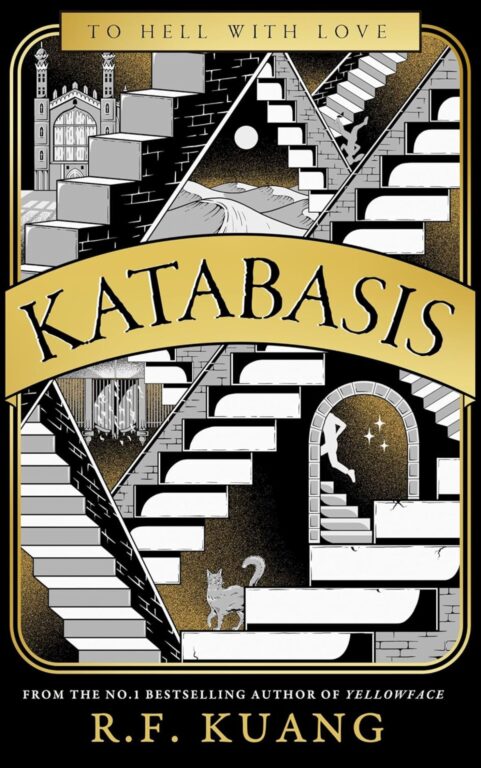
Kuang’s writing in Katabasis is dense, referential, and intentionally demanding. The prose swings between sharp satire and lyrical abstraction, often lingering on philosophical arguments and symbolic spaces. The underworld itself feels meticulously designed: lecture halls become traps, scholarly debates take on physical consequences, and administrative structures morph into systems of punishment.
This style will delight some readers and frustrate others. The novel is less interested in speed than in atmosphere and argument. Kuang clearly enjoys stretching metaphors until they become environments, and while this can slow the story, it also gives the book its distinctive voice.
Characters and Relationships
Alice is a difficult but compelling protagonist. She is brilliant, proud, deeply insecure, and emotionally brittle. Her grief over Grimes is tangled with resentment, admiration, and a hunger for validation, making her motivations messy and believable. She is not always likable, but she is consistently honest in her desperation.
Peter serves as both companion and contrast. His relationship with Alice is layered with rivalry, attraction, and mutual dependence. Together, they embody different ways of surviving the same system, and their interactions ground the novel when its ideas threaten to float too far into abstraction.
The supporting characters — faculty members, fellow students, and underworld figures — often function more as embodiments of academic roles than as fully fleshed individuals. While this can feel limiting, it reinforces the book’s allegorical nature.
What Works Well
One of the novel’s strongest achievements is its premise. Turning academic life into a literal underworld allows Kuang to explore familiar anxieties in unfamiliar ways. The settings are imaginative, unsettling, and often darkly funny.
The emotional core also stands out. Beneath the satire is a genuine exploration of grief and identity. Alice’s fear of becoming nothing without institutional approval feels painfully real, especially for readers familiar with academic or highly competitive environments.
Finally, the satire cuts sharply. Kuang exposes how institutions exploit passion, reward endurance over well-being, and mistake suffering for merit. These observations land with uncomfortable accuracy.
Where the Novel Struggles
The book’s ambition is also its biggest risk. Long passages of exposition and philosophical debate can stall momentum, especially for readers expecting a faster-paced fantasy narrative.
At times, the novel leans too heavily into argument, making certain scenes feel more like essays than moments of lived experience. This can distance readers emotionally, even when the themes are compelling.
Additionally, some secondary characters feel schematic, designed to illustrate ideas rather than exist independently. While this serves the allegory, it occasionally flattens the emotional landscape.
Why This Book Sparks Conversation
Katabasis is not a comfortable read, and it is not meant to be. It invites debate about ambition, mentorship, exploitation, and the cost of intellectual prestige. The book resonates because it captures a truth many recognize but rarely articulate: that institutions built around knowledge can still be deeply inhumane.
Readers are likely to disagree about whether the novel earns its length and density, but few will deny its relevance. Its images linger, especially the moments where academic rituals become physical trials with real consequences.
Final Thoughts
Katabasis is a demanding novel that asks for patience and attention. It will not appeal to everyone, and it does not try to. For readers willing to sit with its discomfort, the book offers sharp insight, unsettling imagery, and an unflinching look at what it means to sacrifice oneself to a system that may never love you back.
Kuang does not provide easy answers. Instead, she leaves readers with a question that echoes after the final page: what are we willing to lose in exchange for belonging, recognition, and the promise of intellectual immortality?