
When chaos wears a smile and morality dissolves into madness, we find ourselves staring straight into the eyes of Gotham’s Clown Prince of Crime — the Joker. The chilling story of the boy named Sergio and his unforgettable “birthday Gift” isn’t just another horrifying act of violence; it’s a window into the Joker’s Twisted ideology, where innocence and cruelty intertwine. This article dives deeply into every layer of that encounter — from the symbolic play with bugs to the twisted lessons Joker leaves behind. It’s a reflection of human darkness, the nature of corruption, and how one man’s madness can infect even the purest soul.
The Lonely Beginning: A Boy and His Bugs
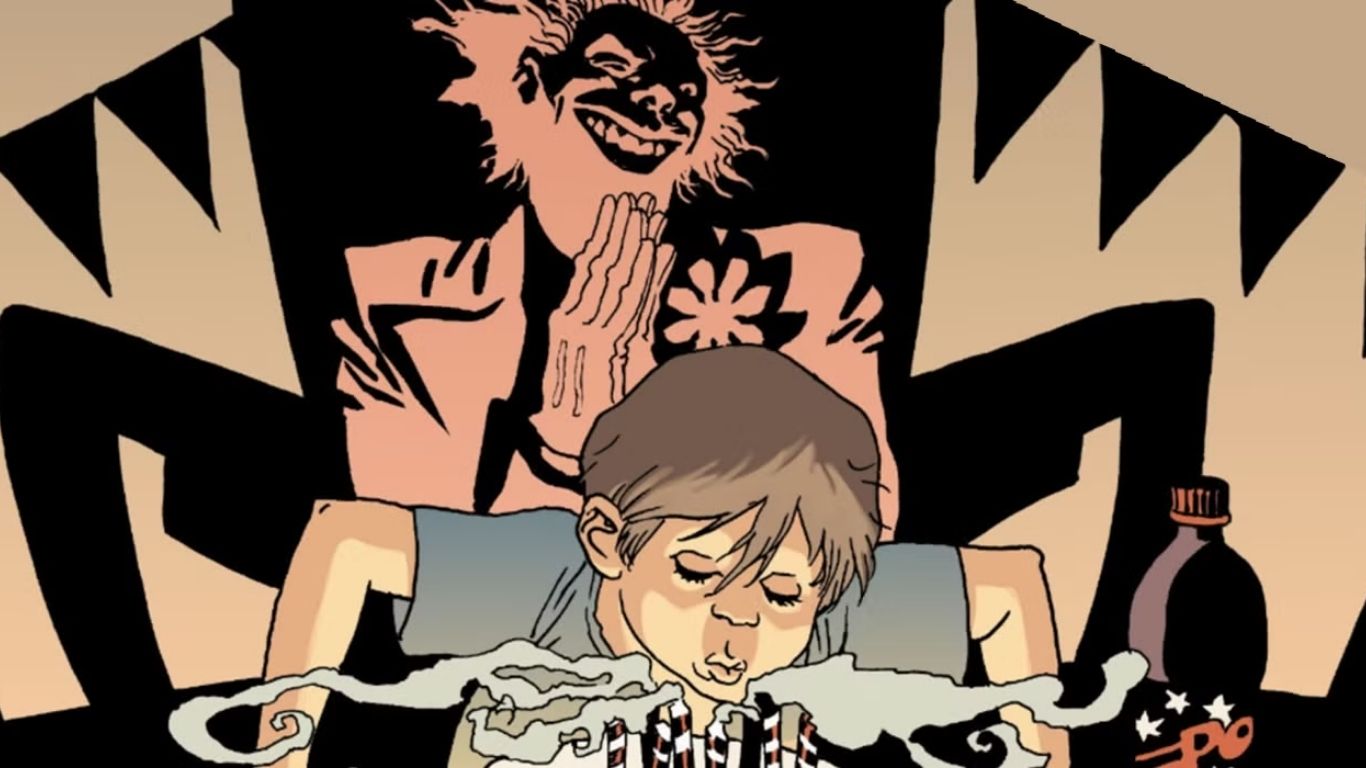
The story begins on an unsettling note. A young boy, Sergio, is playing alone with bugs in a box. He grabs one and cruelly tears off its leg — not out of malice, but out of curiosity and control. This tiny act becomes a haunting metaphor for the world the Joker embodies.
In a sense, the bugs symbolize powerlessness. Within their confined box lies a microcosm of Gotham itself — a city trapped, injured, yet still alive. Sergio’s act mirrors how the powerful often toy with the helpless. It’s bleak, but real — and Joker, when he enters, instantly recognizes that the boy is not so different from himself.
The boy’s isolation sets the tone. His birthday party has no guests, no laughter, just silence and a box of bugs. It’s innocence decaying in solitude — exactly the environment where the Joker thrives.
The Arrival of the Clown: A Smile in the Shadows
When the Joker enters the room, the shift in atmosphere is instant. The door creaks open and the boy’s face lights up — joy, for the first time. “Finally someone showed up,” he says.
That single sentence crushes the heart. For a brief second, Joker isn’t the monster; he’s the guest the child’s been waiting for. His entrance, ironically, brings happiness — but it’s a happiness built on rot.
Joker quickly learns that the boy’s father is Emiliano. At that revelation, he hides his weapon, slipping effortlessly from predator to performer. The duality of the Joker — playful yet lethal — becomes visible. He kneels to the boy’s level, inviting him to “torture the bugs together.”
From there begins the symbolic transfer of ideology.
The Lesson of the Bugs: Philosophy of a Madman
“Do you kill the insects after?” Joker asks.
“Only if they try to get out of the box. If you kill them, you can’t play with them anymore,” the boy answers.
That line freezes Joker in admiration. It’s chilling wisdom from a child, but it resonates deeply with him — a reflection of his own worldview. To Joker, chaos must be preserved; destruction must be prolonged for it to entertain. Killing ends the fun — but control, manipulation, and fear? That’s the true game.
When Joker calls Sergio “wise beyond your years,” it’s not mockery — it’s recognition. He sees in this boy a reflection of his own psyche: an emerging madness masked by innocence. It’s almost paternal, in a twisted way.
“Everyone’s a Freak”: The Gospel According to Joker
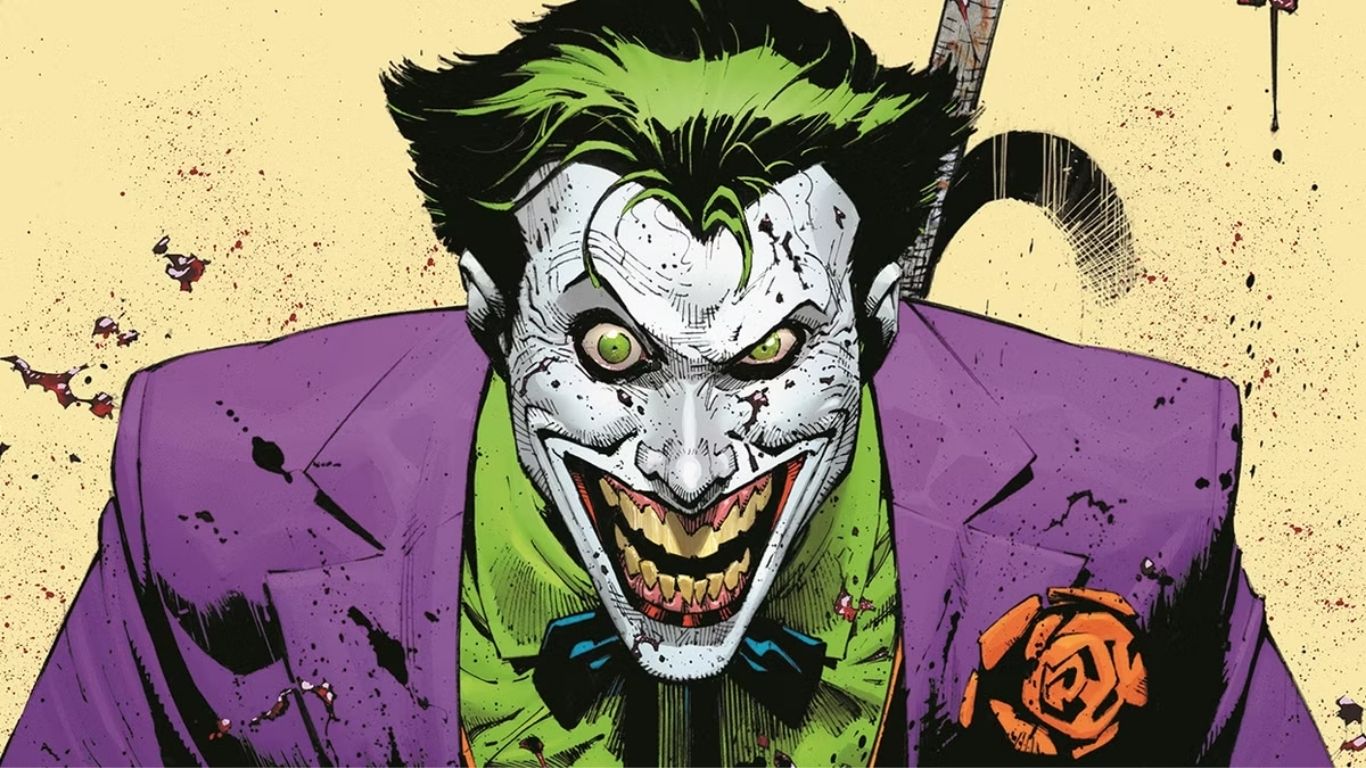
When Sergio explains that no one came because “everyone thinks I’m a freak,” Joker’s response becomes a sermon on the philosophy of abnormality.
“Everyone is so judgmental these days,” he says with that unpredictable grin. “Everyone is a freak — they just hide it better.”
This is quintessential Joker — a chaotic philosopher cutting through societal hypocrisy. He believes that normality is a façade. In his mind, every human being has a crack in their morality, a breaking point. Society just teaches them to wear masks (ironically, the very thing the Joker refuses to do).
In this scene, Joker is both corruptor and liberator. He validates Sergio’s pain but twists it into acceptance of freakishness. He tells him it’s okay to be different — but through the lens of violence and vengeance. That’s where the manipulation lies.
The Party That No One Wanted
After realizing the boy’s father is absent, Joker tells Sergio to go inside and “get ready.” The chaos is about to begin. What follows is one of the most disturbingly theatrical acts in Joker’s history — he forces the neighborhood to attend the boy’s birthday.
He goes door-to-door, gun in hand, delivering invitations in his own way. “You will go home. You will wrap your most prized toys with care and bring them,” he says. Every command is accompanied by a threat, turning what should be a joyous celebration into a hostage ceremony.
Soon, laughter fills the air, fake and fearful. “Happy birthday to you…” they sing, trembling, tears blending with forced smiles. Joker watches like a ringmaster of suffering, his creation finally taking shape — a grotesque parody of happiness.
What’s deeply unsettling is that Joker doesn’t do this for money, revenge, or power. He does it for the spectacle — the idea of turning a tragedy (a lonely birthday) into a grotesque carnival. This act proves that his motivation is pure chaos, art for the deranged.
The Father’s Return: Debt, Betrayal, and Justice
Just when the illusion peaks, Sergio’s father walks in — cheerful, unaware, relieved to see people celebrating his son’s birthday. The tension spikes. Joker’s grin tightens as he leads the man to the kitchen.
There, the façade shatters. Joker confronts him about the previous night: a job gone wrong, a betrayal, and Batman’s interference. Emiliano was supposed to be there. The consequences were brutal — his team was beaten, and Joker is here to settle accounts.
But the boy’s earlier wisdom echoes in Joker’s mind:
“If you kill them, you can’t play with them anymore.”
And suddenly, Joker changes the rules. Instead of killing the father, he decides to mutilate him — symbolically sparing his “plaything.” He orders the man to give his non-shooting arm and not to scream. Moments later, the man’s fingers are gone.
Outside, Joker shouts, “Hot dogs are ready!” blending horror with humor as only he can. The grotesque comedy of it all encapsulates his philosophy — everything, even agony, is part of the performance.

The Farewell Gift: Innocence Returns to Madness
As Joker leaves, he turns to Sergio and promises to see him next year, as if it’s the start of a dark mentorship. But before he can go, Sergio runs after him — offering a gift.
It’s the box of bugs.
What began as the boy’s toy becomes a token of their shared philosophy. To Joker, it’s more than a gift; it’s a badge of kinship. When he hugs the boy, there’s a fleeting, eerie tenderness — the kind that disturbs more than violence ever could.
But then he looks at the injured father and tells Sergio, “If the bugs get out of the box, kill them.” It’s the perfect closing line — cementing the boy’s transformation and the Joker’s eternal cycle of corruption. It’s both advice and curse.
Themes of Power, Control, and Corruption
This story, while short, encapsulates three major Joker themes:
- Corruption of innocence: Joker doesn’t just kill; he converts. He molds others, especially children, into reflections of his worldview. Sergio’s arc — from loneliness to sadistic curiosity — mirrors Gotham’s slow decay.
- The illusion of normality: Joker’s assertion that “everyone’s a freak” reveals his disgust for societal pretenses. He doesn’t believe in good or evil — just masks hiding chaos.
- Entertainment through suffering: Every event is a performance. Joker views life as theater — one where laughter and screams are interchangeable.