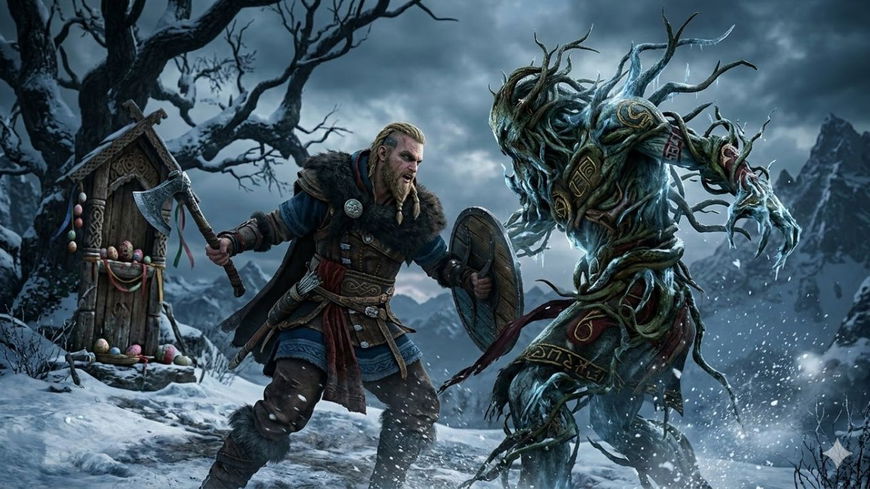
For decades, the architectural bones of fantasy literature have been shaped by a distinctly Eurocentric tradition—the towering peaks of Tolkien’s Middle-earth or the mist-covered landscapes drawn from Celtic myth. These familiar settings often revolve around a moral binary, where the narrative centers on a clear battle between absolute light and overwhelming darkness. Yet a new creative current is emerging. Authors and professional worldbuilders are increasingly choosing to incorporate Slavic mythology into fantasy worldbuilding, turning toward a mythic tradition that is darker, more primal, and deeply rooted in the rhythms of nature. Unlike many Western fantasy traditions, Slavic mythology introduces a worldview built on duality and balance rather than simple triumph over evil. In this framework of fantasy worldbuilding, nature is not merely scenery—it is a living force, filled with spirits, rules, and ancient agreements that humans must respect or face the consequences.
The Cosmological Spine: The World Tree
In Slavic worldbuilding, the universe is not a series of distant dimensions, but a single, vertical ecosystem organized around the World Tree (typically a massive sacred oak). This axis mundi connects three distinct yet permeable realms. Understanding this hierarchy is essential for establishing the “physics” of your magic and the stakes of your plot.
Prav: The Canopy of Law
Situated in the highest branches, Prav is the realm of divine order. It is presided over by Perun, the thunder god. Unlike the Christian “Heaven,” Prav is not a reward for the virtuous; it is a celestial command center.
- Worldbuilding Tip: Treat Prav as a source of stern, inflexible justice. If a character breaks an oath, the retribution doesn’t come from a “devil,” but from the sky itself.
Yav: The Trunk of Existence
Yav is the physical world of humans. In the Slavic mindset, Yav is a “hard” space defined by the seasonal cycle and the struggle against the elements. It is the liminal middle ground where the influence of the gods above and the spirits below collide.
Nav: The Pastoral Underworld
At the roots lies Nav, the domain of the dead ruled by Veles. Refreshingly, Nav is not a dark cavern of torment. It is often depicted as a sea of rolling green plains—a paradise for an agricultural people.
- Narrative Hook: Characters traveling to the underworld shouldn’t expect fire and brimstone, but rather a hauntingly peaceful reflection of the living world where the ancestors continue their “rest.”
The Divine Friction: Perun vs. Veles
The engine of Slavic mythology is the eternal cycle of opposition between Perun (Sky/Thunder) and Veles (Earth/Magic/Underworld). This is not a “Good vs. Evil” war; it is a necessary friction that generates life.
| Feature | Perun (The Enforcer) | Veles (The Shapeshifter) |
| Domain | Sky, Lightning, Oaths, War | Water, Earth, Wealth, Magic |
| Symbolism | The Axe, The Eagle, High Peaks | The Serpent, The Bear, Lowlands |
| Role | The protector of social order | The patron of musicians and rebels |
| Worldbuilding Tone | Stern, violent, “High” altitude | Fluid, arcane, “Deep” resonance |
In your world, consider how this duality manifests. Perhaps the “Theft of the Cattle” (a classic myth where Veles steals from Perun) is a metaphor for the humidity rising from the earth to create rain. Rain isn’t just weather; it’s the result of a cosmic heist and a divine chase.
The Geography of Liminality: Borders and Barriers
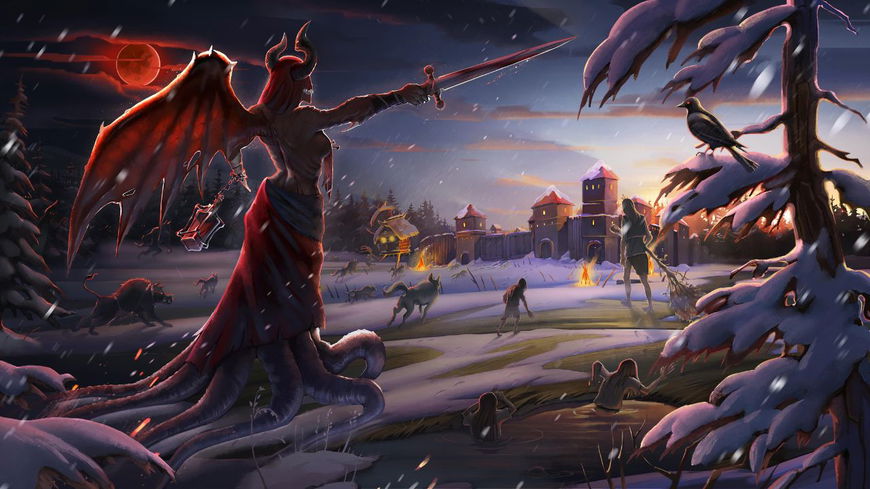
In Slavic fantasy, “where” you are matters as much as “who” you are. The world is full of high-risk transition points that serve as the ultimate tests for a protagonist.
The Smorodina River and Kalinov Bridge
The boundary between Yav and Nav is the Smorodina River. Its name suggests a “stench” of fire or rot. To cross into the land of the dead, one must traverse the Kalinov Bridge, an iron structure that glows white-hot.
- Implementation: Guard this bridge with multi-headed dragons like Zmey Gorynych. The crossing shouldn’t just be a physical trek; it should be a symbolic “death of the old self.”
Buyan Island and the Alatyr Stone
Deep in the “Ocean-Sea” lies Buyan, a mythical island that appears and disappears with the tides. At its center sits the Alatyr Stone, the “navel of the earth.”
- The Power of the Alatyr: In your magic system, use the Alatyr as a primordial battery. It is the “father of all stones,” and invoking it in a spell makes that magic “firmer than stone.”
Domestic Spirits: The Home as an Ecosystem
Perhaps the most unique aspect of Slavic lore is the belief that a house is a living spiritual community. A fantasy protagonist isn’t just safe because they are indoors; they are safe because they have satisfied the “tenants” living behind the stove.
The Domovoy: The Hairy Ancestor
The Domovoy is the primary house spirit. He is helpful but sensitive. If the family is lazy or prone to swearing, the Domovoy becomes a source of poltergeist-like chaos or simply leaves, stripping the house of its spiritual protection.
The Dangers of the Outbuildings
The Slavic worldbuilding model extends magic to every structure:
- The Bannik: The spirit of the bathhouse (banya). Because the banya is a place of birth and purification, it is a “high-magic zone.” Interrupt the Bannik during his midnight steam, and he might flay you alive.
- The Ovinnik: The spirit of the threshing barn. He often appears as a black cat with glowing eyes and is the most volatile of spirits because he guards the grain—the village’s survival.
Nature Spirits: Territorial Personifications
Forget the idea of “monsters” that wander the woods waiting to be slain for XP. Slavic nature spirits are landlords.
The Leshy: Master of the Woods
The Leshy can be as tall as a pine or as small as a leaf. He is the forest’s immune system. He doesn’t want to eat the hero; he wants the hero to stop being loud, stop killing his deer, and show some damn respect.
- Worldbuilding Step: Make the forest a puzzle. To pass through a Leshy’s woods, characters might need to wear their clothes backward or leave an offering of salt and bread.
The Rusalka: The Complexity of Water
A Rusalka is often the ghost of a woman who died an “unnatural” death. They represent the crushing weight and cold danger of the water. In the South, they are beautiful and seductive; in the North, they are hags with iron breasts. This regional variation allows you to build a world with diverse cultural fears based on local geography.
The Poludnitsa: The Daylight Horror
One of the most effective tropes to subvert is the “safety of the day.” The Poludnitsa (Noonwraith) appears in fields at the height of summer heat. She strikes down those who work through the midday rest.
- Narrative Impact: Use the Noonwraith to create a world where high noon is more terrifying than midnight. It forces your characters to adhere to strict cultural rhythms to survive the literal and spiritual “heat.”
The Arcane System: Zagovory (Incantations)
Magic in a Slavic world shouldn’t be about “mana points” or “spell slots.” It is linguistic and rhythmic. The Zagovory (charms) are the primary mechanism of folk magic.
The Structure of a Slavic Spell
If you are designing a magic system, follow the traditional three-part structure:
- The Journey: The caster describes themselves rising and heading toward the East, to the Sea-Ocean and Buyan Island.
- The Appeal: They call upon a higher power (Perun, a Star, or the Alatyr Stone).
- The Lock: The caster “locks” the spell with a verbal key and “throws the key into the sea.”
- Vocal Resonance: Slavic magic is visceral. It involves whispering (bajanje), rhythmic chanting, or shouting. A caster’s power should be tied to their physical stamina and the resonance of their voice.
Social Fabric: The Mir and “Double-Faith”
To make your world feel authentic, the social structure must match the mythology. Historically, Slavic life was communal, centered on the mir (the commune) or zadruga (extended family).
Dvoeverie: The Tension of Two Faiths
One of the most compelling narrative layers is Dvoeverie (Double-Faith). This occurs when an “official” state religion (like Christianity) overlays an older pagan system.
- Example: On the surface, the villagers pray to St. Elijah, but they know in their hearts he is just Perun in a new coat. They keep the icons in the “red corner” of the house, but they still leave bread for the Domovoy under the stove. This creates a “whimsical syncretism” that adds immense depth to your world’s religious politics.
Subverting Modern Tropes
As we move through 2026, the “Slavic Fantasy” subgenre is evolving away from the “perennial winter” cliché.
Move Beyond the Cold
While winter is a character in Slavic myth (Morozko), don’t make your world a static wasteland. Focus on the seasons. The transition from the death of winter to the explosive growth of spring is where the real tension lies.
The Shift Toward “Gothic Slavic”
Contemporary trends are leaning into “intensely personal” stories. Works like Genoveva Dimova’s Foul Days (2024) show that you can place Slavic mythology in urban, “Balkan-esque” settings with monster-filled cities. Use the mythology to explore modern themes like identity, displacement, and the “dark heart” of the wild.
Conclusion: Becoming the Negotiator
To successfully build a Slavic-inspired world, you must stop being a “conqueror” and start being a “negotiator.” In this setting, you don’t “defeat” the darkness; you find the “middle road” in Yav. You learn the name of the spirit in the river, you respect the silence of the noon fields, and you keep your hearth clean for the ancestor under the floorboards.
By integrating the vertical hierarchy of the World Tree, the dualistic friction of Perun and Veles, and the rhythmic power of the Zagovory, you create a world that feels ancient, grounded, and profoundly human.