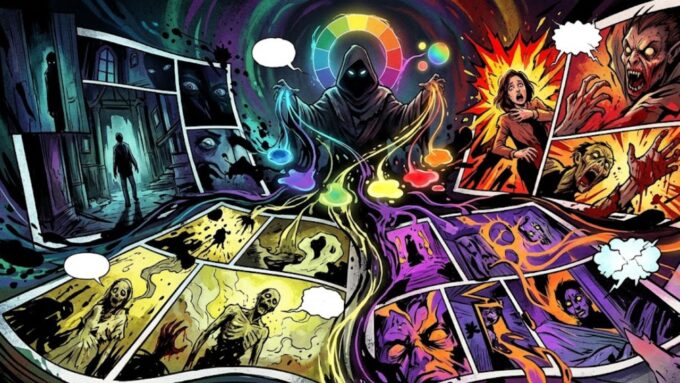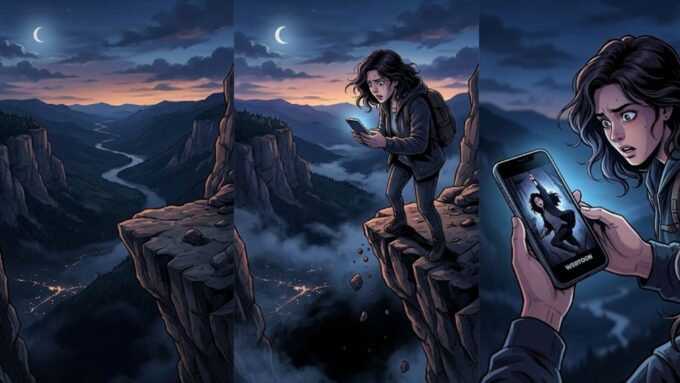


When we talk about suspenseful writing, horror stories often come to mind—full of eerie creatures, chilling scenes, and unexpected scares. But while those moments might make us jump, they’re not what truly haunt us. What really sticks with readers is the tension that builds slowly—the quiet dread that creeps in and keeps us turning pages. As H.P. Lovecraft famously said, “The oldest and strongest kind of fear is fear of the unknown.” That kind of fear doesn’t come from revealing everything—it comes from holding back, making your readers wait, wonder, and worry. In this blog, we’ll explore how to add suspense to your writing—what makes it work, why it’s so powerful, and the techniques that keep readers hooked from start to finish.
Suspense Is Built on Questions We Want Answered
At its core, suspense is about posing a question that the audience desperately wants an answer to—then holding that answer just out of reach. Think of a haunted house story: What’s lurking behind the door? Or a classic whodunit: Which guest committed the murder?
But suspense isn’t limited to horror or mystery. Romantic comedies ask Will they end up together? Thrillers tease us with Will the hero survive? And character-driven dramas keep us wondering, What traumatic secret is the protagonist hiding?
The key lies in delaying resolution while keeping the audience engaged. A good suspenseful story creates tension not just from the events themselves, but from the wait—and the uncertainty—about what happens next.
1. Limit the Point of View to Build Mystery
One of the most effective ways to create suspense is by narrowing the scope of what the audience knows. Instead of using an all-knowing narrator who reveals everything, many great writers tell the story through the limited perspective of the characters. That way, the audience uncovers the truth at the same pace the characters do.
Take Dracula, for example. The story unfolds through letters and journal entries. We’re not just watching events from above; we’re inside the heads of the characters, feeling their fear, confusion, and creeping dread as they try to understand what’s happening.
This kind of limited point of view pulls us in and keeps us guessing—because we’re as in the dark as the protagonist.
2. Choose a Setting That Suggests Hidden Horrors
The environment of a story plays a huge role in its suspense. A dusty old mansion. A foggy street. A crumbling castle with hidden corridors. These settings don’t just provide atmosphere—they actively contribute to the feeling that something terrible is lurking just out of sight.
It’s not just about location either. Time of day matters. Nighttime, storms, and fog all restrict visibility and heighten a sense of vulnerability. That’s part of why settings like Victorian London are so popular in horror and suspense—they’re dark, chaotic, and filled with secrets.
Even ordinary things can be made ominous. In the gothic novel Rebecca, the flowers around the estate aren’t described as merely pretty or bright—they’re described as blood red. It’s a small choice, but it plants a seed of discomfort in the reader’s mind.
3. Play with Style and Pacing
Suspense isn’t just about what happens—it’s about how it’s told. The rhythm of sentences, the choice of words, and the structure of scenes can all add to the tension.
Edgar Allan Poe mastered this in stories like The Tell-Tale Heart, where the narrator’s fragmented, frantic language mirrors his unraveling sanity. Short, clipped sentences create a breathless pace. Sudden pauses draw attention to what’s unsaid. It’s not just about scaring you with what happens—it’s about making you feel unsettled as you read.
Filmmakers like Alfred Hitchcock understood this too. His iconic suspense scenes often feature long silences and lingering shots—especially of staircases. These techniques make viewers feel like something is always about to happen, even if nothing does.
4. Use Dramatic Irony to Keep the Audience on Edge
Another powerful tool is dramatic irony—when the audience knows more than the characters do. This flips the suspense from What will happen? to When will it happen? and How will they react?
A perfect example is Oedipus Rex. The audience knows the awful truth: Oedipus has unknowingly killed his father and married his mother. But Oedipus doesn’t. Watching him get closer and closer to discovering the horror is agonizing—and riveting.
Dramatic irony builds a special kind of tension. It lets the audience see the danger long before the characters do, making every scene feel like a countdown.
5. End on a Cliffhanger—But Use It Wisely
Finally, there’s the infamous cliffhanger. It’s when a story cuts off right at a crucial moment—just before the big reveal, or in the middle of a life-or-death situation. Whether it’s the end of a chapter or the season finale of a show, cliffhangers leave us desperate to know what comes next.
They’re incredibly effective because they force us to imagine all the terrifying possibilities during the wait. Will the character survive? What’s behind the door? Is the villain about to strike?
Of course, if overused, cliffhangers can feel cheap. But when done right, they build suspense not just in the moment, but in the space between moments—where fear and imagination run wild.
Why Suspense Is the Heart of Horror
Monsters, gore, and jump scares may get our adrenaline pumping—but suspense is what truly terrifies us. It’s the unknown. The wait. The feeling that something awful is coming, but we don’t know when or how.
Suspense taps into a primal fear—the fear of not knowing—and stretches it out for maximum emotional impact. It makes us turn pages faster. It makes us squirm in our seats. It lingers in our minds long after the story ends.
So the next time you’re writing a scary story—or reading one—pay attention not just to the screams, but to the silence before them. That’s where the real fear lives.