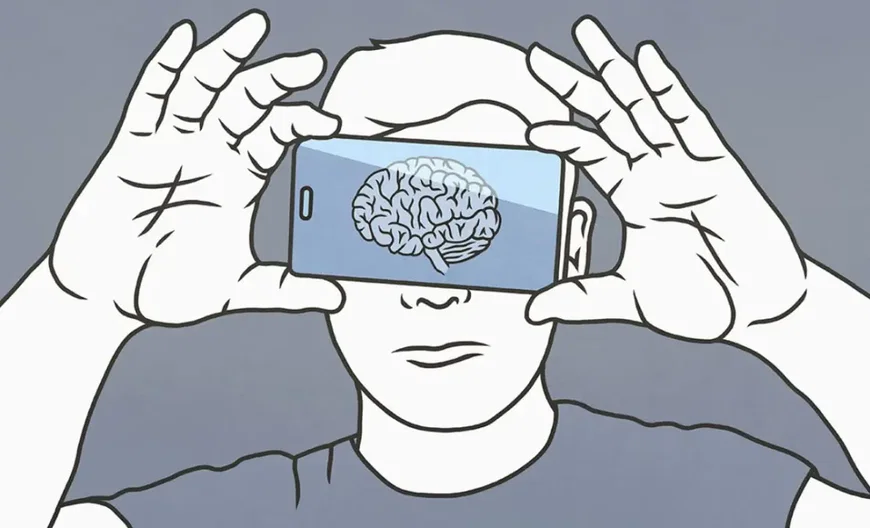
In just a little over a decade, our relationship with our phones has transformed from occasional curiosity to constant dependence. Only 15 years ago, just 20% of people accessed the internet via mobile. Today, that number has skyrocketed to 91%, with adults spending an average of 11 hours daily interacting with media. An alarming 71% of users never turn off their phones, and 31% admit they can’t control their usage. What’s worse? 17.3% of parents now spend more time on their phones than with their children. But why? And what is this doing to our minds? Let’s break down how smartphones are affecting our brains, whether or not we’re truly addicted, and the top three science-backed strategies to help take control of our digital lives.
How Your Phone Changes Your Brain
We often hear about dopamine—the brain’s “feel-good” neurotransmitter. But it’s more than just the chemical of pleasure. Dopamine drives motivation. In fact, genetically altered mice that can’t produce dopamine won’t even reach for food placed right in front of them.
Normally, dopamine motivates behaviors critical to survival—like eating, socializing, and sex. But our phones hijack this system. Every notification, funny TikTok, or Instagram like triggers a dopamine release, strengthening the brain’s reward pathways (called mesocortical, mesolimbic, and nigrostriatal pathways). These pathways get stronger every time they’re activated—a process known as long-term potentiation.
That means the more you use your phone, the more your brain craves it.
Why Everything Else Feels Boring
Studies have shown that rats placed in an exciting new environment release more dopamine than those in a familiar cage. But if they are given a dopamine stimulant before entering the novel space, their brains don’t respond the same way—the environment no longer feels exciting.
Humans are the same. Our constant dopamine hits from phones blunt our natural response to real-life novelty. That’s why things that used to feel fun or special—like going out with friends or reading a book—can now feel… dull.
Phones Are Destroying Our Focus and Joy
Research reveals that heavy phone use is eroding our ability to pay attention and delay gratification. This condition, known as delay discounting, means we value immediate rewards far more than long-term ones.
Even scarier, extended screen time can lead to anhedonia—the inability to feel pleasure at all. Young people who spend 7 or more hours daily on screens are twice as likely to be diagnosed with depression or anxiety.
Meanwhile, limiting screen time has measurable benefits. A 2018 study found that students who cut their social media use to 30 minutes per day reported significantly improved well-being.
The Anxiety-Social Media Feedback Loop
More phone time is linked to higher anxiety and reduced willingness for face-to-face interaction. Teens who use their phones for 5+ hours a day are 71% more likely to show suicide risk factors compared to those using it for an hour.
Apps like TikTok and Instagram fuel upward social comparison—making us compare ourselves to others’ curated lives, triggering FOMO (fear of missing out). These platforms are designed to withhold notifications and release them strategically, keeping us checking compulsively.
Are You Addicted to Your Phone?
Phone addiction is defined as compulsive behavior despite harmful consequences. Here are five questions to ask yourself:
- Cravings: Do you feel the urge to check your phone even when engaged in something else, like talking to your kids or partner?
- Salience: Does your phone affect your mood? Are you happier with more likes, or sad when others seem to be doing better?
- Tolerance: Are you spending more and more time on your phone to feel the same satisfaction?
- Withdrawal: Do you feel anxious, angry, or unfocused when you don’t have your phone? That’s cortisol—the stress hormone—talking.
- Relapse: Have you tried to cut back… and failed?
If you answered yes to most of these, you’re not alone. 78% of people say they can’t live without their phone.
How to Reclaim Control: 3 Proven Tips
The good news? Your brain can rewire itself. Thanks to neuroplasticity, change is possible. Here are three science-backed strategies to help you reduce your phone use:
1. Chronological Binding – Time-Limit Your Usage
Rats with unlimited access to cocaine escalate their intake until collapse. But rats with limited daily access use a steady amount without spiraling.
Apply the same principle: Restrict phone use to a specific time window, like one hour in the evening. This still lets you catch up on messages and notifications, but prevents endless scrolling.
Let friends and family know you’ll be offline outside that hour—communication is key.
2. Physical Binding – Create Real-World Barriers
If TikTok or Instagram is your weakness, log out and give the password to someone you trust. Want to stop doomscrolling at night? Turn off your phone by 9 PM and lock it in a drawer.
Other physical tricks:
- Have tech-free meals
- Don’t sleep with your phone nearby
- Don’t use your phone as an alarm—it’s too emotionally tied to your routine.
3. Categorical Binding – Make Your Phone Less Stimulating
Make your phone boring:
- Turn on grayscale mode
- Only use “fun” apps like Instagram or YouTube on your computer
- Delete apps you don’t really care about
- Charge your phone in a hard-to-reach spot
This retrains your brain to view your phone as a tool, not a dopamine factory.
It’s a Journey, Not a Quick Fix
Changing your brain takes time. Some studies say a month, others say it could take two years. Since we can’t live without phones, we need to develop smart habits and use them intentionally.
We’re all in this together. Whether you’re a student, a parent, or someone who just wants to reclaim a sense of peace—you are not alone. By understanding the science and trying out strategies that work for you, you can start to unplug from compulsive phone use and reconnect with your real life.
So… are you ready to put down your phone and take back control?
Also Read: How to Write Comedy: A Human Guide to Finding the Funny in Everyday Life