

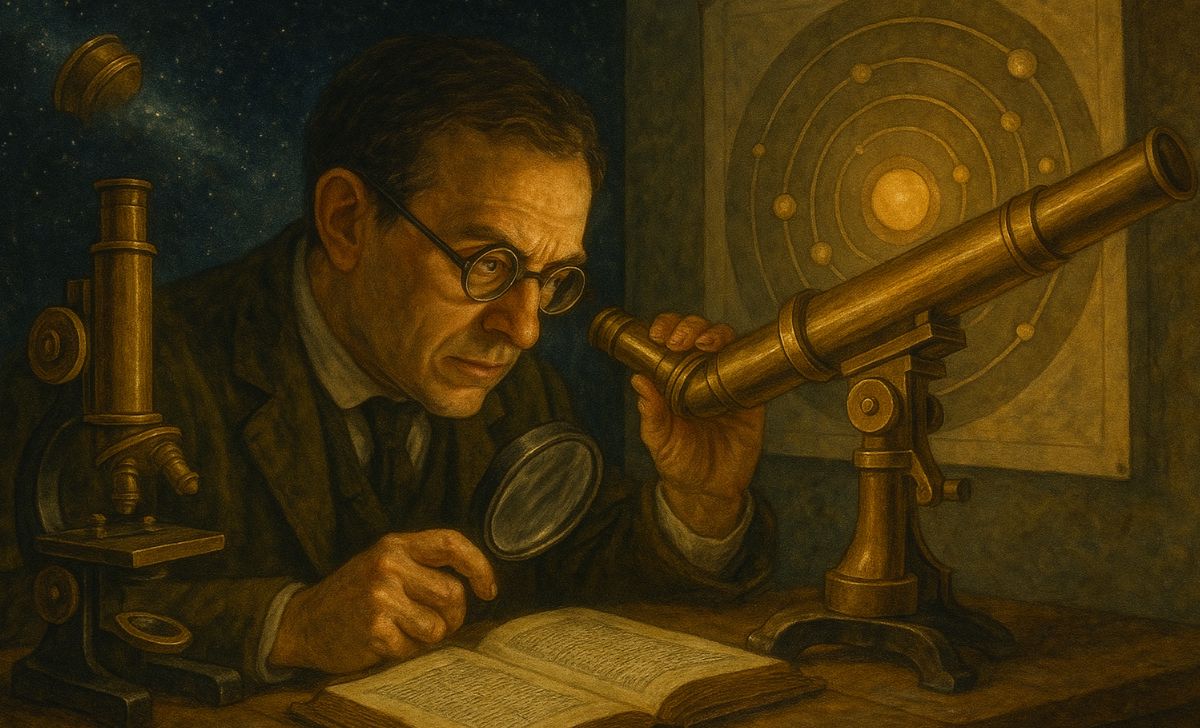
The human story is one of seeing and seeking to see more clearly. From the moment our ancestors stared up at the stars or down through crude lenses, vision has been both a literal and metaphorical driver of discovery. The science of optics—the study and enhancement of sight—has not only helped us correct our imperfect eyes but has also reshaped our understanding of everything from the smallest cells to the vastness of galaxies. It’s the grand narrative of how optics transformed human vision and understanding of the universe, showing how a simple desire to read better by candlelight eventually led to humanity peering into the fabric of the cosmos and reimagining the laws that govern reality.
The Birth of Optics: From Literature to Lenses
The origins of optical innovation began not in a laboratory, but in the printing press workshop of Johannes Gutenberg. Around 1440, Gutenberg introduced a device that would revolutionize communication—the printing press. Printed books became more than the possessions of monks or monarchs; they became common tools for learning and literacy.
As readers multiplied, another phenomenon emerged: strained eyes. Reading by dim candlelight for hours caused visual fatigue, which increased demand for one of Italy’s earlier inventions—spectacles. Invented around 1286, eyeglasses had been an elegant curiosity for the privileged, but now they were becoming necessities. This surge in demand for clearer vision inspired thinkers to consider a deeper question: could lenses not just help us see the familiar world better, but perhaps reveal new worlds altogether?
The Microscopic Revolution: Discovering Worlds Within
The first to seriously pursue this curiosity was Robert Hooke, a 17th-century English polymath known for his tireless experimentation. His fascination with magnifying lenses led to the creation of detailed observations of minute structures. In 1665, Hooke published “Micrographia,” an astounding collection of his microscopic sketches. It was within these pages that he introduced a term still used today—“cell.”
Through Hooke’s eyes, aided by lenses, humanity witnessed what had been hidden: the intricate architecture of living things. His discoveries didn’t simply show more detail; they revealed that life itself was composed of repeating structures, invisible to the naked eye. This transformed biology, anatomy, and medicine, opening the door to a deeper understanding of how living systems functioned at the smallest scale.
Galileo and the Telescope: Turning Vision to the Heavens
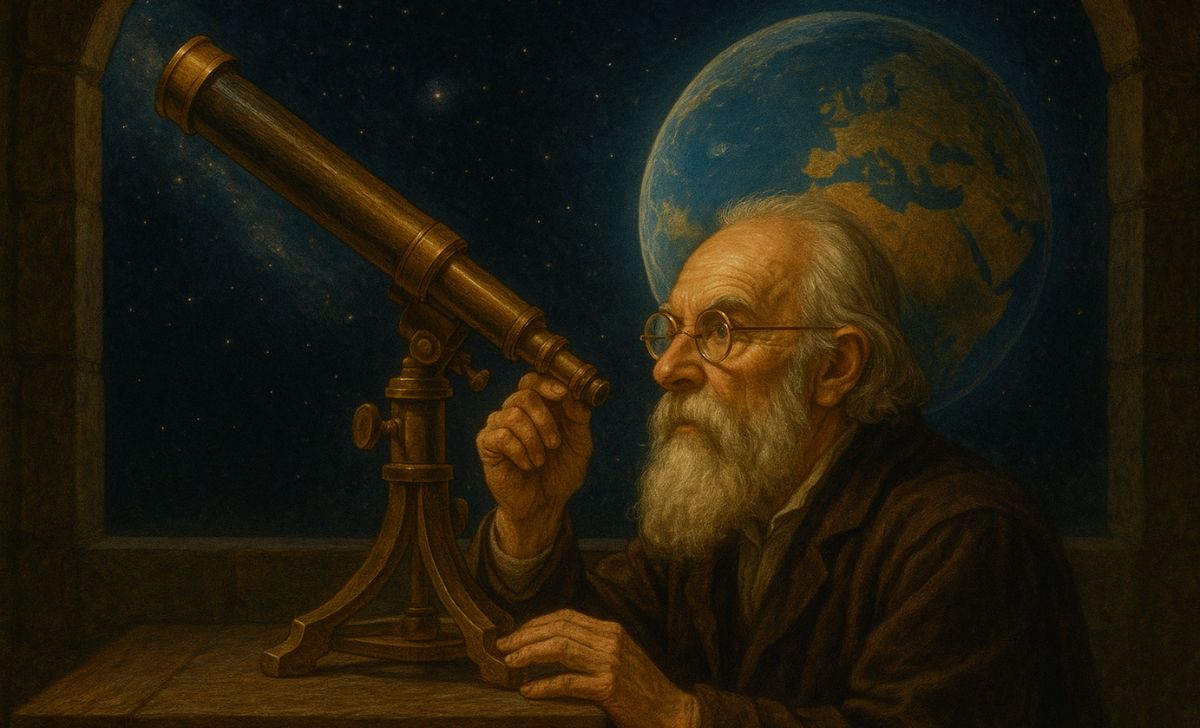
While Hooke peered inward, another visionary looked outward. Galileo Galilei, in 1609, refined and extended the reach of the telescope—an invention originally developed as a curiosity for viewing distant ships. Galileo’s improvements to the instrument made it powerful enough to challenge centuries of cosmological belief.
When he pointed his telescope skyward, he discovered that the Moon was not a perfect sphere as church doctrine had taught, but a rugged landscape filled with craters and mountains. He saw moons orbiting Jupiter—clear evidence that not all celestial bodies revolved around Earth. These observations dealt seismic blows to the geocentric worldview long held by religious and scholarly authorities.
Galileo’s discoveries didn’t just expand our knowledge—they transformed our place in the universe. He provided visual evidence that forced mankind to accept a humbling truth: Earth was not the center of all things. The cosmos was vaster and more dynamic than anyone had dared to imagine.
Newton’s Light: Decoding the Spectrum
Almost a year after Galileo’s death, in 1643, Isaac Newton was born. He would take up the torch of discovery, focusing his formidable intellect on one of the most mysterious of all phenomena—light itself. At the time, it was believed that colors were simply variations in brightness: red being “more light,” blue being “less.”
Newton shattered that misconception. In his famous prism experiments, he passed sunlight through a glass prism and split it into a vibrant spectrum of colors. Then, by recombining those colors through another prism, he showed they could form white light again. This groundbreaking discovery revealed that color was not a property of objects or brightness—it was part of the intrinsic nature of light.
This experiment unified optics around a central principle: color arises from light’s refraction at different wavelengths. Newton’s insights not only revolutionized the study of light but also led to his invention of the reflecting telescope, which used mirrors instead of lenses to minimize distortion. With it, the heavens came into even clearer focus.
Seeing the Invisible: The Birth of Scientific Laws
Newton’s experiments in optics didn’t exist in isolation. They were deeply intertwined with his exploration of motion, gravity, and the forces that governed both Earth and sky. Observing light’s refraction helped him understand universal laws—most famously, the law of gravitation.
Through rigorous observation, Newton showed that even the invisible could be inferred from its visible effects. Gravity could not be seen, but its pull on the planets and falling apples could be measured. This principle became a defining feature of scientific methodology: to discover truths not by what we can directly see, but by how unseen forces act upon the world around us.
This concept laid the foundation for modern science. We no longer relied on philosophy or authority as the final arbiters of truth. Instead, vision—enhanced through reason and instrument—became our most faithful guide to understanding the universe.
From Glass to Galaxies: Modern Optics and Its Legacy
In the centuries that followed Newton, the field of optics accelerated with astonishing speed. Each new invention extended human vision further—to the unimaginably small and the incomprehensibly distant.
Microscopes evolved from simple magnifiers to electron microscopes capable of visualizing atoms. With their help, scientists could see viruses, track proteins, and even watch individual cells divide. These discoveries reshaped biology and medicine, enabling breakthroughs like vaccines and genetic engineering.
Meanwhile, telescopes grew larger, more precise, and more technologically advanced. From Galileo’s small handcrafted instrument, we eventually reached the Hubble Space Telescope and the James Webb Space Telescope. These modern marvels have captured images of galaxies forming billions of years ago—glimpses into the universe’s own infancy. The ability to see so far back in time underscores just how far optics has extended both our vision and our imagination.
The Double Lens of Discovery: Technique and Perception
Yet, even as optics reveals more about the natural world, it also reminds us that how we see matters as much as what we see. Our tools—microscopes, telescopes, cameras, and lasers—extend our perception, but they also frame it. Each instrument brings its own limitations and interpretations.
The telescope, for instance, turned philosophical debates into observable truths. The microscope did the same for medicine. Today’s imaging technologies—MRI machines, satellite lenses, and molecular sensors—continue that tradition. They allow us to visualize what was once beyond human reach. But the interpretation of what we see still depends on perspective, context, and imagination.
Science progresses when vision is joined with insight. Seeing clearly is only half the task; understanding what we see defines the other half.
The Human Element in Seeing
The evolution of optics is not just a story of lenses and light—it’s also a story about the human desire to know. Every leap in optical science reflects a leap in curiosity. We wanted to read better, so we invented spectacles. We wanted to explore the unseen, so we built microscopes and telescopes. Today, we want to understand the origins of life and the universe, so we design quantum sensors, particle detectors, and space observatories.
At every point, our instruments serve as mirrors reflecting our collective ambition. They remind us that science begins with perception, but ends with insight. The clearer our vision becomes, the deeper our questions grow.
The Future of Sight: Beyond Human Eyes
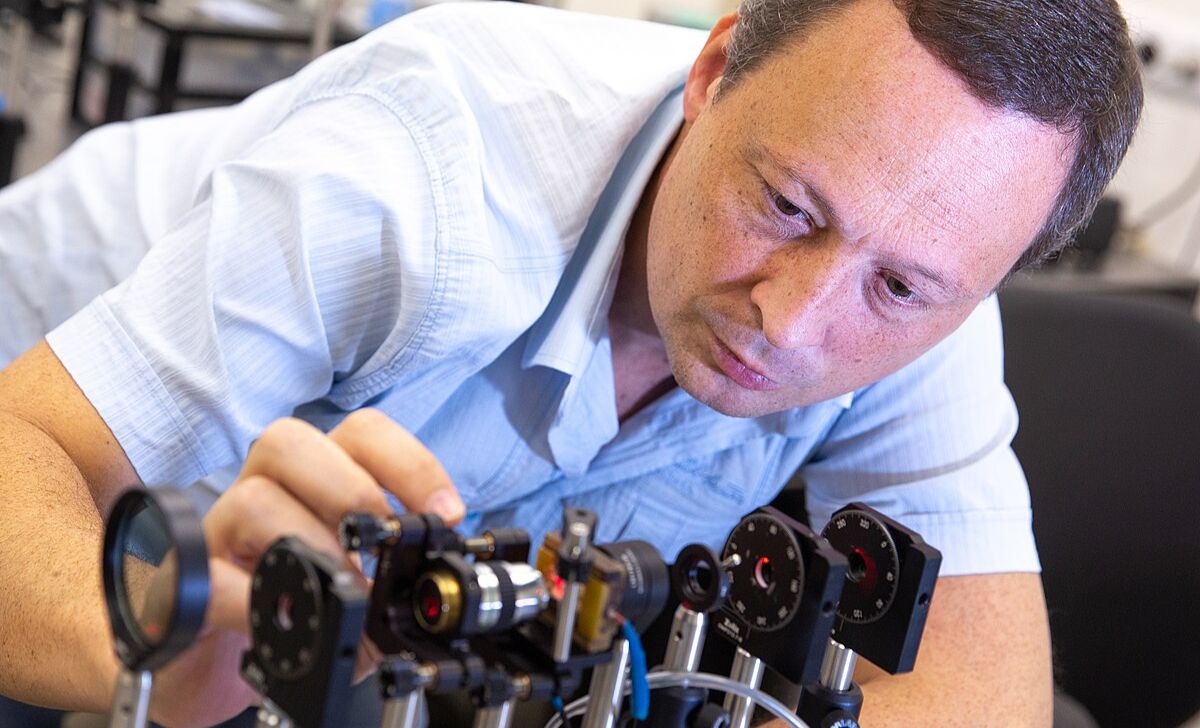
So what comes next in this continuing story of light and lenses? Modern optics points toward a future where vision may transcend biology entirely. Technologies like adaptive optics, quantum imaging, and artificial vision systems promise to exceed even the finest human eyesight.
Adaptive optics already allow researchers to compensate for atmospheric distortion, giving us near-perfect images of distant stars. Quantum imaging can detect objects invisible in normal light. Meanwhile, AI-driven vision systems interpret complex visual data faster and more accurately than humans. These developments suggest that we are entering an era where “seeing” may no longer be bound to the eye—but to data, algorithms, and machine cognition.
Still, the spirit that began with Gutenberg’s reading glasses endures. We keep refining our ways of seeing, driven by the same impulse: to illuminate the unknown.
Seeing Tomorrow: The Continuing Legacy of Optics
From the flickering candles of 15th-century Europe to the dazzling photographs from telescopes orbiting distant space, the arc of optics is one of relentless curiosity and courage. Each generation built lenses that opened new dimensions of existence, revealing that our visible world was just a fraction of reality.
Today, with so much visible—atoms, embryos, galaxies—we face a new question. Should we assume that everything important has already been discovered? Or should we see our current knowledge as merely another doorway to the unseen mysteries ahead?
The story of optics reminds us that every act of seeing invites new vision. What began with a quest to bring letters on a page into focus has evolved into a journey to bring the entire universe into view. As long as humankind continues to ask what lies beyond what we can see, the lens of discovery will never stop focusing forward.