
Contemporary literature has experienced a remarkable renaissance in mythological storytelling, with authors worldwide drawing from ancient narratives to create compelling modern works. This literary trend transforms age-old myths into fresh, relevant stories that speak to today’s readers while preserving the timeless wisdom embedded in these classical tales.
The Contemporary Mythology Revival
Modern authors approach mythology as a rich source of archetypal patterns, complex characters, and universal themes that remain surprisingly relevant to contemporary audiences. Rather than simply retelling ancient stories, today’s writers reinterpret mythological narratives to address current social issues, explore modern psychology, and challenge traditional perspectives.download/8130/7746/15484″>
This revival serves multiple purposes: mythology provides authors with pre-existing narrative frameworks that readers intuitively understand, while offering opportunities to subvert expectations and present familiar stories from new angles. The practice bridges the gap between ancient wisdom and contemporary concerns, creating literature that feels both timeless and urgently modern.
Rick Riordan: Making Ancient Gods Accessible
Rick Riordan revolutionized young adult literature by seamlessly blending Greek mythology with contemporary settings in his Percy Jackson series. His approach makes ancient myths accessible to modern readers by placing mythological characters and conflicts in recognizable contemporary contexts.
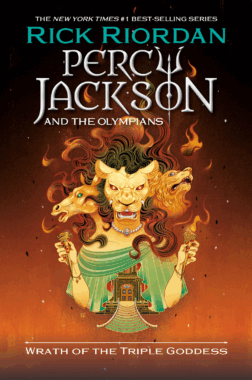
Book cover of ‘Percy Jackson and the Olympians: Wrath of the Triple Goddess’ by Rick Riordan, illustrating mythological imagery relevant to Greek mythology
Riordan’s success lies in his skillful adaptation of the classical hero’s journey for modern adolescents. Percy Jackson follows the archetypal pattern of mythological heroes while addressing contemporary themes like acceptance, identity, and family relationships. The series introduces young readers to classical mythology while making it relevant to their lived experiences.blog/greek-mythology-percy-jackson-connections”>
The author’s work demonstrates how mythology can serve as a vehicle for exploring modern concerns. By updating the language and cultural references while preserving the essential mythological elements, Riordan creates stories that feel both ancient and contemporary. His approach has inspired countless readers to explore classical mythology independently, proving the enduring power of these ancient narratives.
Madeline Miller: Psychological Depth in Mythological Retelling
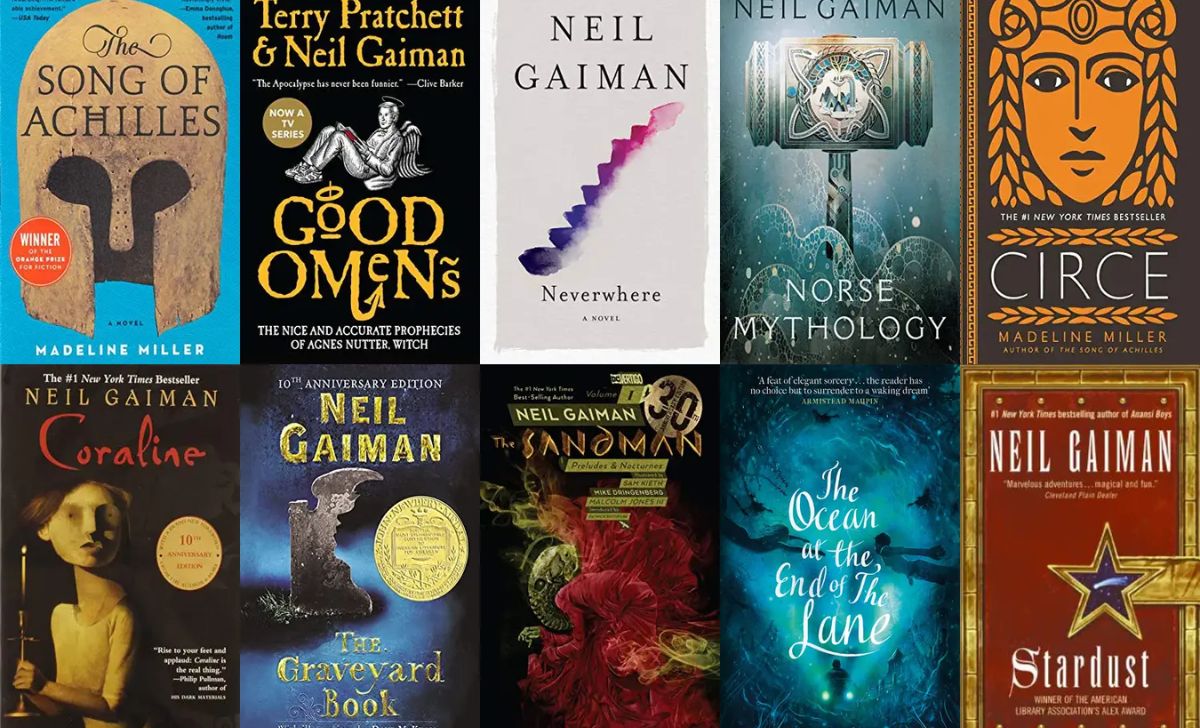
Madeline Miller represents another significant approach to mythological literature through her novels “The Song of Achilles” and “Circe”. Miller’s work demonstrates how contemporary authors can use psychological insights to explore the inner lives of mythological characters, bringing unprecedented depth to ancient figures.
Book cover of “The Song of Achilles” by Madeline Miller, a modern retelling of Greek mythology focused on Achilles and the Trojan War
Her novel “Circe” transforms the witch from Homer’s Odyssey into a fully realized character with complex motivations, fears, and desires. Miller explores themes of power, isolation, and transformation while maintaining the mythological framework. The novel addresses contemporary issues like gender roles, family dynamics, and personal agency through the lens of ancient mythology.
Miller’s approach showcases how modern authors can preserve the essence of original myths while providing fresh perspectives. Her work appeals to readers who may be unfamiliar with classical mythology by making these ancient stories emotionally accessible and psychologically compelling.
Neil Gaiman: Mythology in Modern Fantasy
Neil Gaiman’s “American Gods” exemplifies how contemporary authors integrate multiple mythological traditions into complex modern narratives. Gaiman weaves Norse, African, Native American, and other mythological traditions into a story about immigrant gods struggling to survive in contemporary America.
His work demonstrates the intertextual nature of modern mythological literature, where traditional myths dialogue with contemporary narrative forms. Gaiman uses mythological figures to explore themes of belief, cultural identity, and the immigrant experience in modern America.
The author’s approach shows how mythology can serve as a framework for examining contemporary social and political issues. By bringing ancient gods into modern settings, Gaiman creates opportunities to explore how traditional beliefs adapt to new cultural contexts.
Feminist Reinterpretations: Margaret Atwood’s “The Penelopiad”
Margaret Atwood’s “The Penelopiad” represents the feminist approach to mythological retelling, giving voice to previously marginalized characters. Atwood retells Homer’s Odyssey from Penelope’s perspective, challenging traditional interpretations and highlighting women’s experiences in ancient Greek society.
The novella addresses contemporary concerns about gender roles, power dynamics, and social justice through the lens of classical mythology. Atwood’s work demonstrates how modern authors can use mythological frameworks to critique both ancient and contemporary social structures.
This approach reveals how mythology can serve as a tool for social commentary and cultural critique. By giving voice to silenced characters, contemporary authors create new meanings from ancient narratives while addressing modern concerns about representation and equality.

Toni Morrison: African Mythology in Contemporary Fiction
Toni Morrison’s “Beloved” incorporates African American folklore and mythological elements to address the historical trauma of slavery. Morrison demonstrates how authors can draw from diverse mythological traditions to create powerful contemporary narratives.
Her work shows how mythology can serve as a vehicle for cultural preservation and resistance. Morrison uses mythological elements to explore themes of memory, identity, and community survival, creating literature that honors cultural heritage while addressing contemporary concerns.
Contemporary Authors and Global Mythologies
Modern literature increasingly draws from diverse mythological traditions beyond Western classical mythology. Authors like Jennifer Saint continue the Greek mythology revival with novels like “Elektra” and “Ariadne,” focusing on female perspectives in classical narratives.
Paulo Coelho’s “The Alchemist” incorporates universal mythological patterns into a modern spiritual journey. The novel demonstrates how contemporary authors can use archetypal patterns from various mythological traditions to create stories with universal appeal.
Techniques and Approaches
Contemporary authors employ several key techniques when incorporating mythology into their work:
Psychological Realism: Modern authors bring psychological depth to mythological characters, making them relatable to contemporary readers. This approach transforms archetypal figures into complex individuals with believable motivations and emotional lives.
Cultural Translation: Authors update mythological stories for modern contexts while preserving their essential elements. This involves adapting language, settings, and cultural references to make ancient stories accessible to contemporary audiences.
Perspective Shifting: Many contemporary works retell familiar myths from new viewpoints, particularly giving voice to previously marginalized characters. This technique reveals new dimensions of familiar stories while addressing contemporary concerns about representation.
Thematic Exploration: Modern authors use mythological frameworks to explore contemporary themes such as identity, power, gender roles, and social justice. Mythology provides a rich symbolic language for addressing complex modern issues.
Intertextual Dialogue: Contemporary mythological literature creates conversations between ancient and modern narratives, allowing for complex interpretations that speak to both historical and contemporary concerns.
The Cultural Impact
The contemporary revival of mythological literature serves important cultural functions. These works introduce new generations to classical narratives, ensuring the preservation and continued relevance of ancient wisdom. They also provide frameworks for understanding universal human experiences across cultures and time periods.
Modern mythological literature demonstrates the enduring power of these ancient stories to address contemporary concerns. By reinterpreting classical narratives, contemporary authors create bridges between past and present, offering new perspectives on both ancient wisdom and modern challenges.
The success of authors like Rick Riordan, Madeline Miller, and Neil Gaiman proves that mythology remains a vital source of inspiration for contemporary literature. Their work shows how ancient narratives can be transformed to speak to modern audiences while preserving their essential power and wisdom.

Conclusion
Contemporary authors demonstrate remarkable creativity in their use of mythology, transforming ancient narratives into compelling modern literature. Whether through psychological realism, feminist reinterpretation, cultural translation, or genre-blending approaches, these writers prove that mythology remains a vital and relevant source of literary inspiration.
The continued popularity of mythologically-inspired literature suggests that readers crave stories that connect them to larger patterns of human experience. By drawing from the rich wellspring of world mythology, contemporary authors create works that satisfy this need while addressing the specific concerns and challenges of our modern world.
Modern mythological literature succeeds because it recognizes that while the external circumstances of human life change, the fundamental experiences of love, loss, transformation, and the search for meaning remain constant. Through their skillful reinterpretation of ancient narratives, contemporary authors ensure that these timeless stories continue to inspire, challenge, and enlighten new generations of readers.