The Gothic tradition, since its formal inception in the mid-eighteenth century, has functioned as a remarkably sensitive cultural barometer, meticulously recording the tremors of societal anxiety, moral decay, and the persistent weight of history upon the present. While the genre was initially defined by its architectural obsessions—crumbling medieval castles, decaying mansions, and subterranean crypts—the twenty-first century has witnessed a radical reorganization of these foundational tropes. The “haunted house” is no longer merely a physical structure of stone and mortar; it has evolved into a multifaceted metaphor encompassing the human body, the digital landscape, the corporate office, and the planetary ecosystem. This evolution suggests that Gothic horror has moved beyond the literal haunted house to address the pervasive, systemic, and existential threats of the modern era, where the site of entrapment is often invisible and the ghosts are made of code, climate data, or bureaucratic regulations.
The Architectural Foundation and the Psychology of Classical Decay
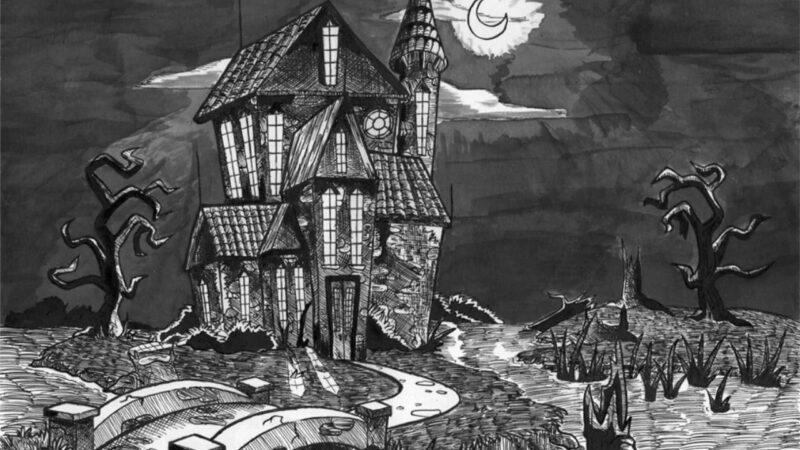
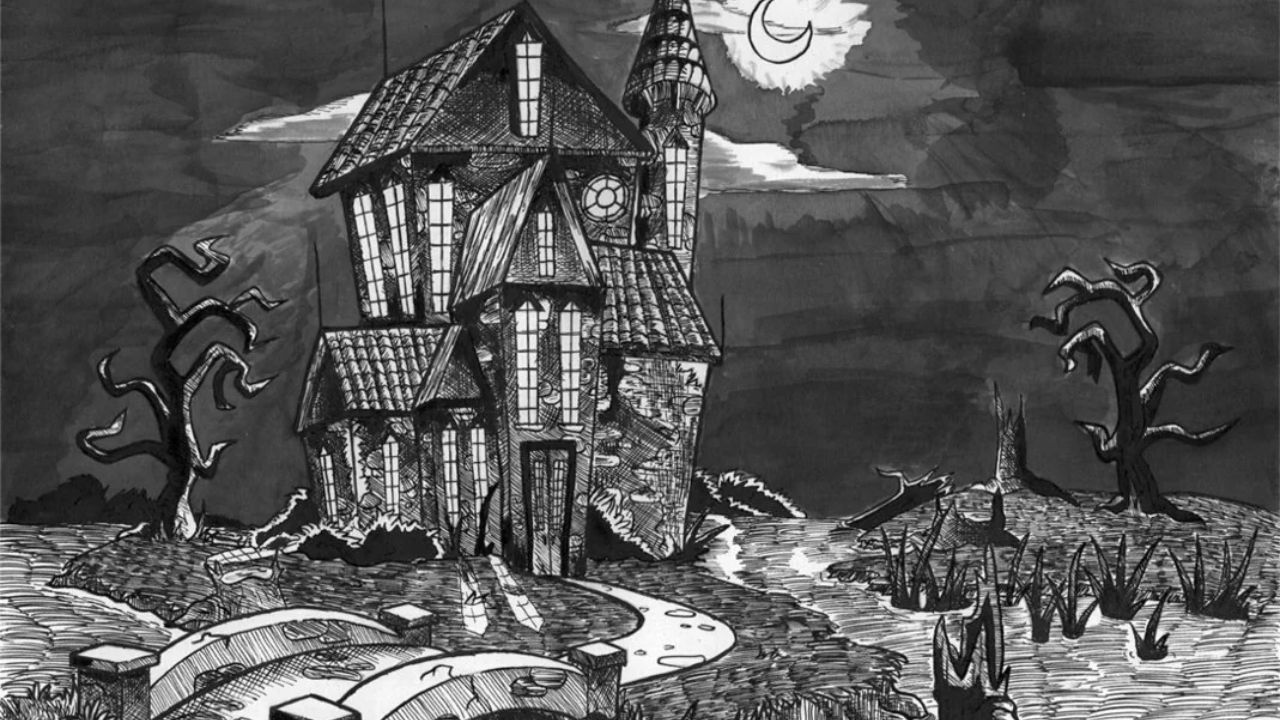
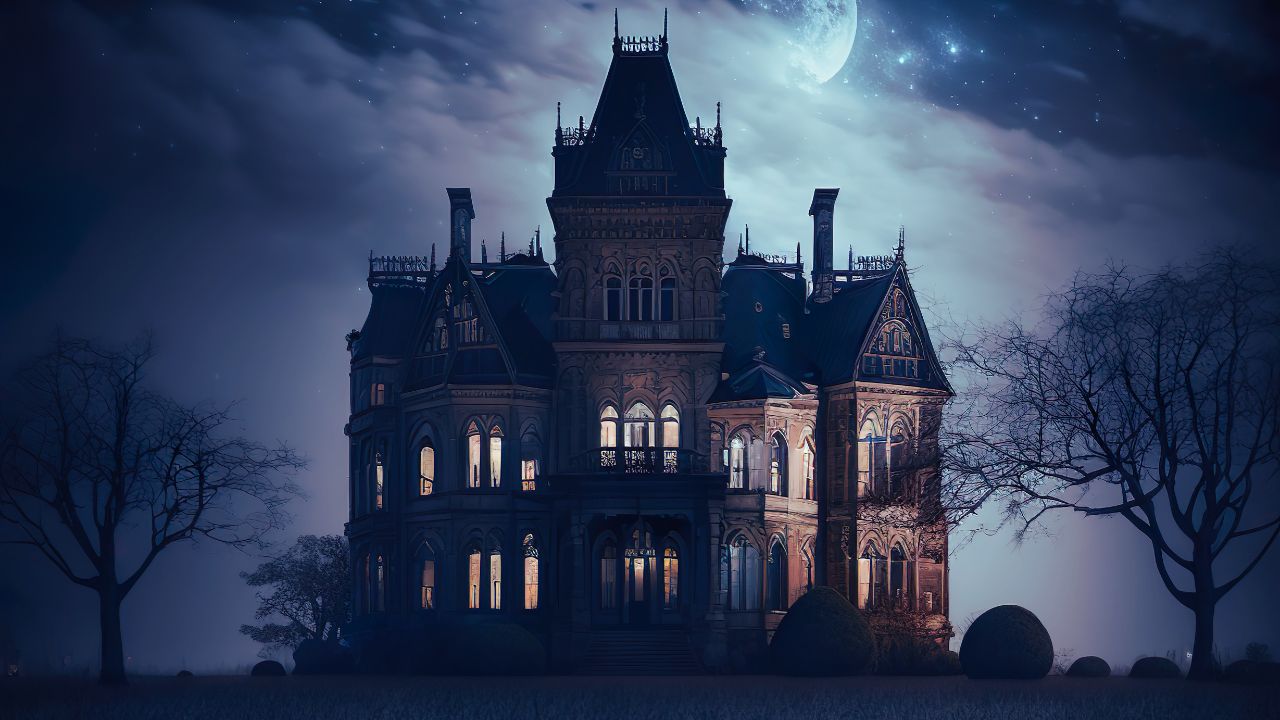
The traditional Gothic landscape, established by Horace Walpole’s The Castle of Otranto (1764), utilized the isolated mansion or castle as a direct metaphor for the psychological and moral state of its inhabitants. These structures were never merely settings; they functioned as sentient entities, rotting from the inside and mirroring the doomed fates of those trapped within their corridors. The “Ancient Castle” trope, characterized by hidden passageways and forbidden rooms, represented the repressed trauma and dark secrets of the aristocracy. In this era, the architecture itself reflected the psychological state of the inhabitants, where a decaying mansion symbolized a deteriorating mind and a forbidden room signified suppressed trauma.
The significance of these traditional settings lies in their ability to manifest the “uncanny”—the sensation of the familiar being made strange or threatening. According to Freud’s conceptualization, the uncanny (unheimlich) derives its terror not from the unknown, but from something strangely familiar that defeats efforts to separate the self from it. In the eighteenth and nineteenth centuries, the Gothic emphasized atmosphere over action, utilizing “Gothic Weather”—perpetual storms, fog, and darkness—to heighten a sense of isolation and dread. Perpetual winter and fog created an atmosphere where the boundaries between life and death, sanity and madness, were perpetually blurred.
Comparative Analysis of Gothic Eras and Tropes
| Era | Primary Setting | Nature of the Ghost | Core Anxiety |
| Early Gothic (1764–1820) | Medieval castles, monasteries, ruins | Ancestral revenants, literal spirits | Usurpation, legitimacy, religious corruption |
| Victorian Gothic (1837–1901) | Urban centers, industrial London | The Doppelgänger, the “other” within | Science vs. Faith, urban alienation, moral decay |
| Modern/Suburban (1950–1990) | Domestic suburbs, cookie-cutter homes | Repressed trauma, family secrets | Domestic confinement, loss of identity, McCarthyism |
| Contemporary (2000–Present) | Digital spaces, corporate offices, dying planet | Algorithms, data traces, climate guilt | Systemic collapse, surveillance, Anthropocene |
The core of the Gothic has always been the idea of the past haunting the present. In classical works, this manifested through prophecies and curses, often rooted in “the sins of the father being visited upon the children”. For instance, in The Castle of Otranto, the prophecy regarding the castle passing from the family when the real owner becomes “too large to inhabit it” addresses a past wrong—a murder committed by Manfred’s grandfather to usurp the lordship. This theme of wrongfully acquired property and generational retribution persisted into the nineteenth century with works like Nathaniel Hawthorne’s The House of the Seven Gables (1850), where the curse “God will give him blood to drink!” follows the Pyncheon family across generations. In modern narratives, however, this has shifted from familial bloodlines to broader historical and systemic violences, such as the lingering effects of colonial exploitation and the “slow violence” of environmental destruction.
Urban Gothic: Industrial Alienation and the Mystery of the Metropolis
The mid-nineteenth century marked a critical shift as Gothic anxiety migrated from rural ruins to the modern industrial city. This “Urban Gothic” emerged as a direct response to the loss of community, increased criminality, and the alienation caused by rapid urbanization and the rise of industrial capitalism. The city itself became a zone of liminality and danger, where the “criminal Other” lurked in plain sight, masquerading as a fellow citizen in crowded neighborhoods.
The fog of Victorian London, famously utilized by Charles Dickens and Robert Louis Stevenson, became a staple of the urban Gothic meteorological repertoire. In The Strange Case of Dr. Jekyll and Mr. Hyde (1886), the fog represents the obscured identity and moral ambiguity of the characters, reflecting a society struggling to navigate the influence of modern science on the human psyche. This urban tradition expanded into modern media through dark cityscapes in graphic novels like Batman and films like Seven, which portray the city as a threatening, almost sentient character that swallows the individual.
The transition to Urban Gothic reflects a fear not of the ancient past, but of the “fin de siècle”—the end of an era characterized by moral degeneration and the dehumanizing effects of mass production. James Malcolm Rymer’s The String of Pearls (1846) critiques industrial capitalism by suggesting it turns human beings into “mere machines”. This industrial horror, where workers are isolated and dehumanized in the bowels of the city, laid the groundwork for the modern Corporate Gothic, where the site of entrapment is no longer a physical dungeon, but the sterile, windowless corridors of a contemporary office environment.
Suburban Gothic: The Domestic Prison and the American Dream
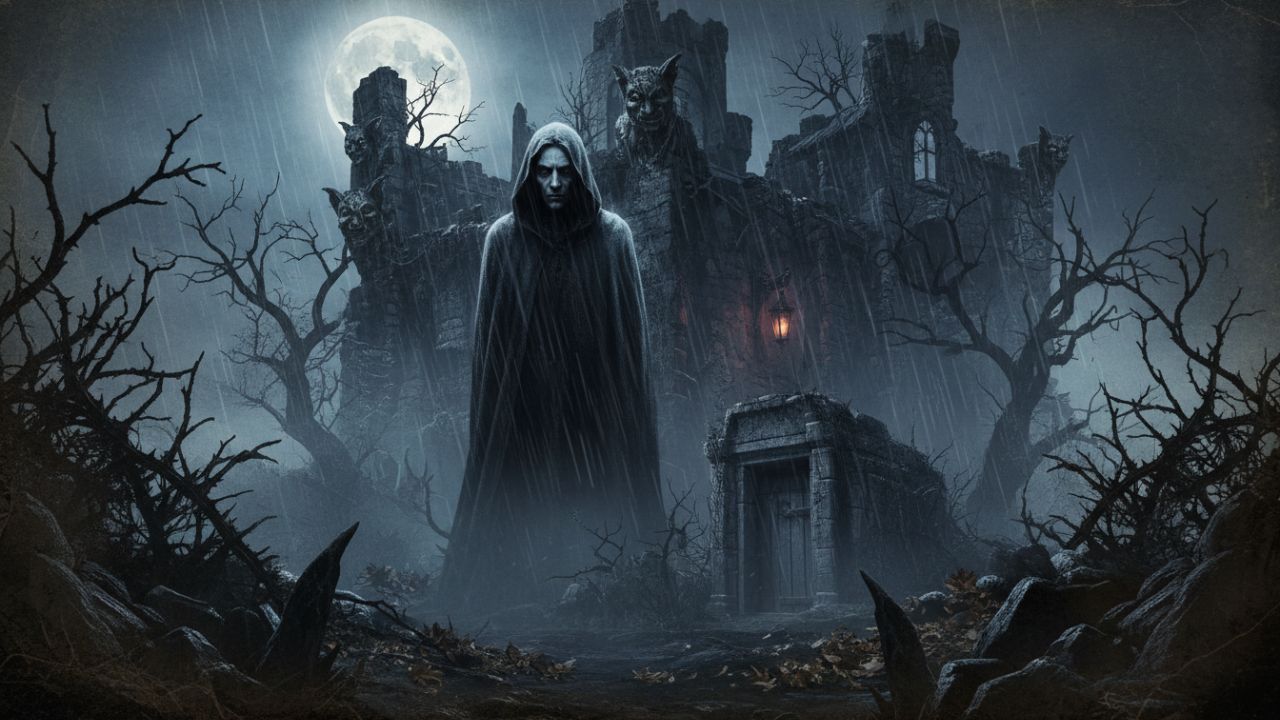
As the twentieth century progressed, the haunted house shifted again, moving from European manors to the seemingly innocent homes of modern suburbia. The Suburban Gothic focuses on the existential horror lurking beneath the veneer of suburban perfection—the “darkness, rot, and hungry insects” existing under white picket fences. This subgenre challenges the assumption that “home is a haven,” suggesting instead that danger is most likely to occur in recognizable places among family and neighbors.
Shirley Jackson’s works, particularly The Haunting of Hill House (1959) and We Have Always Lived in the Castle (1962), are foundational to this shift. Jackson subverted the “haunted house formula” by transforming the domestic space into a metaphor for modern women’s inescapable confinement. In Jackson’s narratives, the “haunting” is often an internal manifestation of unresolved childhood trauma, social withdrawal, and the psychological pressures of 1950s gender norms. The house acts as a character itself, with Hill House being described as a labyrinth of psychological terror that “wants you there, forever”.
Modern iterations of the Suburban Gothic, such as Paranormal Activity and The Conjuring, exploit the familiarity of the modern home to create a sense of cognitive dissonance. However, the real horror in these narratives often stems from the breakdown of family structures and the inability of modern systems to provide actual safety. The suburban neighborhood acts as a “sentient” location, using its brightness and normalcy to mask the deeper psychological rot of its inhabitants. In some cases, trauma and pain turn the individual themselves into a “living, breathing haunted house” from which there is no escape.
The Body as a Haunted Space: Gothic Body Horror and Metamorphic Corporeality
One of the most significant evolutions of the Gothic is the movement of the “haunted space” from the external environment into the human body itself. Body horror, or biological horror, focuses on the grotesque transformation, loss of control, and vulnerability of the physical form. This subgenre traces its lineage back to Mary Shelley’s Frankenstein (1818), which replaced the traditional landscape of fear with “sutured skin,” suggesting that bodies themselves are the true site of terror.
The body as a haunted space is particularly evident in narratives where characters experience a “gradual descent into madness” or a “loss of conscious control” through disease, mutation, or medical intervention. Contemporary body horror often serves as a repository for biopolitical discourse, visualizing the marginalized experiences of women, the LGBTQ+ community, and ethnic minorities. These violations—manifested through aberrant sex, mutations, or zombification—invoke a primal fear of deformity and the ravages of disease.
Tropes of the Haunted Body vs. Traditional Gothic Structures
| Traditional Gothic Structure Trope | Corresponding Body Horror Trope | Underlying Psychological Fear |
| The Forbidden Room | The Chest Burster/Internal Parasite | The discovery of a hidden, destructive truth within the self |
| The Crumbling Foundation | Diseased Bodies/Decomposition | The inevitable failure of the systems that support life |
| Hidden Passageways | Exposed Organs/Surgical Violation | The vulnerability of the interior to external gaze or intervention |
| The Family Curse | Genetic Mutation/Infection | The biological inheritance of past traumas and sins |
Modern films like The Substance (2024) and Titane (2021) utilize the body to critique beauty capitalism and patriarchal surveillance. In these works, bodily disintegration serves as an allegory for societal pressures, where the “innate human propensity for destruction” is turned inward. This shift reinforces the idea that the “haunted house” is ultimately the psyche and the biological vessel that contains it, with the uncanny valley being reached when the human form is distorted enough to evoke revulsion while remaining disturbingly familiar.
Corporate Gothic: The Labyrinth of Bureaucracy and Neoliberal Entrapment
The evolution of the Gothic into the “Corporate Gothic” or “Organizational Gothic” represents a profound critique of late-stage capitalism and neoliberalism. This subgenre replaces the ancient family curse with the “voracious, toxic economic model” and the “labyrinthine bureaucracy”. The site of entrapment shifts from the stone dungeon to the sterile, high-tech corporate office, where individuals are reduced to numbers or “first names and last initials”.
A prime example of this is the series Severance, which dramatizes the consequences of extreme surveillance and “identity fragmentation”. The “severance” procedure itself is a Gothic tool—a surgical intervention that creates a “dual identity,” effectively trapping the “innie” self in a windowless, characterless aesthetic where their entire existence is reduced to meaningless tasks. This reflects the Gothic trope of “existential entrapment,” where a character has no control over a sinister plan or destiny. The “innie” self is physically, mentally, and existentially trapped within the corporate maze, forced to work passionless jobs in a “hollow existence” cut off from history and identity.
Mechanisms of Control in Corporate Gothic Narratives
- Physical Entrapment: The windowless, surgical environment of the “severed floor” and the rigid staggering of arrivals as a means to retain a separation of identity.
- Mental Entrapment: The “innie” self having no memory of the outside world, creating a “prison of their own thoughts” where identity is suppressed.
- Existential Entrapment: The feeling of being “caught up in some sinister plan or destiny over which the character has no control,” often represented by a faceless board.
- Systemic Haunting: The cult-like devotion to the corporation’s founder and the “constant sense of surveillance” through technology and “wellness” rituals.
The Corporate Gothic highlights how modern organizations prioritize control and efficiency over individual freedoms, echoing the “power-crazed lunatics” of nineteenth-century Gothic fiction but updated for the era of “market managerialism”. The “haunting” in this context is the loss of the whole self and the “collateral damage” of institutionalized blindness. Corporate rituals like the “Melon Party” or “Waffle Party” serve as “hollow rituals” that fail to connect people, instead emphasizing the dehumanization inherent in the system.
Eco-Gothic: The Anthropocene and the Haunted Planet
The emerging subgenre of the “Eco-Gothic” reimagines traditional Gothic motifs to articulate the anxieties of environmental degradation and ecological collapse. In the era of the Anthropocene, nature is no longer a passive backdrop but an agentic, often malicious force that “haunts” the human psyche through guilt and trauma. The Eco-Gothic reorients the Gothic gaze from past familial curses toward “future catastrophes” and the “slow, cold dread” of realization regarding humanity’s impact on the earth.
Works like Jeff VanderMeer’s Annihilation (2014) portray Area X as a “haunting reflection of ecological collapse,” where nature is “alien, hostile, and unknowable”. The “monsters” in these stories are often environmental—a “convergence of myth, colonial history, and ecological volatility”. The Eco-Gothic frequently utilizes “spatial disorientation” and “labyrinthine” landscapes to reflect the unpredictability of the natural world in the face of climate change. The environment becomes a “spectral presence”—absent, mourned, and haunting.
Theoretical Frameworks of the Eco-Gothic
| Framework | Core Concept | Impact on Gothic Narrative |
| Dark Ecology | Timothy Morton | Humans attempting to dominate nature only to have it become an “alien and haunting presence”. |
| Tentacular Horror | Dawn Keetley | Nature as a “fully agentic, dynamic entity” that entangles and disrupts the human body. |
| Spectral Anthropocene | Various | The planet is “haunted by the intermingling of human and nonhuman pasts” and “lost voices”. |
| Biophobia | Various | The fear of nature and the “Self” as a monstrous embodiment of environmental guilt. |
The Eco-Gothic suggests that humanity is “doubly haunted”: first by the suspicion that we are not the masters of the planet we claim to be, and second by the awareness of our “active complicity” in our own destruction. This subgenre effectively uses the Gothic’s “transgression, excess, and monstrosity” to chronicle the violence of climate change, turning “fossil” fuels into a literal haunting of “dead matter” brought back to life to heat the world’s climate. In The Road, the world is already dead, and the terror comes from the existential vacuum left behind, where the landscape has already “given up on us”.
Digital Gothic: Dataveillance, Hauntology, and the Ghost in the Machine
As society enters a period of profound “technological upheaval,” the Gothic has evolved to reflect the horrors of the digital age. The “Digital Gothic” addresses the anxieties of “dataveillance,” artificial intelligence, and the loss of truth through deepfakes and algorithmic control. In this space, “digital artifacts” like search histories, location data, and social media profiles replace traditional cursed objects. The “simple desire to read more on a topic becomes the fatal click that allows something sinister to read us”.
Mark Fisher’s concept of “Hauntology”—the presence of a time that never came to pass—is central to understanding the Digital Gothic. The early twenty-first century is described as a “cultural echo chamber,” where the future has been “cancelled” and we are haunted by the “ghosts” of unrealized possibilities. This results in a “cultural melancholy” and a “reflexive impotence,” where society knows things are bad but feels unable to change the course.
Digital Ghosts and Algorithmic Dread
- Data Footprints as Ghosts: The dead no longer rest; they linger in “pixels and algorithms,” with “griefbots” simulating the voices of the lost, turning mourning into an uncanny mechanical interaction that clings rather than soothes.
- The Ghostly Gap: Missing data and vanishing repositories act as “infrastructure haunted houses,” where valuable collections are lost to obsolescence, ransomware, or software failure.
- Data Blackmail: Series like Black Mirror demonstrate the horror of one’s private digital past being exhumed and weaponized against them.
- The Digital Doppelgänger: Algorithms generate malevolent online copies of individuals, dismantling their lives with chilling efficiency, reflecting a “culture where truth is no longer tied to indexical evidence”.
The “digital uncanny” arises from the blurring of reality and fabrication, where technology captures and reveals reality while simultaneously threatening it through “digital fakery” and “algorithmic dread”. This suggests that the “individual, the family, and the domestic” are being radically reorganized by the internet, leading to a “return of the Gothic” as a way to wrestle with current technological shifts. In Unfriended, a supernatural entity uses social media profiles to torment a group of teens, demonstrating that “nothing is ever truly deleted” in the digital age.
Postcolonial Gothic: Reclaiming the House and Rewriting History
Contemporary Gothic literature has increasingly adopted a “postcolonial lens” to address issues of race, colonialism, and gender. Works like Silvia Moreno-Garcia’s Mexican Gothic (2020) revitalize traditional motifs—such as the isolated mansion and the family curse—to expose the “lingering effects of colonial exploitation”. In these narratives, the “haunted house” is the site of “rememory,” where the traumatic past returns to force the living to confront a history of racial violence.
In postcolonial and minority Gothic, the “haunted house” trope is often predicated on the house itself being the “locus of familial trauma” resulting from systemic oppression. However, these narratives sometimes reverse the tradition; dead ancestors may be “benevolent and protective” rather than vengeful, representing a desired connection to the past that was “separated forcibly” by history. This “Southern Gothic” and “Postcolonial Gothic” use horror elements to expose the “social rot” beneath polished exteriors, turning the Gothic into a powerful “mode of cultural critique”.
Key Postcolonial Gothic Themes and Examples
| Work | Primary Focus | Gothic Trope Used |
| Mexican Gothic | Colonialism and racial oppression | The sentient mansion and the fungal “family curse” |
| Beloved | Traumatic past of slavery | The literal ghost as the weight of history (“Rememory”) |
| Sharp Objects | Small-town repression and family trauma | Dilapidated domestic spaces and self-harm as haunting |
| The Black Isle | War and colonialism in Singapore | The city as a haunted space for ghosts of war |
These works collectively demonstrate the Gothic’s “versatility as both a literary tradition and a framework for addressing complex societal questions”. By intertwining the supernatural with psychological and existential fears, contemporary Gothic narratives push readers to confront their own uncertainties about history and justice.
Conclusion: The Persistence and Fluidity of the Gothic Mode
The evolution of Gothic horror beyond the literal haunted house demonstrates the genre’s remarkable resilience and adaptability to the shifting fears of each era. By migrating from the stone walls of medieval castles into the cellular structures of the human body, the sterile cubicles of the corporate office, and the binary code of the digital sphere, the Gothic continues to provide a “potent aesthetic and philosophical framework” for understanding the “uncanny, monstrous aspects” of modern life.
Whether it is the “slow violence” of neoliberalism, the “metamorphic crises” of the human body under patriarchal surveillance, or the “spectral” nature of a damaged planet, the Gothic remains uniquely attuned to “chronic unease” and “existential threat”. It reminds us that “nowhere is safe”—not our homes, not our minds, and certainly not the technological and economic systems that surround us. As we navigate the complexities of the twenty-first century, the Gothic will undoubtedly continue to evolve, finding new “shadowy and mysterious settings” to mirror our deepest anxieties and the “ghostly absence of a future” that we have yet to secure.
The Gothic’s enduring appeal lies in its ability to serve as a “cultural register” for decoding the anxieties of our time, turning “fear into a means of political and ethical awareness”. As the “haunted house” continues to expand its boundaries, the Gothic remains the primary language through which humanity “feels, names, and navigates the crises of its age”. In the final analysis, the Gothic is not a genre of the past, but a “living, evolving mode” that ensures the ghosts of history—whether biological, digital, or ecological—are never truly laid to rest.