
In the kitchens of 16th-century Europe, a small, low-built dog once ran endlessly inside a wooden wheel, turning spits of roasting meat over open fires. Known as the turnspit dog, this breed existed for a single purpose: labor. When mechanical roasting devices arrived in the 1800s, the dogs disappeared, quietly becoming one of history’s many forgotten breeds. The turnspit’s story is more than a curious footnote. It is a reminder that dog breeds are not timeless categories etched into nature, but human-made solutions to human needs.
Over thousands of years, people shaped dogs for work, aesthetics, and companionship—producing an animal species with unmatched physical and behavioral diversity. Yet despite the confidence with which we label dogs by breed, modern research suggests those labels reveal far less about personality than many assume. To understand why, it helps to look at how dogs became dogs in the first place.
The First Domesticated Species
Dogs hold a singular place in human history. Long before humans domesticated livestock or cultivated crops, they formed alliances with wolves. At least 15,000 years ago—possibly earlier—some wolves began living alongside human groups. The reasons remain debated: perhaps wolves scavenged near camps, or humans recognized the value of early warning systems and hunting partners.
What followed was not immediate transformation, but gradual cohabitation. Over generations, wolves that were less fearful and more tolerant of humans thrived. Those traits, subtly favored again and again, laid the foundation for domestication.
Dogs were humanity’s first domesticated species by thousands of years. That head start mattered. It gave dogs time to diversify alongside human societies as they spread across continents, climates, and cultures. As humans adapted to deserts, tundras, forests, and coastlines, their dogs adapted too.
Early Diversification: Function Before Form
By roughly 11,000 years ago, dogs had already begun to display a wide range of appearances. These differences were not cosmetic. They reflected function.
Humans relied on dogs for specific tasks: guarding camps, tracking prey, pulling loads, herding animals, retrieving game, and alerting communities to danger. Dogs that excelled at these roles were more likely to be bred, reinforcing particular physical and behavioral traits.
Long legs favored speed. Broad chests and heavy frames supported strength. Keen noses aided scent-tracking. High endurance suited long-distance travel. Over time, these selective pressures created recognizable types, even if formal breed names did not yet exist.
Crucially, dogs were not bred to look a certain way—they were bred to work.
Victorian England and the Birth of Modern Breeds
The idea of dog breeds as fixed, standardized categories is relatively recent. It emerged most forcefully in Victorian England during the 19th murder-at-harvard-and-a-half-century-of-silence-by-becky-cooper/”>century, when industrialization reduced reliance on working dogs and increased leisure time among the middle and upper classes.
Dog breeding shifted from function to form. Instead of prioritizing performance, breeders began emphasizing appearance. Dogs were selectively inbred to exaggerate specific features—shorter snouts, longer coats, flatter faces, curled tails. Kennel clubs formed, breed standards were written, and pedigrees became prized.
This period locked many breeds into narrow genetic pools. While this preserved consistent looks, it also introduced health problems and reduced genetic diversity. More importantly, it cemented the cultural idea that breed determines identity—how a dog should look, act, and behave.
That assumption still dominates popular thinking today.
The Astonishing Physical Range of Dogs
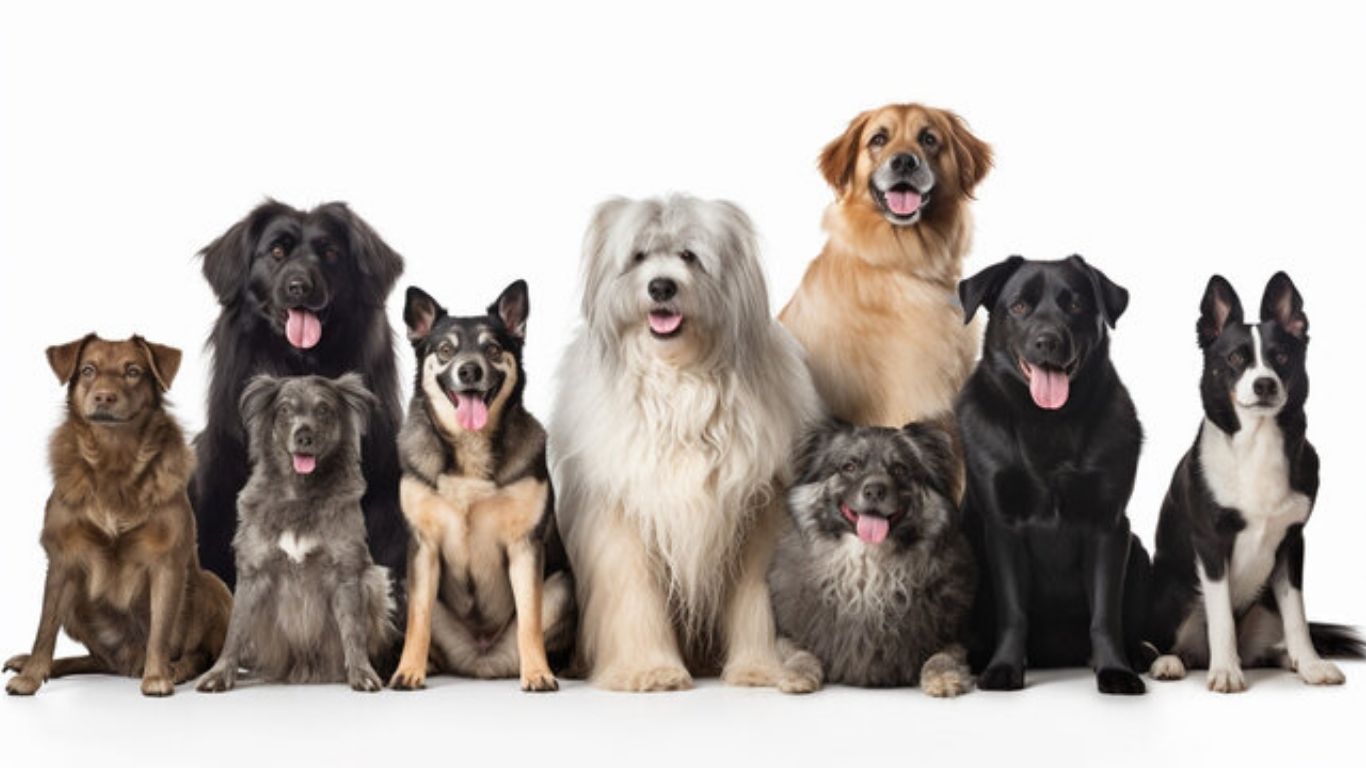
Few species rival dogs in physical diversity. A Pomeranian may weigh around two kilograms; a Mastiff can exceed 100. Some dogs are built for sprinting, others for endurance. Some have dense double coats; others are nearly hairless. Ears can stand upright or flop low. Faces range from elongated snouts to compressed muzzles.
This variation stems from selective breeding acting on a shared genetic foundation. All dogs descend from wolves, yet small changes in developmental genes can produce dramatic physical differences. A handful of genetic switches influence size, limb length, coat texture, and skull shape.
Because humans repeatedly selected for extreme traits, dogs became a living demonstration of how flexible a species can be under artificial selection.
But physical diversity does not translate neatly into behavioral predictability.

Genetics, Lineages, and Working Roles
When scientists sequenced the genomes of modern dog breeds, they found patterns beneath the surface. Roughly ten major genetic groupings emerged, often aligning with historic working roles: herding, pointing, flushing, scent-tracking, retrieving, guarding, and companionship.
These groupings reflect deep ancestry. A border collie shares more genetic similarity with other herding dogs than with unrelated breeds, even if they look different. Likewise, retrievers cluster together genetically due to shared working origins.
Within these groups, researchers can identify distinct genetic signatures. What remains difficult is connecting those signatures to specific traits—especially complex behaviors like personality.
Genes rarely map cleanly to behavior. Instead, they influence neurological tendencies, thresholds, and predispositions, which then interact with environment and experience.
How Much Does Breed Shape Personality?
To answer that question, researchers compared genetic data with behavioral assessments across large numbers of dogs. The findings challenge many long-held assumptions.
Only about 9% of a dog’s personality traits could be attributed specifically to breed. That figure is far lower than popular belief suggests. While certain tendencies cluster within breeds, the overlap between individuals is enormous.
Traits that appeared most heritable were often linked to ancient predatory behaviors inherited from wolves. These instincts, refined rather than invented by breeding, show up clearly in some dogs.
Border collies stalk with intense eye contact, mirroring a wolf’s hunting posture. Golden retrievers chase and grab-bite, behaviors tied to retrieving game without damaging it. These actions reflect deep evolutionary roots shaped by selective reinforcement.
Traits That Do Show Breed Tendencies
Some behavioral patterns do align more consistently with certain breeds, though none are absolute.
Dogs bred to work in water, such as Portuguese water dogs, often display comfort and enthusiasm around swimming. Retrievers tend to enjoy fetch, not because they were taught, but because the behavior taps into inherited motor patterns. Huskies, malamutes, and hounds frequently howl, a vocalization that remains deeply ingrained.
Responsiveness to human direction also appears partly heritable. Herding breeds—especially border collies—stand out for their sensitivity to cues and commands. This trait made them invaluable working partners and continues to define their reputation today.
Still, these tendencies are probabilities, not guarantees.
Traits That Aren’t Breed-Specific
Other behaviors show little connection to breed at all. Circling before defecating, for instance, appears universal. Aggression, often cited as a breed-linked trait, shows surprisingly weak genetic association at the breed level.
This finding undermines persistent stereotypes. Pit bull terriers, frequently labeled as inherently aggressive, do not show strong breed-specific aggression when genetics are isolated from environment. Individual history, training, and socialization matter far more.
Toy breeds appeared more independent and less sociable with other dogs in some studies, but interpretation is tricky. Smaller dogs may initiate less play simply because of their size or how humans treat them. Being carried frequently or shielded from other dogs can shape behavior in ways that mimic genetic predisposition.
What looks like breed personality may, in many cases, be lifestyle feedback.
Beyond Breed: Genes Aren’t the Whole Story
When researchers looked beyond breed altogether, they found that genetics accounted for less than 25% of a dog’s personality. That means the majority of behavior arises from non-genetic factors.
Early socialization, training methods, environment, human interaction, trauma, enrichment, and learning experiences all leave lasting marks. Two dogs of the same breed can diverge dramatically depending on how they are raised.
This reality plays out clearly in service dog programs. These programs deliberately breed dogs with calm, attentive temperaments, increasing the odds of success. Yet even under controlled conditions, not every dog makes the cut. Individual variation persists, stubbornly resistant to prediction.
Selective breeding improves probabilities, not certainties.
The Myth of the Breed Shortcut
For centuries, humans have tried to reduce complexity into categories. Breed labels offer a tempting shortcut: choose the right dog, get the right personality. But the evidence suggests that this shortcut often misleads.
Breed can hint at certain tendencies, especially those rooted in ancient working roles. It cannot reliably predict friendliness, aggression, loyalty, or adaptability in an individual dog. Those traits emerge from a dynamic interplay between biology and experience.
Dogs are not machines stamped from genetic molds. They are learning animals shaped by relationships.

Rethinking What a Breed Means
The turnspit dog vanished because its function vanished. That alone reveals how contingent breeds are on human priorities. Many modern breeds may persist only because humans maintain them through clubs, standards, and cultural attachment.
Breed, then, is less a biological destiny than a historical record. It tells a story about what humans once needed—or wanted—from dogs. It reflects labor, aesthetics, and social fashion as much as genetics.
Understanding this frees us from rigid assumptions. It allows dogs to be seen not as representatives of categories, but as individuals navigating the world with unique combinations of instinct and experience.
Dogs as They Really Are
As much as humans have reshaped canine bodies and behaviors, dogs remain complex creatures molded by both inheritance and environment. Their personalities cannot be fully decoded from a pedigree chart or predicted from a label.
Breed offers context, not conclusion. It provides clues about history, function, and probability—but not destiny.
In the end, every dog is a singular outcome of ancient wolves, human intervention, and lived experience. And that may be the most remarkable legacy of domestication: not uniformity, but enduring individuality.