

For years, comic books were brushed off as mere entertainment—bright panels, caped crusaders, snappy dialogue, and nothing more. They lived in backpacks and under desks, traded like treasure among friends, and devoured with excitement. “How comic books can help you learn” wasn’t a thought on anyone’s radar. In fact, many kids tucked their comics behind classroom textbooks, worried a teacher might catch them reading something considered frivolous or “unacademic.”
Fast-forward to today, and the script has flipped. The very medium once blamed for distraction is proving to be a japanese-secret-to-a-long-and-happy-life-by-hector-garcia/”>secret weapon in education. These vibrant stories don’t just entertain—they explain, engage, and break down tricky concepts in ways that lectures and dense pages often struggle to achieve.
This is the story of that unexpected transformation: a diary-of-a-young-girl-by-anne-frank/”>young reader discovering their first comic, an educator recognizing its promise, and modern classrooms welcoming graphic storytelling as a serious teaching tool. Comic books have officially graduated from guilty pleasure to powerful learning partner.
A Childhood Discovery That Sparked a Lifelong Fascination
The story begins with a fifth grader standing before a spinner rack at a local bookstore. Among all the brightly colored covers was DC Comics Presents #57, an issue that would shape his future. One reading session was enough to ignite a lifelong love for the world of comic books.
Despite his enthusiasm, he instinctively understood something even at that young age: comics didn’t belong in school. They were for fun, not learning. He never took them into the classroom because he knew they weren’t associated with education. They lived in the realm of imagination, not academics.
Little did he know that these two worlds—comics and the classroom—would eventually collide in the most unexpected way.
From Comic Reader to Cartoonist and Teacher
As he grew older, his passion for comics evolved into a career. He became a published cartoonist, turning his ideas into panels, speech bubbles, and stories. But life brought him down another path as well—he became a high school teacher.
He taught at Bishop O’Dowd High School in Oakland, California, and on the first day of every class, he shared his comic career with his students. He imagined this revelation would win him admiration.
Instead, it backfired.
His students thought he was “kind of a dork.” And they used his comic background not as a reason to respect him, but as a tool of distraction. They would raise their hands and ask off-topic questions like:
“Mr. Yang, who do you think would win—Superman or the Hulk?”
Their playful interruptions seemed to confirm a belief he had held since childhood: comic books didn’t belong in the classroom.
But that belief would soon be challenged in a surprising way.
The Failed Video Lectures That Led to a Breakthrough
One semester, he was assigned to substitute for an Algebra II class. There was one issue—he had to miss one or two class periods every few weeks. He didn’t want the students to fall behind, so he decided to record video lectures.
He tried making them interesting, lively, and engaging. But students were brutally honest.
Some approached him and said:
“Mr. Yang, we thought you were boring in person—but on video you are unbearable.”
The videos were a complete disaster.
Desperate for a solution, he tried something unconventional:
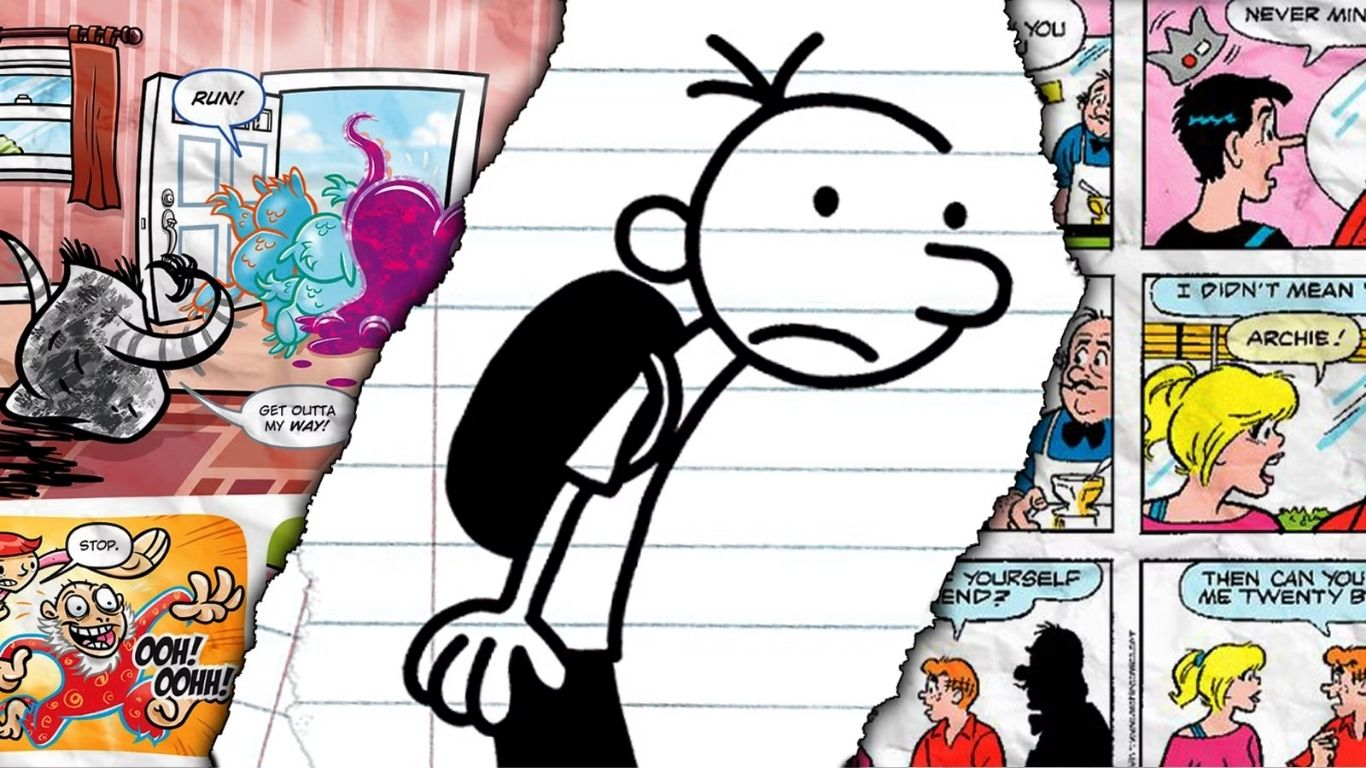
he drew the lessons as comic strips.
Each math lecture became a series of illustrations and dialogue, capturing concepts visually rather than through monotonous monologues.
And something surprising happened:
The students loved it.
They even preferred it over having him teach in person. They responded more enthusiastically to the illustrated lessons than to live instruction.
It was an unexpected revelation—comic books had a real place in learning.
Why Comics Work: The Visual Advantage
Comic lectures succeeded because they tapped into something fundamental about how students today consume information.
We live in a visual culture. From smartphones to social media to streaming platforms, students are surrounded by images, icons, and visual cues. Traditional instruction—long lectures or dense textbooks—often moves too quickly or too slowly for learners. It forces them to follow the pace of the teacher rather than their own understanding.
Comics change that dynamic.
In a comic:
- The past, present, and future exist side by side on a single page.
- A student can control the speed of learning.
- They can reread panels at their own pace.
- They can skim or focus deeply as needed.
- Visual cues provide context, memory anchors, and clarity.
This style of learning empowers students. Instead of feeling overwhelmed, they feel engaged.
Math concepts that once seemed intimidating suddenly become less threatening when presented through illustrations and step-by-step visuals.
Comic books don’t merely entertain—they teach visually, and that alone makes them incredibly effective.
Comics Once Thrived in Classrooms—Until Fear Stopped Them
The idea of comics in school isn’t entirely new. In the 1940s, comic books were a mass medium. Millions of copies were sold every month, and some educators experimented with using them as teaching tools.
But then came a major turning point that set comics back for decades.
Enter Dr. Fredrick Wertham, a child psychologist who published the book Seduction of the Innocent in 1954. In it, he argued that comic books caused juvenile delinquency. His claims were weak, poorly researched, and exaggerated, yet they triggered a national panic.
The U.S. Senate held hearings to investigate whether comics were corrupting children. These hearings lasted nearly two months. They reached no definitive conclusion, but the damage was done.
Comics went from being creative resources to being seen as dangerous influences. Schools rejected them. Parents feared them. Librarians banned them.
For decades, comics remained unwelcome in classrooms.
The Slow Return of Comics to Education
It wasn’t until the 1970s that educators began cautiously experimenting with comics again. But acceptance was slow—until recently.
Over the last decade, comic books have experienced a renaissance in the educational world. They are now recognized as valuable learning tools that help struggling readers, visual learners, and even advanced students seeking deeper engagement.
Schools, libraries, and teachers are embracing comics like never before.
And this shift is visible even at Bishop O’Dowd High School—the school where the speaker once taught.
Teachers there now use comics in several innovative ways:
- Mr. Smith uses Understanding Comics by Scott McCloud to teach storytelling and visual literacy.
- Mr. Burns assigns a yearly comics essay, requiring students to convert a prose novel into images.
- Miss Murac teaches the graphic novel American Born Chinese to her English students.
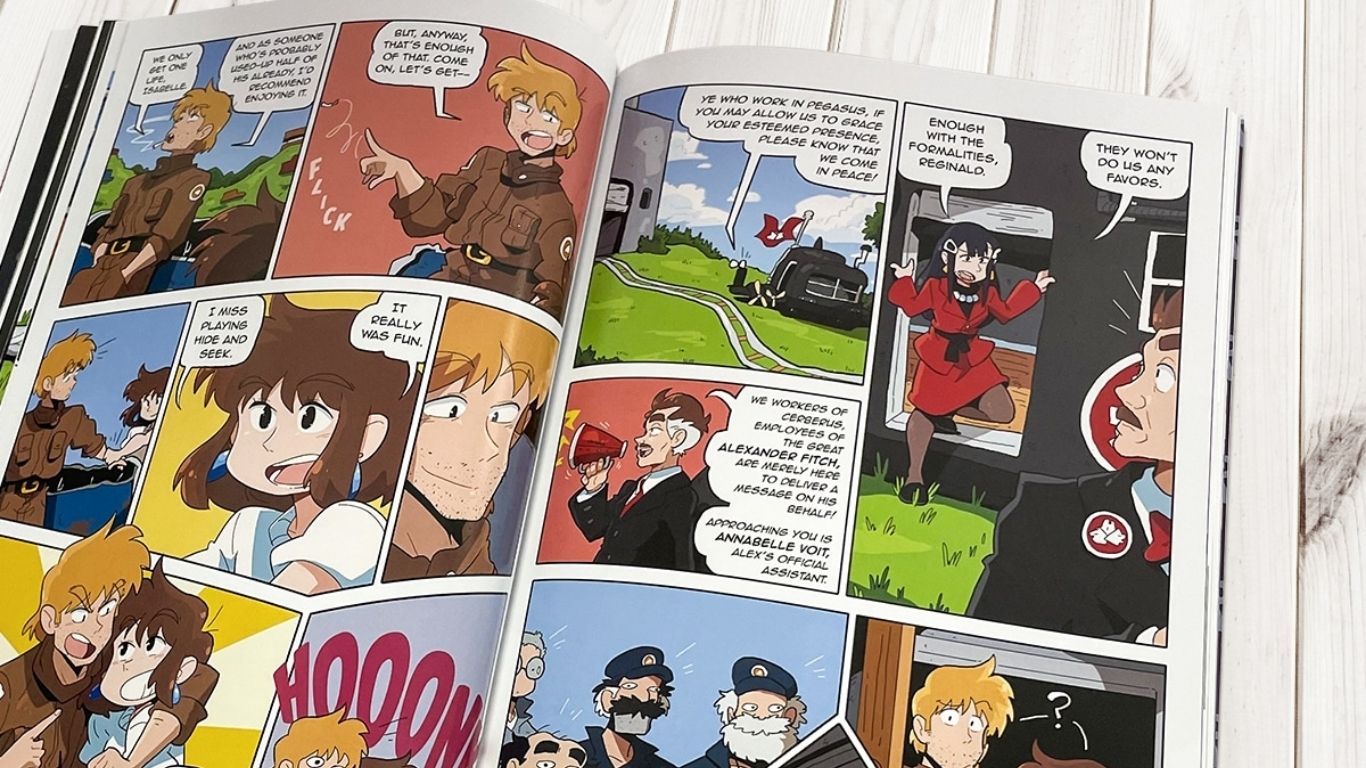
The school library has also expanded its graphic novel collection significantly. This shift is paying off. When graphic novels were added:
- Overall library usage increased by 80%
- Circulation of other materials increased by 30%
Comic books didn’t replace traditional reading—they enhanced it.
Comics Are Entering STEM Education in a Big Way
One of the most exciting developments today is the rise of STEM comics—graphic novels and comic-style resources that cover science, technology, engineering, and mathematics.
These subjects are often seen as intimidating or dry, especially for students who struggle with abstract concepts. Comics bring these topics to life by:
- Adding visuals to equations
- Showing step-by-step processes
- Humanizing scientific ideas through characters
- Creating memorable analogies through storytelling
- Breaking down complexity into digestible panels
For students who are afraid of math or science, comics reduce anxiety. For advanced learners, they offer new perspectives. And for teachers, they provide another tool to keep students engaged.
STEM comics represent a frontier overflowing with potential—one that educators and creators are just beginning to explore.
Why Comic Books Absolutely Belong in Education
After decades of stigma, misunderstandings, and resistance, comic books have finally earned their place in classrooms—and for good reasons.
Here’s why comics are powerful educational tools:
1. They engage reluctant readers
Students who avoid textbooks often dive eagerly into graphic novels.
2. They support visual learners
Images help students interpret information, remember facts, and understand complex concepts.
3. They give readers control
Students can set their own pace, reread confusing sections, and move through material at a comfortable speed.
4. They make learning more accessible
Comics are less intimidating than dense text, which helps struggling learners feel confident.
5. They strengthen critical thinking
Students must interpret visuals, infer meaning, and connect images to dialogue.
6. They teach storytelling, imagination, and creativity
Creating comics strengthens writing skills, narrative structure, and visual communication.
7. They increase overall literacy
When graphic novels appear in libraries, students read more—not just comics, but everything.
Comic books aren’t merely an alternative form of reading—they are a bridge that helps students connect with information in new ways.
The Future of Comics in Education
The world of education is evolving, and comic books are playing an increasingly important role. Teachers across the country are discovering their potential—not just for entertainment, but for deep, meaningful learning.
Comic books:
- Make difficult subjects easier
- Increase student engagement
- Offer flexible learning
- Teach visual literacy
- Encourage students to create, not just consume
Today, we are only beginning to unlock the full educational power of this medium. The future holds endless possibilities—especially for those willing to innovate.
Conclusion: Comics Help Us Learn Better, Faster, and With More Joy
What started as a child’s love for a superhero comic turned into a teaching revelation that has inspired classrooms across America. Comic books are no longer seen as distractions or low-value reading material. They are recognized as powerful tools that blend imagination with education.
Whether used to explain algebraic functions, explore literature, or dive into STEM concepts, comics make learning more visual, more engaging, and more human.
The truth is simple:
Comic books can help you learn—not just more effectively, but more joyfully.
And as more educators embrace this medium, students everywhere will benefit from this unique blend of art and education.