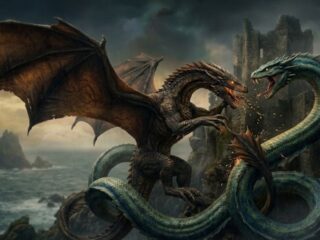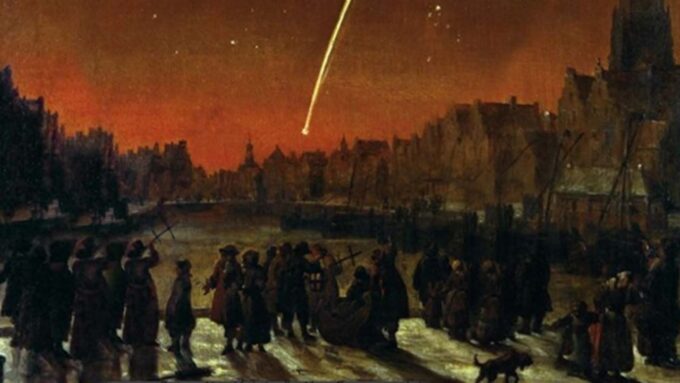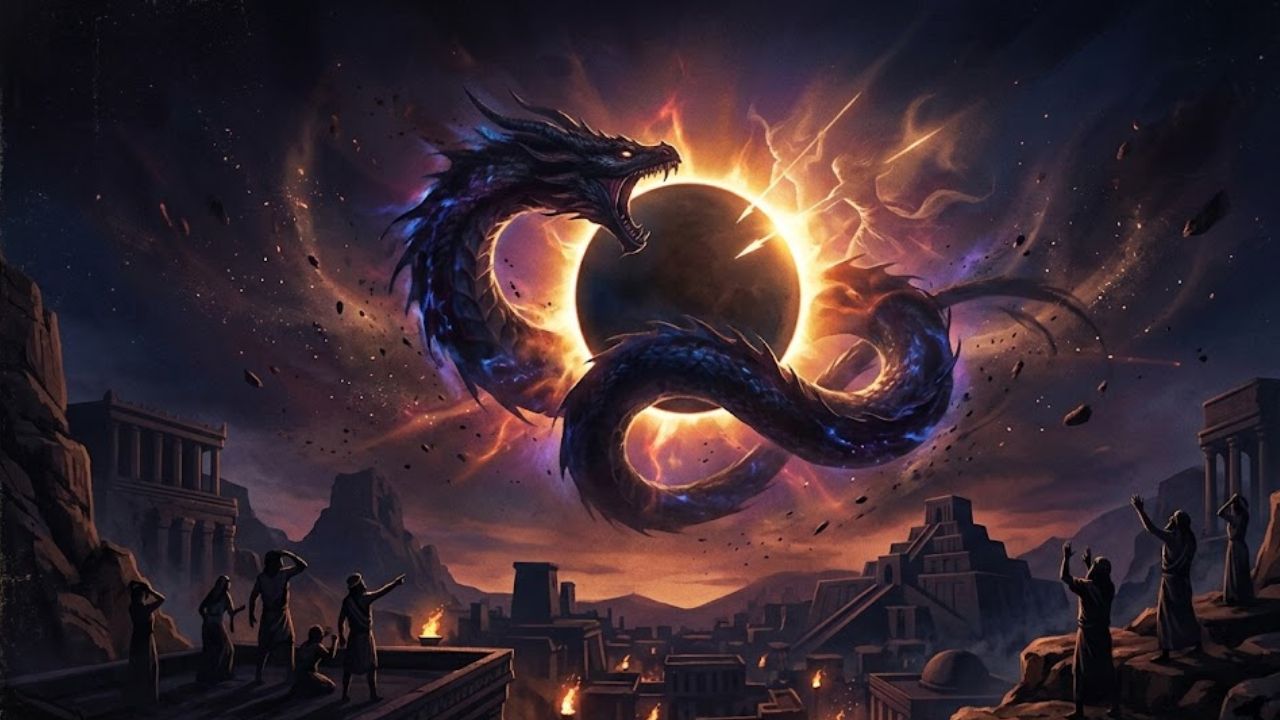
Long before telescopes mapped the heavens or astrophysics decoded celestial mechanics, Ancient Cultures stood beneath darkening skies and struggled to comprehend what they were seeing. When Solar Eclipses swallowed the midday Sun and cast the world into sudden twilight, the effect was immediate and visceral. Light vanished. Shadows sharpened. Birds fell silent. To early civilizations, this was no routine astronomical alignment — it was a rupture in reality itself. Across continents and centuries, Ancient Cultures Mythologized Solar Eclipses as Terrifying Cosmic Battles. The vanishing Sun was not a coincidence of orbit but a divine crisis unfolding overhead. Gods clashed. Serpents lunged. Wolves pursued their radiant prey. The heavens became a battlefield where order and chaos fought for dominance. In these narratives, darkness was not passive — it attacked.
Without scientific explanations, societies reached instinctively for story. Solar Eclipses became signs of celestial warfare, supernatural conflict, and fragile cosmic balance. These myths were not simple folklore; they were attempts to process fear, uncertainty, and the unsettling possibility that the universe itself could falter. By framing eclipses as Terrifying Cosmic Battles, Ancient Cultures transformed chaos into narrative — and narrative into meaning. To understand how humanity once interpreted the sky’s most dramatic spectacle, we must step back into those mythic landscapes where Solar Eclipses were not astronomical events, but epic struggles written across the heavens.
A Sky “Eaten” by Beasts and Demons
Perhaps the most widespread interpretation of solar eclipses was that some mighty creature was devouring the Sun.
China: Dragons in the Heavens
In ancient Chinese belief, the sky was not a sterile celestial mechanism — it was alive with dragons, celestial serpents whose appetites could consume the Sun. Solar eclipses were literally described as “the Sun being eaten” — in Chinese, the word for eclipse (shi) also means “to eat.” People banged drums, pots, or fired weapons into the air in order to scare away the dragon and force the return of daylight.
One record from as early as 2134 B.C. speaks of the “sun and moon not meeting harmoniously,” reflecting an unsettling belief that the cosmic balance had been disrupted.
This image of a celestial beast consuming the Sun was not unique to China, but a recurring motif in human storytelling — a powerful metaphor for forces that devour light and life.
Southeast Asia: The Frog and the Sun
Across parts of Thailand, Laos and Vietnam, a similar myth involves a giant frog attempting to swallow the Sun — a belief encapsulated in the folk tale known as Kob Kin Duean (“frog eating the sun”).
In some accounts, this frog is a cosmic antagonist, bringing disorder and darkness. In others, the struggle between frog and celestial bodies is part of a sacred cycle tied to creation stories, fertility, and the balance of the cosmos. Villagers would beat drums and make noise, motivated by the belief that their efforts could force the frog to release the Sun.
These amphibious tales reveal how even the most everyday creatures can become powerful symbols in mythic frameworks, embodying human attempts to “fight back” against cosmic calamity.

Solar Gods Under Siege: Divine Battles in the Heavens
Many mythologies did not anthropomorphize eclipses through animals, but through direct conflict between gods or supernatural forces.
Hindu Mythology: The Asura’s Bite
In Vedic and later Hindu traditions, the asura Svarbhānu — later identified with figures like Rahu and Ketu — is said to darken the Sun by striking it with darkness, overshadowing its brilliance.
The origin myth goes further: Rahu, a powerful being who had stolen ambrosia granting immortality, was beheaded by the god Vishnu. However, his head (without a body) became immortal and forever chased the Sun and Moon. When Rahu’s head catches either celestial orb, an eclipse occurs.
This myth turns an eclipse into a cosmic vendetta — a celestial being’s revenge against the gods whose alarmed intervention prevented his full ascension.
Ancient Egypt: Ra’s Momentary Defeat
In the rich tapestry of Egyptian religion, Ra — the Sun god and supreme force of life — was locked in perpetual struggle with Apep (or Apophis), the serpent-embodiment of chaos and darkness.
While daily battles between Ra and Apep symbolized the cycle of night and day, eclipses were seen as moments when Apep had gained the upper hand: the Sun’s light was swallowed, if briefly, and darkness reigned. The eventual return of full daylight reaffirmed Ra’s triumph — a powerful metaphor for life, death, and renewal.
This timeless tale turned a terrifying cosmic event into a story of ultimate restoration — an affirmation that even when darkness seems to prevail, light is triumphant.
Cosmic Wolves, Squirrels, and Sky Beasts
Across Eurasia and the Americas, cultures imagined the Sun pursued or attacked by creatures whose success at obscuring it dramatized the eclipse.
Norse Mythology: Wolves of Doom
In medieval Norse tradition, immense wolves named Sköll and Hati chased the Sun and Moon through the sky. At Ragnarok — the end of the world — it was foretold that these wolves would finally catch and devour the Sun, plunging the cosmos into final darkness.
During an eclipse, it was believed Sköll had nearly succeeded in biting down on the Sun. The violent imagery of a wolf’s jaws clamping on the solar disc captured both terror and storytelling imagination.
North America: A Bite from the Sky
Several Native American traditions also depicted the Sun in combat with animal forces. The Pomo of California told of a bear biting into the Sun — a moment so dramatic that it explained both solar and lunar eclipse phenomena.
The Choctaw, a southeastern tribe, recounted the tale of a black squirrel nibbling on the Sun — and the community’s response of knocking on pots and pans to chase the creature away.
These stories underscore a universal human instinct: when faced with the inscrutable, give it a narrative texture drawn from the familiar world of animals.
Eclipses as Omens of Doom and Divine Wrath
In many cultures, eclipses were more than cosmic battles — they were portents.
Greece: Zeus Conceals the Sun
In ancient Greece, eclipses were often linked to divine displeasure. The poet Archilochus described an eclipse as Zeus concealing the blazing sun and casting darkness upon humanity — a chilling sign that the gods were signaling anger or abandonment.
Because the Greek word ekleipsis literally means “abandonment,” the phenomenon was firmly rooted in ideas of divine omission and cosmic neglect.
Herodotus, the ancient historian, even recounts a solar eclipse that halted a battle between the Medes and Lydians — a moment interpreted as supernatural intervention compelling peace over war.
Inca and Other South American Cultures
In South America, the Inca saw solar eclipses as signs of the great Sun god Inti’s displeasure. Spanish chroniclers recorded that leaders would try to interpret these events, seeking the cause of divine wrath and offering sacrifices or performing rituals to restore favor.
For the Inca, an eclipse was not just a narrative of conflict but a powerful warning from the gods — a disruption in cosmic harmony that required human atonement.
Ritual Responses: Noise, Offerings, and Substitute Kings
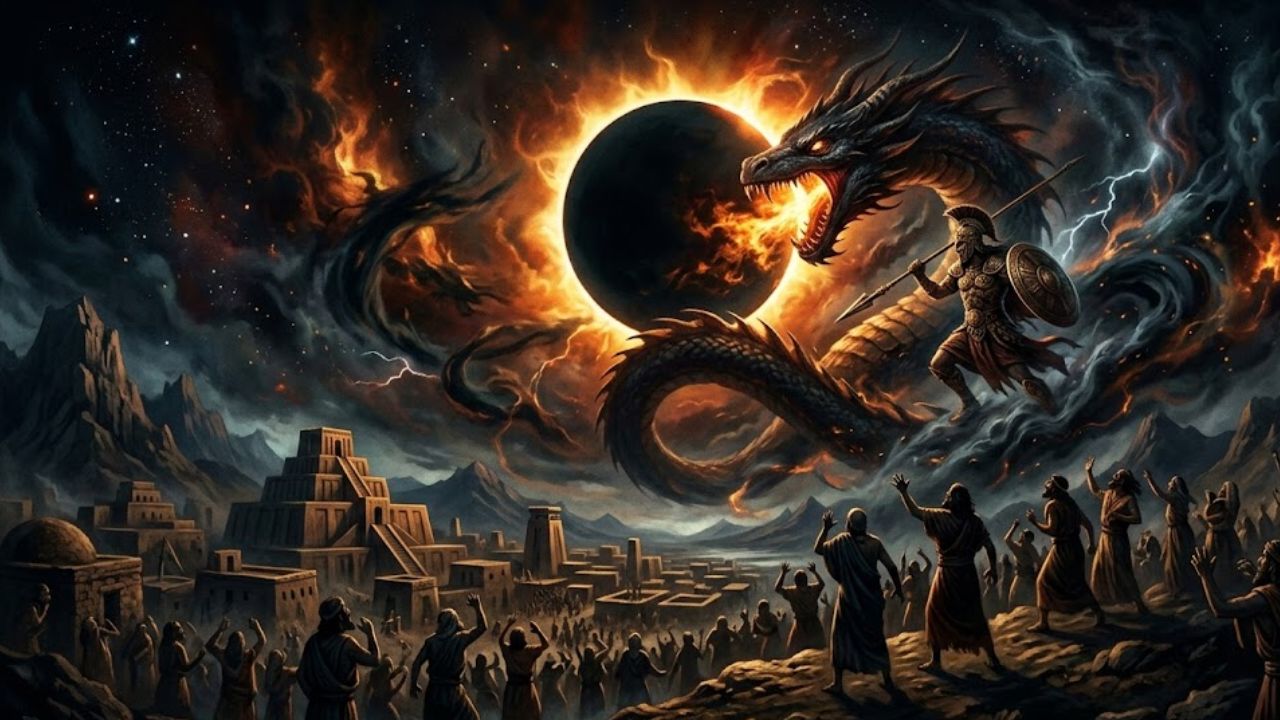
Across geographical divides, humans did not passively observe eclipses — they acted. Eclipses demanded ritual.
In many traditions, elaborate noise-making — whether drums, pots or weapons — was intended to frighten off whatever monster was consuming the Sun.
In ancient Assyria and Babylonia, eclipses were taken so seriously as omens that rulers performed elaborate rituals — including the substitution of a surrogate king — to avoid the doom prophesied for the real monarch.
Why These Myths Matter Today
Modern science offers precise explanations: an eclipse occurs when the Moon passes between Earth and the Sun, casting a shadow on our world. But the ancient myths remain powerful cultural touchstones — not just for their imaginative richness but for what they tell us about human psychology.
Across eras and continents, the eclipse’s sudden darkness inspired interpretations grounded in the known world — animals that eat, serpents that hunt, gods that punish. Each story offered a way to translate the inexplicable into meaning.
Today, as amateur astronomers and families gather to watch total solar eclipses with protective glasses, there’s a sense of continuity — a human fascination with this cosmic spectacle that has never dimmed.