

Dick Grayson, known to millions as Nightwing, stands as one of the most enduring and beloved characters in DC Comics history. Born from tragedy but forged into heroism, his journey from the bright-eyed Boy Wonder to the confident leader who stepped out of Batman’s shadow represents one of comics’ greatest character evolutions.
Origins: From Circus Tragedy to Robin the Boy Wonder
The story begins with Richard John “Dick” Grayson, a member of the renowned Flying Graysons circus family, master acrobats who dazzled audiences with their death-defying aerial performances. Tragedy struck during a performance when the crime boss Tony Zucco sabotaged the trapeze rigging, sending Dick’s parents plummeting to their deaths. This horrific event mirrors Batman’s origin story, creating an instant connection between the orphaned boy and millionaire Bruce Wayne, who witnessed the murder firsthand.
Bruce Wayne adopted the young acrobat and, after extensive training in the Batcave, welcomed him as his crime-fighting partner Robin the Boy Wonder in Detective Comics #38 (April 1940). Created by writer Bill Finger and artist Bob Kane, Robin was designed to soften Batman’s darker edges with his bright red, green, and yellow costume and bubbly demeanor. For decades, this Dynamic Duo blazed through countless adventures across various media.
Dick Grayson’s time as Robin established him as a founding member of the Teen Titans, where his natural leadership abilities first emerged. Despite being one of the few members without superpowers, he became the team’s first leader and guided them through numerous challenges.
The Birth of Nightwing
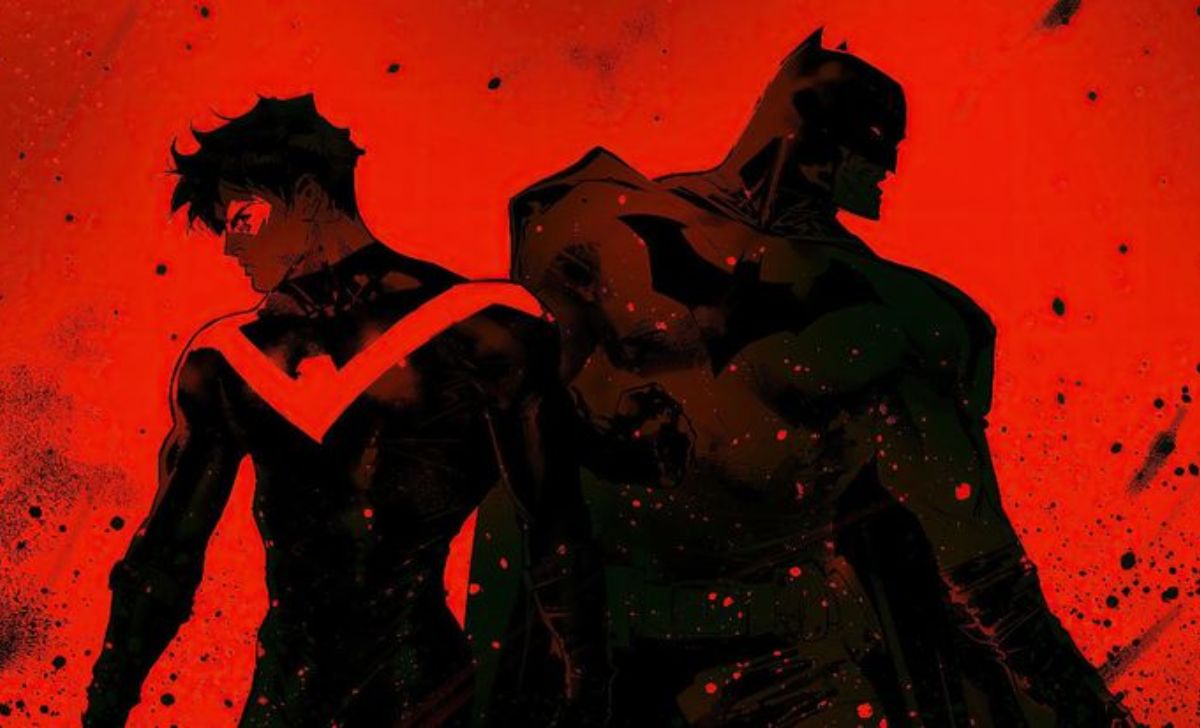
As Dick matured into his late teens and early twenties, tensions grew between him and his mentor. The breaking point came when Batman fired Dick from his role as Robin after he disobeyed orders and became too old to follow them effectively. This separation reflected the natural growing pains many young readers experienced as they chafed under parental authority while approaching adulthood.
Dick temporarily retired from superheroics until the pivotal “Judas Contract” storyline forced his return to action. In Tales of the Teen Titans #44 (July 1984), Dick emerged with a new identity: Nightwing. The name came not from Batman’s influence but from Superman’s polar opposite – a Kryptonian legend about a hero cast out from his family who still chose to fight for his planet and people.
The “Judas Contract” storyline remains one of the darkest and most significant arcs in Teen Titans history. Deathstroke the Terminator orchestrated a devastating plot using the earth-powered Titan Terra as a mole within the team. Terra, who was secretly working with Deathstroke, gathered intelligence on each Titan’s secret identity before betraying them to the criminal organization H.I.V.E. When the trap was sprung, only Dick Grayson escaped capture, forcing him to adopt his Nightwing persona to rescue his teammates with help from Deathstroke’s own son, Jericho.
Establishing Independence: A Knight in Blüdhaven
Nightwing truly came into his own during Chuck Dixon’s influential run beginning in 1996. In the landmark “A Knight in Blüdhaven” storyline (Nightwing #1-8), Dixon created a new setting for the character when Batman asked Dick to investigate bodies washing up on Gotham’s shores. This investigation led him to Blüdhaven, a crime-ridden city described as even worse than Gotham, where corruption ran from the police force to the highest levels of government.
Dixon’s creation of Blüdhaven gave Nightwing his own city to protect, establishing him as more than just Batman’s former sidekick. The series, illustrated by Scott McDaniel, showed Dick making his own rules and facing unique challenges in a city where traditional heroic methods often proved insufficient. This run successfully positioned Nightwing as an independent hero while maintaining connections to the larger Batman family.
Major Story Arcs and Character Development
Leadership Roles
Throughout his career, Nightwing has demonstrated exceptional leadership abilities across multiple teams. He led various incarnations of the Titans, from the original Teen Titans through the New Teen Titans era. His leadership style contrasts sharply with Batman’s approach – where Batman leads through fear and authority, Dick leads through friendship and trust.
During the “Graduation Day” crossover event, the deaths of Lilith and Troia led to the disbandment of both the Titans and Young Justice, prompting Nightwing to join the more mission-focused Outsiders team. However, his natural inclination toward team leadership eventually drew him back to reforming the Titans.
The Blockbuster Era
Roland Desmond, known as Blockbuster, emerged as Nightwing’s most personal and devastating enemy. As the crime lord controlling Blüdhaven, Blockbuster represented everything wrong with the city Dick sought to protect. Their conflict escalated dramatically when Blockbuster’s mother died in an incident he blamed on Nightwing.
Blockbuster’s revenge was swift and brutal. He discovered Nightwing’s secret identity and used this knowledge to destroy Dick’s civilian life systematically. The villain bombed the apartment building where Dick lived, killing many of his friends and neighbors. This attack pushed Nightwing to his psychological breaking point, leading to one of the character’s darkest moments when he allowed the vigilante Tarantula to kill Blockbuster rather than saving his enemy.
This storyline demonstrated how Blockbuster succeeded where other villains had failed – he broke Nightwing’s spirit and forced him to compromise his moral code. Many fans consider Blockbuster, not Deathstroke, to be Nightwing’s true archenemy because of the personal nature of their conflict and its lasting psychological impact.
Crisis Events and Batman’s Mantle
The “Infinite Crisis” storyline brought significant changes to Nightwing’s life. During this period, Dick briefly adopted the villainous persona “Renegade” to infiltrate Lex Luthor’s Secret Society of Super Villains. This dangerous undercover mission included working alongside his longtime enemy Deathstroke while secretly training Deathstroke’s daughter Rose Wilson.
The aftermath of “Infinite Crisis” saw Blüdhaven’s destruction when the Society dropped the supervillain Chemo onto the city, killing 100,000 people. Dick’s desperate attempts to rescue survivors left him radiation poisoned, and the trauma of losing his adopted city added another layer to his psychological burden.
Following Bruce Wayne’s apparent death in “Batman R.I.P.” and “Final Crisis,” Dick reluctantly accepted the responsibility of becoming Batman in the “Battle for the Cowl” storyline. Initially hesitant to assume the mantle, Dick eventually recognized that Gotham needed a Batman. His tenure as Batman, partnered with Damian Wayne as Robin, offered a lighter interpretation of the Dark Knight while maintaining the character’s core mission.
Rogues Gallery and Notable Enemies
Deathstroke the Terminator
Slade Wilson, known as Deathstroke, represents Nightwing’s most historically significant adversary. Their conflict began during Dick’s time as Robin and intensified through the “Judas Contract” storyline. Deathstroke’s professional approach to villainy – he fights anyone he’s paid to fight – creates a different dynamic than more personal enemies.
The rivalry between Nightwing and Deathstroke has defined both characters across decades of storytelling. Their confrontations often center on philosophical differences about morality, family, and the cost of their respective codes of conduct.
Other Notable Villains
Nightwing’s rogues gallery extends beyond his two primary adversaries to include various threats specific to his operations in Blüdhaven and beyond. These enemies range from street-level criminals to supernatural threats, each testing different aspects of Dick’s abilities and moral convictions.
Recommended Essential Reading
For readers seeking to explore Nightwing’s rich history, several storylines stand out as essential:
Origin and Early Years
- Detective Comics #38 – Robin’s first appearance
- Teen Titans Year One – Early team formation
- The New Teen Titans: The Judas Contract – Dick becomes Nightwing
- Tales of the Teen Titans #44 – First appearance as Nightwing
Classic Nightwing Stories
- Nightwing: Year One (Nightwing #101-106) – Definitive origin retelling
- Nightwing: A Knight in Blüdhaven (Nightwing #1-8) – Establishing independence
- Chuck Dixon’s Nightwing Run (1996-2006) – Foundational character development
Major Character Moments
- Batman: Prodigal – First time as Batman
- Batman: Battle for the Cowl – Officially becoming Batman
- Nightwing: Freefall (#140-146) – Detective work and character growth
- The Black Mirror – Dick as Batman psychological study
Modern Interpretations
- Tom Taylor’s Current Run – Contemporary character exploration
- Grayson: Agent of Spyral – Spy thriller interpretation
- Nightwing: Rebirth – Return to classic form