

In a universe filled with god-like beings, alien warriors, and speedsters who can outrun time, Michael Holt — aka Mister Terrific — stands apart. He doesn’t fly, shoot lasers, or wield mystical weapons. Instead, he relies on something much rarer: unmatched intelligence, unshakable morality, and the sheer will to turn pain into purpose. With his recent appearance in James Gunn’s Superman, it’s the perfect time to explore the History of Mister Terrific, one of DC’s Smartest underrated and essential heroes.
A Tragic Beginning: From Grief to the Edge
Michael Holt didn’t set out to become a superhero. In fact, his story begins with tragedy. A man of great success — Olympic gold medalist, multi-millionaire tech genius, and holder of 14 PhDs — Michael still found himself standing on a bridge, ready to end his life after losing his wife Paula and their unborn child in a car accident.
That heartbreaking moment takes place in The Spectre #54 (1997). As Michael contemplates suicide, he’s approached by thugs trying to mug him — only to be interrupted by the arrival of The Spectre, a cosmic force of divine vengeance. Instead of just saving him, the Spectre tells Michael the story of another man who stood on a bridge once: Terry Sloane, the original Mister Terrific.
Sloane had it all too — brains, money, talent — and once stood at the edge like Michael. But instead of ending it all, he chose to live with purpose. He became a street-level hero who fought crime to inspire kids and uphold the motto “Fair Play.” The Spectre challenges Michael to consider stepping into that legacy.
Becoming Mister Terrific: A Choice, Not a Destiny
At first, Holt resists. He doesn’t believe in fate, spirits, or divine intervention — ironic, given he’s literally talking to one. But something about the encounter resonates. Michael returns home and makes a choice — not one of destiny, but of intention.
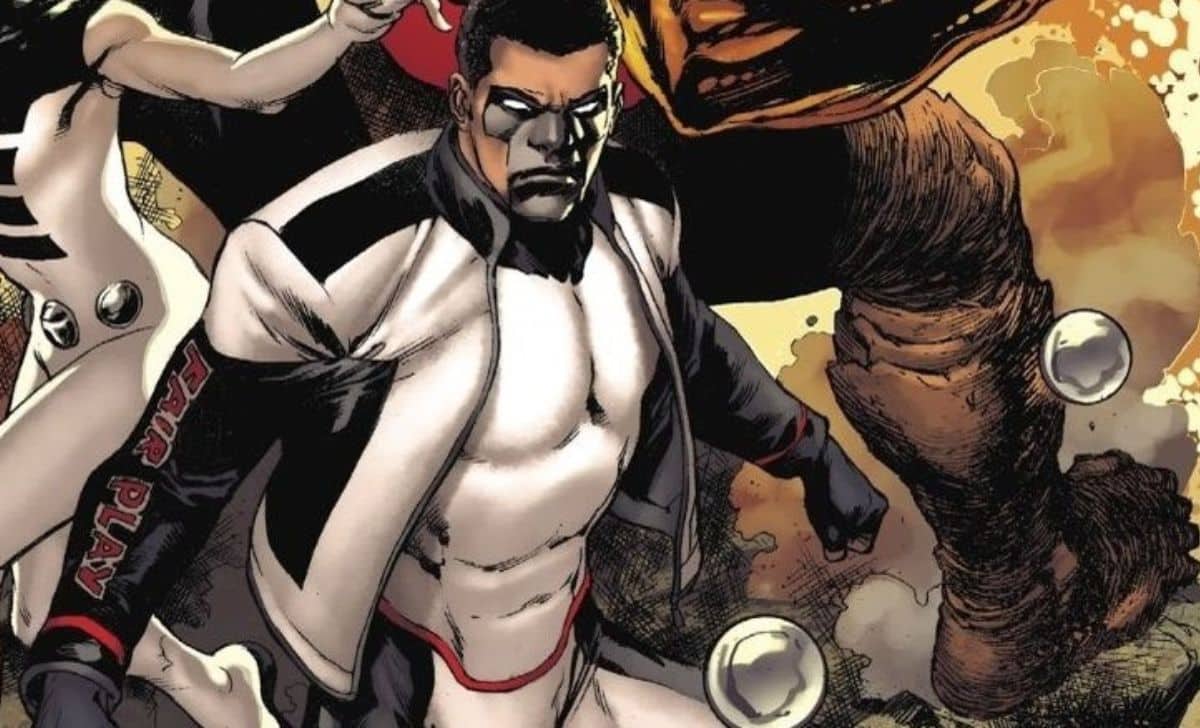
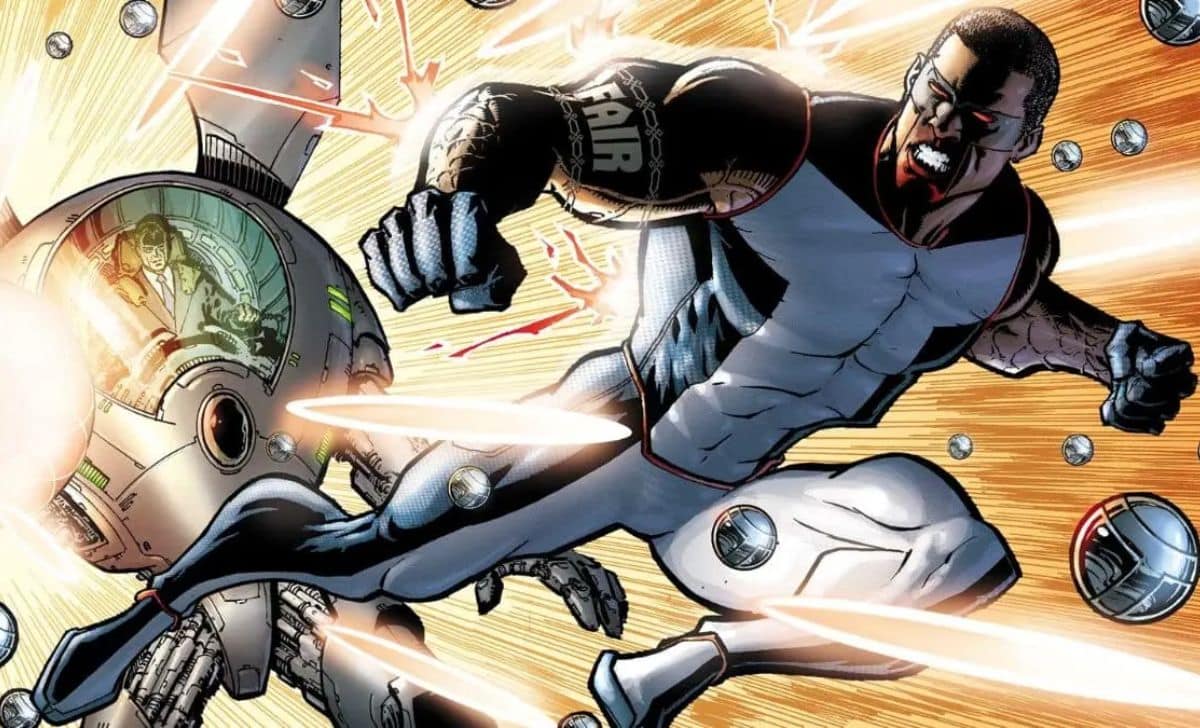
He creates his first T-Sphere, a floating AI-powered device, and embroiders “Fair Play” on a custom jacket. He confronts gang members in his community and, when threatened, stands firm. When the Spectre arrives to deliver justice, Holt intervenes — promising to take responsibility for the youths, because if there’s a chance they can change, they deserve that chance.
With that, Mister Terrific is born. Not because the universe chose him. Because he chose to become someone better — for himself and for others.
Building the Legend: Tech, T-Spheres, and the Mission
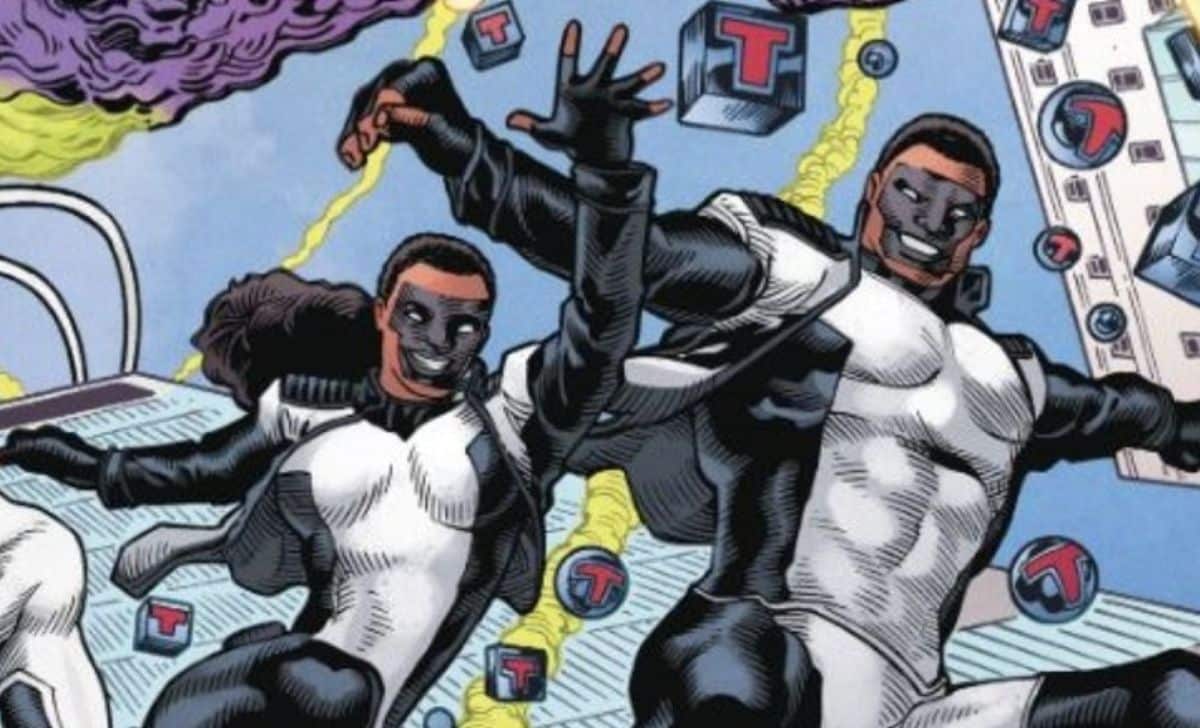
Michael Holt builds his superhero identity with precision. His T-Spheres become his signature tools — capable of surveillance, hacking, translation, hard-light projection, and more. Controlled telepathically, these orbs are extensions of his intellect.
He also creates quantum cloaking tech that renders him invisible to all electronic detection — no cameras, satellites, or sensors can track him. But behind the gadgets is a powerful principle: fairness. The “Fair Play” motto isn’t for show — it’s his guiding light. Holt doesn’t want fame. He just wants to do good, and to do it right.
Justice Society of America: Rising as a Leader
Michael’s brilliance soon draws attention. He joins the Justice Society of America (JSA) in the early 2000s — not as a side character, but as a leader. Under writers Jeff Johns and David Goyer, Holt quickly becomes chairman of the JSA, a position that earns him deep respect from seasoned heroes like Hawkman, Jay Garrick, and Dr. Mid-Nite.
In the “Injustice Be Done” storyline, he faces off against the modern Injustice Society, balancing the safety of young recruits and legacy heroes alike. His cool judgment, ethics, and tactical mind prove vital.
Holt’s mentorship of next-gen heroes like Stargirl and Cyclone solidifies him as the heart and brain of a team that spans generations.
Checkmate and The Terrifics: Expanding His Reach
Holt’s journey doesn’t stop with one team. He later joins the Justice League in a scientific advisory role and serves as White King in the espionage agency Checkmate. There, he navigates morally grey operations, often clashing with figures like Amanda Waller over ethics.
Then, in 2018, Michael headlines his own team book: The Terrifics. Alongside Plastic Man, Metamorpho, and Phantom Girl, he explores the multiverse while tethered to the others due to a shared dark energy accident. Their bond forces them to stay close, leading to strange adventures, time loops, and alternate realities.
Here, Holt isn’t just the team’s strategist — he’s its anchor, its voice of reason in chaos.
A New Take: Mister Terrific: Year One (2024)
In 2024, DC released Mister Terrific: Year One — a six-issue mini-series by Varian Johnson and Stacy Lee. This modern retelling dives deeper into Holt’s emotional landscape, focusing on his relationship with his brother Jeffrey, his isolation, and the grief he carries.
This version adds nuance to his origin without rewriting it. It explores how the “Fair Play” philosophy emerges organically, not just as a legacy but as a personal moral code. The early T-Spheres and tech also feel more human in their creation, born from need and connection.
It’s shaping up to be one of the most definitive explorations of Mister Terrific to date.
Abilities and Strengths: Brains, Brawn, and Balance
Michael Holt isn’t just smart. He’s DC’s third-smartest man, behind only Lex Luthor and Bruce Wayne. With 14 PhDs, fluency in several languages, and Olympic-level athleticism, he blends mental and physical mastery.
His T-Spheres are central — able to attack, defend, scan environments, hack networks, and project hard-light illusions. His quantum invisibility allows him to move undetected even in a world dominated by surveillance.
Add in elite hand-to-hand combat training, and you get a hero who doesn’t need powers to stand alongside gods. His true strength is his ability to think ten steps ahead — and lead with compassion.
Enemies and Ethical Battles
Unlike many heroes, Mister Terrific’s enemies aren’t always flashy supervillains. Some are systems, ideologies, or personal challenges.
- The Spirit King: A villain connected to Terry Sloane, who returns to haunt Holt’s early days as Mister Terrific.
- Prometheus: The anti-Batman — a strategist who challenges Holt’s intellect in high-stakes mental battles.
- Vandal Savage: The immortal manipulator whose power-obsessed worldview clashes with Holt’s belief in fairness and empowerment.
Even allies like Amanda Waller test him. At Checkmate, their disagreements over morality and acceptable costs create some of the most compelling scenes. Holt often serves as the conscience of the team — a rare role in the morally grey corners of the DCU.
Legacy and Cultural Impact
Mister Terrific is one of DC’s few Black heroes who chose his legacy. He didn’t inherit powers — he claimed a name after learning what it stood for. That makes his story deeply personal and incredibly human.
He represents intelligence, empathy, and ethical strength. And now, with his cinematic debut, a new generation of fans is discovering a hero who’s been changing the game behind the scenes for years.
In terms of representation, Holt is a brilliant Black scientist, a leader, and a role model — someone who shows that in a world of superpowers, sometimes the strongest tool is conviction.
Want to Read More?
If you’re interested in exploring Mister Terrific’s journey, start with these titles:
- The Spectre #54 (1997) – His emotional debut.
- JSA Vol. 2 (issues #16–#40s) – His leadership and early battles.
- Checkmate (2006–2008) – Espionage and ethical conflict.
- The Terrifics (2018–2021) – His longest solo spotlight.
- Mister Terrific: Year One (2024) – A modern, in-depth origin.