
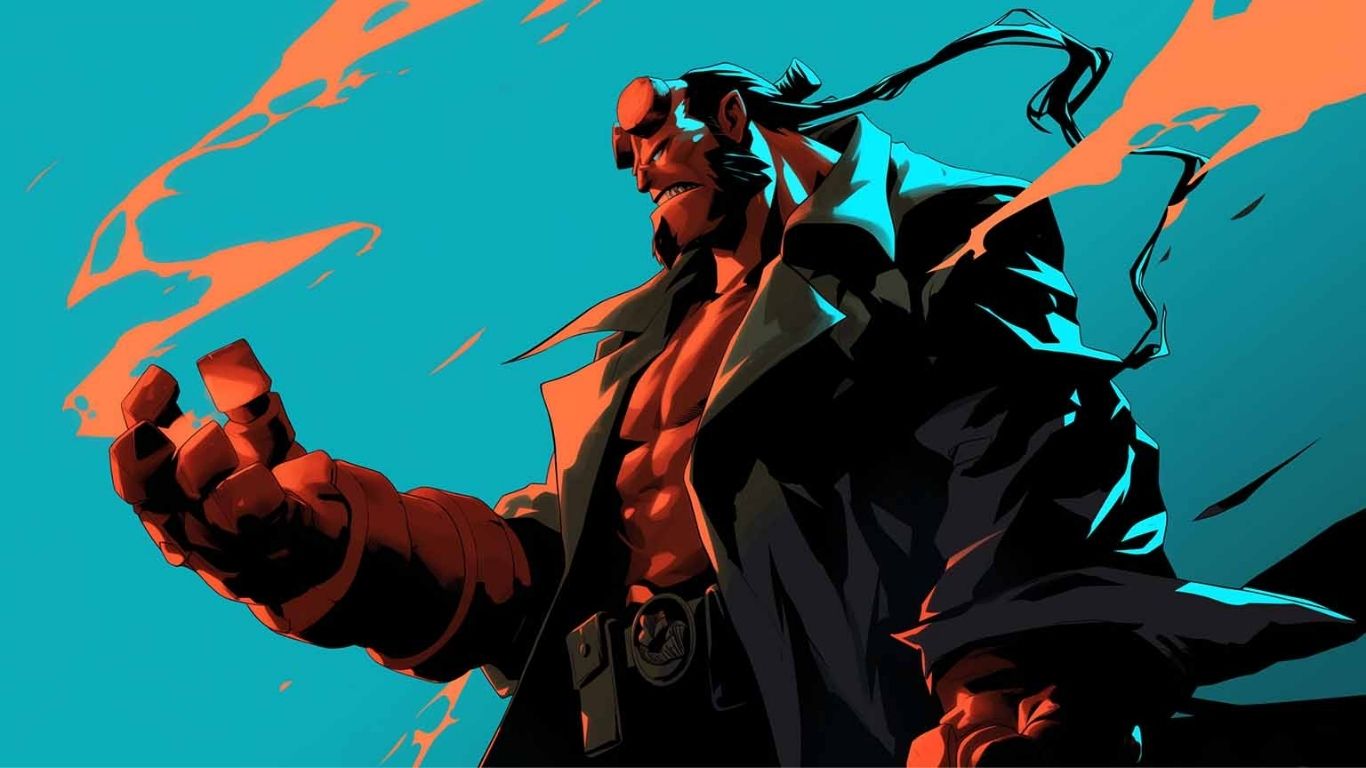
Hellboy stands apart from most comic-book heroes. He isn’t driven by fame, glory, or a moral code carved in stone. Instead, he’s a reluctant defender of humanity—summoned from Hell, armed with apocalyptic power, and stubbornly determined to live like an ordinary guy who just happens to punch monsters for a living. What makes Hellboy endure isn’t just his strength or striking design, but the deeply human conflict at the heart of his story: a demon who refuses to be the end of the world. Below is a more natural, story-driven exploration of Hellboy—his creation, origins, major story arcs, powers, and why his mythos still resonates so strongly.
A Character Born From Shadows and Ink
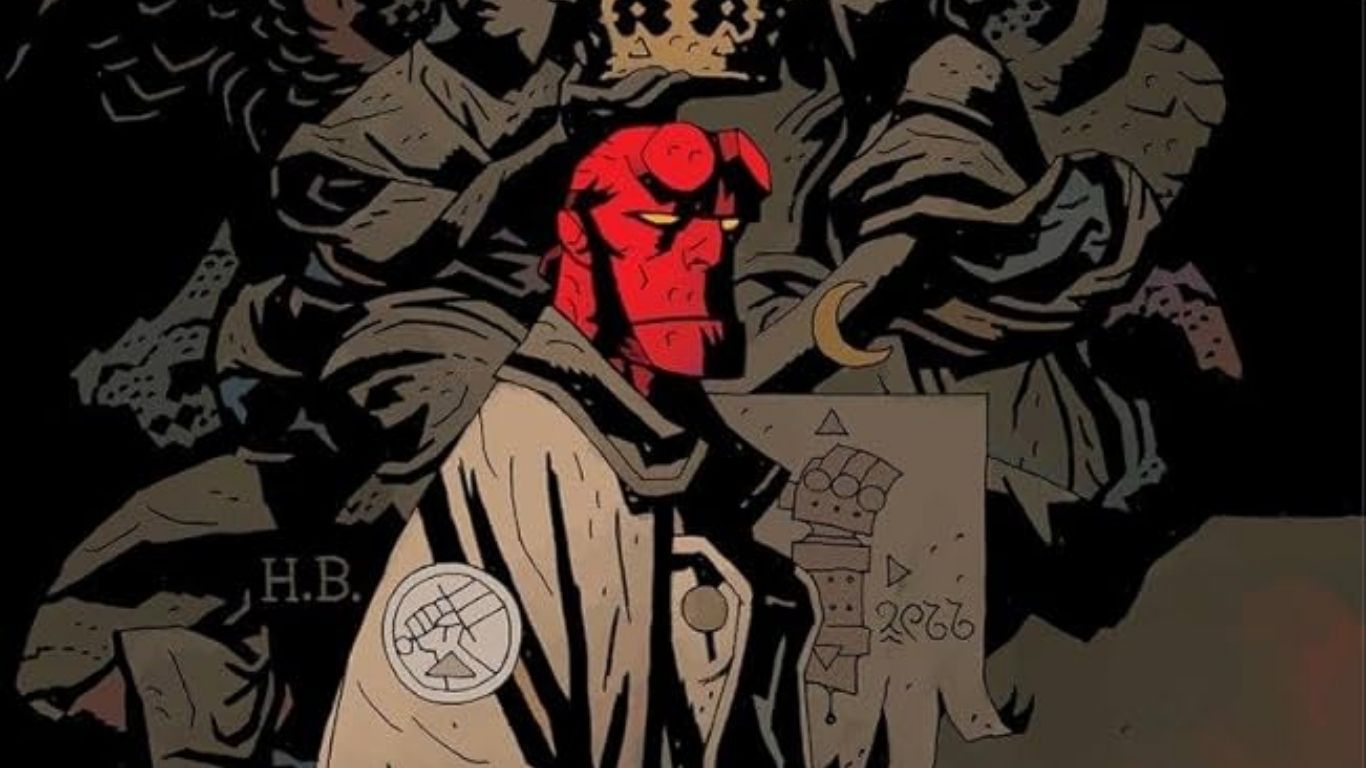
Hellboy was created by Mike Mignola, whose unmistakable art style—heavy shadows, sharp angles, and gothic minimalism—feels inseparable from the character himself. From the very beginning, Hellboy wasn’t designed to be flashy. He was designed to feel ancient, like a folktale carved into stone.
The character’s earliest appearances were quiet, almost experimental. Hellboy first appeared in Dime Press issue 4 in 1993, an Italian publication that introduced an early version of the character. Shortly after, he made his first American appearance in San Diego Comic-Con Comics issue 2 the same year. In these initial outings, Hellboy didn’t yet have the iconic red skin that would later define him.
That final, definitive version arrived in Next Men issue 21 (1993), where Hellboy appeared fully realized—red-skinned, massive, and unmistakable. These three issues have since become collector grails, not because they launched a mainstream superhero, but because they marked the birth of something entirely different.
Anung Un Rama: A Demon With a Destiny He Never Asked For
Behind the nickname “Hellboy” is a name that carries real weight: Anung Un Rama. His story doesn’t begin with heroism, but with sin, regret, and punishment.
Hellboy’s mother, Sarah Hughes, was a witch who entered into a pact with the demon Azzael, a Duke of Hell. When Sarah attempted to repent on her deathbed in 1617, Azzael intervened. Furious that her repentance might undo their pact, he dragged her corpse into Hell and burned it, ensuring their child would be born in the infernal realm.
At birth, Azzael severed his son’s right arm and replaced it with a massive stone limb—the artifact that would become known as the Right Hand of Doom. Internal power struggles among demons soon turned against Azzael, forcing him to exile the child to save him. Long before Hellboy ever walked the Earth, his fate was already tangled in prophecy and apocalypse.
World War II, Nazis, and the Arrival on Earth
Hellboy’s entrance into the human world is tied to one of history’s darkest chapters. In 1944, Nazi occultists attempted to weaponize the supernatural through a ritual called Project Ragna Rok. Led by a mad monk off the coast of Scotland, the ritual succeeded—but not as intended.
Instead of summoning a god of destruction, they brought forth a small demon child.
Before the Nazis could exploit him, Allied forces intervened. The strange infant was transported to a U.S. base in New Mexico, where he was discovered by Professor Trevor Bruttenholm—better known as Professor Broom. Rather than seeing a weapon or a monster, Broom saw a child. He named him Hellboy and raised him as his own son.
That single act of compassion defines everything Hellboy becomes.
Growing Up B.P.R.D.
Professor Broom was the founder of the Bureau for Paranormal Research and Defense (B.P.R.D.), a secret organization tasked with combating supernatural threats. Hellboy grew up inside this world of hidden horrors and classified missions.
Though he matured physically at an accelerated rate, Hellboy emotionally remained very human—sarcastic, curious, rebellious, and often stubborn. He loved machines, tinkered constantly, and questioned authority even when he respected it.
His existence was kept secret at the request of the U.S. President, but Hellboy’s life was anything but isolated. He met Albert Einstein, once threw a rock at Babe Ruth, and eventually became the B.P.R.D.’s most effective field agent—earning the nickname the world’s greatest paranormal investigator.
The People Who Ground Him
Hellboy’s world is rich with supporting characters who give emotional weight to the supernatural chaos.
- Abe Sapien – Intelligent, calm, and analytical, Abe is Hellboy’s closest partner and intellectual counterbalance.
- Liz Sherman – A powerful pyrokinetic and Hellboy’s most significant romantic connection, Liz’s struggle with her abilities mirrors Hellboy’s own fear of what he might become.
- Kate Corrigan – A folklore professor who bridges myth and modern investigation within the B.P.R.D.
- Lobster Johnson – A pulp-era vigilante whose ghost continues to fight monsters long after death.
Together, they remind Hellboy that despite his origins, he belongs somewhere.
Seed of Destruction: Where It All Begins
Hellboy: Seed of Destruction sets the emotional and thematic foundation for the entire series. When Professor Broom disappears during an Arctic expedition, Hellboy is shaken. His relief at Broom’s return is short-lived—a monstrous, Lovecraftian creature soon kills him.
Grief turns to resolve.
Hellboy, Abe, and Liz track the mystery to Cavendish Hall, where they confront the true architect behind it all: Rasputin. His goal is simple and terrifying—push Hellboy to accept his role as the bringer of the apocalypse.
The plan fails. Rasputin is impaled, burned, and destroyed. But the truth lingers. Hellboy learns that his existence spans centuries and that others died trying to prevent his birth. The question is no longer what he is, but what he will choose to be.
Searching for Meaning in Wake the Devil
In Hellboy: Wake the Devil, Hellboy begins actively questioning his destiny. A stolen coffin leads him to Romania, Nazi remnants, and the vampire Vladimir Giurescu.
Through dark rituals and ancient gods like Hecate, Hellboy is forced to confront the terrifying truth: powerful forces expect him to end the world. When Hecate literally consumes him and returns him to reality, the message is clear—his fate is written, but not yet fulfilled.
Hellboy’s resistance becomes the core of the series.
Key Stories That Deepen the Myth
- Almost Colossus – Explores loyalty and sacrifice as Hellboy helps save Liz with the aid of Roger the homunculus.
- The Right Hand of Doom – Reveals the apocalyptic importance of Hellboy’s stone hand.
- Hellboy: Conqueror Worm – A pulpy cosmic horror tale featuring Lobster Johnson and grotesque transformations.
- Hellboy in Hell – Hellboy finally confronts his lineage and destiny in the underworld, bringing his journey full circle.
Power, Restraint, and the Fear of Becoming a Monster
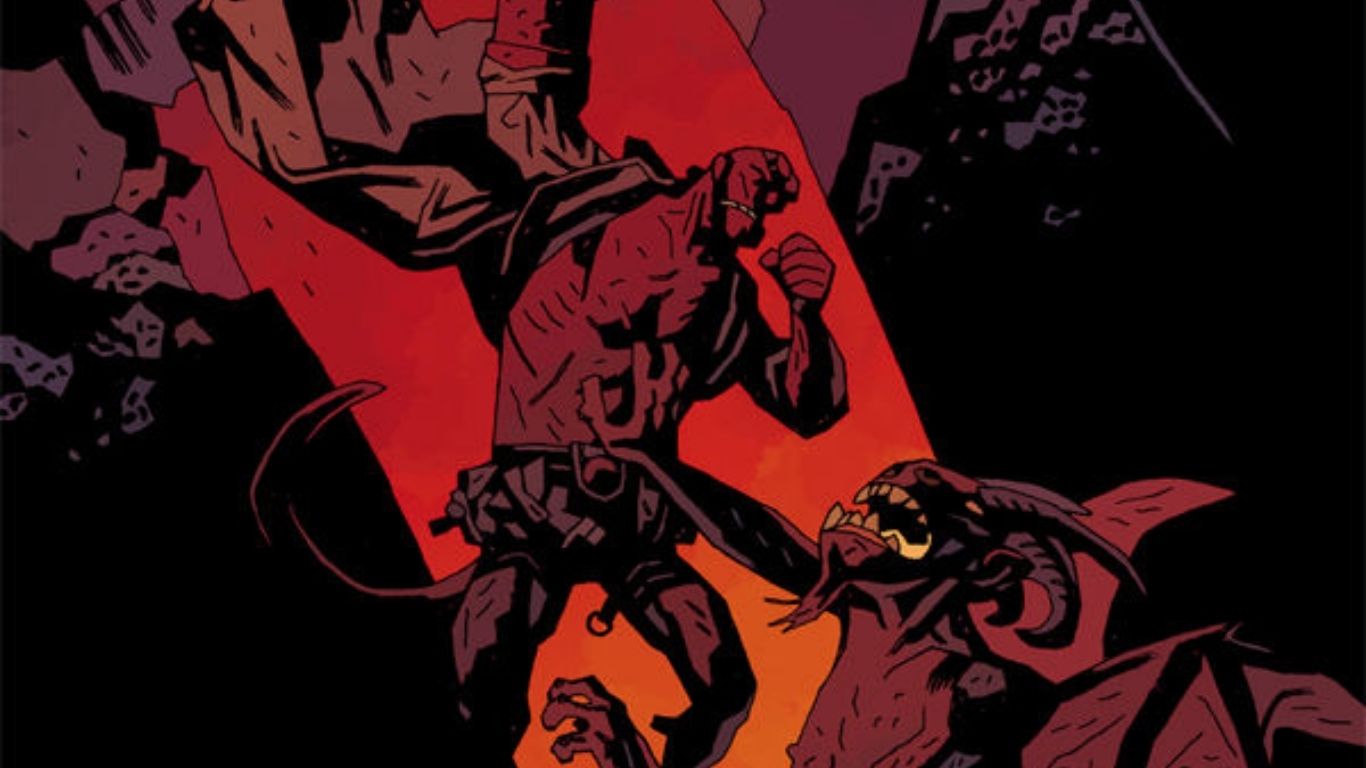
Hellboy is incredibly powerful—but he hates that fact.
He files down his horns to hide his heritage. He avoids leadership. He never seeks dominion.
- Super strength capable of hurling massive enemies and objects
- Extreme durability and healing, comparable to Wolverine
- Near agelessness and resistance to supernatural forces
- Knowledge of ancient magical languages and lore
Despite all this, Hellboy fights like someone who just wants the job done so he can go home.
The Tools of a Reluctant Apocalypse
Hellboy carries two defining weapons:
- The Good Samaritan – A massive handgun designed for monsters, as blunt and practical as Hellboy himself.
- The Right Hand of Doom – An indestructible stone arm tied directly to apocalyptic prophecy, capable of unlocking cosmic forces beyond comprehension.
It is both his greatest weapon and his greatest burden.
Where to Start Reading Hellboy
For new readers, these volumes capture the essence of Hellboy:
- Hellboy: Seed of Destruction
- Hellboy: Wake the Devil
- Hellboy: The Chained Coffin
- Hellboy: The Right Hand of Doom
- Hellboy: Conqueror Worm
- Hellboy in Hell
Together, they tell the story of a demon who was meant to end everything—and chose instead to protect it.