

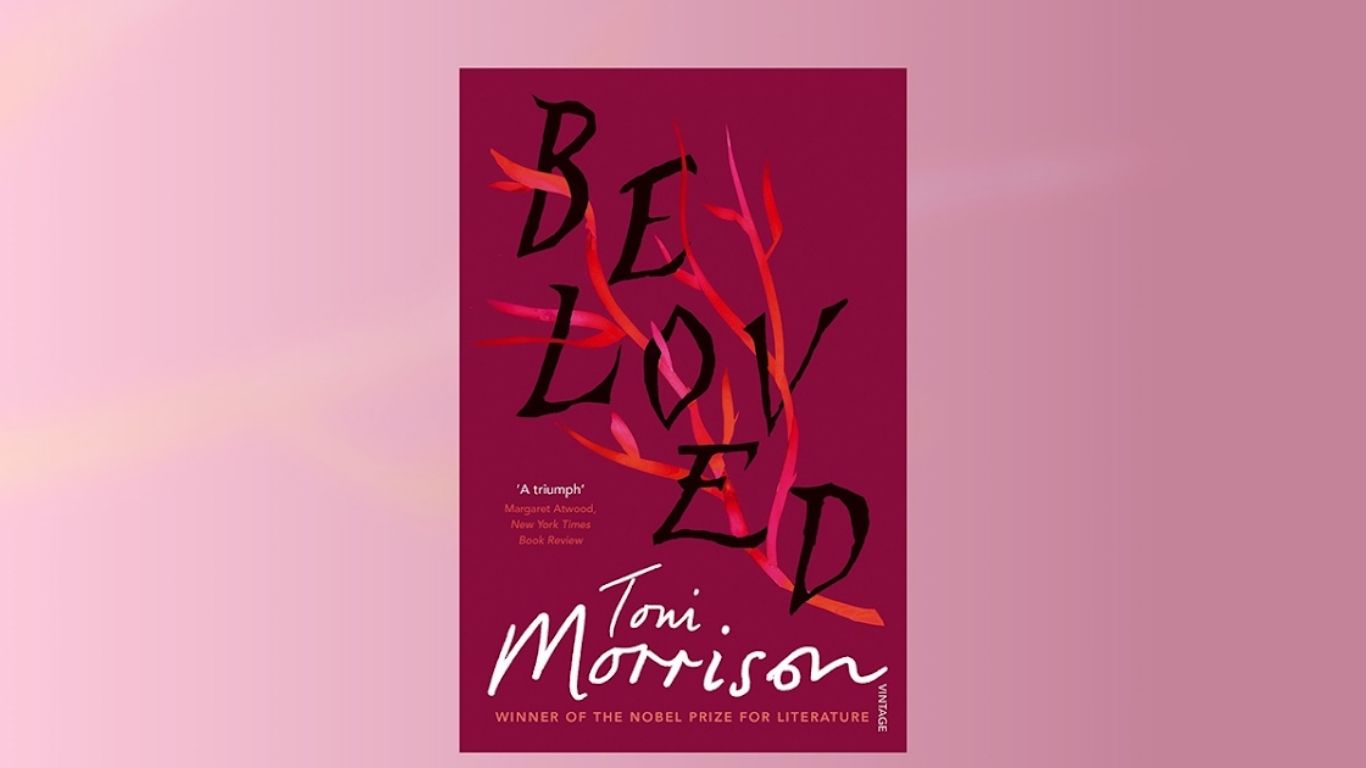
Toni Morrison’s “Beloved” is not just a ghost story; it is a searing meditation on how slavery mutilates love, memory, and the very possibility of a whole self. Through the haunted house at 124 Bluestone Road, Morrison turns the supernatural into a powerful metaphor for a history that refuses to stay buried, insisting that the past must be faced before any real freedom can begin.
The Haunted House at 124 Bluestone Road
The novel opens with strange, violent disturbances: a mirror that shatters on its own, cracker crumbs scattered across the floor, and tiny handprints pressed into a cake. These small domestic horrors establish that the house at 124 Bluestone Road is haunted, and everyone in the area knows it. The haunting is not an anonymous evil; it has a clear identity and origin. The spirit that torments the home is the direct product of an unspeakable trauma, born from a barbaric history that extends far beyond this one family-upstairs-by-lisa-jewell/”>family’s four walls. The ghost is the embodiment of a legacy of suffering that has scarred generations, signaling that the novel’s true terror lies not in the supernatural, but in the enduring effects of slavery.
Sethe’s Fragile Freedom
“Beloved” centers on Sethe, a woman who has escaped enslavement and has technically been free for more than a decade by the time the story begins. Yet Morrison makes it clear that legal freedom does not mean emotional or psychological release. Sethe’s family-upstairs-by-lisa-jewell/”>family has disintegrated under the weight of their experiences. Her mother-in-law, who once anchored the household, has died. Her two sons, driven by fear of the ghost that inhabits the house, have run away, unable to bear the constant tension and terror any longer. The only one who remains with Sethe is her daughter Denver, and together they exist in a kind of suspended life. Isolated and shunned by the community, they share a suffocating existence in which the living and the dead coexist uneasily.
Sethe is consumed by the presence she believes to be her eldest daughter, the child whose loss lies at the center of her deepest pain. Her fixation on this spirit makes clear that her past is not past at all; it is an active force in her present, shaping secret-by-a-r-torre/”>every emotion, every decision, every relationship. When a figure from Sethe’s former life appears and confronts the ghost, driving it away, it seems, at first, that this exorcism might be the catalyst for a new start. But Morrison quickly complicates this hope. The absence of the ghost does not erase the trauma that created it, and what comes to fill the void exposes wounds even more difficult to bear, suggesting that healing requires far more than simply pushing the past aside.
Trauma, Memory, and the Shape of Love
Like much of Morrison’s work, “Beloved” explores the entanglement of trauma and love within African-American history. Her characters are complex, wounded, and deeply human, yet they share an elemental desire: to find love and to be loved, even when that love is inseparable from pain. Morrison’s broader body of work often puts love in tension with social norms and expectations. In “Paradise,” for example, she examines how forbidden affection between townspeople and their fugitive neighbors threatens rigid communal rules. In “Sula,” a character discovers that the deepest love of her life is not romantic at all, but resides in a friendship that defies her assumptions about affection and loyalty.
“Beloved” is arguably Morrison’s most powerful exploration of the costs and complications of love. Here, she pushes the question further: what happens to the human spirit when it learns, over and over, that anything or anyone it cares for can be taken away without warning? Under slavery, attachment becomes dangerous. To love a child, a parent, a friend, or even one’s own body is to risk unbearable grief. Morrison shows that slavery is corrosive to every form of love—familial, romantic, communal, and even self-love—because it turns people into property and relationships into potential liabilities. Yet despite this, her characters continue to seek connection, proving that the urge to love survives even in the harshest conditions.
Slavery’s Dehumanizing Machinery
“Beloved” exposes the dehumanizing mechanics of slavery in ways both explicit and subtle. Sometimes the cruelty is laid bare in chillingly straightforward terms: enslaved people are assessed, bought, and sold like livestock, reduced to entries on a ledger with a fixed monetary value. In this world, bodies are not sacred; they are assets. Such blunt commodification underscores how the system strips away individuality and dignity, turning human beings into things to be owned, traded, and discarded.
At other moments, Morrison’s critique is quieter but no less devastating. Sethe and Paul D.—a man from her old plantation who reenters her life—are described as trying to “live an unlivable life.” Their survival strategies diverge, yet both are rooted in trauma. Sethe remains trapped in her memories, unable or unwilling to let go of the past, because to forget would mean betraying those she has lost. Paul D., by contrast, protects himself by shutting down emotionally, distancing himself from his own feelings in an attempt to avoid further pain. His detachment reveals how trauma can fracture the self, forcing people to compartmentalize in order to keep functioning. Morrison presents both characters as permanently marked by what they endured, showing that even after escaping physical bondage, they remain bound by invisible chains of memory and grief.
Fragmented Time and Shifting Voices
One of the novel’s most striking features is its structure. Morrison braids together multiple perspectives and non-linear timelines to mirror how trauma distorts time and memory. The narrative moves back and forth between past and present, slipping into different consciousnesses and offering a mosaic of overlapping experiences. This technique allows readers to see how the trauma of slavery reverberates across individuals, families, and entire communities. Experiences that occurred years earlier remain vivid and intrusive, while current events often feel haunted by echoes of what came before.

As the narrative delves into the inner worlds of townspeople, enslavers, and formerly enslaved individuals, Morrison reveals clashing interpretations of the same events. These conflicting viewpoints highlight the limits of perception and the ways in which some characters actively refuse to confront the reality of their actions. Those who benefited from slavery often minimize or distort their culpability, while those who suffered under it struggle to integrate the enormity of their pain into a coherent story. Yet there are also moments when fragmented memories suddenly align, creating a collective recognition of shared trauma. These convergences emphasize that slavery is not just a series of isolated injustices but a vast, interconnected wound.
Beauty in Darkness: Morrison’s Prose
Although “Beloved” plumbs some of the darkest aspects of human history, Morrison’s language is often luminous and lyrical. Her prose highlights her characters’ capacity for tenderness, vulnerability, and joy, even in the midst of overwhelming suffering. One of the most memorable sections is a stream-of-consciousness passage from Sethe’s perspective. In it, memories of domination and fear mingle with small, vivid images of affection and beauty: a baby stretching toward her mother’s earrings, the bright colors of spring, the sight of freshly painted stairs.
These moments do not erase the brutality surrounding them, but they complicate it. Sethe recalls that her mother-in-law had the stairs painted white “so you could see your way to the top… where lamplight didn’t reach.” The detail is practical, but Morrison turns it into a metaphor for finding a path through darkness. The white stairs symbolize both an attempt at order and safety within chaos and a fragile kind of hope—an insistence that, even when the world is hostile, there can still be spaces of care and intention. The juxtaposition of harsh memories with such tender details suggests that love, however precarious, continues to assert itself.
Hope, Freedom, and Moral Responsibility
Throughout the novel, Morrison invites readers to grapple with difficult questions about freedom and responsibility. What does it mean to be free when the mind and heart remain shackled to horrifying memories? How can a community heal when its foundation is built upon unacknowledged violence and betrayal? Sethe’s struggle to reconcile her past with her present, and Denver’s journey toward connection with the outside world, dramatize these dilemmas. The haunting at 124 Bluestone Road becomes a test of whether confronting painful truths can lead to genuine transformation, or whether the weight of history will always drag the living backward.
Morrison also pushes readers to reflect on the power people hold over one another, and how that power is used—for domination, for neglect, or for care. In the context of slavery, power is grotesquely imbalanced and used to crush bodies and spirits. But even beyond the institution itself, the novel suggests that every relationship carries a form of power: the power to listen or ignore, to acknowledge or deny, to nurture or wound. By foregrounding the voices and experiences that history has often silenced, “Beloved” insists that there is a moral obligation to hear and honor those stories.
“Beloved” as Enduring Testimony
In the end, “Beloved” stands as a powerful testimony to three central truths. First, hate and systemic cruelty have an almost unimaginable capacity to destroy lives, relationships, and self-worth. The violence of slavery is not confined to whips and chains; it seeps into how people think about themselves and what they believe they deserve. Second, despite all of this, love retains a fiercely redeeming potential. It is never simple or pure in Morrison’s world—love can be possessive, desperate, and dangerous—but it is also the force that keeps people going, that allows moments of beauty to shine through even the darkest memories.
Third, the novel insists on the responsibility to remember and to listen. The ghostly presence in the house, the fragmented memories, and the recurring stories that characters tell and retell all underscore that the past cannot be forgotten without cost. To truly move forward, individuals and societies alike must face the legacies of their actions. “Beloved” asks readers not to turn away from painful histories, but to confront them with honesty and compassion, recognizing that only through such engagement can there be any hope of healing.
Through its haunting images, layered structure, and profound emotional insight, Toni Morrison’s “Beloved” transforms a story of one haunted family into a larger reflection on a nation’s unfinished reckoning with slavery. The novel lingers because it speaks not only to the horrors of the past but also to the ongoing challenge of how to remember, how to love, and how to live in the long shadow of history.