
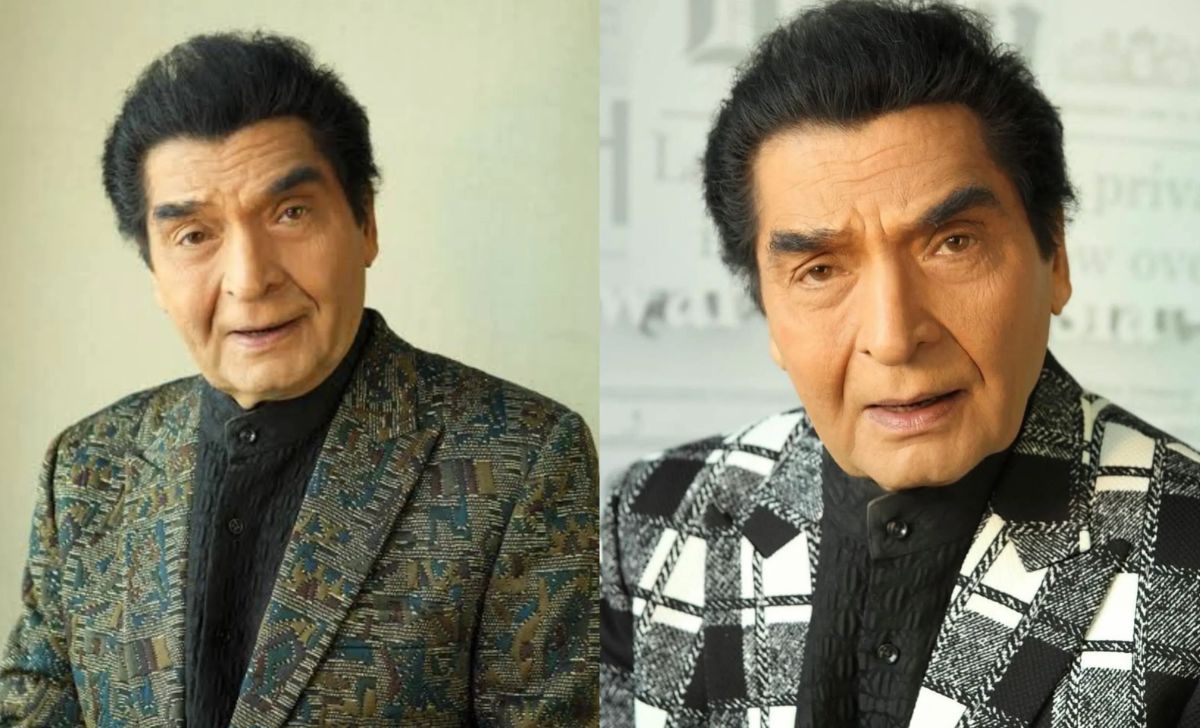
Bollywood has bid a heartfelt farewell to one of its most beloved actors, Govardhan Asrani, who passed away on October 20, 2025, at the age of 84. Fondly remembered simply as Asrani, the veteran performer left behind laughter, joy, and a towering legacy built over six decades in cinema. His manager, Babu Bhai Theeba, confirmed that the actor breathed his last at 3 PM at Arogya Nidhi Hospital in Juhu. Later that evening, he was cremated through an electric ceremony at the Santacruz crematorium, marking the end of an era.
Early Life and Passion for Performance
Born on January 1, 1940 (some reports list 1941) in Jaipur, Asrani grew up in a middle-class Sindhi household. His father managed a carpet business, but young Asrani showed little interest in following that path. Drawn instead to the performing arts, he completed his education at St. Xavier’s School and graduated from Rajasthan College. During his student years, he began working as a voice artist with All India Radio in Jaipur—his first tryst with show business.
The true journey toward cinema began when Asrani trained under Sahitya Kalbhai Thakkar between 1960 and 1962 and later joined the prestigious Film and Television Institute of India (FTII) in Pune in 1964. Under the mentorship of Roshan Taneja and legendary filmmaker Hrishikesh Mukherjee, he refined his craft, combining discipline with innate comic energy that would one day become his signature.
The Struggle and Breakthrough
After completing his FTII course, Asrani moved to Mumbai with dreams of acting but faced intense struggle. Despite formal training, he remained jobless for two years, knocking on studio doors and surviving on small gigs. His fortunes changed when he and other FTII graduates approached Indira Gandhi, then the Information and Broadcasting Minister, seeking opportunities for trained artists. Her intervention reportedly led producers to consider FTII actors seriously, paving the way for Asrani’s breakthrough role in Guddi (1971) alongside Jaya Bhaduri.
That performance marked a turning point in his career. Guided by Hrishikesh Mukherjee, Asrani went on to play several memorable roles, becoming an indispensable part of the Hindi film landscape.
The Comic Genius Who Redefined Laughter
Asrani’s range extended far beyond mere slapstick. He brought an emotional intelligence and subtle satire to comedy, balancing physical humor with social commentary. Over a career spanning more than 400 films, he collaborated with matinee idols like Rajesh Khanna, Amitabh Bachchan, and Jeetendra—often serving as the perfect foil to their screen personas.
One of his most iconic performances came in Sholay (1975), where he portrayed an eccentric jailor—a parody of Adolf Hitler—that became a pop-cultural landmark. Even fifty years later, his exaggerated Hindi accent and comedic energy continue to evoke laughter.
Yet, limiting Asrani to comic roles would overlook his brilliance in dramatic and sensitive portrayals. In films like Namak Haram, Bawarchi, Abhiman, and Guddi, he infused supporting characters with humor, melancholy, and humanity. Whether playing Dhondudas, the cheerful spirit in a tragic narrative, or Babbu, the music-loving friend, Asrani rendered even the smallest roles unforgettable.

Beyond the Screen: A Director, Mentor, and Visionary
Determined to break the mold of the stereotypical comedian, Asrani ventured into direction with Chala Murari Hero Banne (1977), a semi-autobiographical film about a struggling actor’s rise amidst industry exploitation. Though not a commercial blockbuster, the film won appreciation for its honesty and ambition. He followed it with Hum Nahin Sudharenge and later with Dil Hi To Hai (featuring Jackie Shroff and Divya Bharti) and Udaan (starring Rekha), proving his creative range extended beyond acting.
His contributions to Gujarati cinema further cemented his popularity. Hits like Amdavad No Rikshawalo, Saat Qaidi, Sansar Chakra, Pankhi No Malo, and Mota Ghar Ni Vahu saw him in leading roles, expanding his reach across linguistic boundaries.
In 1988, Asrani returned to his alma mater as Principal of FTII, helping shape its curricula and mentoring new generations of actors. His time there was marked by innovation, generosity, and an enduring passion for the craft.
Resilience Through the Decades
Few actors aged as gracefully as Asrani. In every era, he adapted to the changing face of cinema. During the 1980s, he embraced the loud, social comedies that defined that decade; in the 2000s, he reconnected with audiences alongside Amitabh Bachchan in Baghban (2003). His collaborations with directors like Priyadarshan and David Dhawan led to a revival of his presence in lighthearted entertainers that delighted a new generation.
Even in his later years, Asrani remained creatively active. He performed on stage in an adaptation of Molière’s The Miser, appeared in Dream Girl 2 with Ayushmann Khurrana, and played a lawyer in the second season of the courtroom drama The Trial. His final film project, Priyadarshan’s Bhoot Bangla, was still in production when he passed away—proof that his artistic spirit never dimmed.
The Man Behind the Legend
Asrani was married to actress Manju Asrani. The two shared a quiet life, without children, surrounded by close family including his sister and nephew. His legacy lives not just in his expansive filmography but also in the evolution of the comic actor’s role in Indian cinema.
Asrani’s genius lay in making people laugh without losing sight of the human beneath the humor. His expressive face could swing from joy to anxiety within moments, an acting style that seamlessly blended empathy, wit, and wisdom.
His passing closes a golden chapter in Bollywood’s story, but his performances—timeless and full of heart—continue to teach both laughter and life. Generations will remember his smile, his voice, and his unmatched ability to turn fleeting moments into immortal memories.