

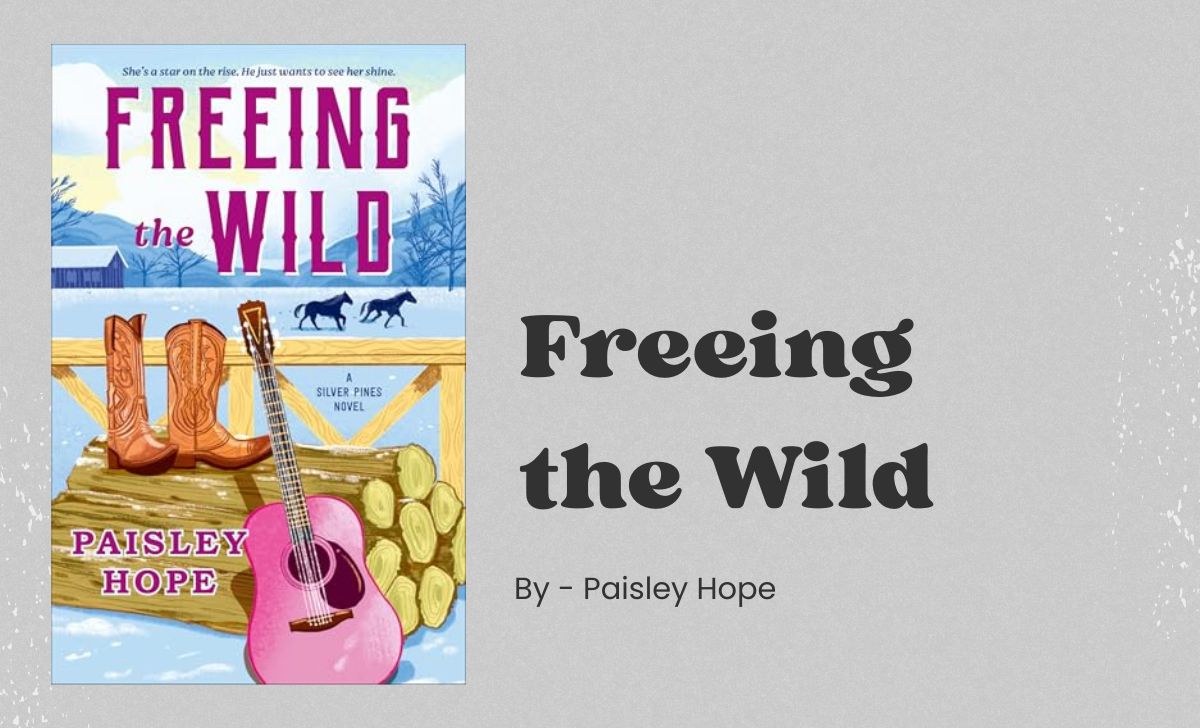
Freeing the Wild by Paisley Hope lands squarely in the sweet spot between steamy romance and tender emotional recovery. Set in the familiar small-town world of the Silver Pines Ranch series, the novel centers on a country music star who retreats from the spotlight and a local cowboy whose steady presence forces her to reckon with grief, anxiety, and the cost of fame. What follows is a story that mixes passionate chemistry with real-world wounds and the slow, sometimes uneven work of healing — all wrapped in Paisley Hope’s warm, accessible voice.
Plot (what happens)
Cassie Spencer is riding high in her music career when a public crisis and private loss interrupt the momentum of her tour. Needing distance, she returns to the family property in rural Kentucky and into the orbit of Silver Pines Ranch. There she reconnects with Haden (a rugged, reliable ranch hand who’s also part of the town’s connective tissue) and what was meant to be a temporary stay gradually becomes something more. Their relationship moves from a spark of attraction into a deeper attachment as Cassie navigates therapy, grief, and the decision of whether a life under stadium lights or one among horses, family, and slower days will bring her true peace. The narrative covers the arc from pain to possibility, with detours into found-family moments, supportive side characters from previous books, and a number of sexy, emotionally charged scenes that help the protagonists understand what — and who — they really need.
Characters and chemistry
Cassie is written as a believable modern heroine: she’s talented, vulnerable, and not immune to mistakes. The book responsibly shows her seeking help when anxiety and grief overwhelm her, lending the story emotional honesty. Haden is the archetypal cowboy with enough nuance to feel earned: steady, observant, and protective without being overbearing. Their chemistry is immediate but becomes more compelling because of the soft moments in which they learn to trust. Secondary characters — friends and family on the ranch and recurring players from the Silver Pines series — provide both comic relief and grounding; readers familiar with the series will particularly enjoy how past relationships ripple into the present story.
Themes and tone
Major themes include grief and recovery, the tension between public life and private needs, and the healing power of community. The author treats mental health with care: therapy and coping strategies appear as part of Cassie’s journey rather than a plot trick. The tone remains romantic and often cozy, but it is punctuated by honest emotional beats that keep the romance from feeling shallow. There’s also a celebration of rural rhythms and of found-family bonds; the ranch is not just a backdrop but an active element shaping the characters’ choices.
Pacing and structure
Hope structures the book with a clear emotional throughline: initial fallout, retreat, reconnection, and eventual decision. Pacing leans toward brisk — romance readers will find the forward momentum satisfying — though quieter middle chapters give room for reflective scenes that deepen character work. Spice and intimacy are balanced with quieter, character-driven pages; both readers who come for heat and those who prefer emotional growth will find moments to enjoy.
Writing style and voice
Paisley Hope’s prose is approachable and descriptive without being overwrought. Dialogue is natural and often funny; internal monologue is used effectively to show Cassie’s internal struggle with fame and expectation. The author has a knack for rendering small-town settings with evocative sensory detail — dusty barns, late-night bonfires, and the scent of hay — while keeping the narrative voice contemporary and accessible. If you appreciate romance that leans into emotion and relationship repair, the voice here will feel comfortable and inviting.
What works well
- Emotional realism: The depiction of anxiety, grief, and the decision to seek help feels sincere and is integrated organically into the plot.
- Supporting cast: The returning series characters and ranch community add warmth and continuity, making the world feel lived-in.
- Balancing heat and heart: Intimate scenes are used to advance character development rather than only titillation.
- Accessibility: The prose is easy to read and the storytelling avoids unnecessary complication.
What might not click for every reader
- Series familiarity: While the novel can be read as a standalone, some emotional beats land better if you’ve read earlier Silver Pines books. Readers new to the series may miss small callbacks or character history.
- Predictability: At times the plot follows well-trod romance beats, so if you crave unconventional structure or radical surprises, this one plays more to comfort than to subversion.
- Tone swings: Moving between theatrical celebrity life and quiet ranch scenes occasionally creates a tonal tug-of-war that might feel jarring for readers expecting one consistent atmosphere.
Final verdict
Freeing the Wild is a generous, emotionally honest romance that knows its audience. It offers the pleasures of a steamier small-town cowboy story while giving characters real problems to solve — and showing them reach out for help rather than suffer in silence. Fans of Paisley Hope and readers who enjoy character-focused contemporary romance with authentic mental-health threads will find a lot to love here. If you’re seeking a feel-good, healing romance with a side of country music sparkle, this is a solid pick.