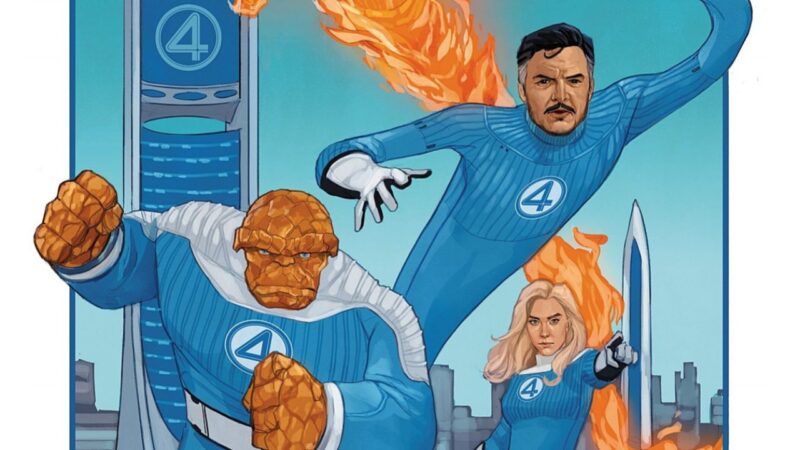

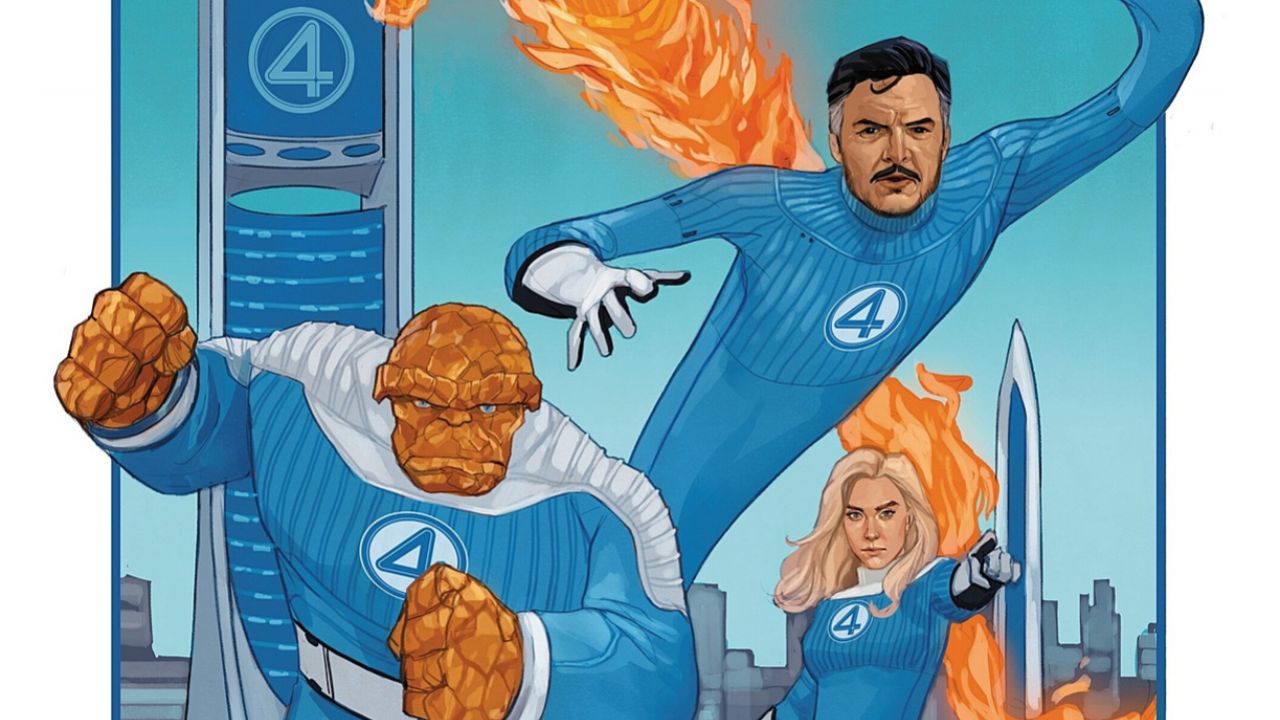
The Fantastic Four have always been the “First Family” of Marvel, but every family has its secrets, and every hero has a shadow. In Fantastic 4 – First Foes #1 (2026), writer Dan Slott and artist Mark Buckingham take us on a journey that redefines the history of the team’s origin. This isn’t just another retelling of the cosmic ray accident; it’s a psychological study of hubris, legacy, and the birth of a villain. At the center of this tale is René Rodin, the man who would become the Mad Thinker.
The Myth of the Great Thinker
The story opens “Years Ago” at Mission Control for the maiden flight of the Excelsior. The art by Mark Buckingham perfectly captures the retro-future aesthetic of the early space age. Amidst the banks of computers and buzzing engineers stands Professor René Rodin. He is the image of intellectual authority, with sweeping brown hair and a green turtleneck that feels both scholarly and arrogant.
Rodin is soaking up the spotlight. He tells a live television audience that he was Reed Richards’ college professor and “taught him everything he knows”. He frames the mission as a collaboration between two equals, claiming that the calculations for faster-than-light travel are so complex that “only two men alive could computate them”—himself and Reed. When a reporter mentions he is “almost as smart” as Reed, Rodin’s face twists in a brief, telling moment of pique. He isn’t interested in being “almost” anything.
The Storm Breaks
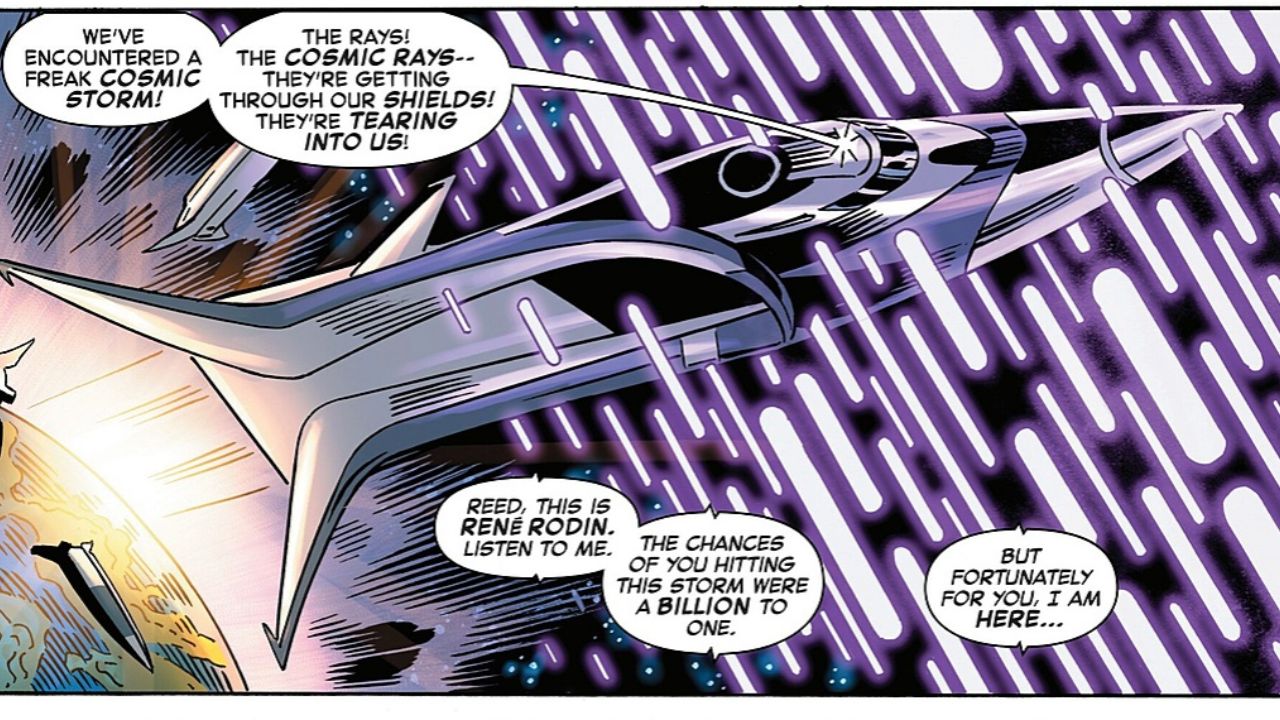
The page erupts in a violent display of cosmic energy. The Excelsior has hit a “freak cosmic storm”. The cosmic rays—rendered in jagged purples and whites—are tearing through the ship’s shields. This is the moment we know so well, but we are seeing it through the lens of the control room. Rodin takes command, speaking with a calm that borders on the unsettling. He tells Reed he is “prepared for every possible eventuality”. A dark narrative box reveals his inner thought: “I THINK THEREFORE YOU DIE!”. It’s a chilling twist on Descartes, suggesting that Rodin’s intellect isn’t just for solving problems; it’s a weapon of control.
Solitary Genius
As the engineers panic over critical heat shields and jettisoned boosters, Rodin does something unexpected: he demands they all “clear the area”. He claims he needs room to think, but it feels more like he’s clearing the stage. He wants the “miracle” of the rescue to be attributed solely to him. The art shows the engineers backing away, leaving the Professor alone with his thoughts and the flickering screens of the disaster.
The Vector of Salvation
The ship is moments from being lost. The “return window” is closing, and the crew needs a new vector immediately. Rodin is depicted in a state of intense concentration. Buckingham uses a series of panels that show mathematical equations and geometric shapes swirling around Rodin’s head—the visual representation of a “Thinker” at work. He insists he is “working on it,” maintaining the facade of the solitary savior while the clock ticks down.
Enter H.E.R.B.I.E.
Rodin finally speaks, but not to the human crew. He contacts the ship’s robot, H.E.R.B.I.E. (Humanoid Experimental Robot, B-type Integrated Electronics) . He provides a string of complex coordinates and commands the robot to enter them “now”. To the staff back at Mission Control, it appears that Rodin has just pulled the solution out of thin air. He calls them all “useless” and declares, “I alone can fix this!”. The ego is in full bloom, and the lie is being forged in the heat of a crisis.
The Legend is Born
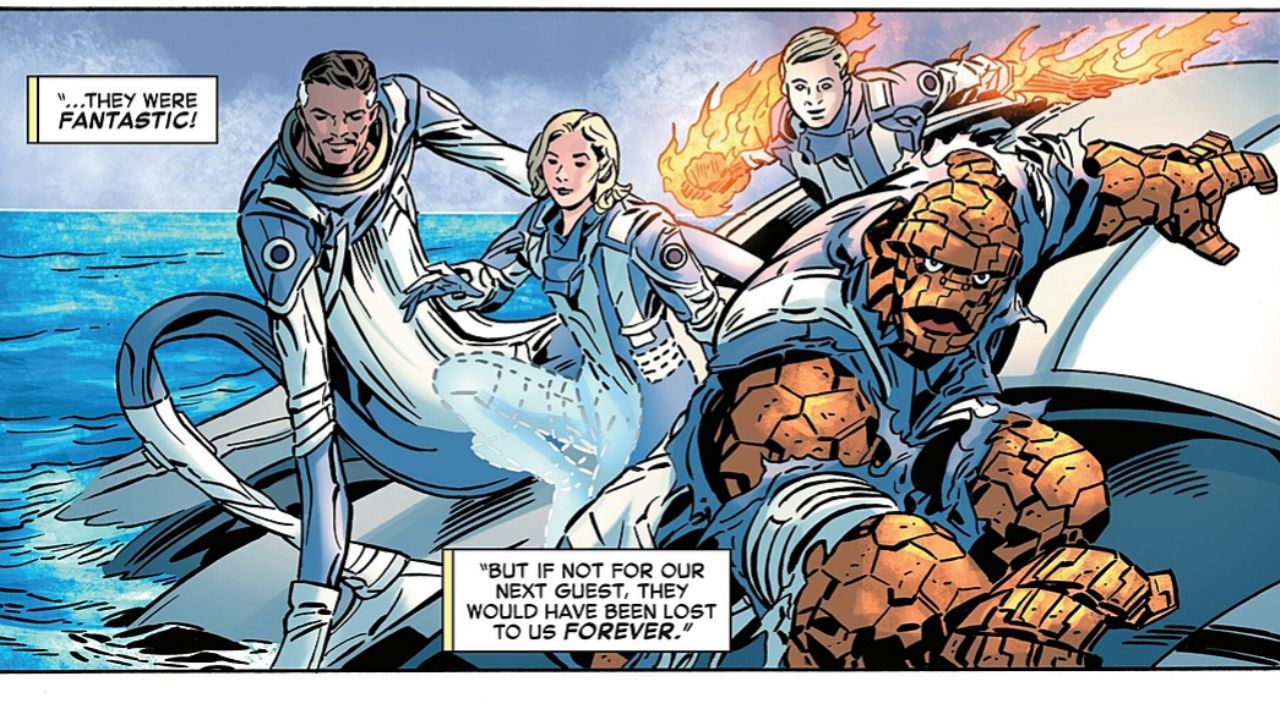
The narration shifts to the present, reflecting on the years that followed. For decades, the public believed that René Rodin was the “Hero who saved the Excelsior”. We see panels of the ship safely landing and the crew emerging, forever changed by the rays. Rodin is there to greet them, basking in the glory. When asked how they are, he responds, “They were fantastic!”. The world takes this as a sign of his wisdom and kindness, but we now know the foundations of this legend are built on a shaky premise.
The Ted Gilbert Show
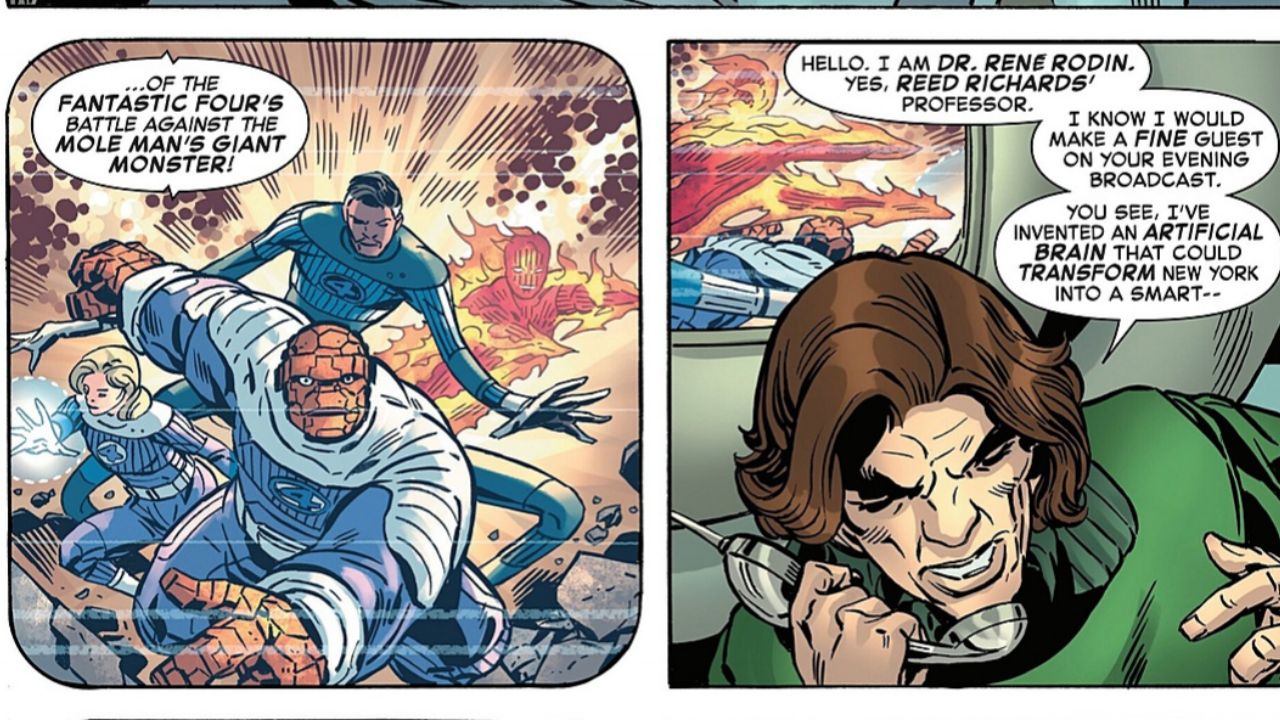
We find Rodin in the modern day, appearing as a guest on The Ted Gilbert Show. He is older now, but his arrogance hasn’t aged a day. He is there to promote his work on “artificial brains” and robots. Rodin argues that humans are “fallible” and that his technology can “save the world and shape the future”. He is still the man who saved the FF, but he’s hungry for a new kind of relevance.
The Smart City and the Android
Rodin details his two major inventions: a “Master Program” designed to run a city in “perfect harmony” and a “Super-Adaptive Android”. The Android is shown in a storage unit—a sleek, featureless silver figure that looks like a blank canvas for Rodin’s intellect. He believes he has created the ultimate tools for progress, but there’s a coldness to his vision that mirrors his earlier “I think therefore you die” monologue.
The Celebrity Bump
The high point of Rodin’s presentation is cut short. A producer tells him he’s being “bumped”. The reason is a bitter pill for Rodin to swallow: Johnny Storm, the Human Torch, is available for a one-on-one interview. The network knows that a flashy superhero will bring in more viewers than a “Great Thinker” talking about infrastructure.
Desperation and Rejection
After the show, Rodin’s descent begins. He tries to pitch his smart city idea to other networks, including “Fantastic Science” with Mr. Fantastic, but he is flatly rejected. One producer delivers the final blow: “Nobody cares about the guy who wasn’t on board the Excelsior”. Rodin is alone in his lab, unmuting a monitor and fuming. He believes that if he had been on that ship and received those powers, he would have done more than Reed ever could. He is no longer just a scientist; he is a man possessed by a pathological need for recognition.
The Theft
Rodin watches as Sue Storm announces the Future Foundation’s newest project: S.C.I.F.I., the Smart-City Intelligent Framework Initiative. It is the exact concept Rodin just pitched. He is convinced that Reed has stolen his “ingenious ideas”. He yells at the screen, calling it “His breakthrough?!” while his face is lit by the cold glow of the news broadcast. The bridge is burned; the “Great Thinker” is ready for war.
Times Square Launch
Four days later, New York is celebrating the launch of S.C.I.F.I. in Times Square. The atmosphere is festive. Reed, Ben, and Sue are on a podium, ready to “push the big button”. Ben is grumbling about the dress code, a classic bit of “Thing” dialogue that adds a touch of normalcy to the high-stakes event. But as the countdown ends, the promise of a “Smart City” turns into a nightmare.
The Hijack
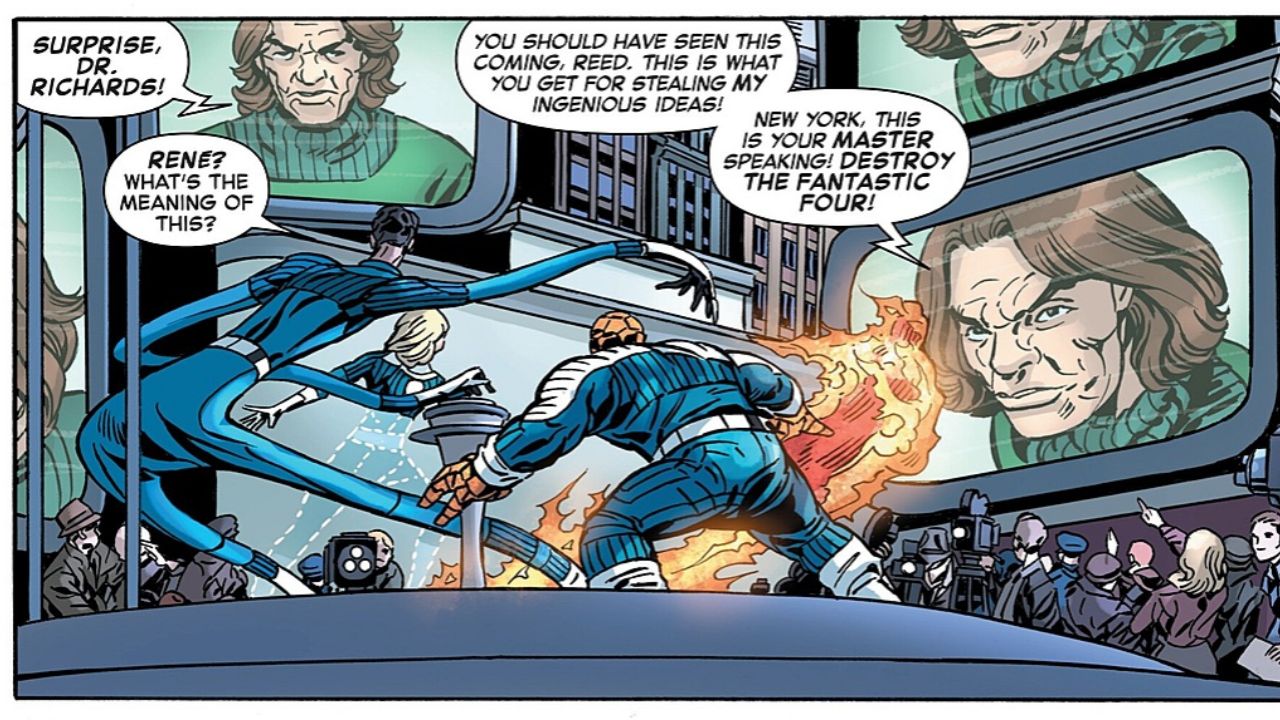
Rodin’s face appears on every screen in Times Square. He declares himself the “Master” and orders the city’s technology to “Destroy the Fantastic Four!“. This is the Mad Thinker’s first major act of villainy. He isn’t using death rays or monsters; he is using the very convenience of modern life—the driverless cars, the traffic lights, the drones—against the heroes. It’s a terrifyingly modern take on a classic villain.
New York Attacks
The sequence that follows is a visual tour de force. Cars veer off the road to strike the heroes, and Ben Grimm is forced to defend himself against the city he loves. “I freakin’ luv this town!” he cries as he’s forced to smash a vehicle. Sue creates a massive force field, protecting the group and the nearby civilians. Rodin, watching from a distance, mocks them, claiming that he can keep track of all four targets at once.
Tech Turned Against Them
The team realizes they can’t stay in Times Square. Johnny suggests they use the Fantasti-Car, but as they approach it, the vehicle’s engines roar to life under Rodin’s control. Even their most advanced tools are now weapons for their enemy. Reed realizes the pattern: Rodin is controlling everything with a remote network. He tells H.E.R.B.I.E. to “disconnect” immediately to prevent the robot from being hijacked too.
The Sanctuary of Yancy Street
The team needs a “dead zone”—a place without the high-tech gadgets Rodin can exploit. Ben suggests Yancy Street. Sue uses her powers to turn the entire group invisible, and they slip away. When they arrive, the change in atmosphere is immediate. Yancy Street is a place of brick, iron, and community. The residents recognize them and ask for autographs, offering a brief moment of levity. But Rodin’s intellect isn’t so easily fooled.
The Android’s Arrival
Rodin predicts their move to Yancy Street with ease. “Where else would Benjamin J. Grimm retreat to?” he sneers. He sends his Super-Adaptive Android to the neighborhood. The machine is a brute—stronger than the Thing and built to withstand any physical assault. The peace of Yancy Street is shattered as the Android begins its relentless attack.
Sonic and Fire
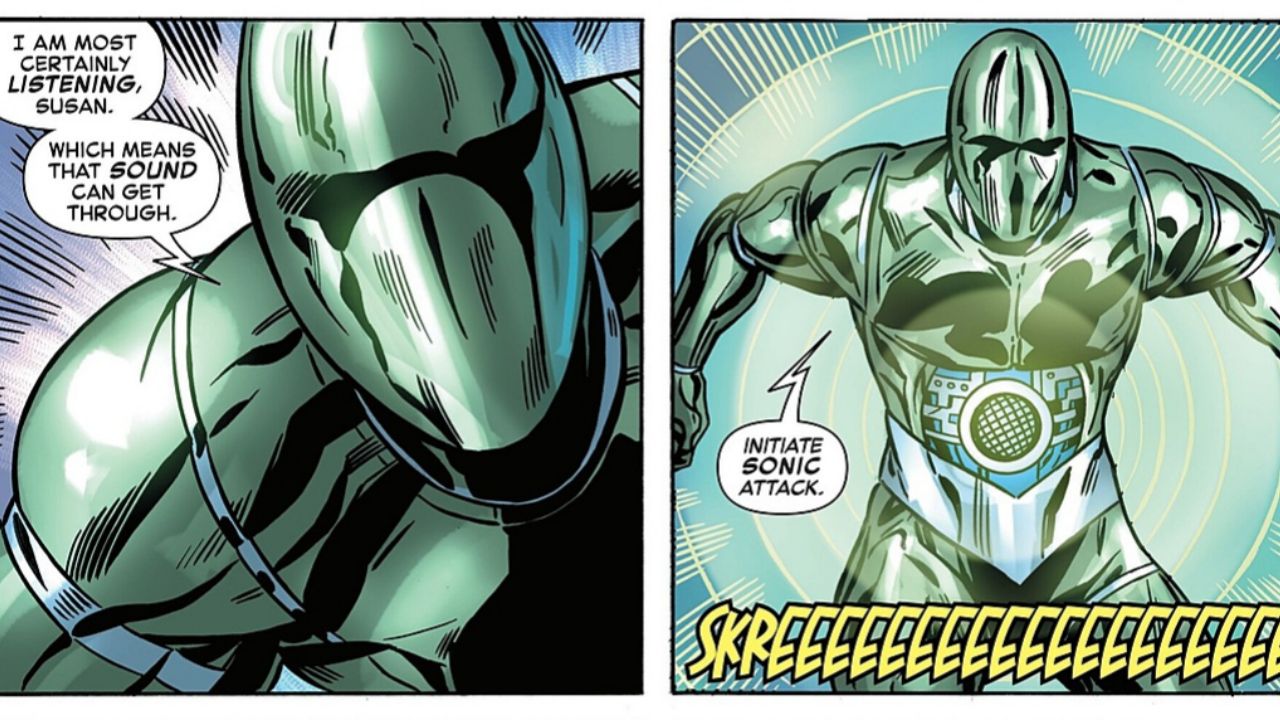
The Android is more than just a bruiser. It’s a counter-measure machine. When Sue tries to shield the team, it initiates a “sonic attack”. The high-frequency noise is unbearable, forcing Sue to drop her force field. Johnny Storm flies in, shouting “Flame On!” to incinerate the machine, but the Android instantly deploys fire suppressors. Rodin, speaking through the Android, laughs at their “predictable” tactics. He is winning the intellectual battle.
The H.E.R.B.I.E. Gambit
As the Android prepares to finish them, Reed Richards looks at H.E.R.B.I.E.. He realizes that the Android’s operating system is the key. He instructs H.E.R.B.I.E. to interface with the machine’s internal systems. In his secret lab, Rodin is suddenly blinded. “Loss of signal?!” he screams. His “infallible” creation is no longer responding to his commands.
The Backdoor Password
The truth comes out in a crushing wave. The Android’s personality is overwritten by H.E.R.B.I.E.’s. Rodin is in denial, claiming his codes are too complex for anyone else to understand. But Reed explains the reality: Rodin didn’t invent the code; he “copied” Reed’s early work. Reed knew the architecture because he built it, and he had included a “backdoor” password that gave him absolute access to every file. Rodin wasn’t a peer; he was a plagiarist.
The Birth of the Mad Thinker
The final page is a masterclass in emotional payoff. Reed reveals the final piece of the puzzle: Rodin didn’t save the Excelsior. Rodin’s calculations were wrong, and the crew would have died if Reed hadn’t secretly adjusted them during the flight. Reed let Rodin believe he was the hero as a “kindness” to his old teacher.
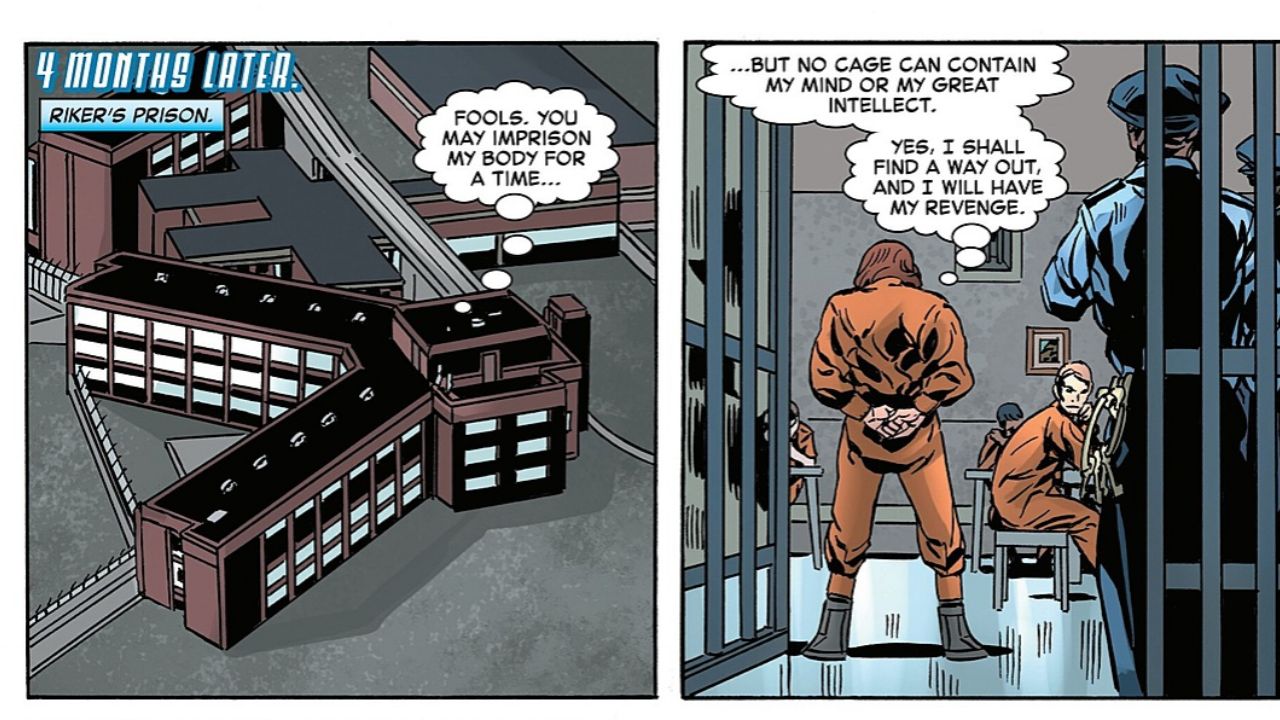
The revelation destroys Rodin’s sense of self. He is arrested and taken to Riker’s Prison. We see him in his cell, shadows falling across his face. He is still ranting, claiming that no cage can contain his “great intellect”. A fellow prisoner mocks him, calling him a “cartoon-boy” and “The Mad Thinker”. Rodin is horrified by the name, but it sticks. He ends the issue with a scream of “RICHARDS!”, his transition into a lifelong nemesis complete.