
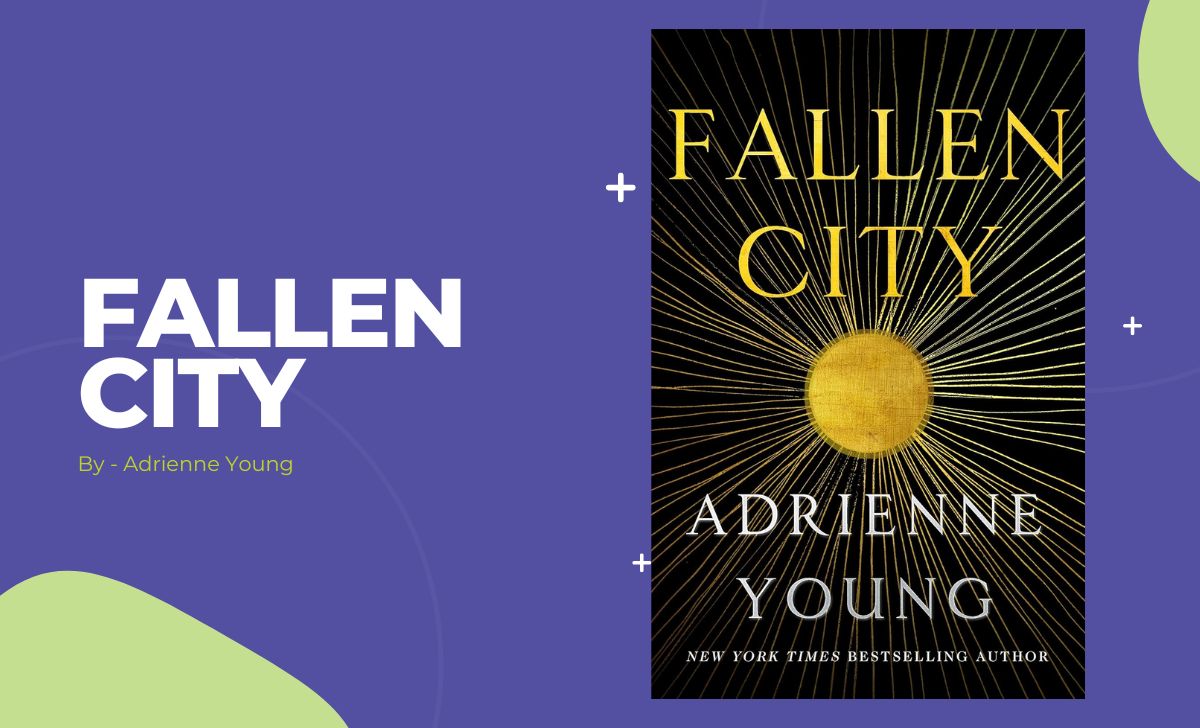
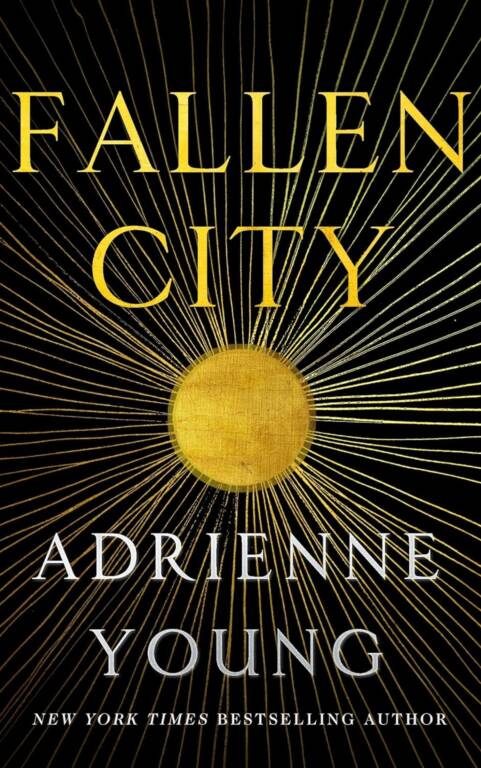
Adrienne Young’s Fallen City is a novel that wears its ambitions openly: it wants to be a political epic, a tragic love story, and a meditation on faith and power. The book marks Young’s confident move into adult fantasy, and it doesn’t shy away from weighty themes. Built around a war-torn metropolis, the story unfolds in a setting where faith is law, loyalty is currency, and rebellion simmers beneath the marble streets.
At its core, Fallen City is about the collision between duty and desire — how two people, bound by the expectations of their world, risk everything to redefine what loyalty means. The book has already attracted attention for its mature storytelling, its dense worldbuilding, and its lyrical yet disciplined prose.
Plot Summary: The Crumbling Walls of Isara
The story takes place in Isara, a once-glorious walled city now eroding under its own corruption and the unrest of its people. The ruling body, the Forum, clings to control through ancient laws and alliances with the temples that guard the favor of the gods. Beneath that shining order, however, lies a growing resistance — citizens who question the cost of peace that demands blind obedience.
In this setting, we meet Luca Matias, a decorated legionnaire born into a family of soldiers, and Maris Casperia, daughter of a high-ranking magistrate and ward of the Citadel. Both have been shaped by their duty: Luca by the weight of military tradition, Maris by the moral rigidity of her upbringing. When their paths cross, their connection is immediate but fraught.
Their forbidden relationship becomes the spark that exposes the fault lines of Isara’s society. As uprisings grow and the gods themselves seem to stir, the lovers must decide where their loyalties truly lie — to the city that made them or to each other. What begins as a love story becomes a question of survival, both personal and spiritual, as the city hurtles toward collapse.
Characters and Relationships
Young’s character work is one of the book’s strongest assets. Luca is more than the archetypal soldier; he is introspective, haunted by the dissonance between honor and conscience. Maris is his mirror — intelligent, fiercely loyal, but aware of the quiet injustices around her. Her perspective offers a nuanced look at privilege and rebellion, showing that defiance can come in many forms, not all of them loud.
Their relationship unfolds with a believable rhythm — neither instant nor excessively drawn out. There’s tenderness, tension, and the ache of choices that can never be undone. The romance fuels the book’s emotional core but never overwhelms its political and philosophical questions.
The secondary cast adds richness to the story: priests who guard forbidden relics, magistrates who barter loyalty for power, and legionnaires torn between discipline and disillusionment. Each minor character reinforces the central theme — that power, once earned, must always be paid for.
Worldbuilding and Atmosphere
The city of Isara feels alive — and doomed. Young’s writing captures its contradictions: the opulence of its temples, the shadowed alleyways where dissent brews, the silent statues of forgotten gods. The rituals, the architecture, and even the scent of incense-laden air create a living atmosphere that readers can almost breathe.
The tone is ceremonial yet human. This is not a world of endless magic, but of consequence — where every act of faith has a political echo, and every rebellion risks divine wrath. It’s a city that remembers too much of its own history and is punished for it.
Readers who enjoy immersive settings will find much to admire here. The worldbuilding never feels like background decoration; it informs every decision, every betrayal, and every act of love.
Themes: Power, Faith, and the Price of Freedom
At its heart, Fallen City is about the cost of loyalty — what people owe to their heritage, to their gods, and to themselves. The book examines how systems of power sustain themselves by intertwining faith and fear.
Luca’s struggle represents duty at war with morality. Maris embodies the courage to question inherited truths. Together, they stand at the center of a moral storm, one that asks readers to consider how far devotion can go before it becomes destruction.
The novel also delves into legacy and sacrifice. Isara’s leaders justify every cruelty as protection, and its citizens accept every injustice as tradition. Through these conflicts, Young explores how faith can inspire both grace and tyranny.
These ideas resonate beyond the fantasy setting, echoing real-world themes of governance, religion, and revolution — all without ever breaking the illusion of the story.
Strengths: Emotion and Craft
What sets Fallen City apart is its emotional precision. Young’s prose balances tenderness and tension, capturing both the intimacy of whispered vows and the grandeur of crumbling empires. She writes grief and devotion with equal conviction.
The pacing of emotional beats — particularly the lovers’ private moments amid public chaos — keeps the story grounded. Each choice they make feels consequential, never melodramatic.
The lyrical style of the writing enhances the sense of myth without losing clarity. Young paints scenes in cinematic detail — from the flicker of torches on marble to the sound of marching boots echoing through corridors of power. Readers who appreciate richly textured language will find themselves lingering over sentences.
Weaknesses: A Question of Pace
Some readers may find the novel’s pacing uneven. The first half, especially, takes time to establish the political and spiritual context of Isara. Those expecting quick action or high fantasy spectacle may feel impatient during the quieter, more reflective passages.
Yet, for readers who value atmosphere and gradual buildup, that same pacing becomes a strength — it allows the tension to ferment naturally. The world feels ancient, heavy with ritual, and the prose mirrors that weight.
Another potential drawback is the familiarity of certain romantic tropes: star-crossed lovers, forbidden alliances, tragic inevitability. However, Young handles these tropes with sincerity rather than irony, giving them renewed emotional weight.
Verdict: Who Should Read It
Fallen City is not a story for readers seeking quick gratification. It asks for patience and offers reward in return. Those who enjoy stories like The Song of Achilles or The City of Stairs — where love and politics intertwine — will likely find much to admire here.
The book’s mature tone and thematic ambition show Adrienne Young’s evolution as a writer. While her earlier works were firmly rooted in young adult fantasy, Fallen City is richer, darker, and more meditative. It feels like the work of an author unafraid to slow down and let silence speak.
In the end, the novel lingers not because of its battles or its gods, but because of its human truth: that devotion — whether to a person, a city, or an ideal — is always a form of surrender.
Final Thoughts
Adrienne Young’s Fallen City succeeds in being both intimate and monumental. It’s a novel about walls — those built from stone, and those built inside the heart. The story’s power lies not only in what happens, but in how it makes you feel: that sense of standing at the edge of something sacred and broken, knowing you can’t turn away.
For readers ready to lose themselves in a world of beauty and ruin, Fallen City is well worth the descent.