
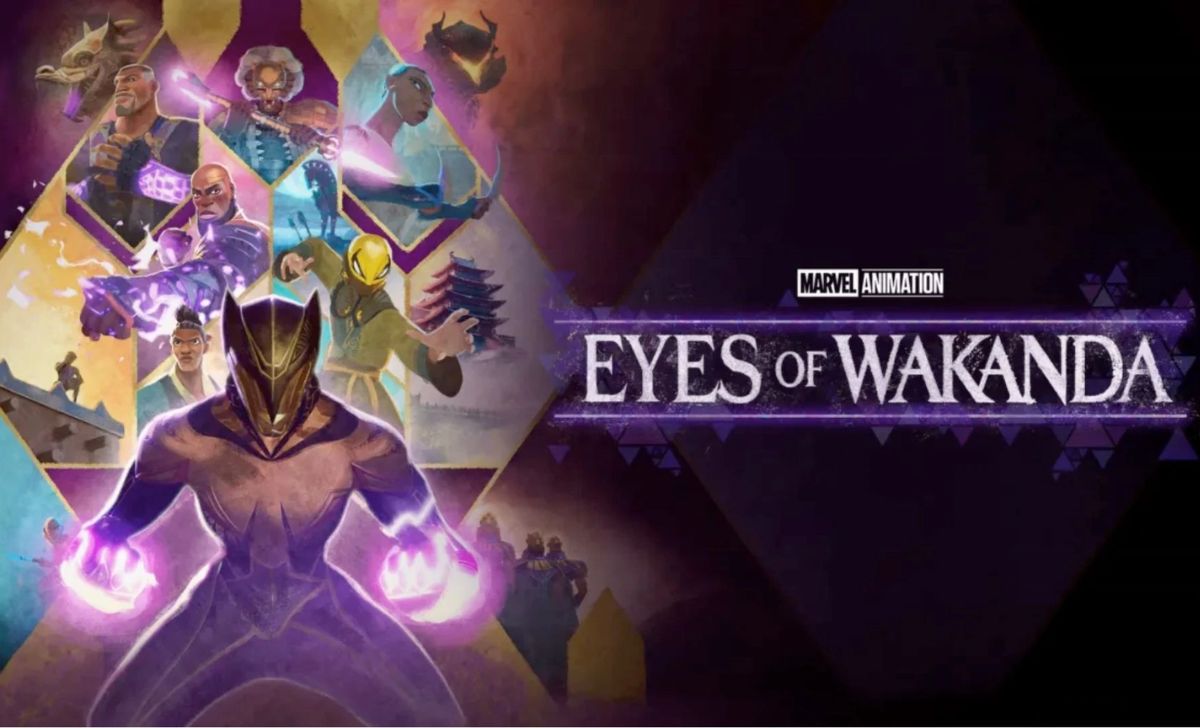
Marvel Studios Animation has added another visually striking title to its Disney+ roster with “Eyes of Wakanda” — a four-episode anthology series that takes viewers beyond the royal courts of Black Panther’s kingdom and deep into the hidden legacy of Wakanda’s secret spies, the Hatut Zeraze, also known as The War Dogs.
Though brief in its first season, Eyes of Wakanda offers an exciting glimpse into the untold missions that shaped Wakanda’s hidden influence across global history, bringing rich visuals, inventive action, and compelling new characters to the Marvel Cinematic Universe (MCU).
Wakanda’s Covert Guardians: Who Are the Hatut Zeraze?
The series revolves around the Hatut Zeraze, Wakanda’s elite secret agents, tasked with a critical mission — recovering stolen Vibranium artifacts scattered across the globe. Unlike the royal family or the Dora Milaje, these operatives blend into the outside world, keeping Wakanda’s secrets safe by operating in the shadows.
Each episode jumps across timelines and continents, from ancient wars to more recent historical conflicts, all while highlighting how Wakanda has silently intervened to protect its most powerful resource.
A Timeline-Spanning Anthology of Four Missions
The show’s strength lies in its anthology format. Each episode is a standalone story set in a different era, ranging from the Bronze Age and Trojan War, to 15th-century Ming Dynasty China, and finally the First Italo-Ethiopian War in the 19th century.
Let’s break down what each episode brings:

Episode 1: “Into the Lion’s Den”
The opener introduces Noni (voiced by Winnie Harlow), a former Dora Milaje candidate seeking redemption. Tasked with hunting down Nakati (Cress Williams), a traitorous former Captain of the King’s Guard turned warlord, Noni’s mission is to retrieve stolen Vibranium weapons. Her journey is a gripping blend of high-stakes espionage and emotional resilience, and it firmly establishes the series’ tone.
Episode 2: “Legends and Lies”
This chapter centers on B’Kai (Larry Herron), a dedicated War Dog who’s been undercover for nearly a decade and becomes entangled in Greece’s legendary Trojan War. While visually captivating, the episode falters slightly due to its predictable storyline and uneven tonal shifts between humor and drama.
Episode 3: “Lost and Found”
In one of the more lively entries, Agent Basha (Jacques Colimon) flees Ming-era China with a Vibranium-infused dragon statue. The episode combines wit, charm, and urgency, offering levity amidst the series’ usually serious tone. Basha’s quick thinking and clever maneuvering injects a refreshing personality that echoes the humor of Black Panther films.
Episode 4: “The Last Panther”
The finale explores legacy and mentorship. Kuda (Steve Toussaint), a seasoned Hatut Zeraze agent, trains Prince Tafari (Zeke Alton), a royal with ambitions that threaten their mission. While it provides a satisfying emotional arc, the episode leans into the MCU’s larger narrative connections, slightly undercutting its standalone strength.
A Feast for the Eyes: Rich Animation and Visual Design
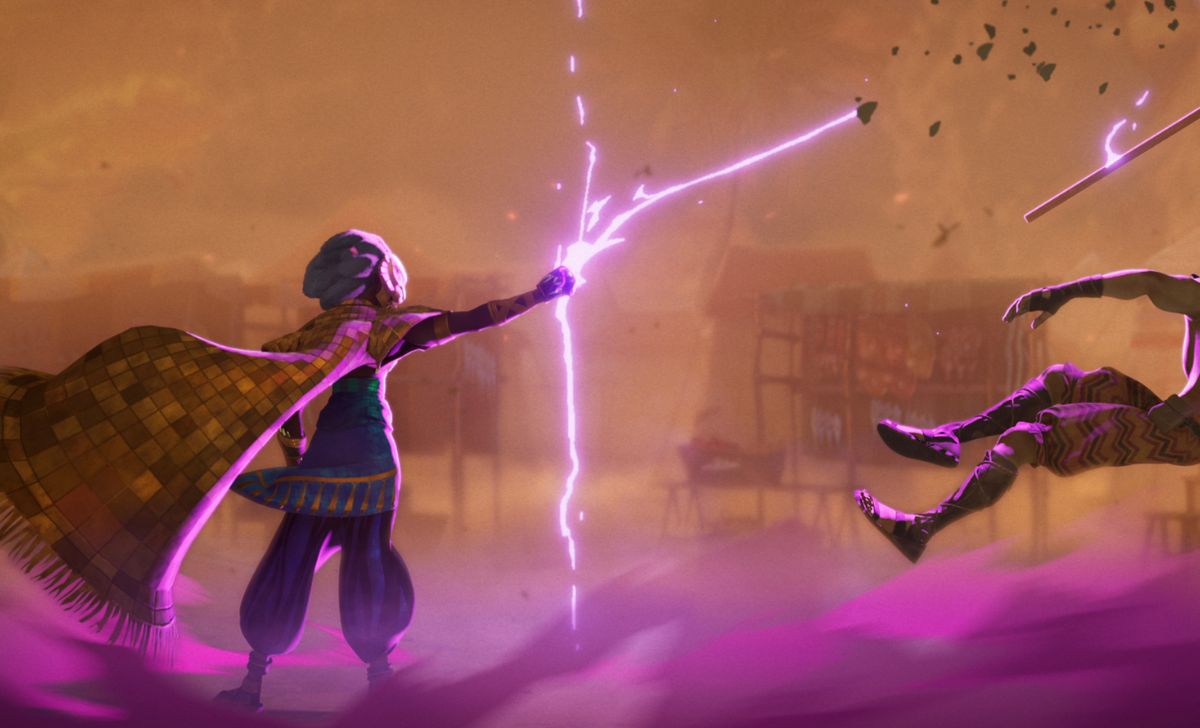
Where Eyes of Wakanda excels without reservation is in its animation and art direction. The series blends 2D and CG styles with impeccable flair. With Craig Elliott (The Princess and the Frog) and August Hall (The Boxtrolls) steering the production design and art direction, every frame feels meticulously crafted.
The title sequence by Studio AKA, rendered in sepia-toned elegance, is itself a standout moment. Axis Animation delivers breathtaking work throughout the series, immersing viewers in detailed environments — from ancient battlefields to futuristic Wakandan landscapes. Every episode’s setting bursts with color and authenticity, echoing Afrofuturist aesthetics and honoring historical cultures.
Strong Start, Uneven Middle, Compelling End
While the show is undeniably beautiful, it stumbles narratively in its midsections. Episodes two and three, though intriguing in concept, don’t match the narrative depth or originality of the first and final episodes. In particular, the middle episodes suffer from predictable plotting and tonal inconsistency, especially when juggling humor with heavier themes.
However, the premiere and finale stand out for their deeper emotional stakes, character arcs, and richer connection to Wakandan lore.
Standalone Yet Connected to the MCU
One of the show’s strengths is its ability to exist independently of the wider MCU. Each episode is self-contained, providing closure and clarity without requiring background knowledge from the Black Panther movies. That said, the finale does make an effort — perhaps unnecessarily — to link the series back into Marvel’s larger narrative, slightly undercutting its uniqueness.
Still, fans of the Black Panther films will find Easter eggs, thematic resonance, and deeper insight into Wakanda’s off-screen activities.
Themes of Legacy, Secrecy, and Cultural Power
Beyond action and aesthetics, Eyes of Wakanda subtly tackles deeper themes: colonialism, racism, repatriation, and the responsibility that comes with cultural power. Without becoming overt or didactic, the show raises questions about what it means to protect heritage in a world that seeks to exploit it — a timely message wrapped in myth and spectacle.
Final Verdict: A Visually Rich, Promising Start
Eyes of Wakanda is a visually spectacular and ambitiously designed series that expands the Marvel Animation universe in bold new directions. While its four-episode length feels limiting and its narrative uneven at times, the series succeeds in giving viewers a fresh look at Wakanda — one that doesn’t rely on T’Challa or Shuri to be compelling.
For fans of animation, Afrofuturism, and untold Marvel stories, this anthology is absolutely worth watching. Hopefully, future seasons will allow the creative team more space to explore the full potential of Wakanda’s mysterious protectors.
Streaming now on Disney+.