

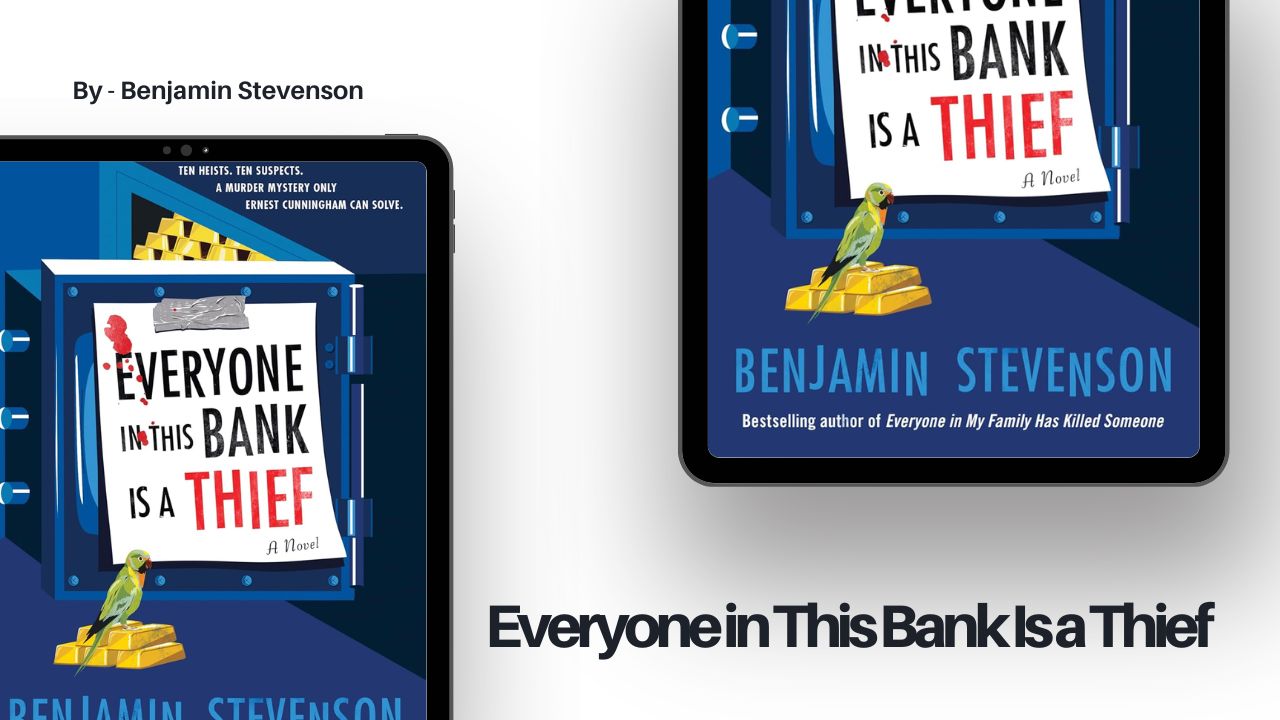
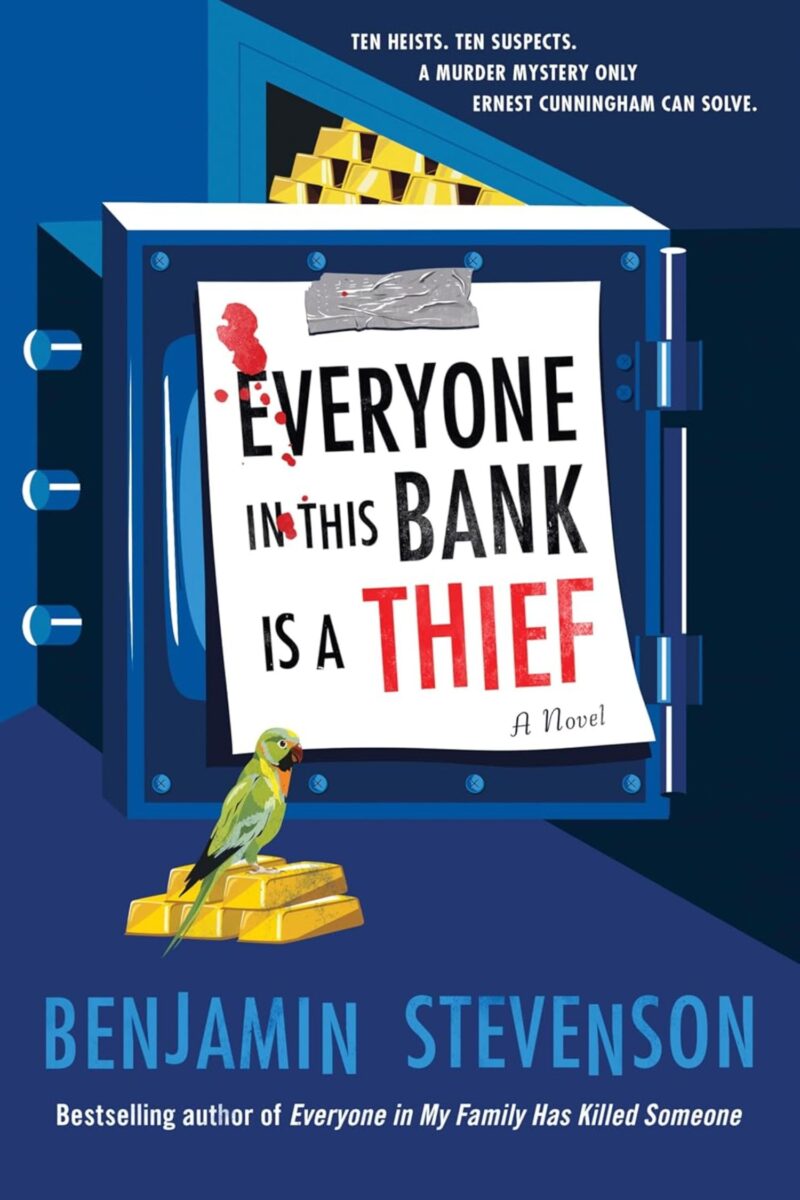
Benjamin Stevenson returns with another intricately layered mystery in Everyone in This Bank Is a Thief, the fourth installment in the Ernest Cunningham series. Known for blending classic whodunit structures with a modern, self-aware voice, Stevenson once again leans into chaos, humor, and puzzle-solving—only this time, he locks everything inside a bank vault. What follows is not just a mystery, but a game—one that dares the reader to keep up.
Plot Overview: A Heist That Turns Into Something Far Deadlier
At its core, the novel begins with a deceptively simple setup: Ernest Cunningham and his fiancée Juliette walk into a small-town bank hoping to secure a loan for their future detective agency. Instead, they walk into a nightmare.
A robbery unfolds. The doors are sealed. No one gets in. No one gets out. And then someone dies.
Suddenly, the bank transforms into a classic locked-room mystery where every hostage is also a suspect. The twist? Nearly everyone inside has their own reason for being there—and many of them are planning crimes of their own.
This isn’t just a single heist gone wrong. It’s multiple schemes colliding at once, creating a layered narrative where theft isn’t limited to money—secrets, identities, and motives are all up for grabs.
A Narrative That Knows It’s a Mystery
One of the defining traits of Stevenson’s writing is his self-aware narration, and this book leans heavily into that strength.
Ernest Cunningham doesn’t just solve mysteries—he explains them, dissects them, and occasionally breaks the fourth wall to guide readers through the logic. This “fair-play” style ensures that every clue is placed in plain sight, even if it doesn’t feel obvious at the time.
The result is a reading experience that feels interactive. You’re not just following the story—you’re actively trying to solve it alongside the narrator.
At times, this approach adds a playful charm. At others, it becomes deliberately overwhelming, as red herrings stack on top of clues, forcing the reader to question everything.
Characters: A Room Full of Suspects, None Innocent
The novel thrives on its ensemble cast. Inside the bank, we meet a diverse group: a manager, a security guard, a priest, a film producer, and more—each carrying secrets that slowly unravel.
What makes this cast compelling is the central idea that everyone is guilty of something. The title is not metaphorical—it’s literal.
Each character contributes to the mystery, not just as a suspect but as a narrative thread. Their motivations intersect in unpredictable ways, creating a web of deception that keeps shifting as the story progresses.
However, this complexity comes with a trade-off. With so many moving parts, the story can occasionally feel crowded, making it challenging to keep track of who’s who and what they’re hiding.
Ernest Cunningham: A Detective Unlike the Usual Kind
Ernest remains one of the most distinctive elements of the series. He’s not a traditional detective—he’s a writer, a reluctant investigator, and at times, an unreliable narrator.
In this installment, he finds himself literally running out of time, trapped in a life-threatening situation while attempting to piece together the truth.
What makes him compelling is his blend of intelligence and recklessness. He is observant and methodical, yet prone to questionable decisions that put him in deeper danger. This duality adds tension to the narrative—he may be the best chance at solving the mystery, but he’s also part of the chaos.
Pacing and Structure: Fast, Frenzied, and Full of Twists
This is not a slow-burn mystery. The pacing is sharp, often relentless, with new revelations appearing just as quickly as the previous ones settle.
The structure mirrors the complexity of the plot:
- Multiple timelines and perspectives
- Interwoven heists and motives
- Constant shifts between clue and misdirection
Readers are bombarded with information, and nearly every detail matters. As one review aptly notes, “every detail serves a purpose” in this tightly constructed narrative.
Yet, this density can also be a double-edged sword. For some, the abundance of twists may feel excessive, occasionally stretching believability.
Themes: More Than Just a Whodunit
While the novel operates as a mystery, it quietly explores deeper ideas:
1. The Nature of Guilt
The story challenges the binary of innocence and guilt. Everyone is a thief in some form—morally, emotionally, or literally.
2. Truth vs. Performance
Characters aren’t just hiding secrets—they’re performing roles. The bank becomes a stage where identities blur and intentions shift.
3. Control vs. Chaos
Despite Ernest’s attempt to impose logic on the situation, the narrative constantly reminds us that real-life mysteries are messy, unpredictable, and often absurd.
What Works Brilliantly
- Ingenious Plot Design: The layered heist-meets-murder structure feels fresh and ambitious.
- Interactive Mystery: Readers are given all the clues, making the final reveal satisfying.
- Sharp Humor: The self-aware tone adds levity to an otherwise tense story.
- Unpredictable Twists: Even experienced mystery readers will struggle to guess the ending.
Where It Stumbles
- Overcomplication: With ten suspects and multiple schemes, the narrative can feel overwhelming.
- Suspension of Disbelief: Some plot elements lean toward the improbable.
- Character Overload: Not every character gets equal depth due to the crowded setup.
Final Verdict: A Puzzle Worth Getting Lost In
Everyone in This Bank Is a Thief is not a quiet mystery—it’s loud, chaotic, and unapologetically complex. It takes the familiar structure of a locked-room whodunit and injects it with the energy of a heist thriller and the wit of a self-aware narrator.
It may not be a perfect puzzle, but it’s an incredibly entertaining one.
For readers who enjoy unraveling intricate plots, chasing clues, and being pleasantly outsmarted, this novel delivers exactly what it promises: a mystery where everyone is guilty—and nothing is as simple as it seems.