
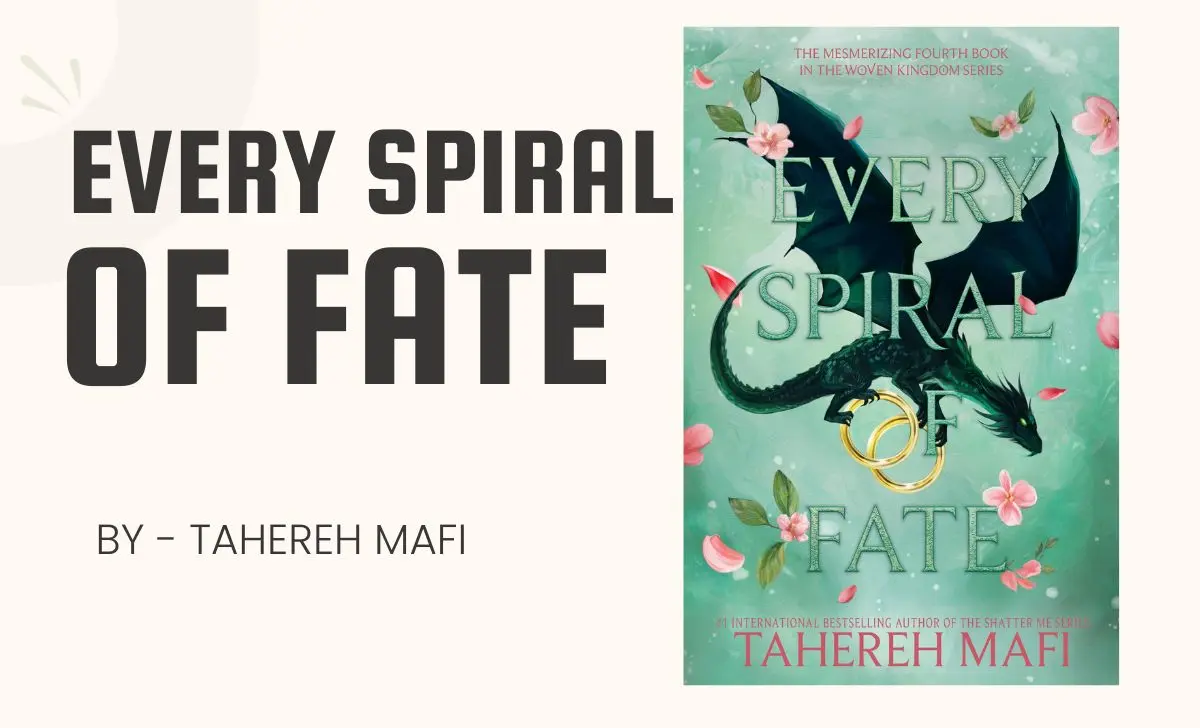
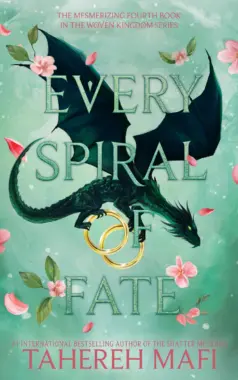
Tahereh Mafi’s Every Spiral of Fate arrives as the fourth installment in the This Woven Kingdom series, and it reads like a story deliberately balanced on an edge: equal parts love story, political tinderbox, and slow-building fantasy mystery. If you’ve followed the series so far, you’ll step back into the familiar whirl of lavish language, longing, and a cast of characters whose loyalties and motives are never quite what they seem. If you’re new to the series, this book will still reward readers who enjoy romantic fantasy where emotional stakes matter as much as battlefield ones.
Plot overview — what actually happens
At the heart of Every Spiral of Fate is a wedding that is equal parts celebration and death sentence: Alizeh, the Jinn queen, and Cyrus, ruler of Tulan, are bound by prophecy and oath in a marriage that carries the weight of their nations. The book revolves around that looming ceremony—built-up for multiple volumes—and the unraveling tensions that the wedding draws in its wake: rival princes, ancient spells, and the question of whether Alizeh can control the unique earth-tied magic she’s inheriting. As alliances fracture and enemies close in, the novel alternates between intimate, tender scenes and broader political set pieces that move the world toward a reckoning. The publisher’s descriptions and book listings highlight the wedding-day stakes and Alizeh’s race to master her magic.
Prose and voice: the good (and for some, the excess)
Mafi’s prose is one of the novel’s biggest draws. Her sentences often sing—ornate, lyrical, and saturated with feeling. For readers who love lush, romantic language, this is a book to savor: it heightens the emotions in small, private moments and makes yearning feel cinematic. That said, the style isn’t for everyone. Some readers admire the breathless, metaphoric voice; others find the same language indulgent to the point of slowing momentum. If you respond strongly to voice, that response will likely determine much of how enjoyable you find the book.
Character work: tenderness, torment, and uneven development
The chemistry between the leads—especially Cyrus’s longing and Alizeh’s conflicted duty—is central and frequently compelling. Mafi excels when she narrows the lens to two people in a room or a single charged conversation; those chapters hum. However, several readers and reviewers have noted an unevenness in the development of secondary arcs: supporting characters sometimes drift into group dialogue or broad exposition, and at moments important motives and world details feel hinted at rather than fully shown. For fans invested in the characters, the book delivers emotional payoffs; for others, it raises questions about whether some narrative threads were deferred for future volumes.
Pacing and plotting: swelling tension, occasional stalls
Structurally, the novel mixes deliberate slow-burn character beats with plot pushes—escapes, political maneuvering, and moments of real danger. That design pays off in the book’s second half, when the mounting pressures converge and scenes that once felt like breathing room snap into urgent consequence. Still, a faction of readers has expressed frustration with what they see as repetitious emotional cycles and moments where plot movement stalls under the weight of lyrical detours. So while the book often feels richly atmospheric, the pacing will test readers who prefer a consistently fast-moving plot.
Magic and world-building: evocative but occasionally vague
Mafi’s world has always mixed invented myth with political complexity, and this volume deepens that texture—especially around the nature of Alizeh’s power and the ancient rules that bind rulers and refugees alike. The writing conveys the wonder and danger of the magic system well, especially in sensory, elemental moments. Critics, however, argue that the rules and broader geopolitical motivations are still sometimes nebulous; the book leans more on mood and character reaction than explicit explanation. If you enjoy impressionistic world-building that leaves room to breathe (and to infer), you’ll enjoy it; if you prefer systematic, clearly defined magic, this might feel frustrating.
Emotional beats: romance as the engine
If there’s a single engine that drives the novel, it’s the romance—an ache so persistent it reframes scenes of governance, sacrifice, and violence. Fans of the series often praise Mafi for how she renders longing and the slow accrual of intimacy; the emotional gravity she gives to small, private vows is powerful. But some readers—especially long-time followers—have expressed impatience at long burns: the sense that key romantic moments are teased across books. That tug-of-war between satisfaction and deferred payoff will feel familiar to anyone who reads serial romantasy.
Who will love this book — and who might not
This is a book for readers who adore floral, poetic prose; romantic stakes that bleed into political ones; and characters who feel complicated and frequently broken. If you enjoyed prior volumes in the Woven Kingdom series, you’ll likely appreciate the continued emotional stakes here. If you prefer plot-first fantasy with tight mechanistic world-building, consider tempering expectations: the novel prizes mood and interpersonal stakes over exhaustive explanation.
Final verdict
Every Spiral of Fate is a polarizing, passionate addition to a series that wears its heart on its sleeve. It delivers luminous writing and high emotional stakes, but those strengths will either enchant or frustrate readers depending on how much patience they have for lyricism and slow-burn romance. For me, the book’s most successful achievement is the way private longing becomes political consequence—love isn’t merely personal here; it has the capacity to change kingdoms. Expect to be moved, occasionally exasperated, and compelled enough to turn the page.