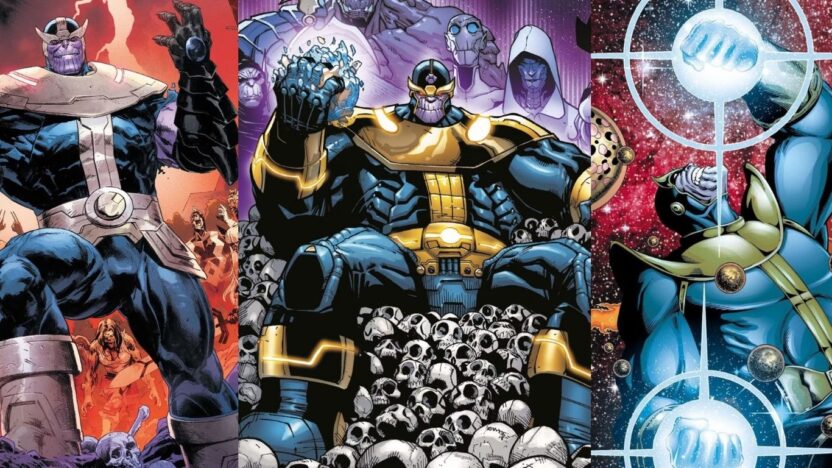
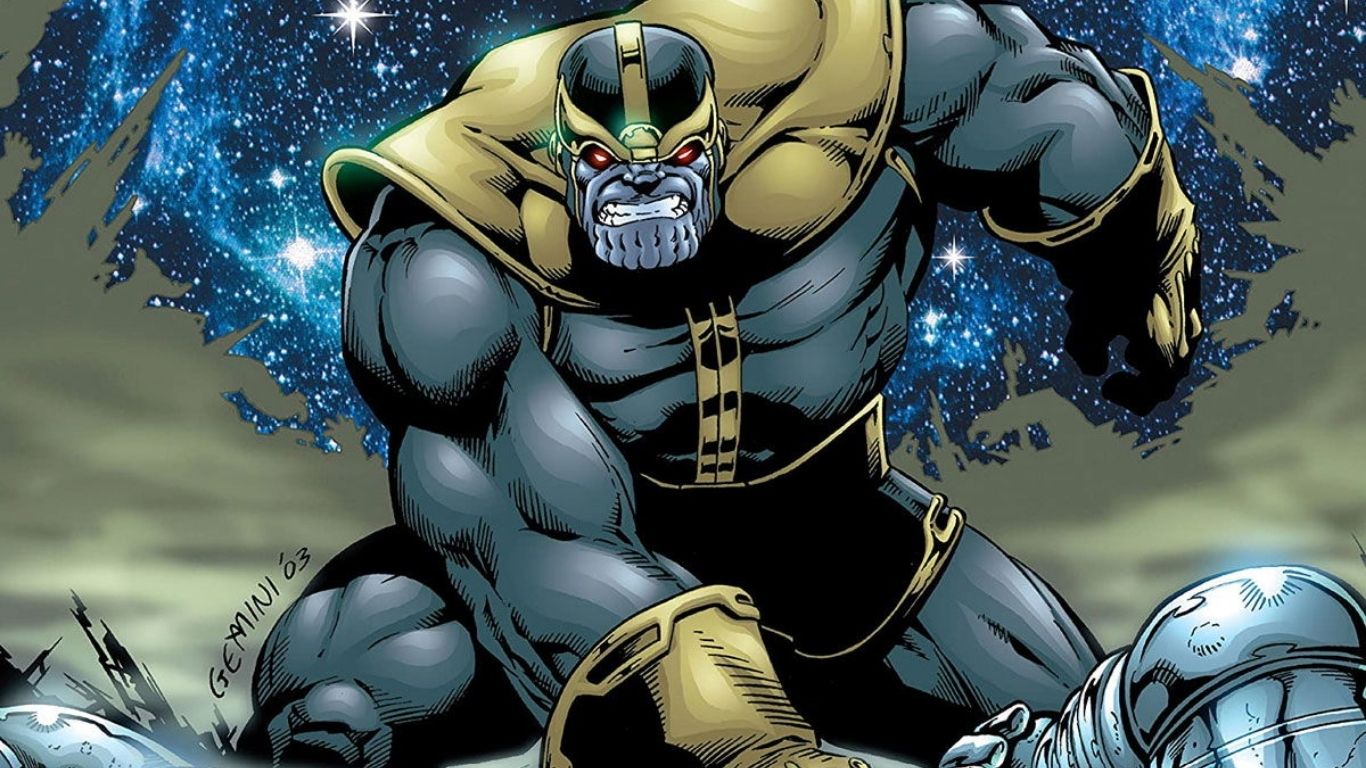
When fans talk about the greatest villains in Marvel history, Thanos is almost always one of the first names mentioned. His popularity skyrocketed after the MCU’s Infinity Saga, where he stood as a relentless, seemingly unstoppable force who actually succeeded—if only briefly—in wiping out half of all life in the universe. But long before the snap echoed through movie theaters, Thanos had already built a terrifying legacy in the comics as a villain who doesn’t just threaten victory—he achieves it.
This blog explores every major instance where Thanos truly won in Marvel Comics. These victories are not just about brute strength or cosmic weapons. They are philosophical, psychological, and deeply unsettling. More than almost any other villain, Thanos proves time and again that inevitability is not just a catchphrase—it is his defining trait.
What Makes Thanos Truly Dangerous
Before diving into his greatest victories, it’s essential to understand why Thanos is such a compelling and terrifying character. His danger does not lie solely in his immense physical power, although that alone places him among the strongest beings in existence. What truly sets him apart is his conviction.
Unlike villains driven purely by greed, domination, or chaos, Thanos genuinely believes his actions serve a higher purpose. Whether it’s balance, love, or cosmic necessity, he sees himself not as a monster but as a misunderstood savior. This twisted logic is what makes him frightening. At times, his reasoning is so disturbingly coherent that even readers momentarily question whether he might be right.
His motivations are also deeply personal. His obsession with Mistress Death is not just about power or conquest—it is emotional, psychological, and rooted in trauma. His relationships with characters like Gamora and Nebula reveal a warped blend of cruelty, affection, and ambition. In these dynamics, Thanos is not a distant cosmic god but a deeply flawed being grappling with loneliness, rejection, and purpose.
Paradoxically, this sliver of humanity makes him more dangerous. Thanos is relatable in his search for meaning, yet horrifying in the conclusions he draws. Combine that with his genius-level intellect, hyper-strategic thinking, and godlike strength, and you get a villain capable of outthinking, overpowering, and outlasting almost anyone who opposes him.
The Infinity Gauntlet: Victory Over Reality Itself
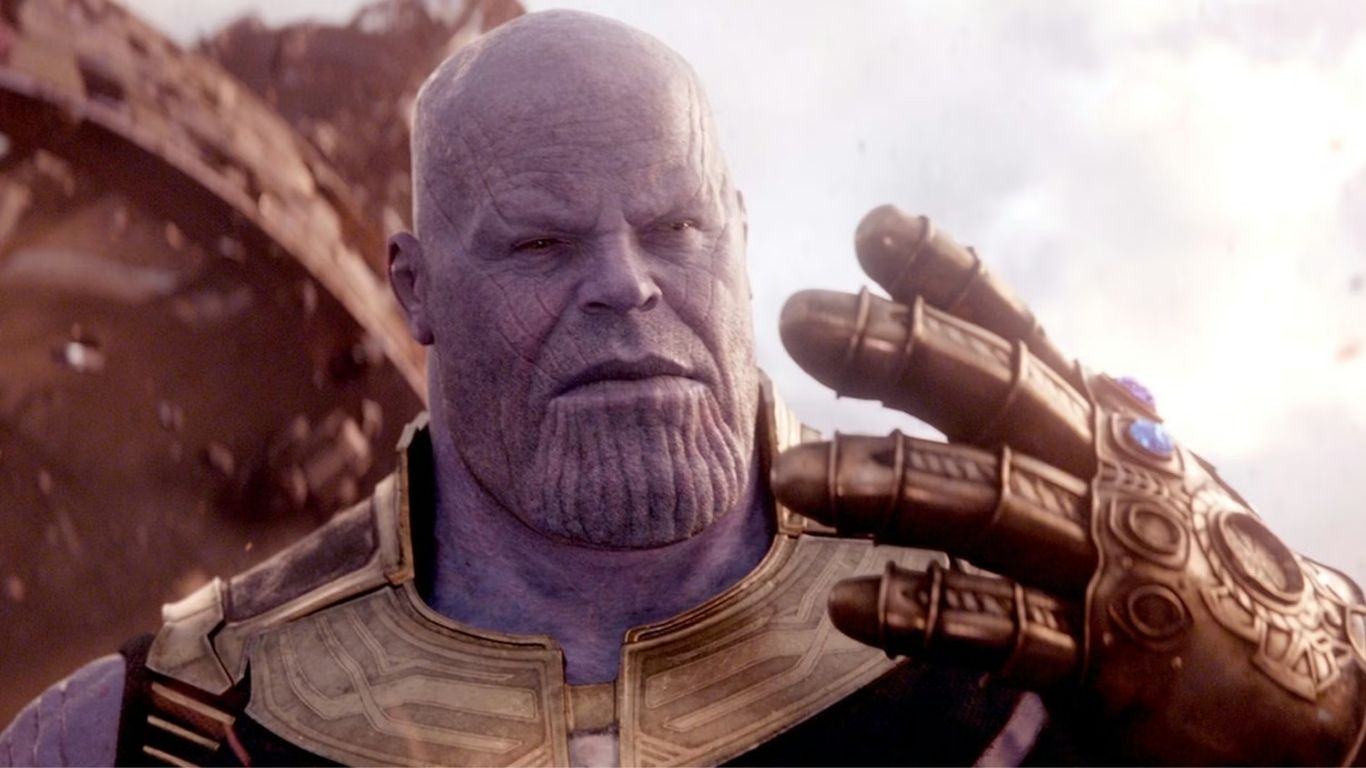
The Infinity Gauntlet storyline is perhaps the most iconic example of Thanos winning—and it differs significantly from the MCU adaptation.
In the films, he gathers all six Infinity Stones, snaps his fingers, and erases half of all life. He then retreats to a quiet existence, only to be hunted down by the surviving Avengers, who eventually undo his actions through time travel.
In the comics, Thanos’s victory is far more absolute and far more disturbing.
Over the course of the first four issues, Thanos systematically dismantles the Marvel Universe. Heroes fall effortlessly. Cosmic entities are humiliated. By Issue #5, he goes beyond mere genocide—he defeats Eternity itself, gaining complete dominion over reality. At that moment, his nihilistic dream is fully realized. He has proven that nothing in existence can stop him.
Yet his downfall does not come from the heroes.
It comes from himself.
Thanos subconsciously sabotages his own victory by separating his consciousness from his body, creating the opening for a broken and tortured Nebula to steal the Infinity Gauntlet. She strips him of power and banishes him to a remote exile outside space and time.
What follows is one of the most revealing moments in Thanos’s history. Adam Warlock forces him to confront a painful truth: every time Thanos achieves ultimate power, he engineers his own defeat because he believes—deep down—that he is unworthy of it.
Despite this, the story ends not with Thanos defeated, but transformed. He escapes exile not because he lost, but because he realized he no longer needed godhood. The ultimate takeaway is chilling: even when he loses, he proves that only Thanos can defeat Thanos.
Thanos Wins: A Universe Where Hope Is Already Dead
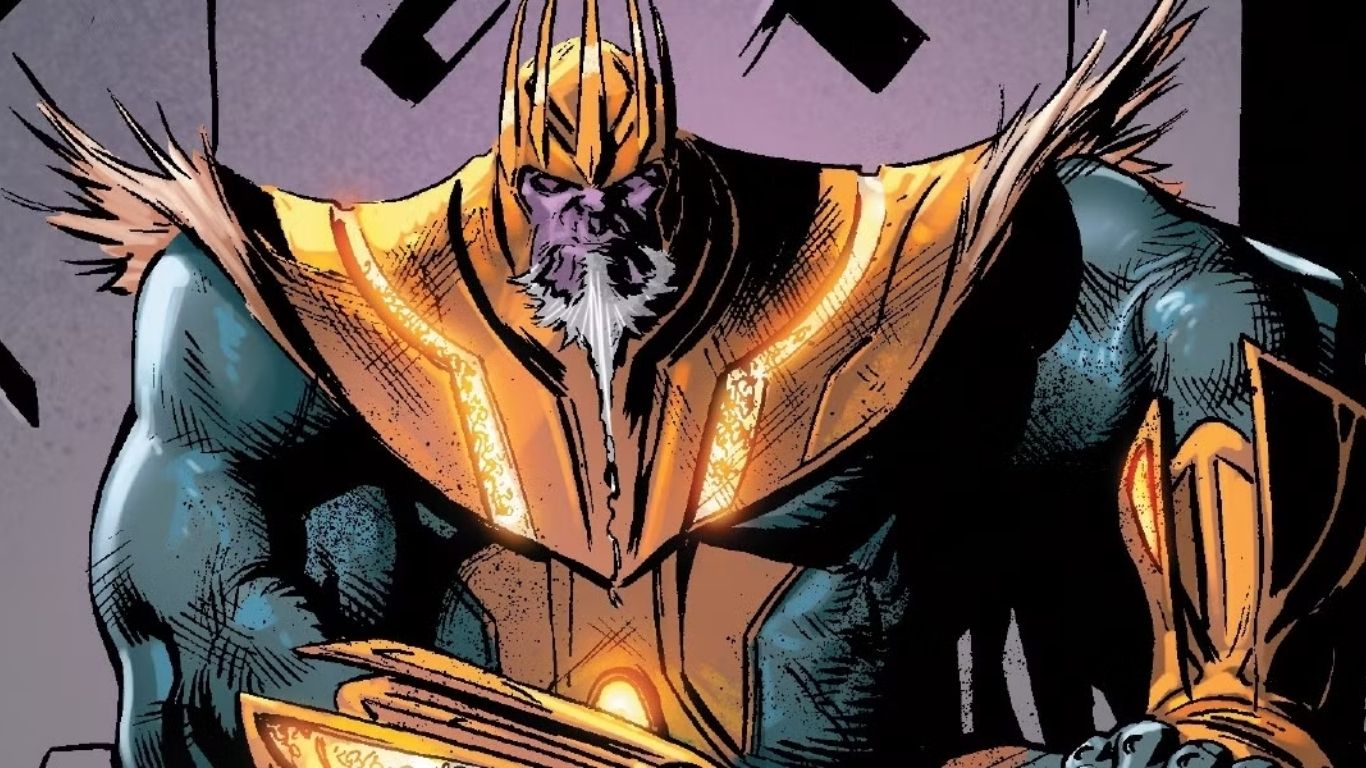
One of the most definitive victories in Thanos’s history comes in the 2016 storyline appropriately titled “Thanos Wins”, written by Donny Cates.
This story introduces King Thanos, a future version of the Mad Titan who has already conquered everything. The Avengers, the Fantastic Four, Earth’s heroes, cosmic champions—every single one of them is dead. Odin has fallen. Even the Celestials, gods among gods, have been defeated.
King Thanos sits alone on a throne atop an apocalyptic Earth, ruling over a universe where there is no one left to challenge him.
To prove his victory, King Thanos has Cosmic Ghost Rider—a future Frank Castle imbued with hellfire and cosmic power—drag present-day Thanos into this future. When the younger Thanos looks around, he realizes the horrifying truth: there is no resistance left. He has already won.
But this victory comes at a cost.
King Thanos reveals that the reason he annihilated the universe was to please Mistress Death. Ironically, this act drives her away. The only way Thanos could ever be with her would be to die—but no one is powerful enough to kill him except himself.
So King Thanos brings his younger self to do the unthinkable.
Instead of fulfilling this destiny, young Thanos rejects it. He sees his future self as pathetic—so consumed by love that he destroyed everything for it. In that moment, young Thanos abandons his obsession with Death entirely.
As King Thanos fades away, Death herself delivers the final verdict: “He won.”
Not just the war. Not just the universe. Thanos won existence itself.
The God Quarry: Power Reclaimed Through Damnation
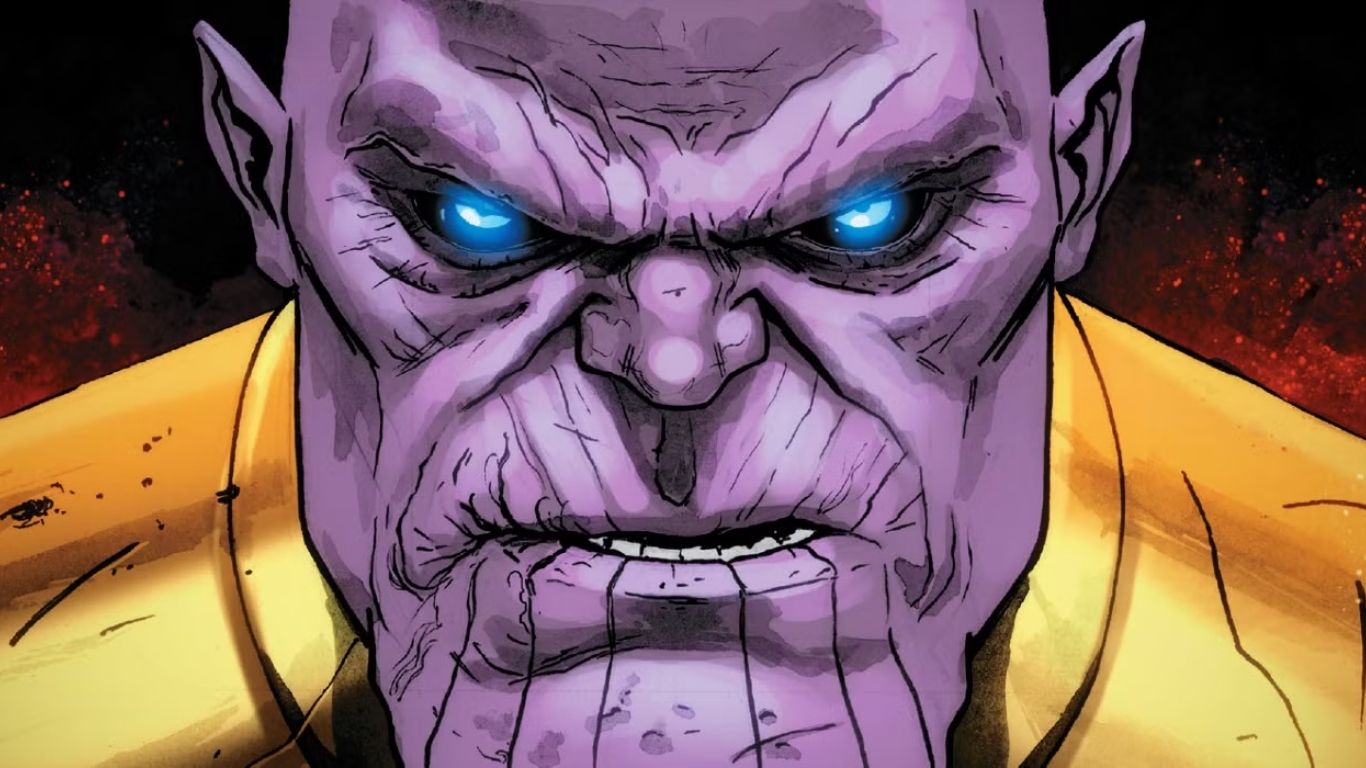
Following the events of Thanos Returns, the Mad Titan finds himself weakened and vulnerable—stripped of his true power. Worse still, his own son, empowered by the Phoenix Force, is hunting him.
Facing annihilation, Thanos seeks the God Quarry, also known as the Quarry of Creation—a forbidden cosmic site formed from the corpses and souls of dead gods. Guarded by cosmic witches, the Quarry offers unimaginable power, but at a terrible cost. Any who attempt to claim it must place their soul on trial. Failure means eternal imprisonment, frozen as stone on the Quarry’s walls.
Thanos accepts the challenge.
Unlike countless others, he passes the trial. His power is restored.
What follows is a brutal, universe-shaking confrontation between father and son. The Phoenix Force clashes with the Mad Titan in a battle that rages across space itself. Insults, regret, and raw hatred fuel every blow.
In the end, Thanos prevails.
But he does not kill his son.
Instead, he condemns him to a fate worse than death—casting him into the God Quarry to be eternally trapped, frozen in stone, lost to time. This act is not mercy. It is punishment. And once again, Thanos wins, reclaiming his power and asserting his dominance at the cost of his own bloodline.
Annihilation: Winning Even in Death
The Annihilation storyline centers on Annihilus and his devastating Annihilation Wave, an army from the Negative Zone bent on erasing the positive matter universe. Entire empires fall. Planets vanish. Civilization itself teeters on extinction.
Thanos plays a pivotal role—but not as a hero.
He allies himself with Annihilus and helps capture Galactus, turning the Devourer of Worlds into a living weapon of mass destruction. When questioned why he would aid such universal annihilation, Thanos delivers one of his most chilling explanations: he was bored.
He wanted to see what would happen if the cosmic balance tilted radically.
Eventually, Drax fulfills his destiny and kills Thanos by ripping out his heart. But even in death, Thanos proves his genius. His demise triggers a fail-safe: Galactus is released, turning the tide and leading to Annihilus’s defeat.
Thanos planned for his own death.
And in doing so, he still won.
Why Thanos Always Wins
Across all these stories, one truth becomes undeniable: Thanos’s greatest weapon is not strength, magic, or cosmic artifacts—it is foresight. He plans for every outcome, including failure and death. His victories are not always clean, and they are rarely joyful, but they are absolute.
Whether ruling over a dead universe, reclaiming power through damnation, or ensuring victory even from beyond the grave, Thanos consistently proves that inevitability is not arrogance—it is fact.



You must be logged in to post a comment.