
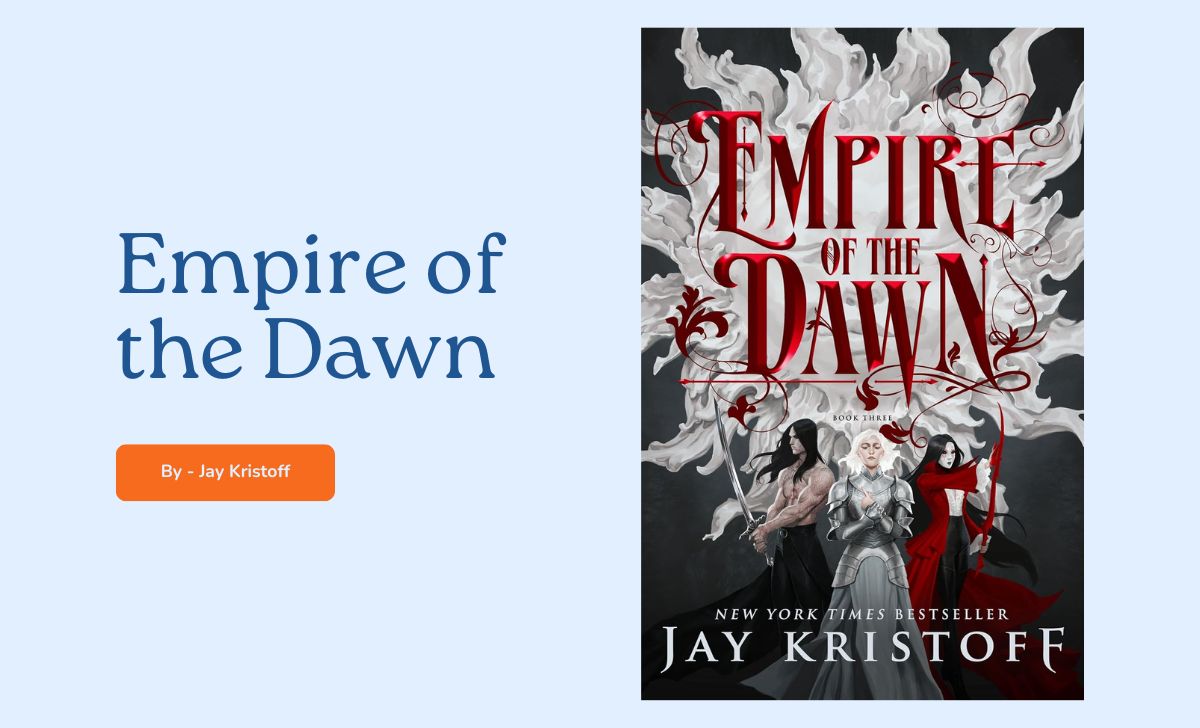
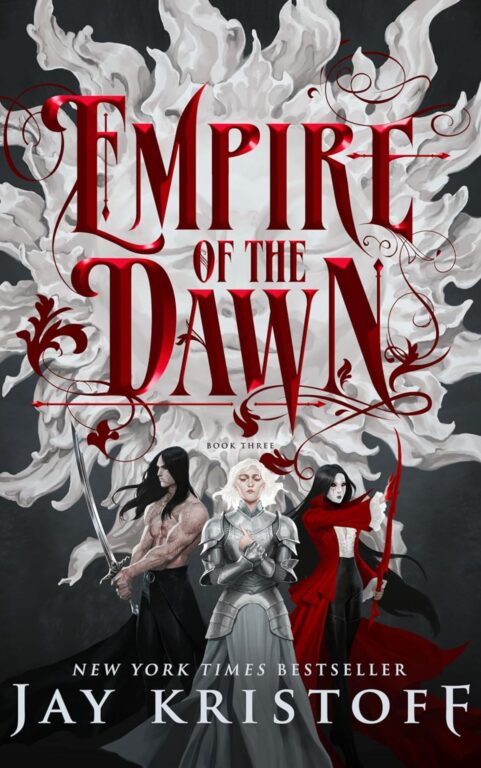
Endings are hard—especially when a series builds its reputation on audacity, heartbreak, and operatic scale. Jay Kristoff’s Empire of the Dawn closes the curtain on the Empire of the Vampire saga with a finale that is at once savage and soulful. This review is spoiler-light and focuses on tone, themes, and craft, while giving enough plot context for new readers to understand what’s at stake.
Where This Book Sits in the Saga
Empire of the Dawn is the third book in the Empire of the Vampire series. The world is trapped under an “endless night,” vampire courts rule, and humanity survives behind dwindling walls and older myths. Our through-line is Gabriel de León, last of the silversaints, a monster-killer whose legend is as bloody as it is contested. Across the trilogy, Gabriel’s tale has been told in a braided structure—his present-tense confessions intercut with the heaving, tragic past that made him. This final volume carries that signature structure forward, but tightens it for the endgame.
Plot setup (spoiler-light)
When we begin, Gabriel has lost almost everything: family, faith, and the clearest path to ending the endless night. What he hasn’t lost is the stubborn ember of purpose. That ember sparks one last, brutal road: a march into the war-riven heart of the vampire empire to confront the Forever King. He’s not alone. Bonds forged in grief and battle—brothers-in-arms, uneasy allies, and the young survivor whose future keeps prying light into Gabriel’s darkness—gather for a final attempt to tilt the world toward dawn. Expect siegecraft and chases, court intrigues and cathedral-quiet reckonings, and a climax that feels like a cathedral collapsing—sublime, terrible, and strangely cleansing.
What the book is really about
Beneath the swords and sorcery, Empire of the Dawn is concerned with cost. What is the price of keeping a promise when the world seems godless? What kind of truth do we owe the people who’ll come after us? The trilogy has always interrogated faith—not just religious faith, but trust in comrades, in stories, in the idea that we can be more than what the worst night says we are. Here, Kristoff threads that theme through every confrontation. Victories arrive, but they’re jagged. Mercy isn’t weakness; it’s a muscle the characters must choose to use, even when it hurts more than vengeance.
Tone and mood
If you’ve read the first two books, you already know the emotional palette: gothic grandeur, gallows humor, and gore that refuses to blink. The difference this time is an undercurrent of—dare I say—warmth. Not softness; Kristoff’s battle writing remains vicious and kinetic. But where earlier volumes often sprinted from disaster to disaster, this one allows for breath—moments of hearth-light, banter, and the kind of quiet that makes the thunderclaps louder when they come. That pacing choice pays off by giving the finale genuine catharsis rather than only shock.
Characters who stick the landing
- Gabriel de León remains one of grimdark’s most memorable leads: stubborn, wounded, occasionally infuriating, and capable of acts of grace that surprise even him. His voice—the blend of prayer, profanity, and self-indictment—continues to carry the series.
- Dior (and other allies I’ll leave unnamed to avoid spoilers) anchors the book’s moral compass. The counterweight she provides to Gabriel’s fatalism turns several set-pieces from “cool action” into “choices that matter.”
- The Forever King is more than a final boss. The best villains force protagonists to argue with themselves; this one does that in ways that illuminate the trilogy’s central questions.
Action, worldbuilding, and the craft of spectacle
Kristoff’s set-pieces have always read like metal album covers come to life—cathedrals of bone, storms of silver, duels where every parry says something about the fighters. Here, the spectacle is purposeful. A city siege isn’t just a fireworks display; it’s a referendum on what people will risk to protect strangers. Road sequences aren’t filler; they’re pilgrimages through a continent’s scars. The magic system—saints, silver, and blasphemies—remains legible even as it reaches toward myth in the finale.
Prose and structure
The prose is barbed and lyrical, with a taste for the profane that will either delight you or send you sprinting for quieter fantasies. The frame-narrative confessional returns, sharper and more self-aware. Chapters know when to sprint and when to kneel. Kristoff also leans into repetition as a design choice—phrases and images recur, changed by new context, mimicking the way stories are told and retold until they become scripture or warning.
Themes that linger after the last page
- Faith vs. institution: The book separates belief from the brittle power structures that claim to own it. Miracles don’t arrive on schedule; courage does.
- Found family: Brotherhood and chosen kinship are not sentimental decorations—they are tactical advantages and existential lifelines.
- Story as weapon and shelter: Who gets to write history? Who gets to define “monster”? The novel returns again and again to the idea that testimony is an act of war against oblivion.
Any rough edges?
Readers who prefer a relentlessly breakneck tempo might feel the early stretch is measured compared to the previous entries. There’s also the series’ trademark appetite for blood and bile; if you bounced off earlier volumes for that reason, nothing here is designed to win you back. But for many, those choices are features, not bugs, and they make the moments of tenderness feel earned.
Who will love this
- Fans of gothic, morally knotty fantasy who want their finales to mean something, not just explode.
- Readers who value character-driven warfare: where every blade swing is tethered to a promise, a failure, or a fragile hope.
- Anyone who followed Gabriel from the first chapter and needs to know whether the sun still remembers how to rise.
Verdict
Empire of the Dawn doesn’t just end a story; it reconciles it. The book honors what came before—the griefs, the glories, the blasphemies—and turns them toward a conclusion that feels both inevitable and surprising. It’s brutal, beautiful, and unexpectedly generous. When the last page closes, it leaves you with the ache of loss and the warmth of a sunrise you fought to see.