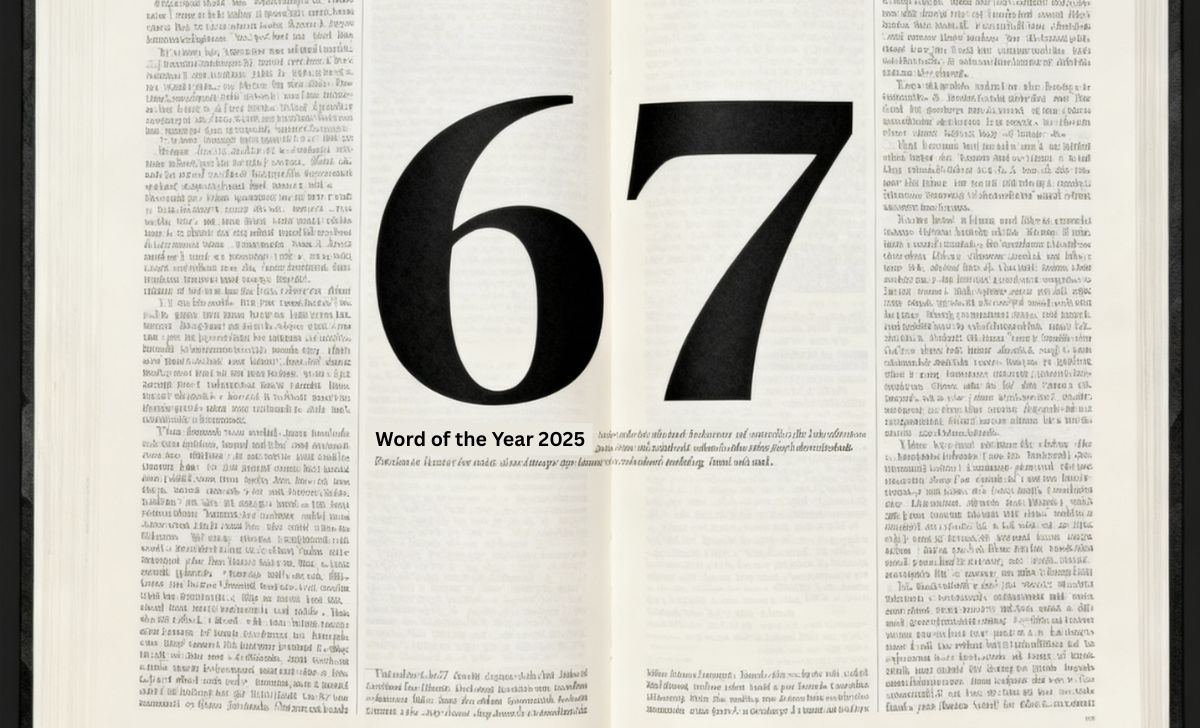
Dictionary.com has officially announced “67” — pronounced “six seven,” not “sixty-seven” — as its 2025 Word of the Year, capturing a linguistic trend that has taken over classrooms, online spaces, and everyday conversations.
The platform described its annual selection as a “linguistic time capsule,” reflecting the social moods and cultural shifts that define the moment. This year, the nonsensical yet catchy slang “67” emerged from Gen Alpha communities, spreading rapidly across social media and into mainstream language.
The Rise of “67”
The origin of “67” remains partly mysterious. The term began gaining traction in 2024 after rapper Skrilla released the song “Doot Doot (6 7)”. Viral clips on TikTok and Instagram paired the song with basketball highlights, often referencing NBA player LaMelo Ball — who stands 6 feet, 7 inches tall. That connection, along with a viral moment featuring a youth basketball player dubbed “The 67 Kid,” helped launch the phrase into everyday Gen Alpha vocabulary.
From there, “67” snowballed into what Steve Johnson, Ph.D., the director of lexicography at the Dictionary Media Group (IXL Learning), calls “a cultural phenomenon.”
“It kept on growing larger and larger, becoming part inside joke, part social signal, and part performance,” Johnson said. “When people say it, they’re not just repeating a meme; they’re shouting a feeling.”
The phrase’s flexibility and humor helped it spread. Even without a fixed definition, it became powerful — a word that signaled group belonging, generational identity, and digital fluency.
What Does “67” Mean?
Unlike most Words of the Year, “67” has no concrete meaning. Some interpret it as another way of saying “so-so” or “maybe this, maybe that,” sometimes accompanied by both palms facing up and moving alternately. However, Dictionary.com defines it as a form of “brainrot slang” — a trend built around absurdity and inside jokes rather than logical meaning.
“This is one of the first Words of the Year that functions as an interjection,” Johnson explained. “It’s something people shout or type to express energy or connection, even when no one fully agrees on what it means.”
He added that, while older generations might find the term bewildering, for younger people it’s “a linguistic badge of identity — a way of saying, ‘this is who we are.’”

Generational Divide and Cultural Impact
The popularity of “67” has created mixed reactions. Teachers and parents have often expressed exasperation at hearing “six seven” shouted randomly in classrooms or hallways. Johnson humorously recalled receiving a message from a middle school teacher saying, “Do not make six seven Word of the Year.” That moment confirmed to him just how deeply the slang had infiltrated young people’s lives.
Despite some groans from adults, Johnson sees the phenomenon as a celebration of youth creativity. “This is a new generation flexing their linguistic muscles,” he said. “They’re redefining how we use and share language in the digital era.”
Statistical Surge
According to Dictionary.com’s internal analysis, usage of “67” exploded in 2025. Mentions of the term appeared six times more frequently in October alone than during all of 2024 combined. The dictionary described this trend as proof of how quickly language can evolve in a hyperconnected world.
The Shortlist: Other Contenders
Before “67” secured the top spot, several other words were considered for Word of the Year. The shortlist captured emerging themes from technology, culture, and politics:
- Agentic – Describing artificial intelligence capable of acting independently like a human agent.
- Aura farming – Cultivating personal vibe or charisma online for social clout.
- Gen Z stare – A blank, unbothered facial expression associated with Gen Z.
- Overtourism – Excessive tourism leading to environmental and social strain at destinations.
- Tariff – Government duties imposed on imports or exports.
- Tradwife – A woman embracing traditional homemaker roles, often linked to conservative ideals.