

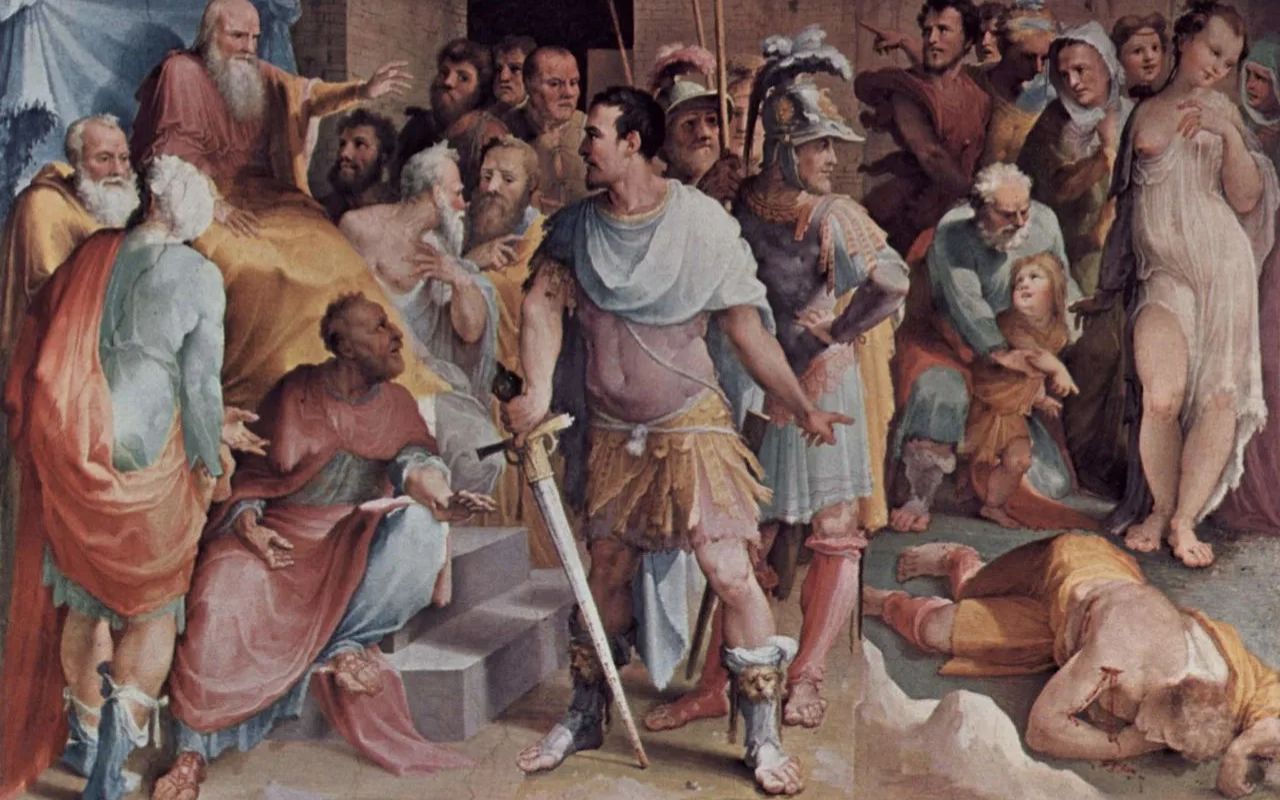
The Middle Ages often lives in our imagination as a foggy era filled with armored knights, unwashed peasants, gloomy castles, and cruel torture devices. Popular media paints it as a time when people feared the unknown, believed the Earth was flat, ate spoiled meat, and locked women into chastity belts.
But when we peel back the layers of later exaggerations and look closely at what the transcript reveals, a very different picture emerges. The truth is that many of the myths we accept about medieval Europe were created centuries later, shaped by scholars, writers, and even showmen with their own agendas.
This article explores common misconceptions about medieval life—its education, hygiene, food, punishments, and social structures—and contrasts them with what the historical record and the transcript actually indicate.
The Middle Ages: A Thousand Years of Change, Not a Single Frozen Era
The “Middle Ages” spans an enormous period—roughly 1,000 years, from the fall of the Roman Empire in the 5th century to the emergence of the Renaissance in the 15th. Despite how it’s sometimes used today, the term traditionally refers specifically to Europe, not all world regions.
It is vital to recognize that labeling this vast timespan as one unified period is itself misleading. Within these centuries, life changed dramatically. There were economic shifts, cultural developments, religious movements, and scientific advancements. Yet later thinkers lumped it all together, often for political, intellectual, or ideological motives.
Calling it the “Dark Ages” especially created a distorted image—suggesting ignorance and stagnation where innovation and learning actually persisted.
Myth 1: Medieval Europeans Believed the Earth Was Flat
One of the most stubborn misconceptions is that medieval people thought they lived on a flat world. This idea took hold because of a 19th century biography of Christopher Columbus, which falsely claimed that he faced opposition from flat-Earth believers. In reality, educated medieval Europeans had little debate over Earth’s shape.
In fact, a popular 13th-century textbook was literally titled “On the Sphere of the World.” Not only did medieval scholars know the Earth was round—they used this understanding in astronomy and navigation.
Other Greek and Roman texts survived and were actively studied throughout the medieval period. Far from losing ancient knowledge, monasteries and early universities preserved, copied, and debated classical works.
This myth survives today largely because later Renaissance and Enlightenment thinkers wanted to make medieval people seem primitive in contrast to their “age of reason.”
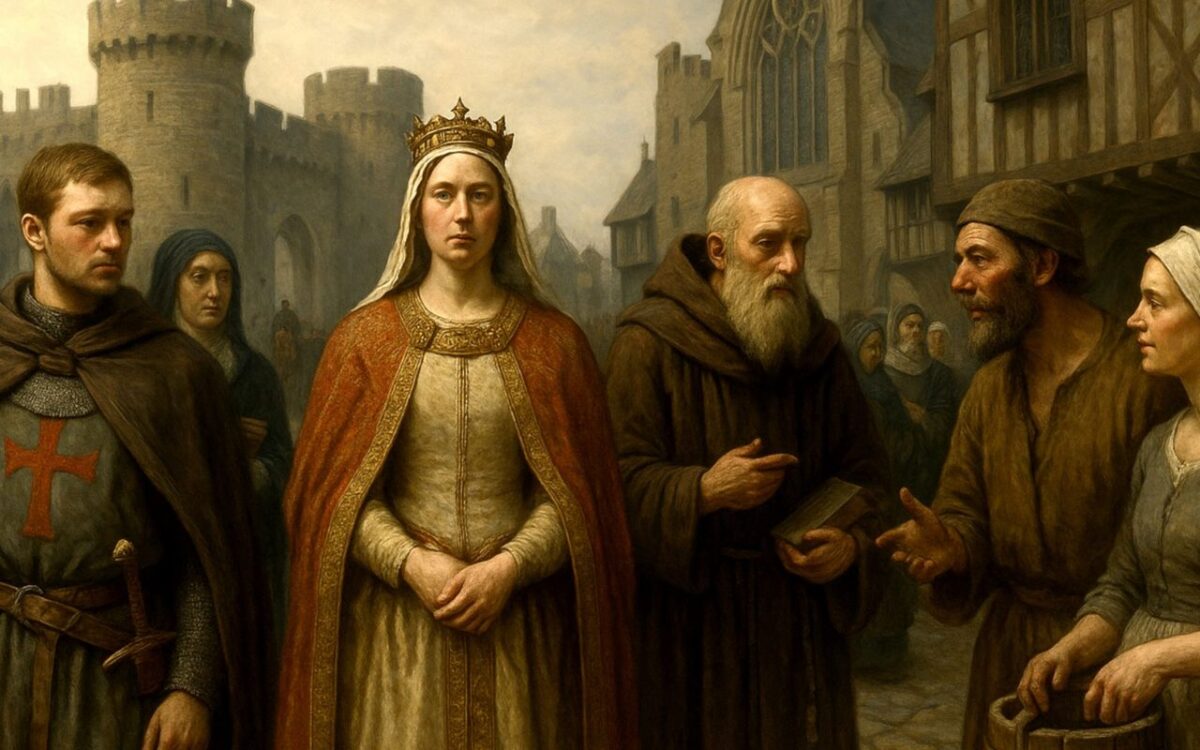
Myth 2: Medieval People Were Uneducated and Ignorant
Another widespread assumption is that education was completely absent and literacy was rare. It’s true that literacy was not universal, but it increased steadily during the Middle Ages, not the opposite. As monasteries and convents became centers of learning, they taught reading, writing, and preserved important manuscripts.
With time, universities emerged—entire institutions dedicated to philosophical, theological, medical, and scientific study. These centers were hubs of intellectual life long before modern schools existed.
The idea that medieval Europeans were uniformly uneducated stems mostly from the way later scholars labeled the period as “dark” compared to the classical world or the Renaissance that followed.
Myth 3: Medieval Food Was Rotten and People Used Spices to Hide the Taste
One particularly colorful myth claims that medieval Europeans frequently ate spoiled meat and used expensive spices to mask its rotten flavor. This idea became popular in the 1930s after a British author misunderstood a single medieval recipe and exaggerated existing food safety laws.
The reality was very different:
- Medieval cooks avoided spoiled food just as we do today.
- Meat was preserved safely using methods like salting, curing, and smoking.
- Spices were a luxury—often more expensive than the meat itself.
If someone could afford saffron or cinnamon, they could certainly afford unspoiled meat. The myth persists simply because it is vivid and dramatic, but it doesn’t reflect the actual culinary practices of the time.
Myth 4: People in the Middle Ages Never Bathed
The phrase “a thousand years without a bath,” coined by 19th-century historian Jules Michelet, has unfairly shaped modern imagination. But medieval Europeans actually cared a great deal about hygiene.
According to the transcript:
- Even small towns had public bathhouses, often busy and well used.
- People used soaps made from animal fats, ashes, and herbs.
- They practiced oral hygiene with mouthwash, tooth-cleaning cloths, and herbal breath fresheners.
Bathhouses were not only places to clean up—they were social hubs. Wealthy households even had private tubs. Only during certain epidemics and later religious restrictions (especially in the Renaissance and early modern period) did public bathing decline.
Myth 5: Grisly Torture Devices, Like the Iron Maiden, Were Medieval Inventions
Images of the medieval world often include horrifying torture machines, especially the infamous Iron Maiden—a human-shaped coffin lined with spikes. Many of these supposed medieval devices were actually invented much later, often in the 18th or 19th century, when sensational museum exhibits and traveling shows wanted to shock visitors.
According to the transcript:
- The Iron Maiden was not medieval; it was likely fabricated just decades before its 1890s exhibition tour.
- Other devices, like the “Pear of Anguish,” existed but were probably not used for torture and may have been completely misidentified.
- Many “medieval torture tools” reflect Victorian-era imaginations more than medieval reality.
Actual medieval justice systems were less gruesome than commonly believed. Punishments included:
- fines
- imprisonment
- public humiliation
- some forms of corporal punishment
Severe executions did occur—such as drawing and quartering—but they were typically reserved for extreme crimes such as high treason. These were rare, not everyday practices.
Myth 6: Chastity Belts Were Common and Real
One of the most enduring fantasies of the Middle Ages is the chastity belt supposedly used by knights to lock up their wives while they went off to war. But this image is another later invention.
The transcript clarifies:
- The first mention of a chastity belt appears in the 15th century in a text by a German engineer—intended as a joke, right alongside fart humor and a device for invisibility.
- Later artists and writers turned chastity belts into satirical subjects.
- These satirical depictions were misunderstood by later generations as evidence of real medieval practices.
There is no credible medieval evidence showing that women were actually forced to wear these contraptions. It is a myth born from humor, then misinterpreted as fact.
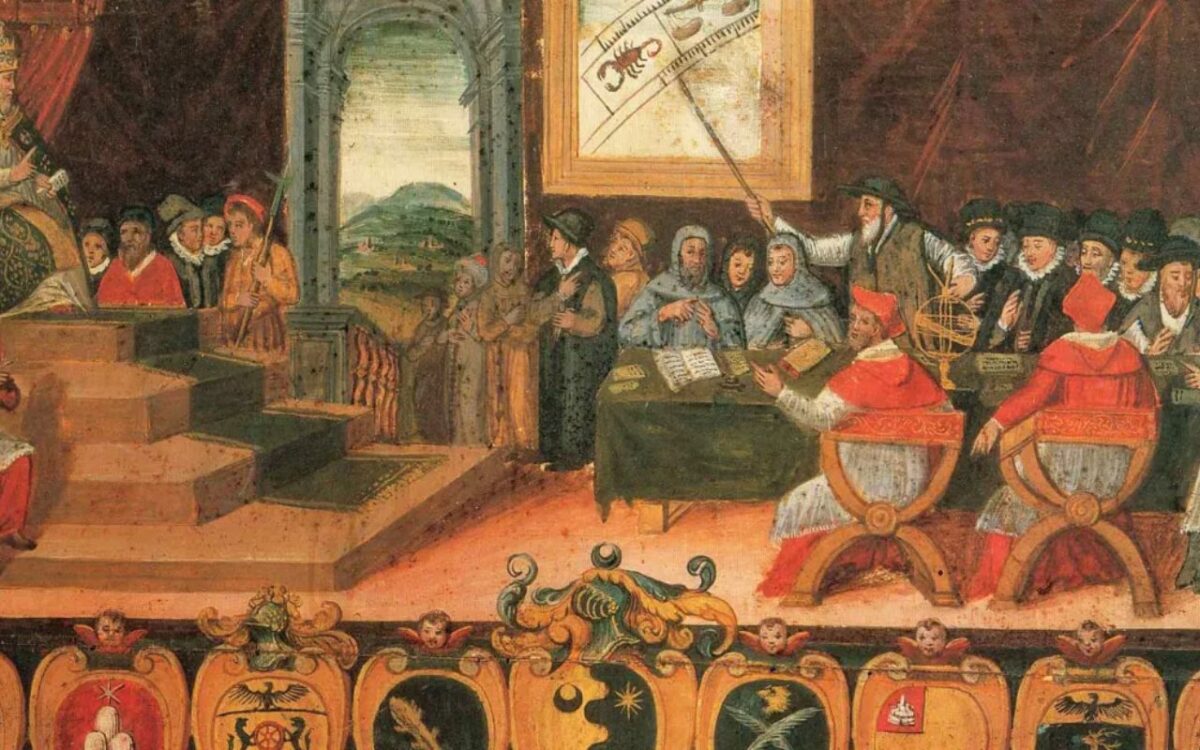
Where Did These Medieval Myths Come From?
The myths didn’t appear randomly. They developed in specific historical contexts:
1. Renaissance Scholars Wanted to Distance Themselves
During the 15th and 16th centuries, Renaissance thinkers viewed themselves as reviving the glory of ancient Rome and Greece. To make their era shine brighter, they painted the Middle Ages as a gloomy, backward phase.
2. Enlightenment Thinkers Pushed the Myth of “Reason vs. Superstition”
Philosophers in the 17th and 18th centuries emphasized rationality. To reinforce this identity, they depicted medieval Europeans as superstitious, irrational, and anti-intellectual.
3. 19th Century Romantic Nationalism Idealized the Middle Ages
Romantic writers went in the opposite direction. They imagined the medieval world as:
- pure
- isolated
- white
- Christian
- chivalrous
This created another layer of myth—idealized rather than demonized.
These competing agendas turned the Middle Ages into a battleground of ideas, each side using its own imagined version of medieval life to support its viewpoint.
The Real Middle Ages: A Connected, Diverse, and Dynamic World
While misconceptions paint the Middle Ages as isolated and insular, the truth is that medieval Europe was deeply connected to the broader world.
According to the transcript:
- Ideas traveled through Byzantine, Muslim, and Mongol trade routes.
- Merchants, scholars, and diplomats from multiple cultures visited European cities.
- Knights—often fetishized in modern portrayals—played relatively minor roles in actual warfare.
The medieval world was far more globally entangled than stereotypical images of lone castles, solitary knights, and frozen societies suggest.
Why Myths Still Survive Today
Myths linger because they are dramatic, romantic, and easy to visualize. A world filled with Iron Maidens, flat-Earth believers, and chastity belts is more visually striking than one filled with trade routes, universities, and public bathhouses.
Additionally:
- Literature and films love exaggerated medieval tropes.
- Nationalistic narratives still sometimes lean on romanticized medieval pasts.
- “Dark Ages” stereotypes feed into simple stories about progress and enlightenment.
But as the transcript demonstrates, the actual Middle Ages were rich, complex, and often surprisingly sophisticated.