
Evolution stands as one of the most robust theories in modern science, yet it remains shrouded in myths and misconceptions that persist even among those who accept it. Many people equate evolution with simple adaptation, picturing organisms actively changing to fit their surroundings, much like an outdated idea from centuries past. This view stems from early theories that have long been overturned, leading to a cascade of errors about how life truly diversifies. In reality, evolution operates through subtle, random processes at the genetic level, not through deliberate effort by individuals.
The transcript highlights how these misunderstandings arise from oversimplifications, such as viewing evolution as a ladder toward perfection or a contest won by the strongest survivors. Even scientifically literate individuals fall into these traps, assuming traits are passed on based on use or that death without offspring renders an organism pointless. By dissecting these ideas step by step, this article reveals the blind, mechanistic nature of evolution, driven by genetic variations rather than intent or foresight.
Understanding these misconceptions matters because they distort our appreciation of biodiversity and human origins. Evolution explains the intricate web of life without invoking purpose, relying instead on probabilistic changes over deep time. Let’s dive into the first major myth unpacked in the transcript.
The Myth of Organisms Adapting to Their Environment
A widespread belief holds that evolution means organisms adapt directly to their environment during their lifetimes, tweaking themselves to survive better. This notion evokes images of animals reshaping their bodies in response to immediate challenges, like a creature growing stronger muscles from constant use. However, this description aligns with an obsolete theory proposed nearly 60 years before Charles Darwin’s groundbreaking work.
Jean-Baptiste Lamarck championed the idea that acquired traits could be inherited. He famously suggested giraffes evolved long necks because their ancestors stretched to reach high leaves, passing on slightly elongated necks to their offspring with each generation. Under this view, effort and environmental pressure directly mold evolution, making it seem purposeful and responsive.
Modern genetics demolishes this concept entirely. Traits developed over a lifetime, such as calluses from hard labor or muscles from exercise, do not alter DNA and thus cannot be inherited. Individual organisms do not evolve; they remain fixed from birth to death, barring random changes in their genes. Lamarckism fails because it ignores the core mechanism: heritable variations arise from mutations, not use or disuse. This myth lingers because it feels intuitive, portraying evolution as a heroic struggle against nature, but science shows a far more impersonal process.
Lamarckism: The Discredited Precursor to Darwin
Lamarck’s theory, published in the early 1800s, represented a bold step toward evolutionary thinking before Darwin refined it. He argued organisms strive for complexity, driven by an inner urge, and adapt by acquiring traits suited to their needs. The giraffe example illustrates this perfectly: constant stretching supposedly lengthens necks incrementally across generations, leading to today’s towering herbivores.
Yet experiments and observations have repeatedly falsified Lamarckian inheritance. For instance, if mice have their tails cut off for generations, their pups are born with full tails, proving acquired mutilations aren’t passed on. DNA replication ensures genetic material stays stable unless mutated randomly, not shaped by behavior. Lamarck also overlooked competition and variation within populations, elements central to Darwin’s natural selection.
Darwin built on Lamarck’s rejection of fixed species but replaced purposeful adaptation with blind variation and selection. Today’s synthesis of genetics and Darwinism confirms that evolution lacks direction from the organism itself. Lamarckism persists in pop culture phrases like “use it or lose it” applied to heredity, but it misleads by suggesting control where none exists. Recognizing this clears the path to grasping true evolutionary dynamics.
Survival of the Fittest: More Than Strength and Speed
The phrase “survival of the fittest,” often misattributed solely to Darwin but popularized by Herbert Spencer, conjures images of brutal competitions where only the largest, strongest, or fastest prevail. People imagine evolution favoring alpha predators or invincible giants, weeding out the weak in a Darwinian arena. This interpretation paints evolution as a meritocracy of physical prowess, ignoring nuance.
Fitness in evolutionary terms means reproductive success in a specific context, not raw power. A long-necked giraffe thrives amid tall acacias but starves if forests give way to grasslands; sudden environmental shifts flip advantages overnight. What counts is producing viable offspring, not just enduring. Creatures like the male anglerfish exemplify this: tiny and short-lived, it survives by fusing parasitically with a female, ensuring gene transmission despite personal frailty.
Moreover, survival alone doesn’t drive evolution—reproduction does. An organism dying without breeding contributes nothing directly, yet indirect benefits abound. Genes propagate through kin, enabling altruism: a groundhog screeching to warn relatives sacrifices itself but boosts family survival, spreading shared genes. This “inclusive fitness” explains behaviors defying self-preservation, like sterile worker bees defending hives. “Fittest” thus equates to any trait enhancing gene copies in future generations, from speed to social cooperation.
Reproduction Over Survival: The True Engine of Evolution
Natural selection acts primarily on reproductive output, not longevity. Myths focus on survivors as victors, but evolution tallies offspring, not lifespans. The male anglerfish, minuscule at birth, races to attach to a female before starving; its genes endure via her brood, not independent living. Parasitic fusion turns it into a sperm factory, prioritizing propagation over autonomy.
This principle extends to extreme cases. Worker ants, sterile females, forgo reproduction to support the queen, yet their genes thrive because sisters share high relatedness. Hamilton’s rule quantifies this: altruism spreads if the benefit to relatives (weighted by kinship) exceeds the altruist’s cost. Sterile castes dominate eusocial insects, proving evolution favors gene-level success over individual reproduction.
Even posthumous contributions matter. A salmon dies after spawning, but its genes live on in fry. Bacteria lysing to release viruses ensure viral spread, sacrificing the host cell. Reproduction’s primacy shatters the “live longest wins” illusion, revealing evolution’s focus on generational continuity. Traits enhancing mating success, like peacock tails, persist despite survival costs, as mates produce more carriers.
Genes Don’t Want or Plan: Metaphors and Misleads
Anthropomorphic language plagues evolution discussions: genes “want” to replicate, nature “selects” favorites. These metaphors aid explanation but mislead by implying agency. Genes lack desires; mutations occur randomly via errors in DNA copying, radiation, or chemicals. Variants causing better-suited behaviors incidentally produce more copies, accumulating over time.
No guiding hand curates outcomes. The human eye’s blind spot, where the optic nerve bundles exit the retina backward, stems from cephalopod-like development, not optimal design. Forward-wired retinas in octopuses avoid this flaw, yet vertebrate evolution locked in the inefficiency. Perfection isn’t pursued; historical contingencies shape forms.
Evolution lacks foresight. Ancestral humans craved calorie-dense foods for scarcity eras, but modern abundance fuels obesity epidemics. No anticipation of agriculture or supermarkets influenced those preferences. Stepwise changes build complexity blindly: from light-sensitive spots to camera eyes, each increment viable locally, not globally ideal. Dispelling teleological myths underscores evolution’s opportunistic nature.
No Purpose, No Progress: Blind Steps to Diversity
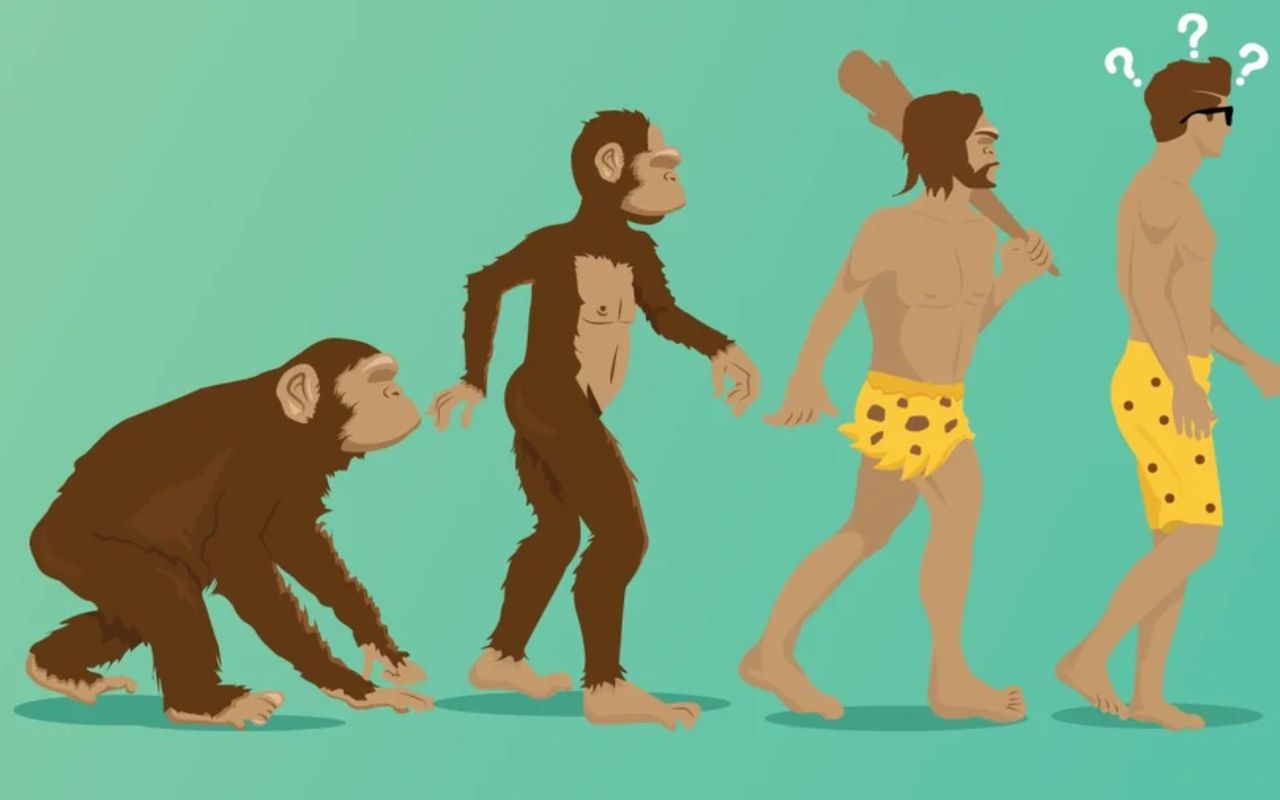
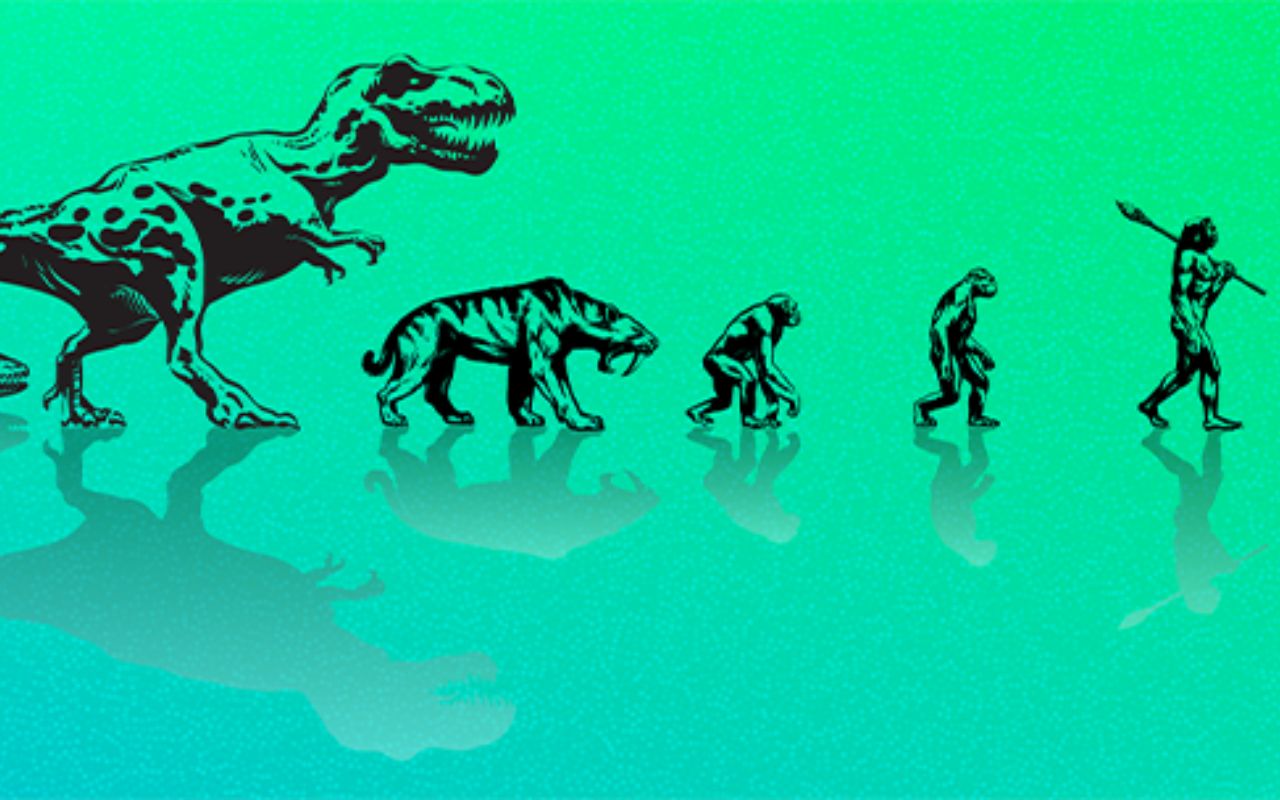
Evolution unfolds without predetermined goals, progressing neither toward complexity nor humanity. Popular views depict a linear march from simple blobs to apex humans, each stage “higher.” Yet branches abound: bacteria outnumber and outweigh all eukaryotes combined, thriving for billions of years unchanged.
Random mutations fuel diversity sans direction. A photoreceptor evolves into diverse eyes—compound in flies, pinhole in nautiluses—each solving vision locally. Human flaws, like appendix vulnerabilities or wisdom tooth crowding, betray patchwork assembly, not engineering.
This blindness generates Earth’s profusion: 8.7 million species from incremental tweaks. No “evolutionary purpose” exists; differential replication alone suffices. Misconceptions of progress stem from hindsight bias, judging ancestors by modern standards. Embracing contingency reveals evolution’s creativity.
Altruism and Kin Selection: Genes in Relatives
Sacrificial behaviors challenge selfish myths, yet kin selection resolves them. A gene prompting self-sacrifice aids siblings’ reproduction, propagating indirectly. Belding’s ground squirrels: females alarm-call, risking predation to save kin packs, males less so due to dispersal.
This scales to eusociality: haplodiploidy in bees heightens sister relatedness (0.75), favoring workers over personal broods. Genes “selfishly” maximize copies via proxies.
Human parallels include parental sacrifice or soldier heroism, rooted in genetic overlap. Altruism evolves when rB > C (relatedness times benefit exceeds cost), explaining cooperation’s ubiquity.
Human Quirks: Evolution’s Historical Baggage
Vestiges like the blind spot or vitamin C synthesis loss highlight blind tinkering. Retina inversion prioritizes developmental ease over optics. Calorie obsession suited hunter-gatherers; post-agricultural shifts expose mismatches.
Goosebumps, futile in humans sans fur, persist from piloerection ancestors. These “spandrels”—byproducts of selected traits—underscore no optimization.
Implications for Understanding Life
Grasping these truths demystifies biodiversity, from anglerfish oddities to human flaws. Evolution’s blind watchmaker crafts wonders sans intent.
Myths erode via education; accurate views foster appreciation. Next time “survival of the fittest” arises, recall: it’s gene copies, contextually fit, blindly propagated.